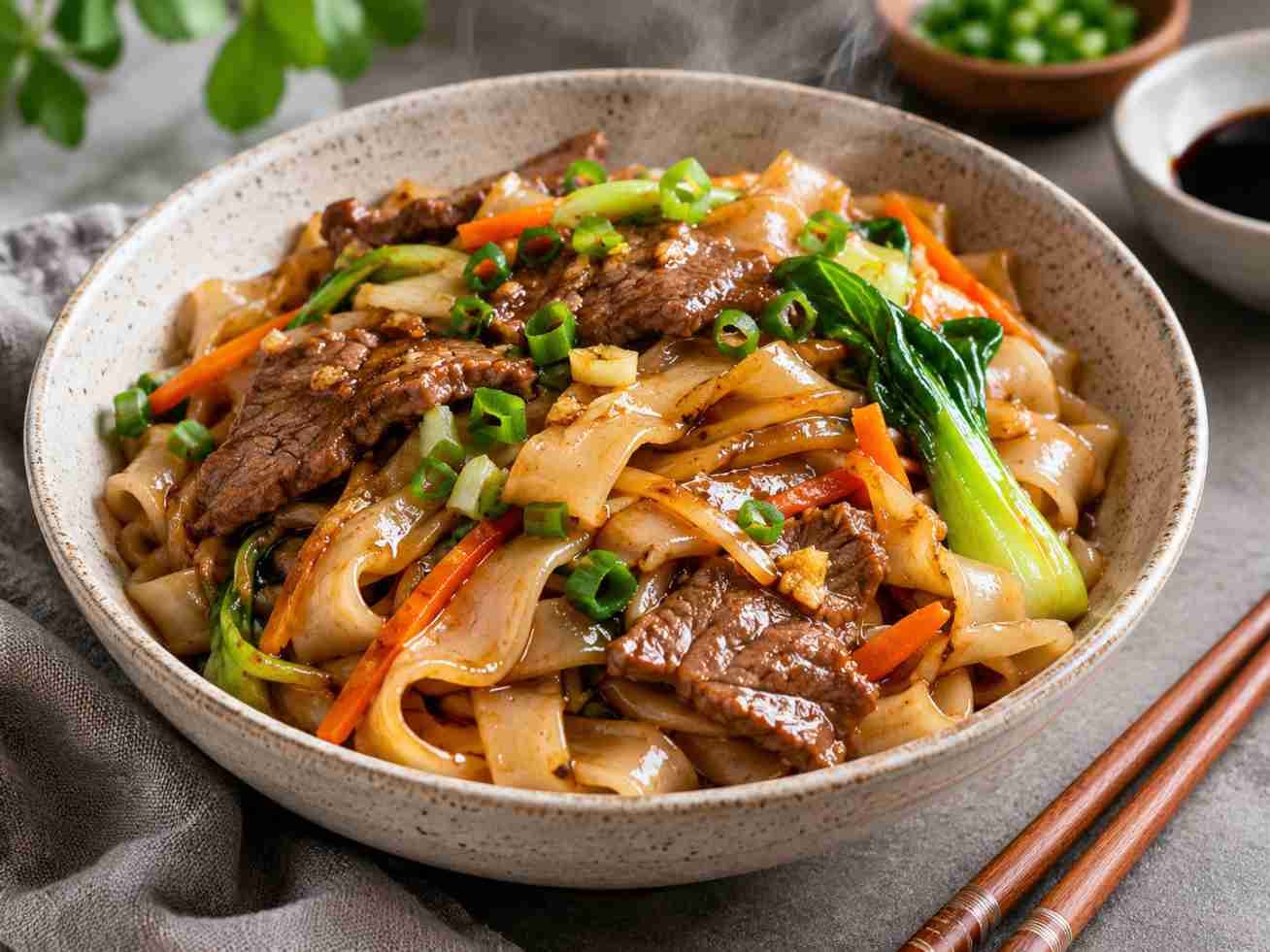
This beef rice noodles recipe is a quick Asian-inspired stir-fry with thin slices of beef, flat rice noodles, crisp vegetables, and a savory sauce with a little sweetness. It is filling enough to serve on its own, but it also works well with a simple cucumber salad or steamed greens. Once you have the ingredients chopped and ready, the actual stir-frying takes less than 10 minutes.
Beef Rice Noodles Recipe Overview
| Recipe | Beef Rice Noodles |
| Cuisine | Asian-Inspired |
| Course | Main Course |
| Preparation Time | 15 minutes |
| Marinating Time | 15 minutes |
| Cooking Time | 10 minutes |
| Total Time | 40 minutes |
| Servings | 3 |
| Difficulty | Easy |
Ingredients for Beef Rice Noodles
You do not need an extensive collection of sauces to make flavorful beef rice noodles. The key is choosing a suitable cut of beef, preparing the rice noodles correctly, and using a balanced sauce that coats everything without making the dish too salty.
For the Beef
- 300 g (10.5 oz) beef sirloin or flank steak, thinly sliced against the grain
- 1 tablespoon light soy sauce
- 1 teaspoon cornstarch
- 1 teaspoon neutral cooking oil
- 1/4 teaspoon freshly ground black pepper
For the Rice Noodles and Vegetables
- 180 g (6.3 oz) dried flat rice noodles
- 2 tablespoons neutral cooking oil, divided
- 4 garlic cloves, finely chopped
- 1 teaspoon freshly grated ginger
- 1 small onion, thinly sliced
- 1 medium carrot, cut into thin strips
- 150 g (5.3 oz) bok choy, chopped, with stems and leaves separated
- 3 spring onions, sliced
- 1 teaspoon toasted sesame seeds, optional
For the Stir-Fry Sauce
- 2 tablespoons oyster sauce
- 1 tablespoon light soy sauce
- 1 teaspoon dark soy sauce
- 2 teaspoons brown sugar
- 1 teaspoon rice vinegar
- 3 tablespoons water
- 1/4 teaspoon white pepper
Ingredient note: Use regular light soy sauce for seasoning and a small amount of dark soy sauce for a deeper color. Oyster sauce provides a rich, savory flavor. If you cannot use oyster sauce, a vegetarian mushroom-based stir-fry sauce is a suitable alternative, although the taste will be slightly different.
Also Read: Beef and Rice Recipe
How to Make Beef Rice Noodles
A good stir-fry depends more on preparation and cooking order than complicated techniques. Have the vegetables chopped, sauce mixed, and noodles ready before heating the pan. Once cooking starts, everything moves quickly.
Step 1: Slice and Marinate the Beef
Place the beef on a cutting board and slice it into thin strips against the grain. Cutting across the muscle fibers makes the cooked meat easier to chew. If the beef is difficult to slice, place it in the freezer for about 15 to 20 minutes until slightly firm, but not frozen solid. Transfer the sliced beef to a bowl and add 1 tablespoon light soy sauce, cornstarch, 1 teaspoon oil, and black pepper. Mix thoroughly until every piece is lightly coated. Leave the beef to marinate for 15 minutes while preparing the other ingredients. The cornstarch forms a thin coating that helps retain moisture during cooking.
Step 2: Prepare the Rice Noodles
Prepare the dried rice noodles according to the packet instructions. Most flat rice noodles need soaking in hot water until flexible and nearly tender. Avoid boiling them for longer than necessary because they will continue cooking in the wok. Drain the noodles and rinse briefly under cool running water to remove excess surface starch. Allow them to drain thoroughly. They should be pliable but still have a little firmness in the center. If the noodles are fully soft before stir-frying, they may become mushy when mixed with the sauce.
Step 3: Mix the Stir-Fry Sauce
Combine the oyster sauce, light soy sauce, dark soy sauce, brown sugar, rice vinegar, water, and white pepper in a small bowl. Stir until the sugar has dissolved. Taste a tiny amount if desired, keeping in mind that the sauce will taste stronger on its own than when mixed with noodles and vegetables. Set it beside the stove so it can be added immediately when needed.
Step 4: Sear the Beef
Heat a large wok or heavy frying pan over medium-high to high heat until hot. Add 1 tablespoon cooking oil and swirl to coat the surface. Arrange the beef in a single layer, working in batches if necessary. Let it sear briefly before turning the pieces. Cook for about 1 to 2 minutes, depending on thickness, until the beef is mostly browned. Transfer it to a clean plate. It does not need to be completely cooked at this stage because it will return to the pan later. Avoid overcrowding the wok, as excess moisture can cause the meat to steam instead of developing a lightly browned surface.
Step 5: Stir-Fry the Vegetables
Add the remaining tablespoon of oil to the same pan. Add the sliced onion and carrot, stirring for about 2 minutes until they begin to soften but retain some crunch. Add the chopped garlic and grated ginger, stirring for another 20 to 30 seconds until fragrant. Next, add the bok choy stems and cook for about 1 minute. Keep the leafy portions aside for now because they take much less time to wilt.
Step 6: Add the Noodles and Sauce
Reduce the heat slightly if the pan appears excessively hot. Add the drained rice noodles and pour the prepared sauce evenly over them. Using two spatulas or kitchen tongs, gently lift and turn the noodles to distribute the sauce. Continue tossing for about 1 to 2 minutes until the noodles become glossy and evenly coated. If they begin sticking or seem dry, add 1 tablespoon of water at a time rather than pouring in a large amount.
Step 7: Combine Everything
Return the seared beef and any juices on the plate to the wok. Add the bok choy leaves and most of the sliced spring onions. Toss gently for another 1 to 2 minutes, or until the greens have wilted, the beef is cooked through, and everything is hot. The sauce should cling to the noodles rather than collect at the bottom of the pan. Taste before adding any extra seasoning, as the soy and oyster sauces already contain salt.
Step 8: Garnish and Serve
Remove the wok from the heat and divide the beef rice noodles among three bowls. Sprinkle with the remaining spring onions and toasted sesame seeds if using. Serve immediately while the noodles are warm, glossy, and tender. A few drops of chili oil or a small squeeze of lime can be added at the table for anyone who prefers extra heat or acidity.
Also Read: Slow Cooker Beef and Broccoli
What You Can Do Better
The difference between average stir-fried noodles and really good ones often comes down to small details. These adjustments will help you get more consistent results, especially if you are making the recipe for the first time.
Choose Beef That Cooks Quickly
Sirloin and flank steak are excellent choices because they have plenty of flavor and cook quickly when sliced thinly. Whatever cut you choose, always slice against the grain. Keep the strips reasonably similar in thickness so they finish cooking at about the same time. For tougher cuts, a separate tenderizing method may be useful, but it is not necessary for this recipe when using tender sirloin.
Do Not Over-Soak the Rice Noodles
Over-soaked rice noodles are difficult to rescue. They can tear, clump together, and absorb too much sauce. Follow the instructions for your particular noodle brand and stop soaking while the noodles still have a little bite. Wider noodles usually require different preparation times from thin rice sticks, so do not rely on one soaking time for every variety.
Use a Large Pan
A wide wok allows moisture to evaporate quickly and gives the ingredients room to move. If your frying pan is small, cook the beef and vegetables separately before combining everything. This helps prevent watery noodles and unevenly cooked ingredients.
Control the Sauce
The ideal sauce should coat the noodles without leaving them swimming in liquid. Measure the sauce ingredients rather than pouring straight from the bottles. Soy sauces vary in saltiness, and adding too much can quickly overwhelm the delicate flavor of rice noodles. A little water is useful for loosening the noodles during cooking, but too much will dilute the sauce.
Keep Some Crunch in the Vegetables
Cook the carrots and bok choy stems first, then add the leaves toward the end. This keeps the vegetables colorful and gives the finished dish a more interesting texture. Completely soft vegetables can make a noodle stir-fry feel heavy.
Ingredient Substitutions and Variations
One of the practical advantages of this recipe is how easily you can adjust it according to what is available in your refrigerator. The cooking method remains nearly the same, although some ingredients may need different cooking times.
Beef and Broccoli Rice Noodles
Replace the bok choy with small broccoli florets. Blanch the broccoli briefly or add a splash of water while stir-frying to help the thicker stems become tender. This variation provides a slightly sweeter vegetable flavor and a pleasant crunch.
Spicy Beef Rice Noodles
Add 1 to 2 teaspoons of chili garlic sauce to the stir-fry sauce, adjusting to your preferred heat level. Thinly sliced fresh red chilies or chili oil also work well. Start with a small quantity because the heat can become more pronounced once the sauce coats the noodles.
Chicken Rice Noodles
Replace the beef with thinly sliced boneless chicken breast or thigh. Cook the chicken thoroughly before combining it with the noodles. Chicken thighs tend to remain juicier during high-heat stir-frying, while breast meat benefits from careful timing.
Vegetarian Rice Noodles
Replace the beef with firm tofu or sliced mushrooms, and use a vegetarian mushroom stir-fry sauce instead of oyster sauce. Brown the tofu separately before adding it back to the pan. You can also increase the amount of bok choy, carrots, and spring onions for a vegetable-rich meal.
Also Read: Beef Rendang
What to Serve with Beef Rice Noodles
Beef rice noodles are substantial enough to be a complete meal, with protein, vegetables, and carbohydrates all in one bowl. If you are serving a larger dinner, a simple cucumber salad dressed with rice vinegar and sesame oil makes a refreshing side. Steamed broccoli, stir-fried green beans, or a light vegetable soup also pair nicely without competing with the sauce. For a casual family meal, serve the noodles directly from the wok and put lime wedges, chili oil, and extra spring onions on the table so everyone can season their own portion.
Storage and Reheating Instructions
How to Store Leftovers
Allow the noodles to cool promptly, then transfer them to a shallow airtight container and refrigerate within 2 hours of cooking, or within 1 hour if the surrounding temperature is above 90°F (32°C). Because cooked rice noodles require careful handling, it is best to eat refrigerated leftovers within 24 hours. Do not leave them sitting at room temperature for extended periods.
How to Reheat
Reheat the noodles in a frying pan over medium heat with a tablespoon or two of water to loosen the sauce. Stir gently until the noodles and beef are steaming hot throughout. Alternatively, microwave them in a covered, microwave-safe container, stirring halfway through to encourage even heating. Reheat leftovers only once.
Can You Freeze Beef Rice Noodles?
Freezing is not recommended for the finished dish. Cooked rice noodles tend to lose their texture after thawing and may become brittle or mushy when reheated. If you want to prepare ingredients ahead, freeze the uncooked sliced beef separately and keep unopened dried rice noodles in your pantry. Thaw the beef safely in the refrigerator before cooking.
Nutrition Information
The following values are approximate estimates for one serving when the recipe is divided into three equal portions. They include the noodles, beef, vegetables, cooking oil, and sauce, but exclude optional garnishes and extra chili oil. Actual nutritional values will vary according to the beef cut, noodle brand, and sauces used.
| Nutrient | Approximate Amount Per Serving |
|---|---|
| Calories | 550 kcal |
| Protein | 30 g |
| Total Carbohydrates | 59 g |
| Dietary Fiber | 3 g |
| Total Sugars | 7 g |
| Total Fat | 21 g |
| Saturated Fat | 5 g |
| Cholesterol | 65 mg |
| Sodium | 1,150 mg |
Nutrition note: These are estimated values rather than laboratory-tested figures. The sodium content depends heavily on the soy sauce and oyster sauce brands. Using reduced-sodium products may lower the amount of sodium, but the finished sauce should still be adjusted to taste.
Also Read: Vegetable Beef Soup
Frequently Asked Questions
What Kind of Rice Noodles Are Best for Beef Stir-Fry?
Medium-width flat rice noodles are a reliable choice. They have enough structure to hold the sauce and remain pleasantly chewy when cooked correctly. Thin rice vermicelli can also work, but it cooks more quickly and is more likely to break if tossed aggressively. Very wide rice noodles are another good option, provided they are prepared according to their packaging.
How Do You Keep Beef Tender in Rice Noodles?
Use a suitable steak cut, slice it thinly against the grain, and avoid overcooking. A short marinade containing soy sauce, oil, and cornstarch can also help protect the meat during stir-frying. Cooking the beef separately before combining it with the noodles gives you better control over its texture.
Are Beef Rice Noodles Gluten-Free?
Rice noodles are commonly made from rice flour and water, but the complete dish is not automatically gluten-free. Regular soy sauce often contains wheat, and oyster sauce formulations vary. To make a gluten-free version, use certified gluten-free rice noodles, gluten-free tamari, and a verified gluten-free oyster or mushroom sauce. Check every packaged ingredient if preparing the dish for someone with celiac disease.
Can I Make Beef Rice Noodles Without Oyster Sauce?
Yes. A mushroom-based stir-fry sauce provides a similar savory foundation. You can also experiment with a little extra light soy sauce and a small amount of sugar, although the resulting flavor will be lighter and less rounded. Avoid simply replacing oyster sauce with the same quantity of regular soy sauce because the noodles may become excessively salty.
Why Do My Rice Noodles Stick Together?
Rice noodles often stick when they are overcooked, insufficiently drained, or left sitting after soaking. Rinsing away excess starch can help. Prepare the noodles shortly before they go into the wok, and use a little water to loosen them if necessary. Gentle tossing is more effective than repeatedly stirring them with a single spoon.
Can I Prepare the Ingredients Ahead of Time?
Yes. You can chop the vegetables, mix the sauce, and slice the beef ahead of time. Store the beef and vegetables in separate covered containers in the refrigerator. For the best texture, soak the dried rice noodles just before cooking rather than preparing them several hours in advance. This also makes the final stir-fry much easier to manage.