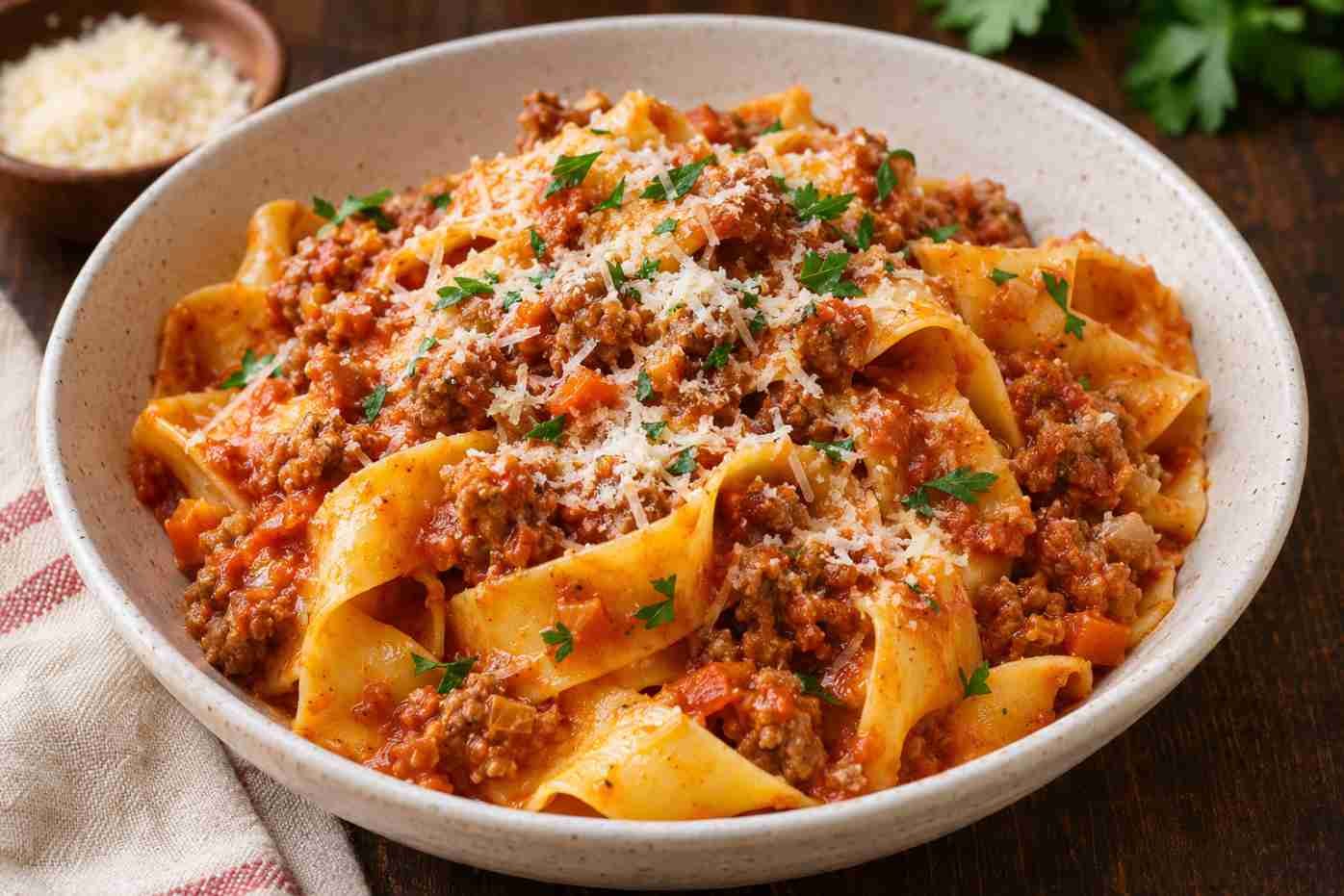
This sausage ragu with pappardelle pasta is built around simple ingredients and a little patience. Rather than using ordinary ground meat, the sauce starts with Italian sausages, which already contain their own blend of seasonings. A slow simmer brings everything together, turning the tomatoes, vegetables, and sausage into a satisfying sauce that tastes as though much more work went into it.
The recipe is particularly good for weekend dinners, family gatherings, or preparing a batch of sauce ahead of a busy week. You can cook the ragu in advance and boil the pasta just before serving.
Sausage Ragu with Pappardelle Pasta Recipe
| Recipe Details | Information |
|---|---|
| Preparation Time | 20 minutes |
| Cooking Time | 1 hour 45 minutes |
| Total Time | 2 hours 5 minutes |
| Servings | 6 |
| Cuisine | Italian-inspired |
| Course | Main Course, Dinner |
| Cooking Method | Stovetop, Slow Simmering |
Ingredients for Sausage Ragu with Pappardelle Pasta
The ingredients are easy to find, and most are everyday kitchen staples. For the best results, choose good-quality sausages with a balanced mixture of meat, fat, and seasoning.
For the Sausage Ragu
- 600 g (1.3 lb) Italian sausages: Sweet or mild sausages, with the casings removed. A mixture of pork and beef sausages also works well.
- 2 tablespoons olive oil: For cooking the vegetables and browning the sausage.
- 1 medium yellow onion: Finely diced.
- 1 medium carrot: Finely chopped or grated.
- 2 celery stalks: Finely diced.
- 4 garlic cloves: Minced.
- 2 tablespoons tomato paste: Adds concentrated tomato flavor and richness.
- 800 g (28 oz) canned crushed tomatoes: Use good-quality tomatoes for a balanced sauce.
- 1/2 cup dry red wine: Optional, for added depth of flavor.
- 3/4 cup low-sodium chicken stock: Helps the sauce simmer without drying out.
- 1 teaspoon dried oregano: Adds an earthy herbal note.
- 1/2 teaspoon fennel seeds: Lightly crushed, if desired.
- 2 fresh thyme sprigs: Or 1/2 teaspoon dried thyme.
- 1 bay leaf: For slow-cooked aroma.
- 1/4 teaspoon red pepper flakes: Optional, for gentle heat.
- Salt and freshly ground black pepper: To taste.
For the Pasta and Serving
- 500 g (about 1.1 lb) dried pappardelle pasta: Wide pasta ribbons that hold a hearty meat sauce beautifully.
- 1/2 cup freshly grated Parmesan cheese: Plus extra for serving, if desired.
- 2 tablespoons fresh parsley: Chopped, for garnish.
- Reserved pasta cooking water: Approximately 1 cup, used as needed to adjust the sauce.
- Extra-virgin olive oil: Optional, for finishing.
Also Read: Beef Cheek Ragu Pasta Recipe
How to Make Sausage Ragu with Pappardelle Pasta
A good sausage ragu is not difficult to prepare, but the order of cooking makes a difference. Browning the meat, softening the vegetables, and allowing the tomato sauce to simmer gently are what give the finished dish its flavor.
Step 1: Prepare the Ingredients
Begin by removing the sausage meat from its casings. Place the meat in a bowl and break it into smaller pieces with your fingers or a fork. Finely dice the onion, carrot, and celery, then mince the garlic. Keeping the vegetables small helps them soften into the sauce rather than remaining as large pieces.
Step 2: Brown the Sausage
Heat 1 tablespoon of olive oil in a large, heavy-bottomed pot or Dutch oven over medium-high heat. Add the sausage meat and spread it across the bottom of the pot. Allow it to cook undisturbed for a couple of minutes before breaking it apart with a wooden spoon. Continue cooking for 6–8 minutes, until lightly browned in places. Transfer the sausage to a plate, leaving the flavorful cooking juices in the pot. The meat will finish cooking later in the sauce.
Step 3: Cook the Vegetables
Reduce the heat to medium-low and add the remaining tablespoon of olive oil if necessary. Add the onion, carrot, and celery. Cook for approximately 8–10 minutes, stirring occasionally, until the vegetables become soft and the onion turns translucent. Avoid rushing this stage. Slowly softened vegetables give the sauce a subtle sweetness that balances the tomatoes. Add the garlic and crushed fennel seeds, then cook for another minute until fragrant.
Step 4: Add the Tomato Paste and Wine
Stir the tomato paste into the vegetables and cook for 1–2 minutes. This helps remove its raw taste and develops a deeper tomato flavor. Pour in the red wine, if using, and scrape the bottom of the pot with a wooden spoon to release any browned bits left from the sausage. Let the wine bubble for 2–3 minutes until noticeably reduced. For an alcohol-free version, replace the wine with an equal quantity of additional chicken stock.
Step 5: Build the Ragu Sauce
Return the browned sausage and any accumulated juices to the pot. Add the crushed tomatoes, chicken stock, oregano, thyme, bay leaf, and red pepper flakes. Stir well and bring the mixture to a gentle simmer. Add a small amount of black pepper, but wait until later to adjust the salt because the sausages may already be well seasoned.
Step 6: Simmer Slowly
Lower the heat so the sauce produces only occasional small bubbles. Cover the pot partially and let the ragu cook for approximately 75–90 minutes, stirring every 15–20 minutes. If the sauce begins sticking or becomes too thick before the meat is tender, add a splash of water or stock. As it cooks, the sausage becomes more tender, the vegetables soften into the tomatoes, and the sauce develops a richer consistency. Remove the thyme stems and bay leaf once cooking is complete.
Step 7: Cook the Pappardelle Pasta
When the ragu is nearly ready, bring a large pot of water to a rolling boil. Season generously with salt and add the pappardelle. Cook according to the package directions until al dente, meaning tender but still slightly firm when bitten. Before draining, reserve about 1 cup of the starchy cooking water. Do not rinse the pasta, as the starch helps the sauce cling to the ribbons.
Step 8: Combine the Pasta and Ragu
Taste the ragu and adjust the salt and pepper as needed. Add the drained pappardelle directly to the sauce. Pour in a few tablespoons of reserved pasta water and gently toss everything together over low heat for about 1 minute. Add more pasta water as necessary until the sauce coats the ribbons smoothly. The finished dish should be moist and glossy, without excess liquid collecting at the bottom of the pot.
Step 9: Serve and Garnish
Divide the pappardelle among six warm serving bowls. Finish with freshly grated Parmesan, chopped parsley, and a little extra-virgin olive oil if desired. Serve immediately while the pasta is hot and the sauce is coating every ribbon.
What You Can Do Better
There are a few small adjustments that make a noticeable difference to homemade sausage ragu. They are not complicated techniques, but they help the sauce taste fuller and give the pasta a better texture.
Choose Sausages with Good Flavor
Since sausage is the main ingredient, its quality matters. Look for sausages made with a high proportion of meat and a sensible amount of seasoning. Italian-style pork sausage is particularly suitable, but a pork-and-beef combination gives the sauce a slightly more robust flavor. If using strongly seasoned sausages, reduce the additional fennel and herbs.
Brown the Meat Before Simmering
Do not simply drop the raw sausage into the tomato sauce. Browning creates flavorful bits on the surface of the meat and at the bottom of the pot. Those browned bits dissolve into the sauce when liquid is added, improving its overall depth.
Keep the Sauce at a Gentle Simmer
A ragu should cook slowly rather than boil aggressively. High heat can cause the tomatoes to catch on the bottom of the pot and reduce the liquid too quickly. Gentle cooking gives the ingredients time to combine without drying out the meat.
Save the Pasta Water
Reserved pasta water is one of the simplest ways to improve the finished dish. Its starch helps the sauce form a light coating around the pappardelle. Add it gradually rather than pouring in the entire cup at once.
Finish Cooking the Pasta in the Sauce
Serving plain pasta with a spoonful of ragu on top is convenient, but tossing them together produces a more consistent result. Even 30–60 seconds in the sauce helps the pasta absorb flavor and distributes the sausage throughout the dish.
Also Read: Chicken Cassoulet
Easy Variations and Substitutions
The basic recipe is flexible enough to accommodate different ingredients and preferences without losing its comforting character.
- Spicy Sausage Ragu: Replace half of the mild sausages with hot Italian sausages and add extra red pepper flakes.
- Chicken Sausage Ragu: Use chicken sausages instead of pork or beef for a different flavor and potentially lower fat content, depending on the product.
- Mushroom and Sausage Ragu: Add 200 g of finely chopped mushrooms after the vegetables soften. Cook until their moisture evaporates before continuing.
- Alcohol-Free Ragu: Replace the red wine with chicken stock and add a small splash of balsamic vinegar near the end if the sauce needs brightness.
- Extra Vegetable Ragu: Add finely diced zucchini or a handful of chopped spinach during the final 10 minutes of simmering.
- Different Pasta Shapes: Tagliatelle, fettuccine, rigatoni, or mafaldine can replace pappardelle. Choose a shape that holds a thick sauce well.
What to Serve with Sausage Ragu
Sausage ragu with pappardelle is quite filling, so the best side dishes are usually simple. A green salad dressed with olive oil and lemon juice adds freshness and balances the richness of the meat sauce. Garlic bread or toasted sourdough is useful for soaking up any sauce left in the bowl.
Roasted broccoli, sautéed green beans, or grilled zucchini are also good choices. For a more complete Italian-inspired meal, serve smaller portions of pasta followed by a light dessert such as fresh fruit or lemon sorbet.
Storage, Freezing, and Reheating
Refrigerating Leftovers
Allow the ragu to cool promptly and transfer it to an airtight container. Refrigerate within two hours of cooking and use within 3–4 days. For the best pasta texture, store the ragu and cooked pappardelle separately whenever possible.
Freezing the Ragu
The sauce freezes particularly well. Divide it into meal-sized portions and place in freezer-safe airtight containers, leaving some room for expansion. Freeze for up to 3 months for best quality. Thaw overnight in the refrigerator before reheating.
Reheating
Reheat the ragu in a saucepan over medium-low heat, stirring occasionally until steaming hot throughout. Add a splash of water or stock if it has thickened too much. When reheating previously mixed pasta, add a little water and warm gently, stirring until heated through. Avoid repeatedly reheating the same batch.
Nutritional Information
The following nutritional information is an approximate estimate for one of six servings, including the pasta and Parmesan cheese. Actual values depend on the type of sausage, fat content, pasta brand, and amount of cheese used.
| Nutrient | Estimated Amount Per Serving |
|---|---|
| Calories | Approximately 730 kcal |
| Carbohydrates | 75 g |
| Protein | 34 g |
| Total Fat | 32 g |
| Saturated Fat | 11 g |
| Dietary Fiber | 7 g |
| Sugars | 10 g |
| Sodium | Approximately 1,000 mg |
| Cholesterol | Approximately 90 mg |
Nutrition disclaimer: These are illustrative estimates rather than values calculated from specific product labels or laboratory testing. For dietary tracking, calculate the recipe using the exact ingredients and serving sizes used.
Also Read: Kale and Mushroom Pasta
Frequently Asked Questions
Can I Make Sausage Ragu Ahead of Time?
Yes. In fact, the sauce often tastes even better the following day because the flavors have more time to develop. Prepare it a day ahead, refrigerate properly, and reheat before tossing with freshly cooked pappardelle.
Can I Use Regular Ground Pork Instead of Sausages?
Yes, although the flavor will be different because plain ground pork does not contain the seasonings found in Italian sausage. Add a little extra fennel, oregano, garlic, salt, and pepper to compensate.
Do I Have to Use Pappardelle?
No. Pappardelle is especially good with thick meat sauces because its broad ribbons hold the ragu well, but tagliatelle, rigatoni, or fettuccine are equally practical alternatives.
Can I Cook the Ragu Without Wine?
Absolutely. Replace the wine with an equal amount of low-sodium chicken stock. The sauce will still develop plenty of flavor from browned sausage, vegetables, tomatoes, and slow cooking.
How Do I Fix Ragu That Is Too Thick?
Add small amounts of warm stock, water, or reserved pasta cooking water while stirring. Continue until the sauce reaches a consistency that coats the pasta without becoming watery.
How Do I Reduce the Acidity of the Tomato Sauce?
Start with good-quality canned tomatoes and allow the sauce to simmer properly. The naturally sweet carrot and onion help balance acidity. If the sauce still tastes too sharp, a small pinch of sugar can help, although it is usually unnecessary.