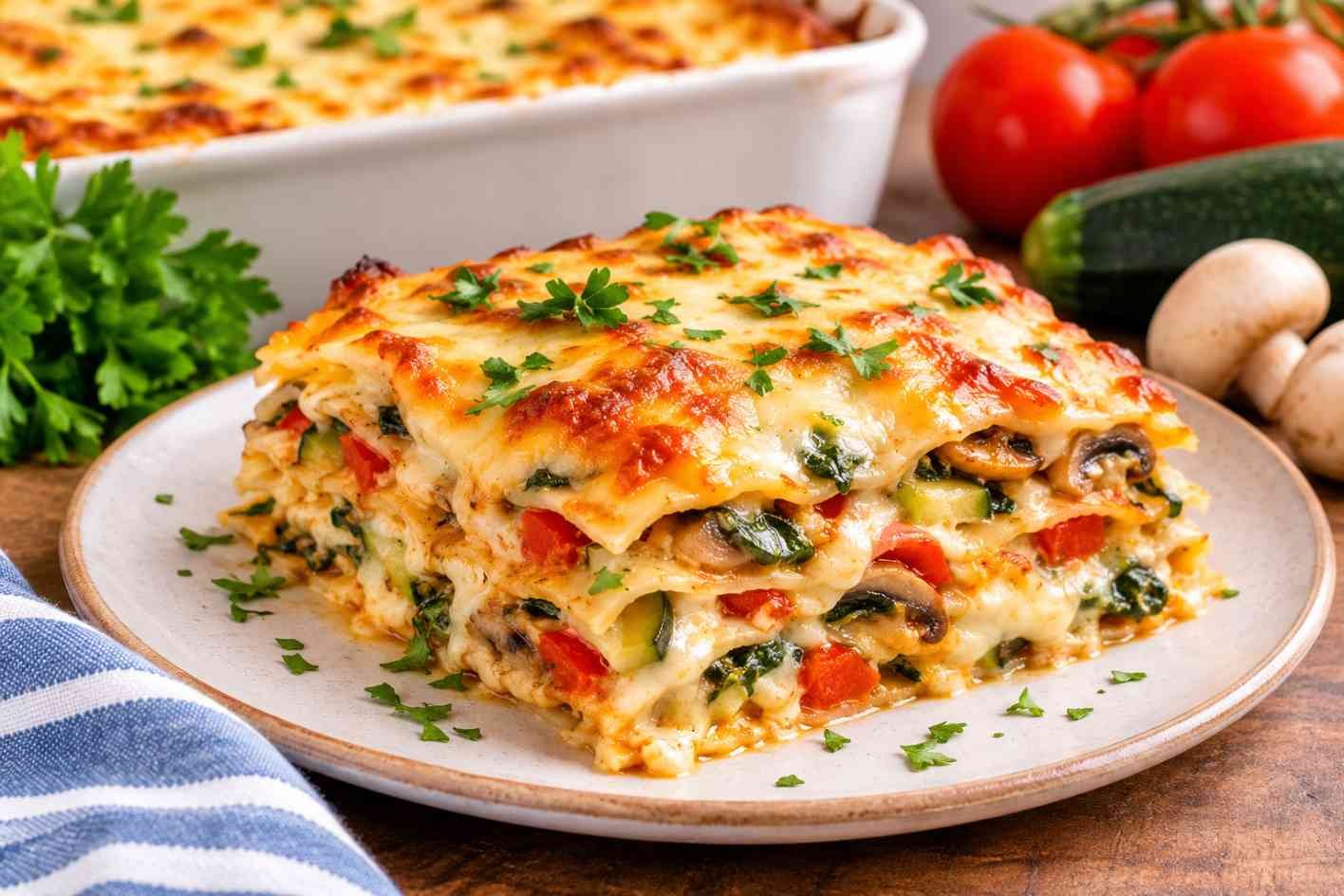
This vegetable lasagna has layers of tender lasagna noodles, a colorful vegetable filling, creamy homemade white sauce, and plenty of mozzarella and Parmesan cheese. Unlike traditional lasagna made with meat and tomato-based sauce, this version has a rich, smooth texture with a mild garlic and cheese flavor. The vegetables add freshness and a little sweetness, while the white sauce brings all the layers together. It is a satisfying vegetarian dinner that works well for family meals, weekend cooking, or when you want something a little different from your usual pasta recipes. Although it takes some preparation, each step is simple, and you can even assemble the dish ahead of time.
Recipe Overview
| Details | Information |
|---|---|
| Recipe Name | Best Vegetable Lasagna |
| Preparation Time | 30 minutes |
| Cooking Time | 45 minutes |
| Total Time | 1 hour 15 minutes |
| Servings | 8 |
| Course | Main Course, Dinner |
| Cuisine | Italian-Inspired |
| Diet | Vegetarian |
| Cooking Method | Baking |
What Makes This Vegetable Lasagna Special?
The best part of this recipe is the balance between the vegetables, pasta, and creamy sauce. Instead of using just one or two vegetables, it combines zucchini, mushrooms, bell peppers, spinach, and onions for different textures and flavors. The vegetables are cooked before layering, which helps remove excess moisture and prevents the finished lasagna from becoming watery. The homemade white sauce is another important part of the dish. It is prepared with butter, flour, milk, garlic, and Parmesan, creating a smooth and creamy consistency. When baked with lasagna sheets and mozzarella, the top becomes beautifully golden while the inside stays soft and cheesy.
Also Read: Pumpkin Lasagna
Ingredients for Vegetable Lasagna
You will need a few basic ingredients to prepare this homemade vegetable lasagna. For the best results, use fresh vegetables and grate the cheese yourself if possible.
For the Vegetable Filling
- 2 tablespoons olive oil
- 1 medium onion, finely chopped
- 3 garlic cloves, minced
- 1 medium zucchini, diced
- 1 cup mushrooms, sliced
- 1 red bell pepper, chopped
- 1 cup fresh spinach, roughly chopped
- 1 small carrot, grated
- 1 teaspoon dried oregano
- 1/2 teaspoon dried basil
- 1/2 teaspoon black pepper
- 1/2 teaspoon salt, or to taste
For the White Sauce
- 4 tablespoons unsalted butter
- 4 tablespoons all-purpose flour
- 3 cups whole milk
- 2 garlic cloves, finely minced
- 1/4 teaspoon ground nutmeg
- 1/2 teaspoon black pepper
- 1/2 teaspoon salt, or to taste
- 1/2 cup grated Parmesan cheese
For Assembling the Lasagna
- 9-12 lasagna sheets, preferably oven-ready
- 1 cup ricotta cheese
- 2 cups shredded mozzarella cheese
- 1/4 cup grated Parmesan cheese
- 1 tablespoon chopped fresh parsley or basil, optional
How to Make the Best Vegetable Lasagna
Step 1: Prepare the Vegetables
Start by washing and preparing all the vegetables. Chop the onion, bell pepper, zucchini, and mushrooms into small pieces so they spread evenly between the pasta layers. Heat olive oil in a large skillet over medium heat. Add the chopped onion and cook for 2-3 minutes until it becomes soft. Stir in the minced garlic and cook for another 30 seconds. Add the carrot, zucchini, mushrooms, and bell pepper. Cook for about 6-8 minutes, stirring occasionally, until the vegetables soften and release some of their moisture. Add the spinach, oregano, basil, salt, and black pepper. Cook until the spinach wilts and most of the excess liquid has evaporated. Remove the skillet from the heat and set the vegetable mixture aside.
Step 2: Make the Creamy White Sauce
Place a saucepan over medium-low heat and melt the butter. Add the minced garlic and cook briefly until fragrant. Stir in the flour and whisk continuously for about 1 minute. The mixture should look smooth and slightly bubbly. Slowly pour in the milk while whisking to prevent lumps from forming. Continue stirring as the sauce heats and begins to thicken. Add salt, black pepper, and ground nutmeg. Lower the heat and stir in the Parmesan cheese until it melts completely. The sauce should be creamy enough to coat the back of a spoon but still easy to spread. Remove it from the heat and keep it aside. If it becomes too thick while resting, add a small splash of milk and stir.
Step 3: Prepare the Lasagna Sheets
If you are using oven-ready lasagna sheets, you can use them directly according to the package instructions. If you have regular dried lasagna sheets, boil them in salted water until just al dente. Drain carefully and arrange them on a clean surface so they do not stick together. Avoid overcooking the pasta because it will continue cooking in the oven.
Step 4: Start Layering the Lasagna
Preheat your oven to 375°F (190°C). Take a 9 x 13-inch baking dish and spread a thin layer of white sauce across the bottom. Arrange a layer of lasagna sheets over the sauce, making sure they cover most of the surface without leaving large gaps. Spread about one-third of the cooked vegetable mixture over the pasta. Add small spoonfuls of ricotta cheese and sprinkle some mozzarella on top. Finish with a generous layer of white sauce, spreading it evenly over the filling.
Step 5: Add the Remaining Layers
Repeat the layering process two more times using the remaining lasagna sheets, vegetables, ricotta, mozzarella, and white sauce. Try to distribute the vegetables evenly so every portion has a good mix of ingredients. Finish with a final layer of lasagna sheets covered completely with the remaining white sauce. Sprinkle the remaining mozzarella and Parmesan cheese over the top. Make sure the edges of the pasta are covered with sauce, as exposed edges can become dry during baking.
Step 6: Bake Until Golden and Bubbly
Cover the baking dish loosely with aluminum foil and place it in the preheated oven. Bake for approximately 30-35 minutes. Remove the foil and continue baking for another 10-15 minutes, or until the cheese on top becomes golden and the sauce bubbles around the edges. If you prefer a more browned cheese topping, you can broil it briefly while keeping a close eye on it.
Step 7: Let It Rest Before Serving
Remove the lasagna from the oven and allow it to rest for at least 15-20 minutes before slicing. This step is important because it gives the sauce time to settle and helps the layers hold their shape. Garnish with chopped parsley or fresh basil if desired. Cut into squares and serve warm while the cheese is still soft and delicious.
Also Read: Pots de Crème
What You Can Do Better
Cook the vegetables properly: Vegetables such as zucchini and mushrooms release plenty of water during cooking. Sauté them until most of the excess moisture evaporates before adding them to the lasagna. This makes a big difference in the final texture.
Make a lump-free white sauce: Add the milk gradually while whisking the flour and butter mixture. Pouring all the milk at once can make the sauce difficult to smooth out. Keep stirring over medium-low heat for a creamy result.
Do not leave the pasta uncovered: If you are using oven-ready lasagna sheets, make sure every sheet is covered with enough white sauce. The pasta needs moisture to soften properly during baking.
Choose vegetables with different textures: Mushrooms provide a meaty texture, zucchini adds softness, bell peppers bring sweetness, and spinach gives the filling a fresh flavor. You can also add broccoli or sweet corn if you want more variety.
Use freshly grated cheese: Freshly grated mozzarella and Parmesan usually melt more smoothly than some pre-shredded varieties. A combination of both gives the top a nice golden finish and a rich cheese flavor.
Allow enough resting time: Cutting the lasagna immediately after baking can cause the layers to slide apart. Give it at least 15-20 minutes to settle before serving.
Easy Variations and Substitutions
Add more vegetables: Broccoli, sweet corn, eggplant, roasted pumpkin, and finely chopped cauliflower can all work well in this recipe. Just cook vegetables with high water content before layering.
Use cottage cheese: If ricotta is unavailable, cottage cheese can be used as a substitute. Drain excess liquid first and blend it slightly for a smoother filling.
Make it extra cheesy: Add a little provolone or cheddar along with mozzarella for a stronger cheese flavor. Avoid adding too much cheese to the white sauce, as it can become overly thick.
Try whole-wheat lasagna sheets: Whole-wheat pasta is a good alternative if you prefer a slightly heartier texture. Follow the cooking instructions on the package.
Make it gluten-free: Use certified gluten-free lasagna sheets and replace the regular flour in the white sauce with a suitable gluten-free flour blend.
Also Read: Chocolate Pudding Pots
What to Serve with Vegetable Lasagna
Vegetable lasagna is filling enough to serve on its own, but a few simple sides can make the meal feel more complete. A fresh green salad with a light lemon dressing balances the creamy sauce nicely. Garlic bread or toasted baguette slices are also great choices for enjoying any extra white sauce on the plate. You can serve it with roasted vegetables, sautéed green beans, or a simple tomato and cucumber salad. If you are preparing dinner for guests, a light soup makes a nice starter before the lasagna.
Storage and Reheating Instructions
Refrigerator: Allow leftover lasagna to cool before transferring it to an airtight container. Store it in the refrigerator for up to 3-4 days.
Freezer: You can freeze individual portions or the entire assembled and baked lasagna. Wrap it tightly in freezer-safe packaging and store for up to 2-3 months for the best quality. Thaw overnight in the refrigerator before reheating.
Reheating: Place a portion in an oven-safe dish, cover loosely with foil, and heat at 350°F (175°C) until warmed through. Add a small spoonful of milk or white sauce if the pasta seems dry. Individual portions can also be reheated in the microwave in short intervals.
Make-Ahead Instructions
This vegetable lasagna is a useful make-ahead dinner because most of the preparation can be completed before baking. Cook the vegetables, prepare the white sauce, and assemble the layers in your baking dish. Cover it tightly and refrigerate for up to 24 hours before baking. When you are ready to cook, allow the dish to sit at room temperature briefly while the oven preheats. Since a cold lasagna takes longer to heat through, check that the center is thoroughly hot before serving and adjust the baking time as needed.
Nutritional Information
The following nutritional information is an estimate based on the ingredients listed above and eight servings. Actual values may vary depending on the type of pasta, cheese, and milk you use, as well as the portion size.
| Nutrient | Approximate Amount Per Serving |
|---|---|
| Calories | 470 kcal |
| Total Fat | 25 g |
| Saturated Fat | 14 g |
| Cholesterol | 75 mg |
| Sodium | 650 mg |
| Total Carbohydrates | 42 g |
| Dietary Fiber | 4 g |
| Total Sugars | 7 g |
| Protein | 22 g |
Also Read: Easy Tiramisu Recipe
Frequently Asked Questions
Can I make vegetable lasagna without ricotta cheese?
Yes. You can replace ricotta with cottage cheese, cream cheese, or a thick homemade paneer-based filling. Cottage cheese is a convenient option, but drain it well to avoid adding extra moisture.
Why does my vegetable lasagna become watery?
Excess moisture from vegetables such as zucchini and mushrooms is one of the most common reasons. Cook the vegetables before layering and allow the liquid to evaporate. Also avoid making the white sauce too thin.
Can I use regular lasagna sheets instead of oven-ready sheets?
Yes. Regular lasagna sheets work perfectly well. Boil them until just al dente, drain them, and allow them to cool slightly before assembling the dish. Always follow the cooking instructions on the package.
Can I prepare vegetable lasagna a day in advance?
Yes. Assemble the entire dish, cover it tightly, and refrigerate for up to 24 hours. Bake it when needed, allowing additional time if the dish is still cold from the refrigerator.
How do I know when vegetable lasagna is fully cooked?
The cheese should be melted and golden, with the sauce bubbling around the edges. Insert a knife into the center to check that the pasta sheets are tender. If the knife passes through easily, the lasagna is ready.
Can I make this vegetable lasagna vegan?
Yes. Use plant-based butter, unsweetened dairy-free milk, vegan mozzarella, and a dairy-free ricotta alternative. You can thicken the white sauce with flour as usual, but the final taste and texture will depend on the dairy-free products you choose.
What is the best way to cut vegetable lasagna into neat slices?
Let the lasagna rest for at least 15-20 minutes after baking. Use a sharp knife to cut through the layers and a wide spatula to lift each portion carefully.