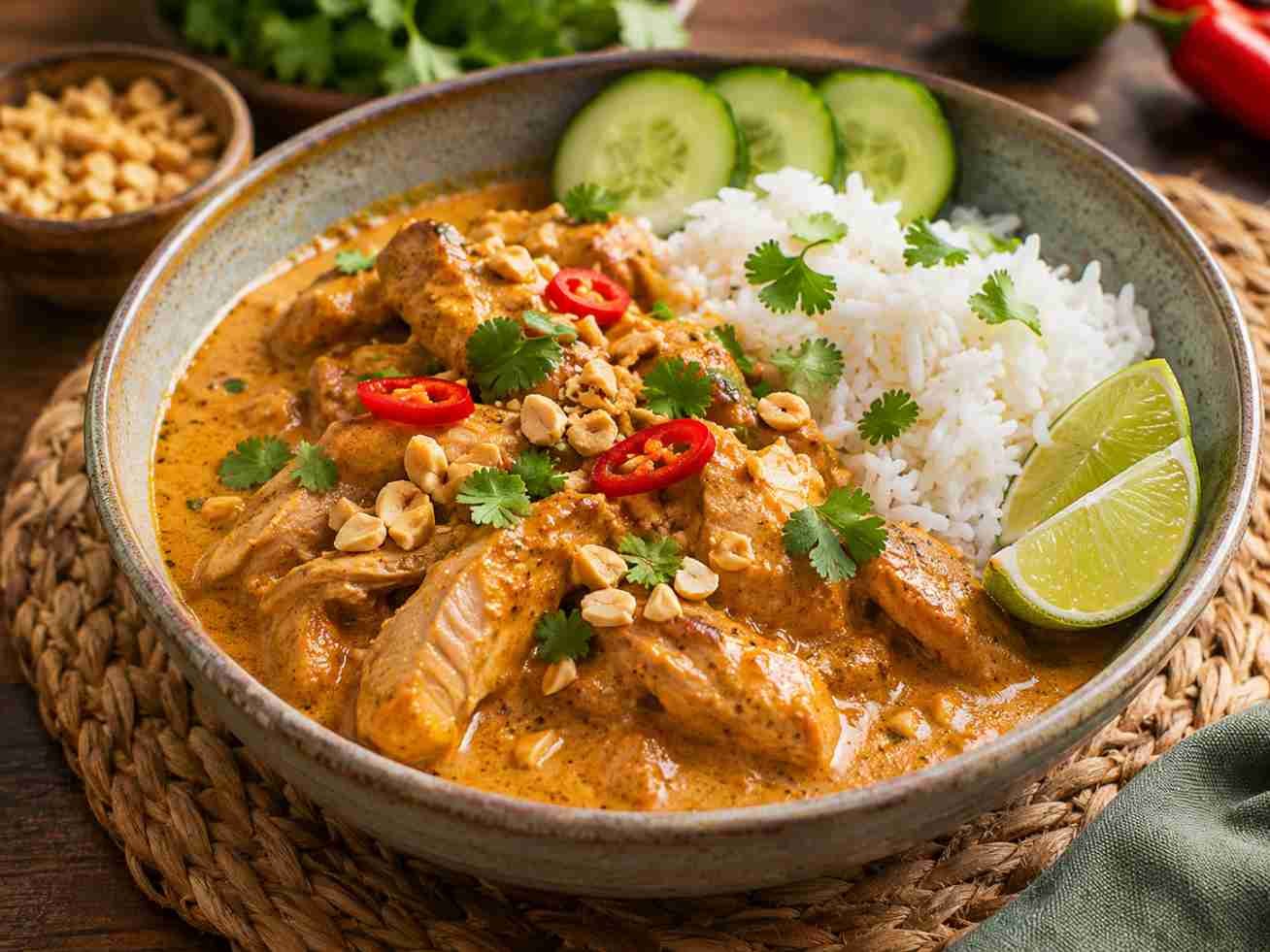
Chicken Satay Curry is the kind of dinner that makes an ordinary bowl of rice feel like something worth looking forward to. Tender chicken pieces are coated in a fragrant blend of spices, lightly browned in a pan, and finished in a thick peanut and coconut sauce. The result is creamy, nutty, gently spicy, and full of flavor without being overwhelmingly hot.
Inspired by the flavors of Southeast Asian satay, this curry turns the familiar combination of seasoned chicken and peanut sauce into a satisfying one-pan meal. There are no skewers to prepare and no complicated cooking techniques to master. Everything comes together on the stovetop, making it a practical choice for a weekend dinner or a meal you can prepare ahead of a busy evening.
The peanut sauce is what makes this dish special. Roasted peanuts provide a deep, toasted flavor, coconut milk softens the spices, and a little lime juice brings everything into balance. Serve it with steamed jasmine rice, fresh cucumber, and an extra spoonful of sauce.
Chicken Satay Curry Recipe Overview
| Details | Information |
|---|---|
| Recipe | Chicken Satay Curry |
| Cuisine | Southeast Asian-inspired |
| Course | Main Course |
| Preparation Time | 20 minutes |
| Marinating Time | 30 minutes |
| Cooking Time | 30 minutes |
| Total Time | 1 hour 20 minutes |
| Servings | 4 |
| Difficulty | Easy to Moderate |
| Spice Level | Mild to Medium, Adjustable |
Ingredients for Chicken Satay Curry
This recipe uses pantry spices alongside a few ingredients that give the sauce its characteristic peanut flavor. Chicken thighs are particularly suitable because they remain tender during simmering, although chicken breast can also be used with a shorter cooking time.
For the Chicken and Marinade
- 700 g boneless, skinless chicken thighs, cut into medium-sized pieces
- 1 teaspoon ground coriander
- 1 teaspoon ground cumin
- 1/2 teaspoon turmeric powder
- 1 teaspoon mild curry powder
- 1/2 teaspoon smoked or sweet paprika
- 1/2 teaspoon chili powder, or according to taste
- 1 teaspoon brown sugar
- 1 tablespoon soy sauce
- 1 tablespoon neutral cooking oil
- 1/2 teaspoon salt
For the Peanut Curry Sauce
- 1 tablespoon neutral cooking oil
- 1 medium onion, finely chopped
- 4 garlic cloves, minced
- 1 tablespoon freshly grated ginger
- 1 small red chili, finely chopped
- 3 tablespoons natural peanut butter, preferably unsweetened
- 1/3 cup roasted unsalted peanuts, finely chopped
- 400 ml full-fat coconut milk
- 150 ml chicken stock
- 1 tablespoon soy sauce
- 1 tablespoon brown sugar
- 1 tablespoon fresh lime juice, plus extra to taste
- 1 teaspoon mild curry powder
- 1 stalk lemongrass, bruised, optional
- Salt, as needed
For Garnishing and Serving
- 2 tablespoons chopped roasted peanuts
- Fresh coriander leaves
- Thinly sliced red chili, optional
- Fresh lime wedges
- Steamed jasmine rice or coconut rice
- Sliced cucumber, optional
Also Read: Chicken Satay Recipe
How to Make Chicken Satay Curry
The cooking process is straightforward: season the chicken, brown it for flavor, build the peanut sauce, and simmer everything gently until the chicken is cooked and the sauce has thickened. Keep the heat under control once the coconut milk goes in, as aggressive boiling can make the sauce oily.
Step 1: Prepare the Chicken Marinade
Place the chicken pieces in a large mixing bowl. Add the ground coriander, cumin, turmeric, curry powder, paprika, chili powder, brown sugar, soy sauce, cooking oil, and salt. Mix until every piece is evenly coated.
Cover the bowl and refrigerate for at least 30 minutes. If you have more time, allow the chicken to marinate for 2 to 4 hours. The salt and seasonings will have more time to work into the surface of the meat. You can also marinate the chicken overnight in the refrigerator.
Step 2: Brown the Marinated Chicken
Heat a large, heavy-bottomed skillet or sauté pan over medium-high heat. Add the marinated chicken in a single layer, working in two batches if necessary. Avoid overcrowding the pan because the chicken will release moisture and steam rather than develop a browned surface.
Cook for approximately 2 minutes per side, just until the outside develops golden-brown spots. The chicken does not need to cook completely at this stage because it will finish cooking in the sauce. Transfer it to a plate and set aside.
Step 3: Cook the Aromatics
Reduce the heat to medium and add 1 tablespoon of oil to the same pan. Add the chopped onion and cook for 3 to 4 minutes, stirring occasionally, until softened and lightly golden.
Add the garlic, ginger, and chopped red chili. Stir continuously for another minute until fragrant. Sprinkle in the remaining teaspoon of curry powder and cook for about 20 seconds. This brief cooking step helps release the aroma of the spices without allowing them to burn.
Step 4: Make the Peanut Curry Sauce
Lower the heat slightly. Add the peanut butter, finely chopped peanuts, soy sauce, and brown sugar. Stir the ingredients into the onion mixture, then gradually pour in the chicken stock while stirring to loosen the peanut butter.
Pour in the coconut milk and mix until the sauce is smooth and evenly combined. Add the bruised lemongrass stalk if using. Bring the mixture to a gentle simmer. The sauce should look creamy and pourable rather than excessively thick at this point.
Step 5: Simmer the Chicken
Return the browned chicken and any accumulated juices to the pan. Stir gently until the chicken is coated with the peanut sauce. Reduce the heat to medium-low and simmer uncovered for approximately 12 to 15 minutes, stirring occasionally to prevent the sauce from sticking to the bottom.
As the curry cooks, the sauce will gradually thicken and cling to the chicken. Check the largest piece of meat with a food thermometer. The chicken should reach an internal temperature of 74°C (165°F) before serving.
Step 6: Adjust the Flavor and Consistency
Remove the lemongrass stalk. Stir in the fresh lime juice and taste the sauce. If it seems too rich, add a little more lime juice. If the peanuts taste slightly bitter, a small pinch of brown sugar may help round out the flavor. Add salt only after tasting, as the soy sauce and chicken stock already contribute seasoning.
If the curry is too thick, stir in a few tablespoons of warm water or stock. If it is too thin, allow it to simmer uncovered for another 2 to 3 minutes, stirring frequently.
Step 7: Garnish and Serve
Turn off the heat and allow the curry to rest for 2 minutes. Scatter chopped roasted peanuts and fresh coriander over the top. Add sliced red chili for extra heat and serve with lime wedges.
Spoon the curry over freshly cooked jasmine rice, making sure to include plenty of peanut sauce. A few slices of cool cucumber on the side provide a refreshing contrast to the warm spices and rich coconut milk.
Also Read: Satay Chicken Legs with Peanut Sauce
What You Can Do Better
A few small adjustments can noticeably improve the finished curry. The quality of the peanuts, the temperature of the pan, and the balance between sweet, salty, and sour flavors all make a difference.
Use Chicken Thighs for Better Texture
Boneless chicken thighs are more forgiving than breast meat because their higher fat content helps them stay juicy during simmering. If you prefer chicken breast, brown it briefly and add it during the last 5 to 7 minutes of sauce simmering. Check that it reaches 74°C (165°F) without cooking it longer than necessary.
Choose Natural Peanut Butter
Look for peanut butter made primarily from roasted peanuts, without added sweeteners. It gives the curry a cleaner roasted flavor and lets you control the sweetness. If using sweetened peanut butter, reduce the brown sugar in the sauce and adjust only after tasting.
Do Not Skip Browning the Chicken
It may be tempting to add raw chicken directly to the sauce, but browning creates additional savory flavor. Give the chicken enough space in the pan and avoid turning it repeatedly. A few well-browned edges are more useful than cooking it all the way through before simmering.
Keep the Peanut Sauce Gently Simmering
Peanut butter and coconut milk make a naturally rich sauce, but high heat can cause the fat to separate. Once the coconut milk is added, keep the curry at a gentle simmer and stir occasionally. A little stock can help loosen the sauce if it becomes too thick.
Balance Richness with Acidity
Lime juice is more than a finishing garnish. Its acidity cuts through the coconut milk and peanut butter, keeping the sauce from tasting heavy. Add it near the end of cooking, taste, and increase it gradually rather than adding too much at once.
Control the Spice Instead of Guessing
Different chili powders and fresh chilies vary considerably in strength. Start with a modest amount when preparing the marinade and sauce. You can increase the heat with extra chopped chili or a pinch of chili powder toward the end, but reducing excessive heat after cooking is more difficult.
Ingredient Substitutions and Variations
Chicken Satay Curry is flexible enough to accommodate several ingredient changes. The main thing is to preserve the balance of savory spices, roasted peanuts, coconut milk, and a little acidity.
| Ingredient | Substitute | Cooking Advice |
|---|---|---|
| Chicken thighs | Chicken breast | Reduce simmering time to prevent dryness. |
| Natural peanut butter | Regular creamy peanut butter | Reduce added sugar if the peanut butter is sweetened. |
| Coconut milk | Light coconut milk | The sauce will be thinner and less creamy. |
| Chicken stock | Vegetable stock | Use a lightly seasoned variety. |
| Brown sugar | Palm sugar or white sugar | Start with a smaller quantity and adjust to taste. |
| Lime juice | Lemon juice | Add gradually, as the flavor is slightly different. |
| Fresh red chili | Chili flakes | Start with 1/4 teaspoon and increase as needed. |
| Lemongrass | Omit | The curry remains flavorful without it. |
Make It with Vegetables
For a more substantial meal, add vegetables such as red bell pepper, green beans, carrots, or broccoli. Cut them into small pieces and add them during the final 6 to 8 minutes of simmering, adjusting for the vegetable and desired tenderness. They should remain slightly firm rather than becoming completely soft.
Try a Vegetarian Satay Curry
Replace the chicken with 400 g of firm tofu and 250 g of mixed vegetables. Use vegetable stock instead of chicken stock. For better texture, pat the tofu dry, cut it into cubes, and pan-fry it until golden before adding it to the finished peanut sauce. Check that your soy sauce and other seasonings are suitable for your dietary preferences.
Make a Thicker Satay Sauce
For a curry that resembles a generous peanut coating rather than a saucy stew, reduce the chicken stock to 100 ml. Allow the sauce to simmer until it thickens before adding the cooked chicken back to the pan. Keep in mind that the sauce will thicken further as it cools.
Also Read: Chicken Gyros
What to Serve with Chicken Satay Curry
Rice is the most practical accompaniment because it absorbs the sauce without competing with the spices. Jasmine rice is particularly suitable for its soft texture and delicate aroma. Coconut rice is another good choice, although the overall meal will be noticeably richer.
For something lighter, serve the curry with steamed green beans, a cucumber salad dressed with lime juice, or lightly sautéed bok choy. Fresh vegetables bring a welcome contrast to the creamy peanut sauce. Rice noodles also work well, especially if you loosen the curry with a few tablespoons of stock before serving.
How to Store and Reheat Chicken Satay Curry
Refrigerating
Allow the curry to cool promptly, transfer it to a shallow airtight container, and refrigerate within 2 hours of cooking. Store at 4°C (40°F) or below and use within 3 to 4 days. For meal preparation, keep rice in a separate container so the grains do not absorb all the sauce.
Freezing
Chicken Satay Curry can be frozen for up to 2 to 3 months for best quality. Divide it into individual portions and place them in freezer-safe containers, leaving a little room for expansion. Thaw overnight in the refrigerator before reheating. Coconut-based sauces may look slightly separated after thawing, but gentle stirring often brings them back together.
Reheating
Transfer the curry to a saucepan and warm over medium-low heat, stirring regularly. Add a splash of water or stock to loosen the peanut sauce if needed. Reheat until the chicken and sauce are steaming hot throughout, reaching 74°C (165°F). Reheat only the portion you plan to eat.
Chicken Satay Curry Nutritional Information
The following values are approximate estimates for one serving when the recipe is divided into four equal portions. They include the chicken, marinade, and peanut coconut sauce but exclude rice, cucumber, and optional garnishes. Actual nutritional values will vary depending on the chicken cut, peanut butter, coconut milk, and quantities used.
| Nutrient | Approximate Amount Per Serving |
|---|---|
| Calories | 760 kcal |
| Protein | 39 g |
| Total Fat | 59 g |
| Saturated Fat | 29 g |
| Carbohydrates | 24 g |
| Dietary Fiber | 4 g |
| Total Sugars | 10 g |
| Sodium | 1,100 mg |
| Cholesterol | 145 mg |
Nutrition note: These figures are estimates, not laboratory-tested values. For a more precise calculation, use the nutrition labels of your actual ingredients. Full-fat coconut milk and peanut butter contribute much of the fat and energy in this recipe. A smaller serving alongside plenty of vegetables is one way to enjoy the dish as part of a balanced meal.
Also Read: Chicken Tinga Recipe
Frequently Asked Questions
Is Chicken Satay Curry the Same as Traditional Chicken Satay?
No. Traditional chicken satay generally consists of marinated meat threaded onto skewers and grilled, often over charcoal, then served with a dipping sauce. Chicken Satay Curry takes inspiration from those seasonings and peanut sauce but cooks the chicken directly in a curry-style sauce. It is a convenient adaptation rather than a replacement for the traditional grilled dish.
Can I Make Chicken Satay Curry Without Coconut Milk?
Yes, although the texture and flavor will change. You can use additional chicken stock and a little extra peanut butter to make a lighter sauce. The result will be more intensely peanut-flavored and less creamy. Avoid adding too much stock at once, as the sauce can become watery.
Can I Prepare the Curry Ahead of Time?
Yes. The chicken can be marinated the night before, and the finished curry can be refrigerated for later meals. The flavors often become more integrated after a few hours. When reheating, add a little water or stock because the peanut sauce tends to thicken in the refrigerator.
Is Chicken Satay Curry Very Spicy?
It does not have to be. The heat depends on the type and quantity of chili used. For a mild version, omit the fresh red chili and use only a small pinch of chili powder. The coriander, cumin, turmeric, and curry powder will still give the dish plenty of flavor.
Can I Use Crunchy Peanut Butter?
Absolutely. Crunchy peanut butter adds small pieces of peanut throughout the sauce. It is a good option if you enjoy extra texture. You can also use smooth peanut butter and add chopped roasted peanuts at the end for more noticeable crunch.
How Do I Fix a Peanut Sauce That Is Too Thick?
Add warm chicken stock or water, one tablespoon at a time, while stirring over low heat. Continue until the sauce reaches your preferred consistency. Remember that peanut sauces naturally become thicker as they cool, so it is usually better to keep the curry slightly looser while it is still on the stove.
Does Chicken Satay Curry Contain Gluten?
It can be prepared without gluten-containing ingredients, but ordinary soy sauce often contains wheat. Choose a certified gluten-free soy sauce or tamari, and check the labels on your curry powder, peanut butter, and chicken stock. The recipe also contains peanuts and coconut, so it is not suitable for everyone with food allergies.