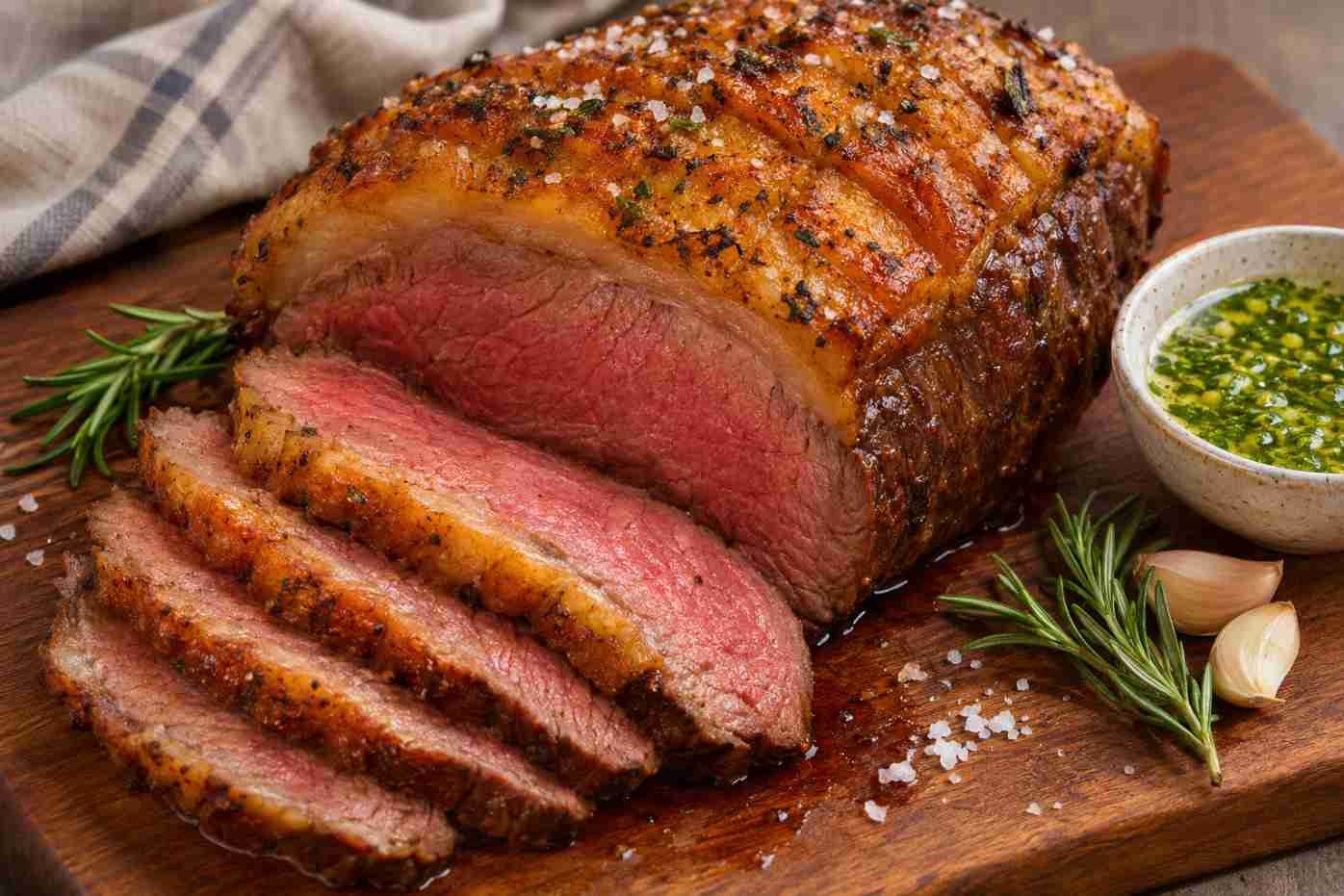
A good rump cap roast doesn’t need a complicated marinade or a cupboard full of spices. Give this cut of beef a little salt, some patience in the oven, and enough time to rest, and you’ll have tender slices with a deep, beefy flavour and a beautifully browned layer of fat on top. It’s the kind of roast that feels special enough for Sunday lunch but is straightforward enough to make whenever you have a few people coming over for dinner.
Rump cap, also known as picanha, sirloin cap, or coulotte, is especially popular in Brazilian cooking. What makes it different from many other roasting cuts is the thick layer of fat covering one side. As the beef cooks, some of that fat renders and adds richness to the meat. The trick is to cook it gently and finish it with high heat rather than blasting it in a hot oven from beginning to end.
This recipe uses a slow-roasting method followed by a quick blast under the broiler. The result is juicy, rosy beef with a golden fat cap. Serve it with roast potatoes, vegetables, and a spoonful of herb sauce, and there isn’t much else you need.
Rump Cap Roast Recipe Details
| Details | Information |
|---|---|
| Recipe | Rump Cap Roast |
| Cuisine | Brazilian-inspired |
| Course | Main Course |
| Preparation Time | 15 minutes |
| Cooking Time | Approximately 75–105 minutes |
| Resting Time | 25–30 minutes |
| Total Time | Approximately 2–2½ hours |
| Servings | 8 |
| Cooking Method | Slow Roasting and Broiling |
Ingredients for Rump Cap Roast
The seasoning is deliberately simple. Rump cap has enough natural flavour that it doesn’t need much help, although garlic and rosemary give it a pleasant aroma without overpowering the beef.
For the Beef
- 1.8 kg (4 lb) whole beef rump cap (picanha), with the fat cap intact
- 2½ teaspoons kosher salt, or approximately 15 g, adjusted for the salt brand
- 1 teaspoon freshly ground black pepper
- 3 garlic cloves, finely minced
- 1 tablespoon finely chopped fresh rosemary
- 1 teaspoon Dijon mustard (optional)
For the Herb Butter Sauce (Optional)
- 3 tablespoons unsalted butter
- 2 garlic cloves, finely chopped
- 2 tablespoons fresh parsley, chopped
- 1 teaspoon fresh lemon juice
- ¼ teaspoon freshly ground black pepper
- A small pinch of salt, if needed
Ingredient note: If you prefer the traditional flavour of picanha, season the beef with salt and black pepper only. The garlic and rosemary are optional additions. You don’t need extra oil for roasting because the fat cap supplies its own fat as it cooks.
Also Read: Slow Cooker Beef and Broccoli
How to Make Rump Cap Roast
Step 1: Prepare the Beef
Take the rump cap out of its packaging and pat it thoroughly dry with paper towels. Check the underside for any tough, shiny membrane known as silverskin. If present, carefully slide a sharp knife underneath it and remove it without taking away too much meat. Leave the upper fat cap intact, although you can trim it slightly if it is unusually thick. Around 1 cm of fat is a useful target.
Step 2: Score the Fat Cap
Place the beef on a cutting board with the fat facing upward. Using a sharp knife, make shallow diagonal cuts across the fat, then repeat in the opposite direction to create a diamond pattern. Keep the cuts within the fat rather than cutting deeply into the meat. This helps the fat render more evenly and gives the surface an attractive finish.
Step 3: Season the Roast
Mix the kosher salt, black pepper, minced garlic, and chopped rosemary in a small bowl. If you’re using Dijon mustard, spread a very thin layer over the meat side before adding the seasoning. Rub the mixture over the underside and sides of the beef, pressing it gently onto the surface. Season the fat cap mainly with salt and pepper so the garlic and herbs do not burn during the final high-heat browning.
For deeper seasoning, you can refrigerate the prepared beef uncovered on a rack for 4–12 hours. This is optional, but it allows the salt to penetrate and dries the surface slightly, helping it brown. If you do this, keep the beef refrigerated until you are ready to roast.
Step 4: Preheat the Oven
Preheat your oven to 140°C (285°F), or approximately 120°C for a fan-assisted oven. Place a wire rack inside a roasting tray. Set the beef on the rack with the fat cap facing upward. Keeping the beef slightly elevated allows hot air to circulate beneath it and prevents the underside from sitting in rendered fat.
Step 5: Slow-Roast the Beef
Insert an oven-safe meat thermometer into the thickest part of the beef, making sure the tip is in the centre of the meat rather than the fat. Transfer the tray to the oven and roast until the internal temperature reaches approximately 48–50°C (118–122°F) for a medium-rare finish after resting. For a 1.8 kg rump cap, this commonly takes around 75–105 minutes, although the actual time depends on the thickness, shape, and starting temperature of the meat.
Begin checking the temperature after about 60 minutes if you don’t have a leave-in thermometer. Avoid relying on cooking time alone. Two pieces of rump cap weighing exactly the same can cook at noticeably different speeds.
Step 6: Allow the Meat to Rest
Remove the beef from the oven and place it on a heatproof surface, still on its rack. Rest it for 25–30 minutes. During this time, the internal temperature will continue to rise, often reaching around 54–57°C (129–135°F), depending on the roast. Resting also allows the meat’s juices to redistribute, making the slices noticeably juicier. Keep the tray uncovered so the surface doesn’t become damp from trapped steam.
Step 7: Brown the Fat Cap
When the beef has finished resting, turn the oven broiler or grill to high. Position the tray so the fat cap sits approximately 5–8 cm (2–3 inches) below the heating element, allowing extra clearance if the fat begins to smoke. Broil for approximately 2–4 minutes, watching continuously, until the fat becomes golden brown and slightly crisp around the scored edges. Rotate the tray if needed for even browning. The aim is to colour the surface quickly without significantly cooking the meat further.
Step 8: Slice and Serve
Transfer the roast to a cutting board. Find the direction of the muscle fibres and slice across them into thin pieces, approximately 5–8 mm thick. Since the grain direction can change across a rump cap, you may need to turn the roast as you slice. Arrange the beef on a warm serving platter and spoon over a little of the resting juices. Serve immediately with your favourite side dishes or the optional herb butter sauce.
How to Make the Herb Butter Sauce
While the beef is resting, melt the butter in a small saucepan over medium-low heat. Add the chopped garlic and cook gently for about 30–60 seconds, stirring until fragrant but not browned. Remove the saucepan from the heat and stir in the parsley, lemon juice, and black pepper. Taste before adding salt, since the beef is already well seasoned. Spoon a little sauce over the sliced beef just before serving, or place it in a small bowl so everyone can help themselves.
Also Read: Chinese Noodle Soup
What You Can Do Better
Choose a Rump Cap with an Even Layer of Fat
The fat cap is one of the main reasons rump cap tastes so good. Look for a piece with a consistent layer of creamy white fat rather than one that has been completely trimmed. A very thick fat cap can leave an unpleasant amount of unrendered fat, so trim it carefully if necessary. Avoid removing it altogether, as that changes how the roast cooks and tastes.
Use a Meat Thermometer Instead of Guessing
Rump cap is relatively lean beneath its fat covering. Cook it too far and it can become firm and chewy, even when the outside looks perfect. A thermometer removes most of that uncertainty. For the best balance of tenderness and flavour, medium-rare is a particularly good choice for this cut. The temperatures in this recipe are culinary targets; official food-safety guidance may recommend a higher final temperature.
Don’t Skip the Resting Time
Cutting into hot beef straight from the oven can release a surprising amount of juice onto the board. Giving it a proper rest helps preserve moisture in the slices. It also makes carving easier because the meat becomes slightly firmer as it cools.
Pay Attention to the Direction of the Grain
Even beautifully roasted rump cap can seem chewy if it is sliced incorrectly. Look closely at the muscle fibres and cut across them, not parallel to them. Thin, cross-grain slices shorten the muscle fibres and make each bite easier to chew.
Keep the High-Heat Finish Brief
The broiler is there to improve the surface, not to cook the centre again. Stay near the oven and check the fat every minute. Beef fat can smoke and flare when exposed to intense heat, so keep the roasting tray clean of excess drippings and never leave the broiler unattended.
Also Read: Leek and Potato Soup
Rump Cap Roast Internal Temperature Guide
The following temperatures are common culinary serving targets measured in the centre of the beef after resting. Remove the roast from the oven before it reaches your preferred final temperature because carryover cooking will continue during the resting period.
| Doneness | Final Internal Temperature | Appearance |
|---|---|---|
| Rare | 50–52°C (122–126°F) | Red centre, very soft texture |
| Medium-Rare | 54–57°C (129–135°F) | Warm pink-red centre, juicy and tender |
| Medium | 60–63°C (140–145°F) | Pink centre, firmer texture |
| Medium-Well | 65–68°C (149–154°F) | Slightly pink centre, noticeably firmer |
| Well-Done | 71°C (160°F) or above | Little to no pink, considerably firmer |
Food safety note: The USDA recommends cooking whole beef roasts to a minimum internal temperature of 63°C (145°F), followed by at least 3 minutes of resting. The medium-rare method described above is below that recommendation. People who are pregnant, older, immunocompromised, or otherwise at increased risk of foodborne illness should follow the recommended minimum safe temperature.
What to Serve with Rump Cap Roast
Because rump cap has a strong, savoury flavour, it pairs particularly well with simple sides that don’t compete with the meat. Roast potatoes are an obvious choice, especially when their crisp edges soak up a little of the beef juices. Garlic mashed potatoes, buttered green beans, roasted carrots, or sautéed mushrooms also work well.
For something lighter, try a salad made with rocket, cherry tomatoes, thinly sliced red onion, and a lemon dressing. The acidity helps balance the richness of the fat cap. Brazilian-style accompaniments such as farofa, rice, and a fresh tomato vinaigrette are also excellent options if you want a meal inspired by traditional churrasco.
If you don’t want to prepare the herb butter, serve the roast with chimichurri, horseradish cream, or a little Dijon mustard. Each brings a different character to the dish without hiding the natural flavour of the beef.
Also Read: Minestrone Soup
Nutritional Information
The following nutritional values are approximate estimates for one of eight servings, based on a 1.8 kg raw rump cap roast, its seasonings, typical cooking losses, and a moderate amount of retained fat. The optional herb butter sauce and side dishes are not included. Actual values vary considerably depending on the fat thickness, trimming, and portion size.
| Nutrient | Approximate Amount per Serving |
|---|---|
| Calories | 410 kcal |
| Protein | 49 g |
| Total Fat | 23 g |
| Saturated Fat | 9 g |
| Carbohydrates | 1 g |
| Dietary Fiber | 0 g |
| Sugars | 0 g |
| Cholesterol | 145 mg |
| Sodium | 750 mg |
| Iron | 3.5 mg |
Nutrition disclaimer: These are recipe-level estimates rather than laboratory-tested values. For precise nutritional tracking, calculate the values using the actual weight, fat content, and cooked yield of your beef.
How to Store and Reheat Leftover Rump Cap Roast
Refrigerating
Allow the leftovers to cool briefly, then transfer them to an airtight container and refrigerate within two hours of cooking. Properly stored cooked beef will generally keep for 3–4 days in the refrigerator at 4°C (40°F) or below. Keep any sauce in a separate container so the meat doesn’t become soggy.
Freezing
For longer storage, divide the roast into meal-sized portions and wrap them tightly before placing them in freezer-safe containers or bags. Freeze at -18°C (0°F) or below. For the best texture and flavour, use within 2–3 months. Thaw overnight in the refrigerator before reheating.
Reheating
Place the sliced beef in a small baking dish with a splash of beef stock or water. Cover tightly with foil and warm gently in the oven. For food safety, reheat leftovers to 74°C (165°F). Reheated slices will be more cooked than freshly served medium-rare beef, so avoid repeated reheating. Thinly sliced leftovers are also excellent in sandwiches with mustard, rocket, and caramelised onions.
Also Read: Pepper Steak Recipe
Frequently Asked Questions
Is rump cap the same as picanha?
Yes. Picanha is the Brazilian name commonly used for rump cap. Depending on where you live, the same cut may also be sold as sirloin cap, top sirloin cap, or coulotte. Butchery terminology varies by country, so ask for the triangular muscle from the top of the rump with its fat cap intact.
Should I remove the fat cap before roasting?
No. The fat cap is an important part of this cut and helps provide its characteristic flavour. You can trim an unusually thick layer, but leaving some fat attached produces a more satisfying roast. Anyone who prefers leaner meat can trim the fat from their individual slices after serving.
Why did my rump cap turn out chewy?
There are two common reasons: overcooking and slicing with the grain. Rump cap has a relatively lean muscle beneath its fat covering, so it benefits from careful temperature control. For a tender eating texture, cook it gently and slice thinly across the muscle fibres.
Can I prepare rump cap roast ahead of time?
Yes. You can trim, score, and season the beef the day before cooking. Store it uncovered on a rack in the refrigerator so its surface can dry slightly. Roast it closer to serving time for the best texture. If you’re entertaining, the resting period gives you a useful opportunity to finish your side dishes.
Can I cook rump cap without a wire rack?
Yes, although a rack gives the most even result. If you don’t have one, place thick slices of onion underneath the beef to raise it slightly above the roasting tray. The vegetables may soften considerably during cooking, but they will help prevent the underside from sitting directly in the rendered fat.
Can I use a different seasoning?
Absolutely. Coarse salt alone is common in Brazilian-style picanha, but garlic, black pepper, rosemary, thyme, and smoked paprika also complement the beef. Keep sugary rubs away from the fat cap if you plan to finish the roast under a hot broiler, because sugar can burn very quickly.
How much rump cap should I buy per person?
For a main meal with side dishes, approximately 200–250 g of raw boneless rump cap per adult is a reasonable starting point. Allow a little extra if the fat cap is especially thick or if you would like leftovers. A 1.8 kg roast generally serves around eight people with generous sides.