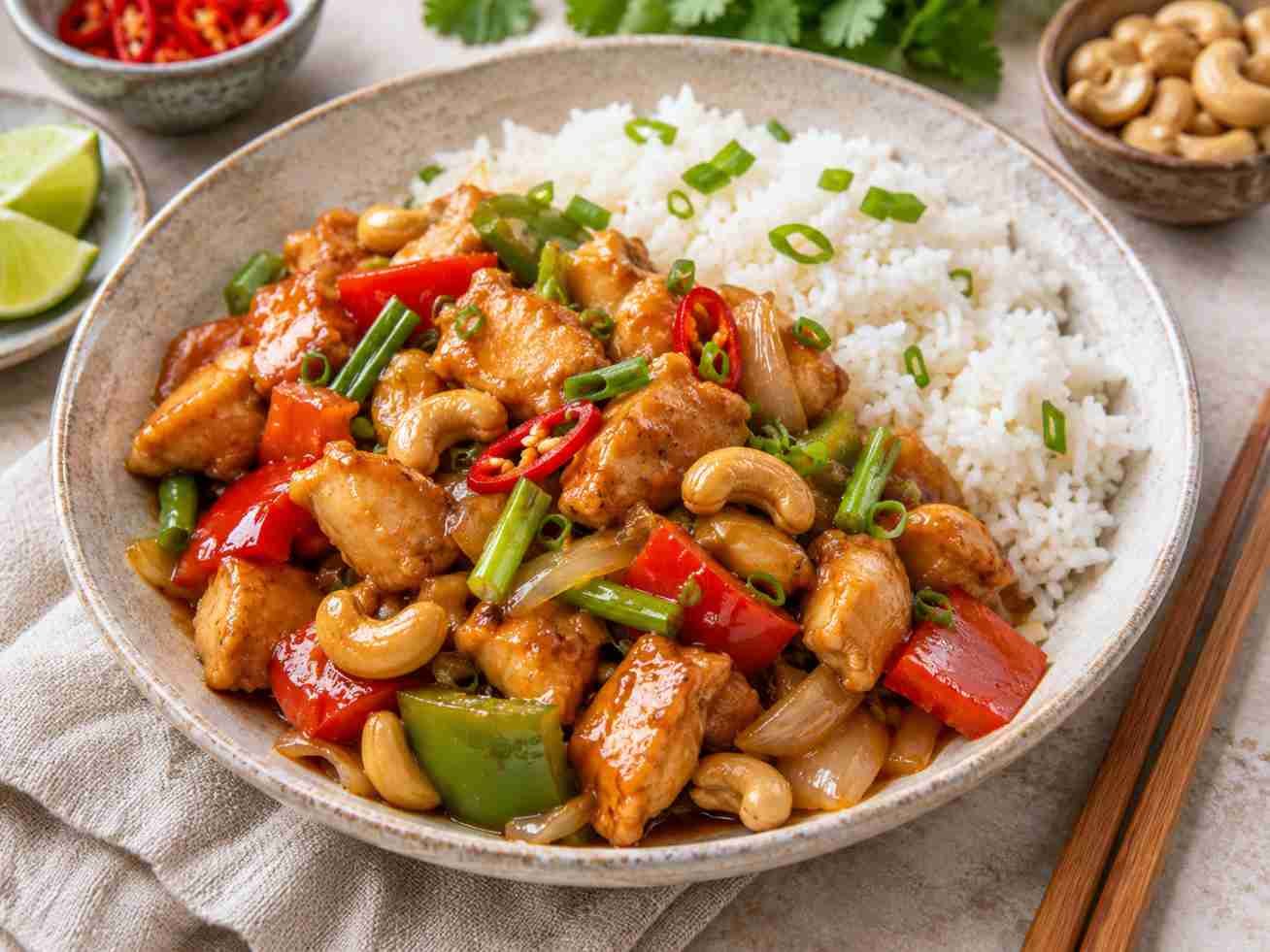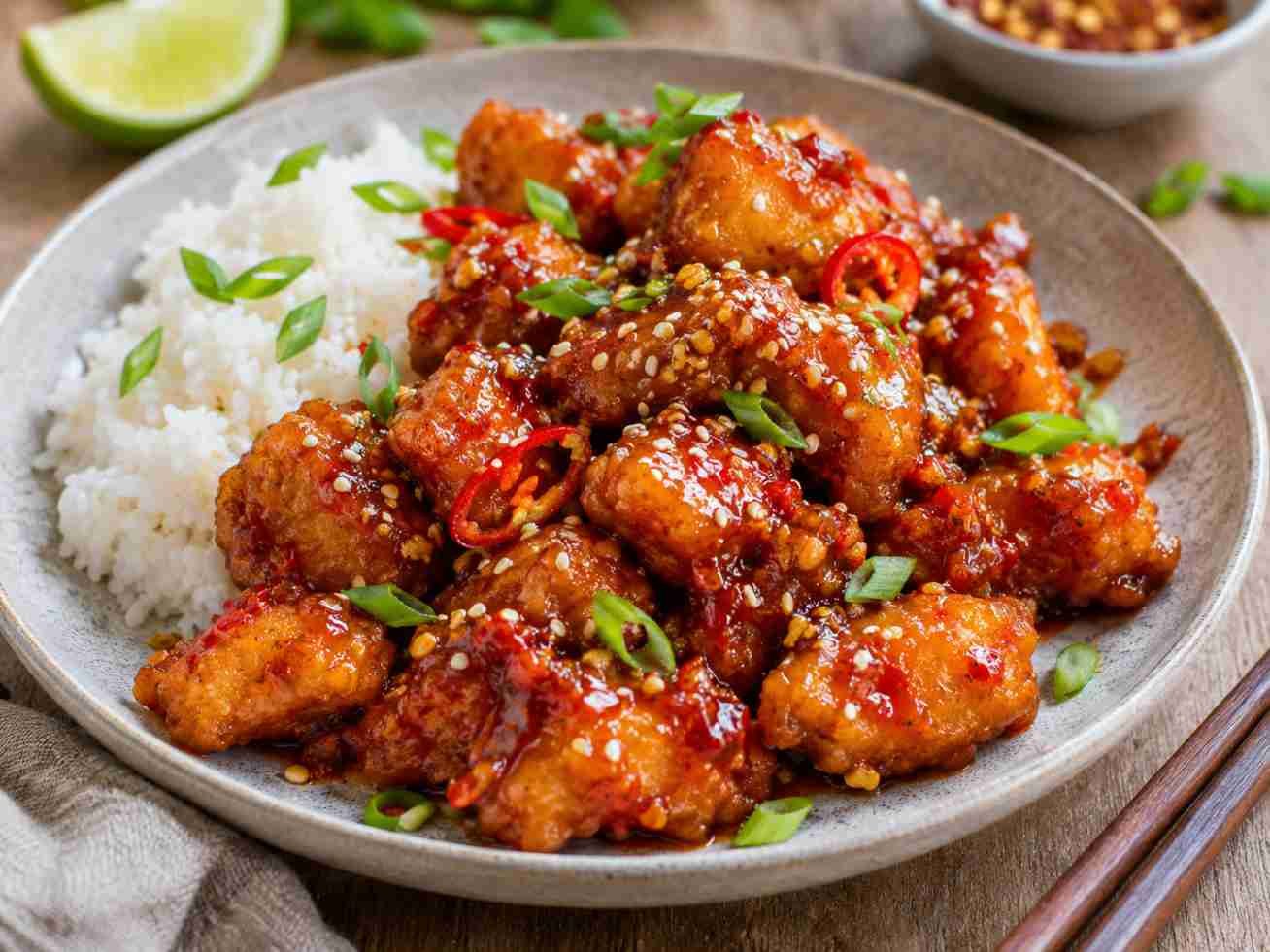
This is a home-style Asian-inspired chicken recipe rather than a traditional dish from one particular country. The sauce has a sticky consistency similar to a glaze, so it coats the chicken instead of pooling at the bottom of the plate. It’s spicy enough to be interesting, but you can easily adjust the chilli to suit your taste.
Asian Chilli Chicken Recipe Overview
| Preparation Time | 10 minutes |
| Cooking Time | 15 minutes |
| Total Time | 25 minutes |
| Servings | 4 |
| Difficulty | Easy |
| Cuisine | Asian-inspired |
| Course | Main Course |
| Spice Level | Medium, adjustable |
Ingredients for Asian Chilli Chicken
The ingredients are divided into two parts: the chicken and the sticky chilli sauce. Keeping the sauce ingredients measured and ready before cooking is helpful because the final stages move quickly.
For the Chicken
- 500 g boneless, skinless chicken breast or chicken thighs
- 2 tablespoons cornstarch (cornflour)
- 1/2 teaspoon salt
- 1/2 teaspoon freshly ground black pepper
- 2 tablespoons neutral cooking oil, such as sunflower or vegetable oil
For the Sticky Chilli Garlic Sauce
- 2 tablespoons light soy sauce
- 2 tablespoons sweet chilli sauce
- 1 tablespoon Sriracha or another chilli garlic sauce
- 1 1/2 tablespoons honey
- 1 tablespoon rice vinegar
- 1 tablespoon fresh lime juice
- 4 garlic cloves, finely minced
- 1 tablespoon freshly grated ginger
- 1 teaspoon toasted sesame oil
- 1/4 teaspoon red chilli flakes, optional
- 1/4 cup water
For Garnishing
- 2 spring onions, finely sliced
- 1 teaspoon toasted sesame seeds
- Fresh red chilli slices, optional
- Lime wedges for serving
Also Read: Lebanese Lemon Garlic Chicken
How to Make Asian Chilli Chicken
The secret to getting this dish right is cooking the chicken over fairly high heat and allowing the sauce to reduce just enough to become sticky. You want the chicken to develop some color without drying out, while the sauce should remain glossy and easy to spoon over the finished dish.
Step 1: Prepare the Chicken
Cut the chicken into evenly sized bite-sized pieces, roughly 1 to 1 1/2 inches across. Pat them dry with kitchen paper to remove excess moisture. Place the pieces in a mixing bowl, add salt and black pepper, and toss to season evenly.
Sprinkle the cornstarch over the chicken and mix until every piece has a light coating. You don’t need a thick layer. Just enough starch to cover the surface will help the chicken turn golden in the pan and give the sauce something to cling to.
Step 2: Mix the Sauce
In a small bowl, combine the light soy sauce, sweet chilli sauce, Sriracha, honey, rice vinegar, lime juice, and water. Stir until the honey dissolves and the mixture looks smooth.
Keep the minced garlic, grated ginger, sesame oil, and chilli flakes nearby. These will be cooked briefly in the pan before adding the liquid sauce. Separating them helps prevent the garlic from burning while the sauce is being mixed.
Step 3: Pan-Fry the Chicken
Heat the vegetable oil in a large frying pan or wok over medium-high heat. Once the oil is hot, arrange the chicken pieces in a single layer. Avoid crowding the pan, as too much chicken at once will release moisture and cause it to steam instead of brown.
Cook the chicken for approximately 3 to 4 minutes on one side, then turn and cook for another 3 to 4 minutes, depending on the size of the pieces. The exterior should develop a light golden crust. Chicken breast should reach an internal temperature of 74°C (165°F) before serving. If needed, cook in two batches to get better browning.
Transfer the chicken to a clean plate once cooked. Leave the browned bits in the pan because they will add flavor to the sauce.
Step 4: Cook the Garlic and Ginger
Reduce the heat to medium and add the sesame oil to the same pan. Add the minced garlic and grated ginger, stirring continuously for about 20 to 30 seconds. They should become fragrant without turning dark brown.
If you enjoy a stronger chilli flavor, add the red chilli flakes at this stage. Allow them to sizzle briefly in the oil. Keep the heat moderate because burnt garlic can make the entire sauce taste bitter.
Step 5: Make the Sticky Chilli Sauce
Pour the prepared sauce mixture into the pan and stir well, scraping up the browned bits left from cooking the chicken. Bring the mixture to a gentle simmer over medium heat.
Let the sauce bubble for 2 to 3 minutes, stirring occasionally. As some of the liquid evaporates, the sauce will become slightly thicker and glossier. It should coat the back of a spoon but still be loose enough to cover the chicken evenly.
If the sauce becomes too thick before the chicken goes back in, add a tablespoon of water and stir. If it seems too thin, allow it to simmer for another 30 to 60 seconds.
Step 6: Coat the Chicken
Return the cooked chicken to the pan along with any juices collected on the plate. Toss gently until every piece is covered in the chilli garlic sauce. Cook for another minute, allowing the sauce to cling to the chicken and warm everything through.
Turn off the heat once the chicken is evenly glazed. Avoid leaving it on the stove unnecessarily because the honey and sweet chilli sauce can become overly sticky or scorch as the liquid continues to reduce.
Step 7: Garnish and Serve
Transfer the Asian Chilli Chicken to a serving plate or spoon it directly over hot steamed rice. Scatter sliced spring onions and toasted sesame seeds over the top. Add fresh chilli slices if you want more heat, and finish with a squeeze of lime just before eating.
Serve immediately while the sauce is glossy and the chicken is still tender.
Also Read: Jalapeno Popper Stuffed Chicken
What You Can Do Better
A few small adjustments can take this recipe from a decent weeknight stir-fry to something you’ll want to make regularly. Most of them come down to controlling moisture, heat, and the balance of the sauce.
1. Use Chicken Thighs for a Juicier Result
Chicken breast works well when you want a leaner meal, but boneless chicken thighs are more forgiving. They contain slightly more fat, which helps them stay tender if they spend an extra minute or two in the pan. If you’re cooking for a family and want to prepare several servings at once, thighs are a particularly good choice.
2. Don’t Skip Drying the Chicken
Excess moisture is one of the main reasons chicken refuses to brown properly. Patting the pieces dry before seasoning makes a noticeable difference. The light coating of cornstarch works much better on a relatively dry surface.
3. Give the Chicken Enough Space
A crowded pan lowers the cooking temperature and traps steam. Instead of developing lightly crisp edges, the chicken becomes pale and releases liquid. If your frying pan is small, cook the chicken in batches. It takes a few minutes longer, but the texture is worth it.
4. Adjust Sweetness and Acidity Together
The sauce should taste sweet, spicy, salty, and tangy without any one flavor overpowering the others. If you add more honey, consider adding a little extra lime juice. If the sauce is too sharp, a small amount of honey can soften the acidity. Always taste before adding extra soy sauce because chilli sauces can already contain plenty of salt.
5. Keep the Sauce Slightly Loose
It’s tempting to reduce the sauce until it becomes very thick, but it continues to tighten as it cools. Stop cooking when it lightly coats a spoon. Once you add the chicken, the remaining starch on the surface will also help the glaze cling.
6. Add Vegetables Without Losing the Glaze
Thinly sliced bell peppers, broccoli florets, snow peas, or baby corn can turn this recipe into a more complete stir-fry. Cook the vegetables separately until just tender, then return them to the pan with the chicken. Avoid adding vegetables that release too much water directly into the sauce, as they can dilute its flavor.
How Spicy Is Asian Chilli Chicken?
This version has a medium level of heat, mainly from Sriracha and the optional chilli flakes. The honey and sweet chilli sauce help balance the spice, so the result is warming rather than aggressively hot.
For a milder dish, reduce the Sriracha to one teaspoon and leave out the chilli flakes. If you’re preparing it for children or anyone sensitive to heat, replace the Sriracha with a little extra sweet chilli sauce, keeping in mind that the finished dish will be sweeter.
For a hotter version, add an extra teaspoon of Sriracha or finely chopped fresh red chilli. Add chilli gradually rather than all at once, particularly if you’re using a brand of chilli sauce that you haven’t cooked with before.
Also Read: Chicken Pasta Bake
What to Serve with Asian Chilli Chicken
Because the sauce has such a concentrated flavor, simple side dishes usually work best. A generous serving of rice absorbs the glaze and balances the heat without competing with the chicken.
- Steamed jasmine rice: Its delicate fragrance pairs especially well with the sweet and spicy sauce.
- Brown rice: A slightly nutty option that adds more fiber to the meal.
- Garlic noodles: Toss cooked noodles with a little sesame oil, garlic, and spring onions for a satisfying dinner.
- Steamed broccoli: A simple vegetable side that tastes excellent with any extra chilli sauce from the pan.
- Stir-fried bok choy: Cook briefly with garlic until the stems are tender but still slightly crisp.
- Cucumber salad: Fresh cucumber with rice vinegar and a pinch of salt provides a cool contrast to the chilli.
For a balanced dinner, serve one portion of chicken with a moderate amount of steamed rice and a generous helping of green vegetables.
Easy Variations to Try
Asian Chilli Chicken with Vegetables
Add sliced red bell pepper, broccoli, and snow peas for a colorful one-pan meal. Stir-fry the vegetables separately for a few minutes, then combine them with the glazed chicken just before serving. This works particularly well when you want to stretch the recipe into extra portions.
Crispy Asian Chilli Chicken
For a more pronounced crust, increase the cornstarch coating slightly and pan-fry the chicken in batches with enough oil to keep it from sticking. Allow the exterior to become golden before turning. Toss with the sauce only when you’re ready to serve, since the glaze will gradually soften the crisp coating.
Honey Garlic Chilli Chicken
Increase the honey by one teaspoon and reduce the Sriracha slightly for a sweeter, more garlic-forward sauce. This variation is useful if you enjoy sticky chicken recipes but prefer a gentler chilli flavor.
Asian Chilli Chicken Noodles
Prepare the chicken as directed, then add cooked egg noodles or rice noodles to the pan with a small splash of water. Toss everything together until the noodles are lightly coated. You may need to make an additional half-batch of sauce because noodles absorb more liquid than rice.
Tips for Preparing Ahead
If dinner time is usually busy, much of the preparation can be done earlier in the day. Cut the chicken and store it in an airtight container in the refrigerator. You can also mix the liquid sauce ingredients in a separate covered container and refrigerate them until needed.
Keep the cornstarch separate until just before cooking. Coating the chicken too early can make the surface damp and prevent it from browning properly.
The garlic and ginger can also be minced in advance. With all the ingredients ready, the actual cooking process is quick and doesn’t require much attention beyond the stove.
Also Read: Thai Basil Chicken & Coconut Rice
How to Store and Reheat Leftovers
Refrigerating
Allow the cooked chicken to cool briefly, then transfer it to a shallow, airtight container and refrigerate within two hours of cooking. Properly refrigerated leftovers can be kept for up to 3 to 4 days at 4°C (40°F) or below.
Freezing
Asian Chilli Chicken can be frozen for up to 2 to 3 months for best quality. Let it cool, divide it into individual portions, and store in freezer-safe containers. The sauce may become slightly thinner after thawing, but its flavor should remain good.
Reheating
For the best texture, reheat the chicken gently in a skillet over medium-low heat with one or two tablespoons of water. Stir occasionally until heated thoroughly to 74°C (165°F). The water will help loosen the sauce without requiring extra oil.
You can also reheat it in the microwave in short intervals, stirring between each interval. Avoid overheating, especially if you used chicken breast, as it can become dry.
Asian Chilli Chicken Nutritional Information
The following values are approximate estimates for one serving, based on four servings made with skinless chicken breast and the ingredients listed above. They include the chicken and sauce but exclude rice, noodles, vegetables, and optional garnishes. Actual nutrition will vary depending on the brands of sauces, the amount of oil absorbed, and the amount of glaze consumed.
| Nutrient | Approximate Amount Per Serving |
|---|---|
| Calories | 305 kcal |
| Protein | 30 g |
| Total Carbohydrates | 23 g |
| Total Fat | 10 g |
| Saturated Fat | 1.6 g |
| Dietary Fiber | 0.5 g |
| Total Sugars | 15 g |
| Sodium | 850 mg |
| Cholesterol | 90 mg |
Nutrition Note: If you’re watching your sodium intake, consider using reduced-sodium soy sauce and checking the salt content of your chilli sauces. To reduce added sugar, use less honey and choose a sweet chilli sauce with a lower sugar content. These changes will affect the final flavor, so adjust the acidity and spice gradually.
Also Read: Easy Ginger Chicken Ramen
Frequently Asked Questions
Can I Make Asian Chilli Chicken Without Sriracha?
Yes. You can use another chilli garlic sauce or a combination of tomato ketchup and a small amount of hot sauce. The flavor will change slightly, but the sauce will still be delicious. Taste before adding extra honey because some substitutes are already sweet.
Can I Use Frozen Chicken?
Yes, provided the chicken is fully thawed before cooking. Thaw it in the refrigerator rather than on the kitchen counter. Pat it dry thoroughly before seasoning and coating with cornstarch, as thawed chicken often releases more moisture.
Is Asian Chilli Chicken Gluten-Free?
It can be made gluten-free by using certified gluten-free tamari instead of regular soy sauce and checking that the sweet chilli sauce, Sriracha, and other packaged ingredients are gluten-free. Cornstarch itself is naturally gluten-free, but check the packaging for cross-contact warnings if needed.
Can I Make This Recipe Without Honey?
Yes. Brown sugar or maple syrup can replace the honey. Start with a slightly smaller amount, then taste and adjust. Honey contributes both sweetness and a glossy texture, so the consistency may differ a little with substitutions.
Why Is My Chilli Chicken Sauce Too Watery?
The sauce may not have simmered long enough, or moisture released from the chicken may have diluted it. Let it bubble gently for another minute or two until it reduces. Remember that it will thicken slightly as it cools, so avoid reducing it too far.
How Do I Prevent the Chicken from Becoming Dry?
Cut the chicken into evenly sized pieces, cook it in a properly heated pan, and avoid leaving it on the heat longer than necessary. A meat thermometer is the most reliable way to check doneness. Chicken breast should reach 74°C (165°F), and chicken thighs can be cooked a little longer if you prefer a softer texture.
Can I Make Asian Chilli Chicken in an Air Fryer?
Yes. Lightly coat the seasoned, cornstarch-dusted chicken with oil and arrange it in a single layer in the air fryer basket. Cook at 190°C (375°F) for approximately 10 to 14 minutes, turning halfway through, or until the center reaches 74°C (165°F). Cooking time will vary with piece size and appliance model. Prepare the sauce separately in a saucepan, then toss it with the cooked chicken.
Can I Double the Recipe?
Absolutely. Double the ingredients, but cook the chicken in batches so the pan doesn’t become overcrowded. You can make the entire batch of sauce together in a large skillet or wok, then add the cooked chicken and toss until evenly coated.