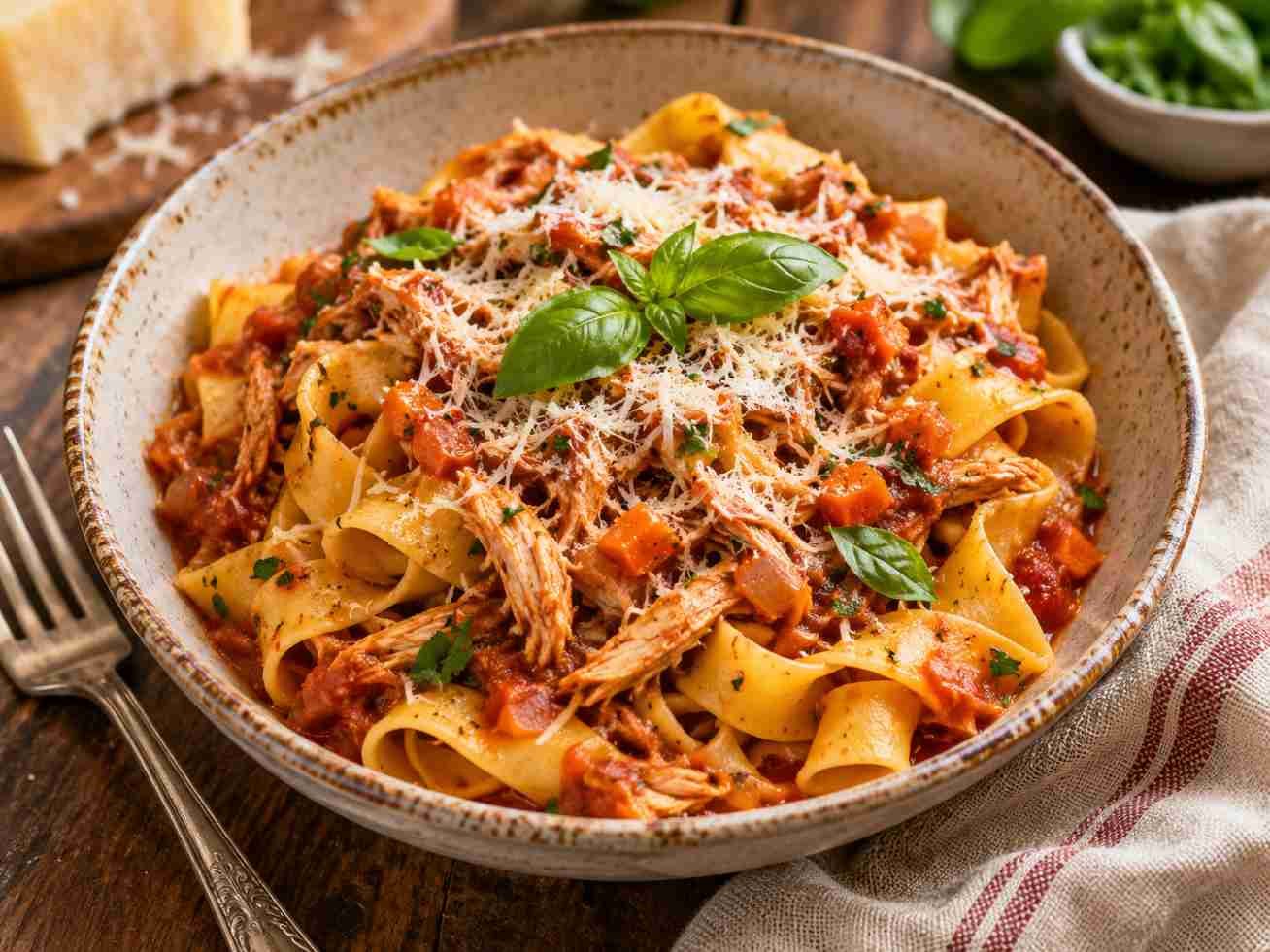
Chicken ragu is one of those dishes that rewards a little patience. Chicken thighs are slowly cooked with tomatoes, garlic, onions, vegetables, and herbs until the meat is tender enough to pull apart with a fork. The shredded chicken goes back into the sauce, where it soaks up all that rich tomato flavor. Toss it through pasta, and you have a substantial dinner without needing an expensive cut of meat or a complicated cooking technique.
Unlike a traditional beef ragu, chicken ragu doesn’t need several hours on the stove. Chicken thighs soften relatively quickly, and their natural richness gives the sauce plenty of body. The important part is building flavor before the simmering begins. Browning the chicken, cooking the vegetables properly, and allowing the tomato paste to darken slightly make a noticeable difference to the finished dish.
Chicken Ragu Recipe Overview
| Recipe Details | Information |
|---|---|
| Preparation Time | 20 minutes |
| Cooking Time | 1 hour 15 minutes |
| Total Time | 1 hour 35 minutes |
| Servings | 4 generous portions |
| Course | Main Course |
| Cuisine | Italian-Inspired |
| Cooking Method | Stovetop, slow simmering |
Ingredients for Chicken Ragu
The ingredients are straightforward, but choosing the right chicken and tomatoes makes the sauce noticeably better. Boneless, skinless chicken thighs are particularly suitable because they stay moist during simmering and shred easily once cooked.
For the Chicken and Sauce
- 750 g (about 1 2/3 lb) boneless, skinless chicken thighs
- 2 tablespoons olive oil
- 1 medium onion, finely diced
- 1 medium carrot, finely diced
- 2 celery stalks, finely diced
- 4 garlic cloves, minced
- 2 tablespoons tomato paste
- 800 g (28 oz) canned crushed tomatoes
- 1 cup (240 ml) low-sodium chicken broth
- 1/2 cup (120 ml) dry red wine, optional
- 1 teaspoon dried oregano
- 1/2 teaspoon dried thyme
- 2 bay leaves
- 1 teaspoon salt, or to taste
- 1/2 teaspoon freshly ground black pepper
- 1/4 teaspoon red pepper flakes, optional
For the Pasta and Serving
- 350 g (12 oz) dried pappardelle, tagliatelle, or rigatoni
- 40 g freshly grated Parmesan cheese
- A small handful of fresh basil or flat-leaf parsley, chopped
- Reserved pasta cooking water, as needed
Also Read: Sausage Ragu with Pappardelle Pasta
How to Make Chicken Ragu
This recipe is prepared in one large, heavy-bottomed pot, with the pasta cooked separately. A Dutch oven works particularly well because it distributes heat evenly and prevents the sauce from catching too quickly on the bottom.
Step 1: Prepare and Season the Chicken
Pat the chicken thighs dry with paper towels. Season both sides with salt and black pepper, using part of the measured seasoning and saving the rest for the sauce. Drying the surface is important because wet chicken tends to steam instead of developing a golden crust. Keep the pieces whole for now; they will be shredded after cooking.
Step 2: Brown the Chicken
Heat the olive oil in a large Dutch oven over medium-high heat. Add the chicken thighs in a single layer, working in batches if necessary. Cook for approximately 3 to 4 minutes on each side until nicely browned. The chicken does not need to be cooked through at this stage. Transfer it to a plate, leaving the cooking oil and browned bits in the pot. Those browned bits will add flavor to the sauce.
Step 3: Cook the Vegetables
Reduce the heat to medium and add the chopped onion, carrot, and celery to the same pot. Cook for 7 to 9 minutes, stirring occasionally, until the vegetables soften and the onion becomes translucent. If the bottom starts to look dry, add a small splash of broth. Stir in the garlic and red pepper flakes, if using, and cook for another 30 to 60 seconds. Avoid browning the garlic too much, as it can give the sauce a bitter edge.
Step 4: Develop the Tomato Base
Add the tomato paste and stir it through the vegetables for about 2 minutes. It should turn a slightly darker red and begin sticking gently to the bottom of the pot. If using red wine, pour it in now and scrape up the browned bits with a wooden spoon. Allow the wine to bubble for 2 to 3 minutes so it reduces slightly. If you prefer not to use wine, replace it with an equal amount of additional chicken broth.
Step 5: Add Tomatoes, Broth, and Herbs
Pour in the crushed tomatoes and chicken broth. Stir in the oregano, thyme, and bay leaves. Return the browned chicken thighs to the pot along with any juices that have collected on the plate. Gently press the chicken into the sauce so most of the meat is submerged. Bring everything to a gentle simmer, then reduce the heat to low. The sauce should bubble occasionally rather than boil aggressively.
Step 6: Simmer Until the Chicken Is Tender
Cover the pot with the lid slightly ajar and simmer gently for 40 to 50 minutes, stirring occasionally. The exact cooking time depends on the thickness of the chicken thighs. They are ready when fully cooked and tender enough to separate easily with a fork. If the sauce becomes too thick before the chicken softens, add a little more broth. If it appears watery, leave the lid off for the final 10 to 15 minutes to allow excess moisture to evaporate.
Step 7: Shred the Chicken
Lift the cooked chicken onto a cutting board or plate. Using two forks, pull it apart into medium-sized shreds. Avoid shredding it too finely; slightly larger pieces give the finished ragu a more satisfying texture. Remove the bay leaves from the sauce, then return the shredded chicken to the pot. Stir well and simmer uncovered for another 5 to 10 minutes so the meat absorbs the sauce. Taste and adjust the salt and pepper.
Step 8: Cook the Pasta
While the shredded chicken finishes simmering, bring a large pot of salted water to a boil. Add the pasta and cook until al dente according to the package instructions. Before draining, reserve about 1 cup of the starchy cooking water. The pasta should retain a slight bite because it will continue cooking briefly when tossed with the hot ragu.
Step 9: Combine the Pasta and Ragu
Add the drained pasta directly to the chicken ragu. Toss gently over low heat for 1 to 2 minutes until the sauce coats the pasta evenly. Add a few tablespoons of reserved pasta water whenever the mixture looks too thick. The starch helps the sauce cling to the noodles instead of collecting at the bottom of the plate. Turn off the heat and stir through some of the grated Parmesan.
Step 10: Serve
Divide the chicken ragu pasta among warm bowls. Finish with the remaining Parmesan, chopped basil or parsley, and a little freshly ground black pepper. Serve immediately while the pasta is hot and the sauce is still loose enough to coat every strand.
Also Read: One-Pot Greek Chicken Risoni
What You Can Do Better
A good chicken ragu depends more on technique than on adding extra ingredients. A few small adjustments can make the sauce richer and the chicken noticeably more tender.
Choose Chicken Thighs Instead of Breast
Chicken breast can be used, but it is less forgiving during extended cooking. Thighs contain more fat and connective tissue, helping them remain juicy while developing a softer, shreddable texture. If using breasts, shorten the simmering time and remove them as soon as they are fully cooked and tender enough to shred.
Don’t Skip the Browning Stage
It may be tempting to put raw chicken directly into the tomato sauce, especially when cooking in a hurry. However, browning creates flavorful compounds on the surface of the meat and in the bottom of the pot. These give the sauce a deeper, more savory taste. Work in batches rather than overcrowding the pan, and avoid moving the chicken continuously.
Cook the Tomato Paste Properly
Tomato paste tastes noticeably different after a couple of minutes in hot oil. Its raw sharpness softens and the flavor becomes more concentrated. Stir it regularly so it darkens without burning. This simple step is particularly useful when making tomato sauces that will not simmer for several hours.
Keep the Simmer Gentle
A hard boil does not speed up the process in a helpful way. It can tighten the chicken and reduce the liquid too quickly. A slow simmer gives the meat time to soften while the tomatoes, vegetables, and herbs gradually come together. Check the pot occasionally rather than increasing the heat.
Use Pasta That Holds the Sauce
Wide ribbons such as pappardelle and tagliatelle work beautifully because the shredded chicken catches between the folds. Rigatoni is another practical choice, especially if you prefer shorter pasta. Very thin pasta is less suitable because the substantial meat sauce can overwhelm it.
Don’t Make the Sauce Too Dry
Chicken ragu thickens as it sits, especially after the pasta is added. Keep some reserved pasta water nearby and use it gradually until the sauce becomes glossy and coats the pasta. Adding more olive oil is not usually necessary. A small amount of starchy water is often enough to bring the texture back together.
Also Read: Jalapeno Popper Stuffed Chicken
What to Serve With Chicken Ragu
Since chicken ragu is already a complete and filling pasta dish, the best side dishes are usually simple. A green salad with lemon dressing provides freshness and helps balance the richness of the sauce. Garlic bread or crusty sourdough is useful for soaking up any tomato sauce left in the bowl.
For a vegetable side, try roasted broccoli, steamed green beans, or sautéed zucchini with a little olive oil and garlic. If you want to serve the ragu without pasta, spoon it over creamy polenta, mashed potatoes, or soft Parmesan polenta. The thick sauce works particularly well with these alternatives.
Chicken Ragu Variations
Chicken Ragu Without Wine
Red wine adds acidity and depth, but the dish is still excellent without it. Replace the wine with chicken broth and continue with the recipe. If the sauce tastes slightly flat at the end, add a small splash of red wine vinegar or lemon juice. Start with 1 teaspoon, taste, and adjust carefully.
Spicy Chicken Ragu
For a little heat, increase the red pepper flakes to 1/2 teaspoon or add a finely chopped fresh chili when cooking the garlic. Keep the heat moderate so it complements rather than masks the tomato and chicken flavors.
Chicken and Mushroom Ragu
Add 200 g of finely chopped mushrooms after the onions, carrots, and celery have softened. Cook until the mushrooms release their moisture and begin to brown before adding the garlic. Mushrooms give the sauce an earthy flavor and make the finished dish even more substantial.
Slow Cooker Chicken Ragu
Brown the chicken and cook the vegetables and tomato paste on the stovetop first. Transfer everything to a slow cooker, reduce the broth to about 1/2 cup, and cook on low for approximately 5 to 6 hours or until the chicken shreds easily. Remove the chicken, shred it, and return it to the sauce. If the sauce is too thin, reduce it separately in a saucepan before combining it with pasta.
How to Store and Reheat Chicken Ragu
Refrigerating
Allow the ragu to cool promptly, then transfer it to an airtight container and refrigerate within 2 hours of cooking. It will keep for 3 to 4 days at 4°C (40°F) or below. For the best texture, store the chicken sauce separately from the pasta. Pasta absorbs liquid during storage and may become softer when reheated.
Freezing
Chicken ragu freezes well without pasta. Portion the cooled sauce into freezer-safe containers or bags, leaving a little space for expansion. Freeze for up to 3 months for the best quality. Thaw overnight in the refrigerator before reheating. Freezing individual portions makes it convenient to prepare a quick meal without making an entire batch.
Reheating
Warm the ragu in a saucepan over medium-low heat, adding a splash of water or chicken broth to loosen the sauce. Stir occasionally until thoroughly heated to 74°C (165°F). If reheating pasta and sauce together, add a little water and cover the pan briefly so the pasta warms without drying out.
Nutritional Information
The following values are approximate estimates for one of four servings, including pasta and Parmesan cheese. They assume boneless, skinless chicken thighs and the ingredient quantities listed above. Actual values will vary depending on the chicken, pasta, broth, and cheese used.
| Nutrient | Approximate Amount Per Serving |
|---|---|
| Calories | 700 kcal |
| Protein | 49 g |
| Total Carbohydrates | 81 g |
| Dietary Fiber | 7 g |
| Total Fat | 20 g |
| Saturated Fat | 6 g |
| Sugars | 12 g |
| Sodium | 900 mg |
Nutrition note: These figures are estimates rather than laboratory-tested values. Using less pasta, omitting Parmesan, or adjusting the olive oil will change the nutritional totals.
Also Read: One Pot Broccoli Chicken Mac and Cheese
Frequently Asked Questions
Can I Make Chicken Ragu Ahead of Time?
Yes. Chicken ragu is an excellent make-ahead sauce because the flavors have more time to develop as it rests. Prepare it a day in advance, refrigerate it in an airtight container, and reheat gently before serving. Cook the pasta fresh and combine it with the hot sauce just before eating.
Can I Use Chicken Breast for Ragu?
Yes, although thighs are the better option for a long simmer. If using breast meat, begin checking for doneness after approximately 20 minutes of gentle simmering, depending on thickness. Chicken should reach an internal temperature of 74°C (165°F). Remove it as soon as it is cooked and tender enough to shred to avoid a dry texture.
Which Tomatoes Are Best for Chicken Ragu?
Good-quality canned crushed tomatoes are the easiest choice because they provide a consistent texture and work well with slow cooking. Whole peeled canned tomatoes also work; simply crush them with your hands or a spoon before adding them to the pot. If the tomatoes are especially acidic, allow the sauce to simmer longer and taste before adding any sugar.
How Do I Thicken Chicken Ragu?
If the sauce looks watery, remove the lid and simmer it gently for another 10 to 15 minutes, stirring occasionally. The excess moisture will evaporate naturally. Avoid adding flour or cornstarch unless absolutely necessary. Tomato paste, shredded chicken, and gradual reduction should give the sauce enough body.
Can I Make Chicken Ragu Without Pasta?
Absolutely. Chicken ragu works as a versatile meat sauce rather than strictly a pasta topping. Serve it with polenta, mashed potatoes, or roasted vegetables. It can also be used as a filling for baked potatoes or layered into a pasta bake.
Is Chicken Ragu the Same as Chicken Bolognese?
Not exactly. Ragu is a broad term for a meat-based sauce that is generally cooked slowly, while Bolognese refers to a more specific style of ragu associated with Bologna. Chicken ragu can contain shredded or chopped chicken and often has a prominent tomato base. Traditional Bolognese is generally made with minced meat, aromatic vegetables, and a different balance of liquids.