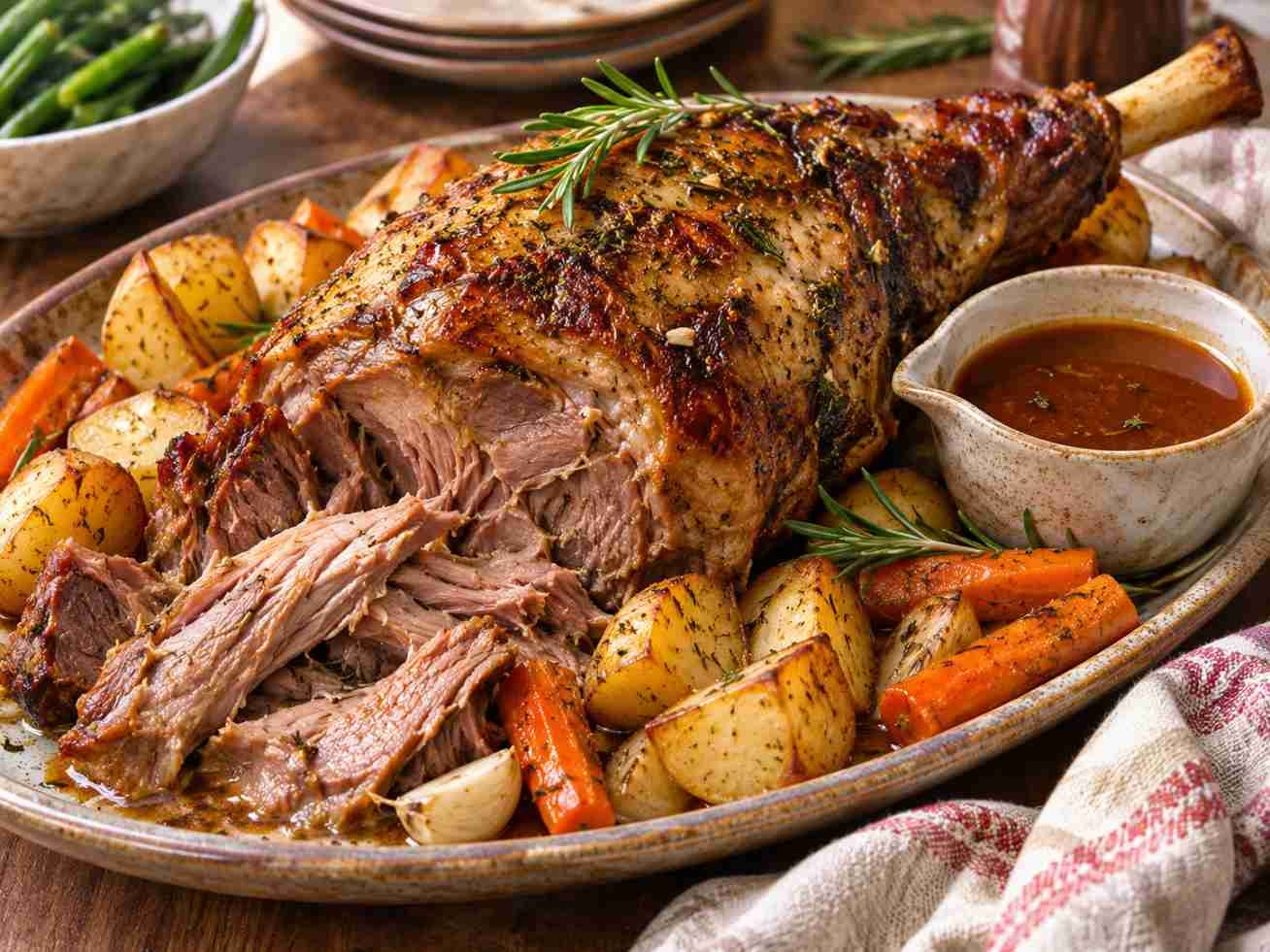
A good roast lamb doesn’t need constant attention or a complicated collection of ingredients. Sometimes, all it takes is a little preparation, a few fresh herbs, and several hours of gentle cooking. This Slow Cooker Roast Lamb Leg is a particularly convenient way to prepare a generous family dinner without spending the afternoon standing beside the oven. The meat cooks slowly in a fragrant mixture of garlic, rosemary, onions, and stock until it becomes tender enough to pull apart with a fork. A short spell in a hot oven gives the outside a lovely golden finish, while the cooking juices provide the foundation for a rich homemade gravy.
It’s the sort of meal that works just as well for a relaxed Sunday dinner as it does for Easter lunch or a special family gathering. Serve it with crispy roast potatoes, seasonal vegetables, and plenty of gravy, and there is very little else you need.
Slow Cooker Roast Lamb Leg Recipe Overview
| Recipe Details | Information |
|---|---|
| Recipe Name | Slow Cooker Roast Lamb Leg |
| Course | Main Course |
| Cuisine | British-Inspired |
| Preparation Time | 20 minutes |
| Slow Cooking Time | 9–10 hours on Low |
| Oven Finishing Time | 12–15 minutes |
| Resting Time | 10 minutes |
| Servings | 6 |
| Cooking Method | Slow Cooker and Oven |
Ingredients for Slow Cooker Roast Lamb Leg
There is no need to buy anything particularly unusual for this recipe. Fresh rosemary and garlic do most of the work, while a small amount of mustard and lemon adds brightness to the finished meat.
For the Lamb
- 1 bone-in leg of lamb, approximately 1.8–2 kg (4–4.4 lb)
- 2 tablespoons olive oil, divided
- 5 garlic cloves, finely minced
- 2 tablespoons fresh rosemary, finely chopped
- 1 teaspoon dried thyme
- 1 tablespoon Dijon mustard
- 1 teaspoon lemon zest
- 1 tablespoon fresh lemon juice
- 1 1/2 teaspoons salt, or to taste
- 1 teaspoon freshly ground black pepper
- 1 large onion, thickly sliced
- 1 cup (240 ml) low-sodium beef or chicken stock
- 2 fresh rosemary sprigs
For the Homemade Lamb Gravy
- 2 tablespoons unsalted butter
- 2 tablespoons all-purpose flour
- 1 1/2 cups (360 ml) strained cooking juices, or enough cooking juices and additional stock to make this quantity
- Freshly ground black pepper, to taste
- Salt, only if needed
Also Read: Slow Cooker Lemon Pepper Chicken and Rotini
How to Make Slow Cooker Roast Lamb Leg
The cooking itself is straightforward, but a few small details make a difference. Patting the lamb dry helps the seasoning stick, keeping the lid closed prevents unnecessary heat loss, and finishing the meat in the oven gives it a more traditional roast appearance.
Step 1: Prepare the Lamb
Remove the lamb from its packaging and pat it thoroughly dry with kitchen paper. Trim away any unusually thick pieces of surface fat, but leave a modest covering to help keep the meat moist during cooking. Check that the leg fits comfortably inside your slow cooker with the lid fully closed. A 6–7 litre oval slow cooker is usually a practical choice for a leg of this size. If necessary, ask your butcher to shorten the bone before cooking.
Step 2: Make the Garlic and Herb Rub
In a small bowl, combine 1 tablespoon of olive oil, minced garlic, chopped rosemary, dried thyme, Dijon mustard, lemon zest, lemon juice, salt, and black pepper. Mix everything into a loose paste. Rub the mixture all over the lamb, working it into the natural folds of the meat. Make sure both sides are well seasoned rather than concentrating the mixture on the top.
Step 3: Prepare the Slow Cooker
Spread the thickly sliced onion across the bottom of the slow cooker. Place the rosemary sprigs over the onions and pour in the stock. The onions create a simple bed for the meat, while the stock provides enough liquid to keep the cooking environment moist. You don’t need to submerge the lamb. As it cooks, the meat and onions will release additional juices that can later be used for gravy.
Step 4: Add the Lamb
Place the seasoned lamb leg on top of the onions, with the fattier side facing upward where possible. Scrape any remaining herb mixture from the bowl onto the meat. Put the lid on securely. Avoid adding extra water unless your slow cooker’s manufacturer specifically recommends it, as too much liquid will dilute the flavour of the finished gravy.
Step 5: Cook Slowly Until Tender
Set the slow cooker to Low and cook for approximately 9–10 hours. Cooking times vary between appliances, so begin checking the lamb near the end of the suggested cooking period. The meat is ready when a fork slides into the thickest section easily and the fibres separate with very little resistance. The aim is soft, succulent lamb that can be pulled into generous pieces rather than neatly sliced like a medium-roasted joint. Keep the lid closed throughout most of the cooking process, as lifting it repeatedly allows heat to escape. Always begin with properly thawed lamb, not frozen meat.
Step 6: Give the Lamb a Golden Finish
Preheat your oven to 220°C (425°F). Carefully lift the cooked lamb onto a sturdy roasting tray, supporting it underneath with two wide spatulas if necessary. The meat will be delicate at this stage. Brush the surface lightly with the remaining tablespoon of olive oil and roast for 12–15 minutes, watching closely, until the exposed edges become golden brown. This step is optional, but it improves both the colour and the flavour of the outside. Remove the lamb from the oven and allow it to rest for about 10 minutes before serving.
Step 7: Prepare the Gravy
While the lamb finishes in the oven, pour the liquid from the slow cooker through a fine sieve into a heatproof jug. Let it settle briefly and skim off the excess fat. Measure 1 1/2 cups of the strained juices, topping up with a little stock if needed. Melt the butter in a saucepan over medium heat, add the flour, and stir for approximately one minute to form a smooth paste. Gradually whisk in the cooking liquid, adding a little at a time at first to prevent lumps. Simmer gently for 4–6 minutes, stirring frequently, until the gravy is smooth and lightly thickened. Taste before adding salt because the stock and meat juices may already provide enough seasoning.
Step 8: Serve the Roast Lamb
Transfer the lamb to a serving platter and use two forks to separate the meat into large, tender pieces. Spoon a little warm gravy over the lamb to prevent the exposed meat from drying out. Serve the remaining gravy separately so everyone can help themselves. Scatter a few fresh rosemary leaves over the platter if you want a simple finishing touch.
What You Can Do Better
Choose a Leg That Fits Your Slow Cooker
Before buying the lamb, consider the shape of your slow cooker. A whole bone-in leg may be too long for a round model even when the weight seems suitable. A shortened leg or a boneless joint is often easier to manage. Never force the lid down or leave it partly open to accommodate the bone.
Don’t Skip the Final Browning
Slow cookers are excellent at producing tender meat, but they don’t create the same browned exterior as a conventional oven. Spending a few extra minutes on this finishing step gives the lamb a more appetising appearance and adds roasted flavour. Watch carefully because the herb coating can darken quickly at high temperatures.
Keep the Seasoning Balanced
Lamb has a distinctive flavour that works beautifully with garlic and rosemary, but adding too many strong spices can overpower it. Mustard and lemon are included here to sharpen the overall flavour without making the meat taste particularly mustardy or citrusy. If you’re using very salty stock, reduce the amount of salt in the initial seasoning.
Remove Excess Fat From the Gravy
Slow-cooked lamb can release a considerable amount of fat, especially when the leg has a thick outer covering. Skimming the cooking juices before making gravy produces a cleaner, more balanced sauce. For advance preparation, refrigerating the strained juices makes it even easier to lift off the solidified fat before reheating.
Allow Enough Cooking Time
A leg of lamb is a substantial cut of meat, and the connective tissue needs time to soften. For a pull-apart result, don’t rely on the clock alone. If the meat still feels firm when tested with a fork, replace the lid and continue cooking, checking again after another 30–45 minutes. A smaller joint may be ready sooner, while a larger joint may take longer.
What to Serve With Slow Cooker Roast Lamb Leg
The rich flavour of lamb pairs particularly well with simple vegetable sides and something that can absorb the gravy. Crispy roast potatoes are the traditional choice, especially when seasoned with rosemary and a little sea salt. Creamy mashed potatoes make an equally satisfying alternative if you prefer something softer.
For vegetables, try roasted carrots, buttered green beans, steamed broccoli, or peas tossed with a little mint. A fresh salad with a sharp lemon dressing can also help balance the richness of the meat. If you’re serving the lamb for a celebration, consider adding Yorkshire puddings or a tray of roasted parsnips. Warm bread is another useful addition, particularly when there is plenty of gravy left on the plate.
Also Read: Slow Cooker Loaded Baked Potato Soup
Can You Prepare Slow Cooker Lamb in Advance?
Yes. This recipe is well suited to advance preparation, which is particularly helpful when cooking for guests. You can mix the herb seasoning and prepare the onions the evening before. Store the seasoned lamb covered in the refrigerator and begin cooking when you’re ready. Keep the stock refrigerated separately until needed.
You can also cook the lamb ahead of time. Once it has finished cooking, cool it promptly, refrigerate within two hours, and store it with some of the cooking liquid to help retain moisture. Reheat thoroughly until piping hot throughout, then finish briefly in the oven if you’d like to restore some colour to the surface.
Storing and Reheating Leftover Lamb
Leftover roast lamb is useful for more than another roast dinner. Shredded pieces can be tucked into warm flatbreads with yogurt and cucumber, folded into sandwiches, stirred into a shepherd’s pie filling, or added to a simple vegetable soup.
Refrigerating
Allow the cooked meat to cool quickly, divide it into shallow airtight containers, and refrigerate within two hours. Store at 4°C (40°F) or below and use within 3–4 days. Keep a small amount of the cooking juices with the lamb if possible, as this helps prevent it from becoming dry.
Freezing
Remove the meat from the bone and place it in freezer-safe containers or sealed bags. Add a little cooled gravy or cooking liquid before sealing. For the best texture and flavour, use within 2–3 months, although food kept continuously frozen at -18°C (0°F) remains safe for longer. Thaw overnight in the refrigerator before reheating.
Reheating
Place the lamb in a covered ovenproof dish with a few tablespoons of stock or gravy. Reheat at 160°C (320°F) until thoroughly hot, aiming for an internal temperature of 74°C (165°F) for leftovers. You can also warm smaller portions in a covered saucepan over low heat, stirring occasionally. Avoid prolonged heating, which may cause the meat to become dry.
Frequently Asked Questions
Can I Cook a Boneless Leg of Lamb in the Slow Cooker?
Yes. A boneless leg works well and is often easier to fit into a smaller slow cooker. Because its thickness and shape can differ from a bone-in joint, the cooking time may change. Begin checking tenderness earlier, especially if the boneless joint weighs less than 1.5 kg.
Can I Cook Lamb on the High Setting Instead?
You can use the High setting if your slow cooker supports cooking large meat joints that way. A leg of approximately 2 kg may take around 5–6 hours, depending on the appliance and the thickness of the meat. However, Low is generally the better choice when the goal is exceptionally soft, pull-apart lamb. Check the manufacturer’s guidance for your particular slow cooker.
Do I Need to Brown the Lamb Before Slow Cooking?
No. Browning beforehand is optional. This method uses a short oven finish after slow cooking to create colour without adding another pan to the preparation. If you would rather sear the meat before it goes into the slow cooker, you can do that too, but the final appearance will still be different from a conventional oven roast.
Why Is My Slow Cooker Lamb Still Tough?
If the meat is cooked through but still difficult to pull apart, it may simply need more time for the connective tissue to soften. Continue cooking on Low until it becomes tender. Excessively dry or stringy meat, however, can indicate that the joint has cooked too long or was particularly lean.
Can I Make the Gravy Without Flour?
Yes. Replace the flour with a slurry made from 1 tablespoon of cornstarch and 2 tablespoons of cold water. Bring the strained cooking juices to a gentle simmer, stir in the slurry, and cook until thickened. Add more slurry a little at a time if necessary. This is also a convenient option for making the gravy gluten-free, provided the stock and other ingredients are certified gluten-free.
Also Read: Slow Cooker Chicken Fajita Sliders
Slow Cooker Roast Lamb Leg Nutritional Information
The following values are approximate estimates for one of six servings, including a moderate portion of gravy. They assume a 2 kg bone-in leg of lamb with some visible fat removed. Actual nutrition will depend on the edible meat yield, fat content, stock, and amount of gravy served.
| Nutrient | Approximate Amount Per Serving |
|---|---|
| Calories | 510 kcal |
| Protein | 46 g |
| Total Fat | 33 g |
| Saturated Fat | 13 g |
| Carbohydrates | 7 g |
| Dietary Fiber | 1 g |
| Sugars | 2 g |
| Sodium | 700 mg |
| Cholesterol | 150 mg |
Nutrition note: These figures are estimates rather than laboratory-tested values and should not be treated as precise dietary measurements. Side dishes are not included.