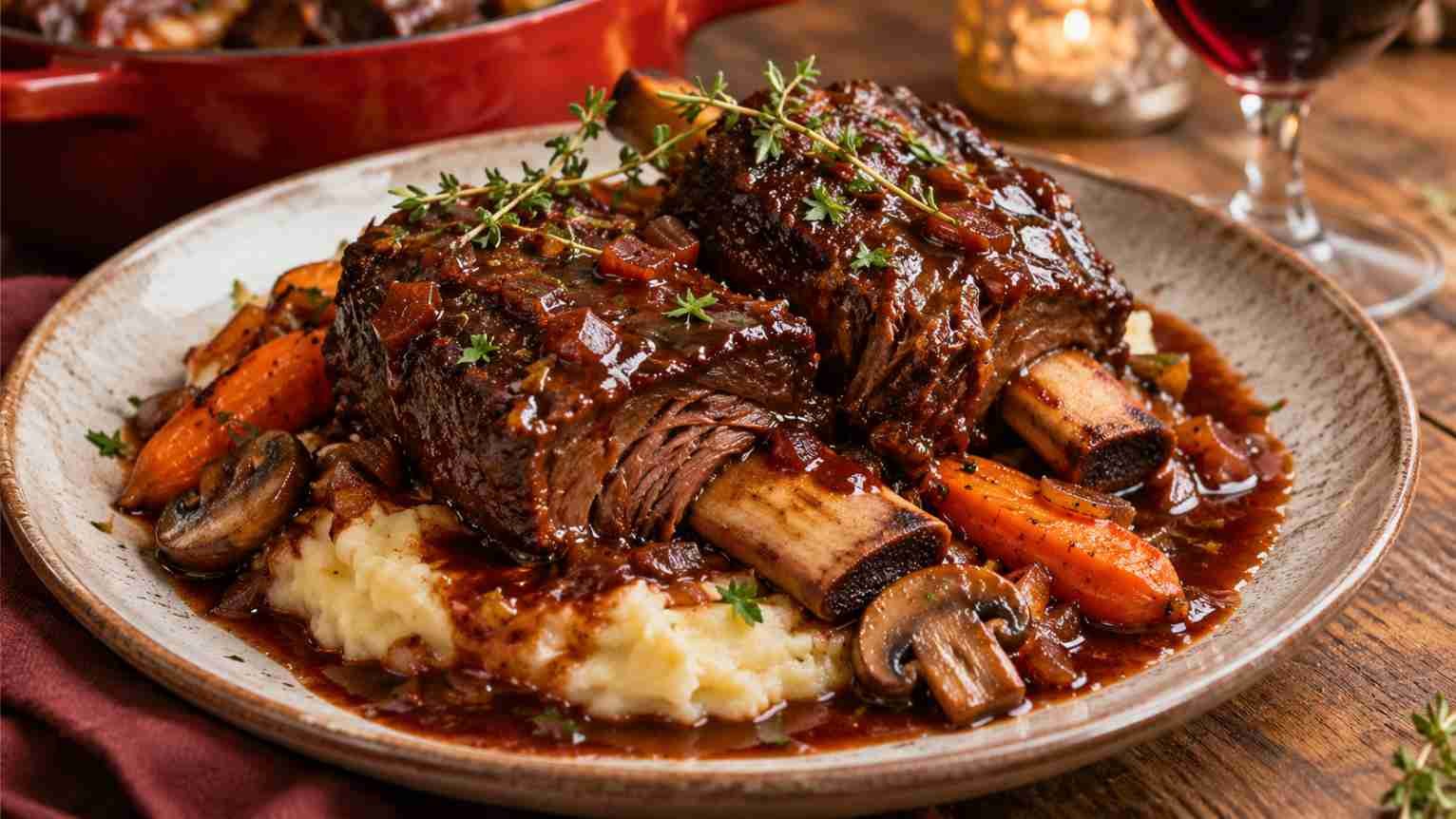
These Braised Beef Short Ribs in Red Wine Sauce are the sort of meal you might order at a good restaurant, but they are surprisingly manageable at home. The preparation is straightforward. Most of the cooking happens in the oven, where gentle heat transforms a relatively tough cut of beef into something beautifully soft and rich.
The sauce is just as important as the meat. Red wine, beef stock, caramelized vegetables, mushrooms, and fresh herbs gradually develop into a dark, savory gravy. Serve everything over creamy mashed potatoes, and you have a dinner worth making for a special occasion or a quiet Sunday at home.
Recipe Overview
| Recipe | Braised Beef Short Ribs in Red Wine Sauce |
| Course | Main Course |
| Cuisine | French-Inspired, American |
| Preparation Time | 25 minutes |
| Cooking Time | 3 hours 15 minutes |
| Total Time | 3 hours 40 minutes |
| Servings | 6 |
| Cooking Method | Oven Braising |
| Difficulty | Moderate |
Ingredients for Braised Beef Short Ribs
You don’t need an especially long shopping list for this recipe. The important thing is choosing good beef short ribs and giving the vegetables enough time to develop flavor before the braising liquid goes in.
For the Beef
- 4 pounds (1.8 kg) bone-in beef short ribs, preferably English-cut
- 2 teaspoons kosher salt, plus more to taste
- 1 teaspoon freshly ground black pepper
- 2 tablespoons olive oil
- 1 tablespoon unsalted butter
For the Red Wine Sauce
- 1 large yellow onion, finely chopped
- 2 medium carrots, diced
- 2 celery stalks, diced
- 5 garlic cloves, minced
- 8 ounces (225 g) cremini mushrooms, sliced
- 2 tablespoons tomato paste
- 2 cups dry red wine, such as Cabernet Sauvignon or Merlot
- 2 cups low-sodium beef stock
- 1 tablespoon Worcestershire sauce
- 1 teaspoon balsamic vinegar
- 3 fresh thyme sprigs
- 1 fresh rosemary sprig
- 2 bay leaves
- 1 teaspoon brown sugar, optional
For Serving
- Fresh parsley, finely chopped
- Mashed potatoes, polenta, or buttered egg noodles
- Freshly ground black pepper
Also Read: Vegetable Beef Soup
Choosing the Right Beef Short Ribs
Beef short ribs contain a generous amount of connective tissue and fat. They are not particularly tender when cooked quickly, but that is exactly what makes them suitable for braising. Several hours of gentle cooking soften the connective tissue and help the meat stay moist.
For this dish, look for English-cut short ribs. These are thick, meaty pieces with a single bone running along one side. They work particularly well because the meat stays in substantial portions as it cooks.
Try to choose pieces that are reasonably similar in size. You also want visible marbling without an excessive amount of hard surface fat. Boneless short ribs are another option, although they may cook somewhat faster and won’t have quite the same presentation.
How to Make Braised Beef Short Ribs in Red Wine Sauce
Step 1: Prepare the Beef
Preheat your oven to 325°F (163°C). Remove the short ribs from the refrigerator about 20 minutes before cooking. Pat them thoroughly dry with paper towels, then season all sides with kosher salt and black pepper.
Drying the meat is important. Excess moisture causes the surface to steam rather than brown, and a good crust contributes a great deal of flavor to the finished sauce.
Step 2: Sear the Short Ribs
Place a large Dutch oven over medium-high heat and add the olive oil. Once the oil is hot, arrange a few short ribs in the pot, leaving space between them.
Sear for approximately 2–3 minutes on each exposed side, until the surface develops a deep brown crust. Work in batches rather than crowding the pot. Transfer the browned ribs to a plate and repeat with the remaining pieces.
Don’t worry about the browned bits stuck to the bottom of the Dutch oven. Those little pieces, known as fond, will dissolve into the braising liquid and help build the sauce.
Step 3: Cook the Vegetables
Reduce the heat to medium. Pour off excess rendered fat, leaving about 2 tablespoons in the pot, then add the butter.
Add the onion, carrots, and celery. Cook for 6–8 minutes, stirring occasionally, until the onion softens and begins to turn golden around the edges.
Stir in the sliced mushrooms and continue cooking for another 5 minutes. The mushrooms will release moisture before gradually developing a more concentrated, savory flavor.
Add the minced garlic and cook for about 30 seconds, just until fragrant.
Step 4: Add the Tomato Paste
Stir the tomato paste into the vegetables and cook for 1–2 minutes. It should darken slightly and begin sticking to the bottom of the pot.
This short cooking step helps remove the raw taste of the tomato paste and gives the sauce a deeper, more rounded flavor.
Step 5: Deglaze with Red Wine
Pour the red wine into the Dutch oven. As it begins bubbling, use a wooden spoon to scrape the browned bits from the bottom of the pot.
Allow the wine to simmer uncovered for 8–10 minutes, reducing by roughly one-third. The aroma will become less sharp as the liquid concentrates.
You don’t need an expensive bottle of wine. Choose a dry red wine that you would be comfortable drinking. Cabernet Sauvignon produces a bold sauce, while Merlot gives a somewhat softer result.
Step 6: Build the Braising Liquid
Add the beef stock, Worcestershire sauce, balsamic vinegar, thyme, rosemary, and bay leaves. Stir everything together and bring the liquid to a gentle simmer.
Return the short ribs to the Dutch oven, arranging them in a fairly even layer with the meaty portions mostly submerged. Add a little extra stock or water if necessary, but avoid completely flooding the pot. Braising works best when the beef is surrounded by liquid and moist heat rather than boiled.
Step 7: Braise Slowly in the Oven
Cover the Dutch oven with a tight-fitting lid and transfer it to the preheated oven.
Cook for approximately 2 hours and 45 minutes to 3 hours and 15 minutes, checking toward the end. The exact time depends on the thickness of the ribs.
The beef is ready when a fork slides easily into the meat and the fibers separate with very little resistance. If the ribs still feel firm, cover the pot and continue cooking, checking every 20–30 minutes.
Resist the temptation to increase the temperature dramatically. Gentle, steady heat produces a better texture than trying to hurry the process.
Step 8: Finish the Red Wine Sauce
Carefully transfer the cooked short ribs to a warm plate. The meat may be loose around the bones, so use a wide spatula or tongs and handle each piece gently.
Remove the thyme stems, rosemary stem, and bay leaves from the pot. Skim excess fat from the surface of the liquid.
For a rustic sauce, leave the softened vegetables and mushrooms in place. For a smoother restaurant-style sauce, strain the liquid through a fine-mesh sieve into a saucepan, pressing lightly to extract the juices.
Simmer the sauce over medium heat for 5–15 minutes, or until it thickens enough to lightly coat the back of a spoon. Taste before adding more salt. If the sauce seems overly acidic, stir in a small amount of the optional brown sugar.
Step 9: Serve
Spoon a generous portion of mashed potatoes onto each plate. Place a short rib on top and ladle over the warm red wine sauce.
Finish with chopped parsley and a little freshly ground black pepper. Serve immediately while the beef and sauce are hot.
Also Read: Irish Beef and Guinness Stew
What You Can Do Better
A few small changes can make a noticeable difference to the finished dish. These are worth remembering, especially when preparing short ribs for guests.
Brown the Beef Properly
A pale sear leaves flavor behind. Make sure the meat is dry and the pot is sufficiently hot before adding the ribs. Give each piece time to develop a proper crust without moving it constantly.
Reduce the Wine Before Braising
Adding wine straight into the pot and immediately covering it can leave the sauce tasting sharper than intended. Simmering the wine uncovered first concentrates its flavor and produces a more balanced base.
Remove Excess Fat
Short ribs are naturally rich, and a noticeable layer of fat can collect on the surface of the sauce. Skimming it away gives you a cleaner flavor and keeps the finished dish from feeling greasy.
Prepare the Dish a Day Ahead
This is one of those recipes that reheats particularly well. Cook the ribs a day in advance, cool and refrigerate them promptly, then remove the hardened surface fat the following day.
Reheat the ribs gently in their sauce until fully hot. The sauce may need a little stock or water if it has thickened considerably in the refrigerator.
Don’t Over-Reduce the Sauce
The sauce should be rich enough to coat the meat without resembling a sticky glaze. If it becomes too thick or salty, add a splash of unsalted stock or warm water.
Also Read: Sticky Chicken Drumsticks
What to Serve with Braised Beef Short Ribs
Because the sauce is such a big part of this meal, choose a side dish that can absorb some of it. You don’t need anything particularly complicated.
Creamy Mashed Potatoes
Mashed potatoes are a natural choice. Their mild flavor balances the intensity of the beef, and their soft texture works beautifully with the sauce. Yukon Gold potatoes are especially good because they have a naturally buttery consistency.
Soft Parmesan Polenta
For something slightly different, serve the ribs over warm polenta finished with butter and grated Parmesan. Its gentle corn flavor complements the red wine reduction without overpowering it.
Buttered Egg Noodles
Wide egg noodles tossed with a little butter and parsley make this dish feel like a comforting family dinner. They’re also useful if you’re serving several people and want something easy to prepare.
Roasted Vegetables
Roasted green beans, Brussels sprouts, or asparagus provide a welcome contrast to the rich beef. A little lemon juice on the vegetables helps keep the whole plate from feeling too heavy.
Can You Make Beef Short Ribs Without Red Wine?
Yes. While wine gives the sauce its characteristic depth and acidity, you can prepare a flavorful alternative using additional beef stock.
Replace the 2 cups of red wine with 1 1/2 cups low-sodium beef stock, 1/2 cup unsweetened red grape juice, and 1 tablespoon red wine vinegar. Simmer this mixture briefly before continuing with the recipe. The resulting sauce will be sweeter and somewhat different in flavor, but it will still work well with the beef.
You can also use a suitable alcohol-free dry red wine. Keep in mind that cooking with regular wine does not guarantee complete alcohol removal, even after several hours.
Slow Cooker Instructions
If you prefer using a slow cooker, start by searing the ribs and cooking the vegetables in a skillet. Add the tomato paste and wine, reduce the wine, then transfer everything to the slow cooker along with the stock, herbs, and remaining sauce ingredients.
Cover and cook on LOW for approximately 7–9 hours, or until the meat is fork-tender. Depending on the slow cooker and the size of the ribs, cooking time may vary.
Once the beef is ready, transfer the cooking liquid to a saucepan, skim away excess fat, and reduce it until the sauce reaches the desired consistency. Slow cookers retain moisture, so this final reduction is particularly useful.
How to Store and Reheat Leftovers
Refrigerating
Allow the ribs and sauce to cool promptly, then transfer them to shallow airtight containers. Refrigerate within 2 hours of cooking and use within 3–4 days.
Freezing
Place the cooled beef and sauce in freezer-safe containers, leaving a little room for expansion. For best quality, use within 2–3 months. Thaw overnight in the refrigerator before reheating.
Reheating
Place the ribs and sauce in a covered saucepan over low heat. Add a splash of stock if necessary and warm gently until the beef reaches 165°F (74°C) throughout. Avoid vigorous boiling, which can break the tender meat apart.
Nutritional Information
The following figures are approximate estimates for one serving, based on six portions of the finished beef and sauce. Actual nutrition varies considerably with the meat-to-bone ratio, fat trimming, how much rendered fat is discarded, and the amount of sauce consumed. Side dishes are not included.
| Nutrient | Estimated Amount Per Serving |
|---|---|
| Calories | 650 kcal |
| Protein | 43 g |
| Total Fat | 44 g |
| Saturated Fat | 17 g |
| Carbohydrates | 14 g |
| Dietary Fiber | 2 g |
| Total Sugars | 5 g |
| Cholesterol | 150 mg |
| Sodium | 880 mg |
| Iron | 5 mg |
| Potassium | 850 mg |
Nutrition note: These values are illustrative estimates rather than laboratory-tested figures. For precise dietary tracking, calculate the recipe using the actual brands, trimmed cooked-meat yield, and portions served.
Also Read: Mexican Chipotle Pork & Beans
Frequently Asked Questions
Why are my beef short ribs still tough?
They probably need more cooking time. Short ribs contain connective tissue that gradually softens during slow cooking. If a fork meets noticeable resistance, return the ribs to the oven with the lid on and check again after 20–30 minutes.
What is the best red wine for braising beef?
A dry, medium- to full-bodied red wine is a reliable choice. Cabernet Sauvignon, Merlot, and Syrah all work well. Avoid very sweet wines, which can make the sauce taste unbalanced after reduction.
Should short ribs be completely covered in liquid?
No. The liquid should reach much of the way up the meaty portions, but the ribs do not need to be fully submerged. A tightly covered pot traps steam, allowing the exposed sections to cook gently as well.
Can I use boneless beef short ribs?
Yes. Boneless short ribs can produce excellent results. Use approximately 2 1/2 to 3 pounds of boneless meat for six moderate portions, depending on appetite and side dishes. Begin checking for tenderness earlier because the pieces may be smaller.
Can I prepare braised short ribs the night before?
Absolutely. In fact, making this dish ahead can simplify dinner considerably. Refrigerating the beef in its sauce allows the surface fat to solidify, making it easier to remove before reheating.
Can I make the sauce thicker?
The simplest method is to remove the cooked ribs and simmer the liquid uncovered. A gradual reduction intensifies the flavor while thickening the sauce naturally. If needed, whisk 1 teaspoon cornstarch with 1 tablespoon cold water and add it to the simmering sauce, cooking until thickened.