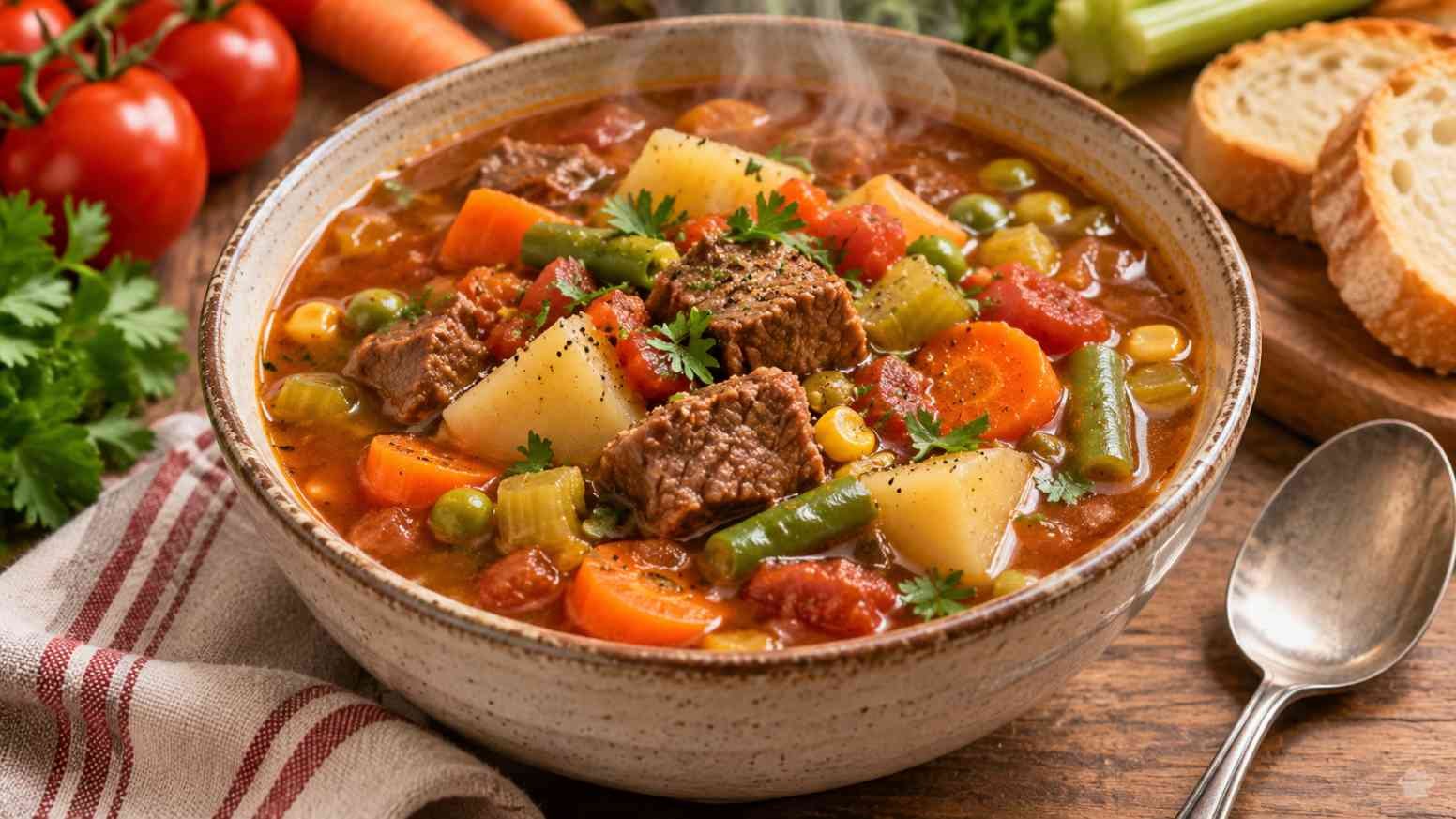
This Vegetable Beef Soup is that kind of meal. It is filling enough to serve on its own, easy to make in one pot, and especially good when the weather turns cold. The best part is how ordinary ingredients come together once you give them enough time. Beef chuck becomes beautifully tender as it simmers, carrots and celery add sweetness, and tomato paste gives the broth a deeper, savory flavor. A little Worcestershire sauce and smoked paprika round things out without overpowering the vegetables. The result sits somewhere between a traditional beef soup and a light beef stew, with plenty of broth for dipping a thick slice of bread.
Recipe Overview
| Details | Information |
|---|---|
| Recipe | Vegetable Beef Soup |
| Preparation Time | 20 minutes |
| Cooking Time | 1 hour 45 minutes to 2 hours |
| Total Time | About 2 hours 5 minutes to 2 hours 20 minutes |
| Servings | 6 |
| Cooking Method | Stovetop |
| Difficulty | Easy |
| Best Served | Hot, with crusty bread or dinner rolls |
Ingredients for Vegetable Beef Soup
You do not need anything particularly expensive to make this soup. In fact, a reasonably priced cut of beef that benefits from slow cooking is often the better choice. Most of the remaining ingredients are vegetables and pantry staples.
For the Beef and Soup Base
- 1 1/2 pounds (680 g) beef chuck: Trimmed of excess fat and cut into small, bite-sized cubes.
- 2 tablespoons olive oil: For browning the meat and cooking the vegetables.
- 1 medium yellow onion: Finely chopped.
- 3 garlic cloves: Minced.
- 2 tablespoons tomato paste: Adds richness and a deeper color to the broth.
- 6 cups low-sodium beef broth: Homemade or store-bought.
- 1 tablespoon Worcestershire sauce: Adds a pleasant savory depth.
- 1 teaspoon smoked paprika: For a subtle smoky note.
- 1 teaspoon dried thyme: Or 3 teaspoons fresh thyme leaves.
- 1 teaspoon dried oregano: Adds a gentle herbal flavor.
- 2 bay leaves: For the simmering broth.
- 1 teaspoon salt: Divided, plus more as needed.
- 1/2 teaspoon freshly ground black pepper: Plus more to taste.
For the Vegetables
- 3 medium carrots: Peeled and cut into thick rounds.
- 2 celery stalks: Sliced.
- 2 medium potatoes: Approximately 400 g, peeled if preferred and cut into 3/4-inch cubes.
- 1 cup green beans: Trimmed and cut into short pieces.
- 1 cup frozen peas: No need to thaw.
- 1 cup corn kernels: Fresh or frozen.
- 1 can (14.5 ounces) diced tomatoes: Including their juices.
- 2 tablespoons fresh parsley: Chopped, for finishing.
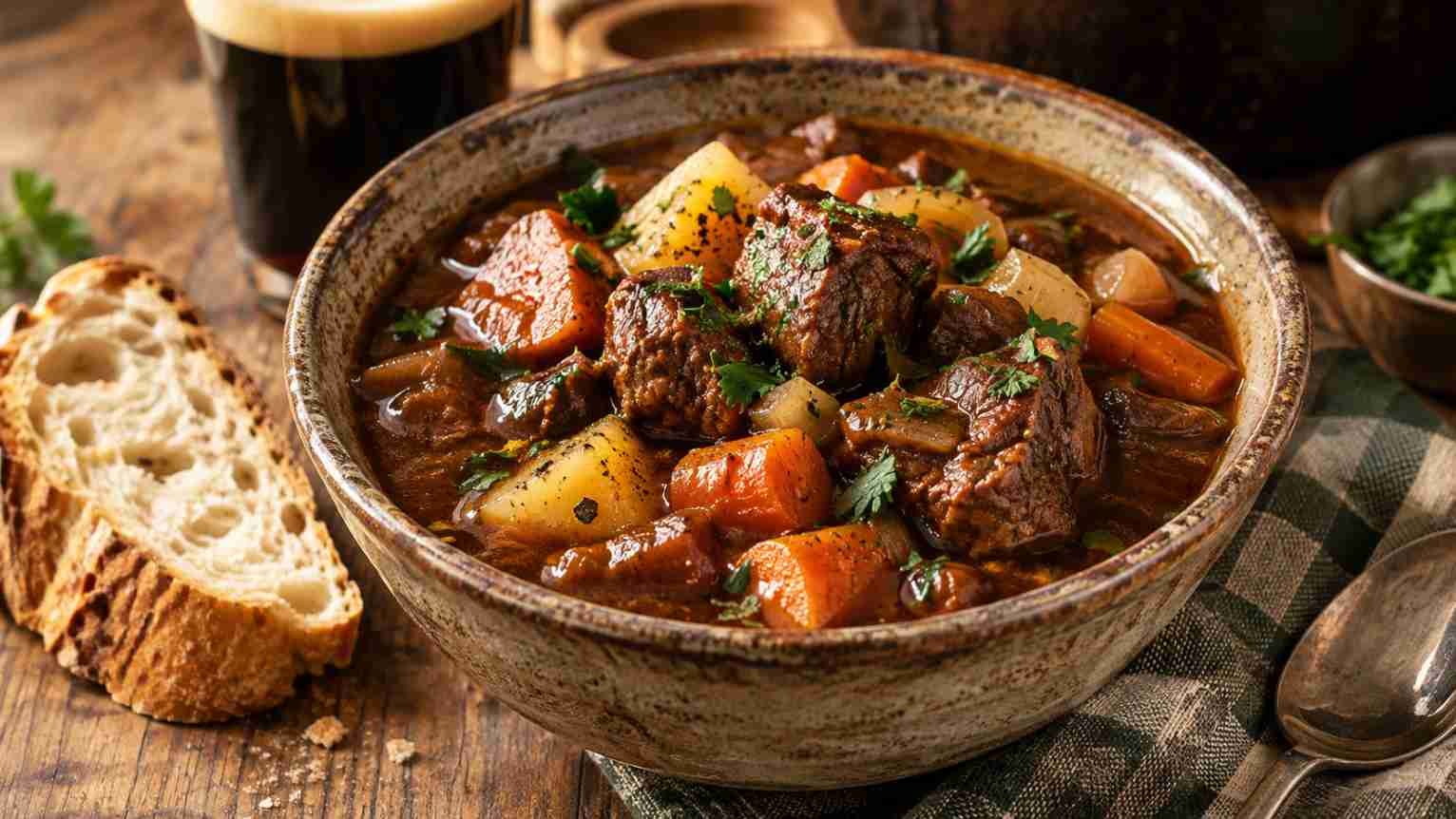
Also Read: Irish Beef and Guinness Stew
How to Make Vegetable Beef Soup
This soup is straightforward, but the order in which you add the ingredients matters. The beef needs time to soften, while the potatoes and quicker-cooking vegetables should go in later so they do not turn mushy. Use a large, heavy-bottomed pot or Dutch oven if you have one.
Step 1: Prepare and Season the Beef
Pat the beef cubes dry with paper towels. Moisture on the surface makes it harder to get a good brown crust, so this small step is worth doing. Season the pieces with about 1/2 teaspoon salt and 1/4 teaspoon black pepper. Cut any unusually large pieces down to roughly the same size so they cook evenly.
Step 2: Brown the Beef
Heat 1 tablespoon of olive oil in a large Dutch oven over medium-high heat. Add half the beef in a single layer, leaving a little space between the pieces. Let it cook undisturbed for about 2 minutes before turning. Continue browning for another 3 to 4 minutes until several sides develop a deep golden-brown crust. Transfer the beef to a plate and repeat with the remaining meat, adding a little more oil if necessary. The beef does not need to be cooked through at this stage. Browning it properly gives the finished soup much of its savory character.
Step 3: Cook the Aromatics
Reduce the heat to medium and add the remaining olive oil if needed. Add the chopped onion, carrots, and celery to the same pot. Cook for 5 to 6 minutes, stirring occasionally, until the onion begins to soften. Add the garlic and cook for another 30 seconds. Scrape any browned bits from the bottom as the vegetables release moisture. Those bits carry plenty of flavor, so do not wash the pot between steps.
Step 4: Build the Soup Base
Stir in the tomato paste and cook for about 1 minute, allowing it to darken slightly. Add the smoked paprika, thyme, and oregano, stirring briefly until fragrant. Pour in about 1 cup of the beef broth and scrape the bottom of the pot with a wooden spoon to release the browned bits. Return the beef and any juices from the plate to the pot. Add the remaining broth, diced tomatoes with their juices, Worcestershire sauce, bay leaves, remaining salt, and black pepper. Stir everything together.
Step 5: Simmer Until the Beef Is Tender
Bring the soup to a gentle boil, then immediately lower the heat. Partially cover the pot and simmer gently for 65 to 85 minutes, stirring occasionally. Avoid a vigorous boil, which can make the meat tighten and cause the broth to evaporate too quickly. Check the beef after about an hour. It should be getting tender, although it may still need additional cooking. If the liquid reduces more than expected, add a little hot water or broth. The beef should be nearly fork-tender before the potatoes go in.
Step 6: Add the Potatoes and Green Beans
Add the cubed potatoes and green beans. Continue simmering, partially covered, for another 15 to 20 minutes, or until the potatoes are tender when pierced with a fork. Stir gently so the potatoes keep their shape. Taste the broth at this stage and add a little more salt or pepper if needed.
Step 7: Finish with Peas and Corn
Stir in the frozen peas and corn. Cook for another 4 to 5 minutes, just until everything is heated through. Remove the bay leaves. The soup should have tender beef, vegetables that still hold their shape, and a flavorful broth. If you prefer a slightly thicker consistency, mash a few cooked potato cubes against the side of the pot and stir them back into the soup. This thickens the liquid naturally without adding flour or cream.
Step 8: Garnish and Serve
Turn off the heat and stir in the chopped parsley. Let the soup rest for about 5 minutes before serving. Ladle it into deep bowls, making sure each serving gets a generous amount of beef and vegetables. Serve hot with toasted bread, buttery dinner rolls, or a simple side salad.
Also Read: Beef and Noodle Casserole
What You Can Do Better
A few adjustments can make a noticeable difference to the finished soup. None are complicated, but they help avoid the most common problems with homemade beef soup.
Choose Beef That Benefits from Slow Cooking
Beef chuck is an excellent choice because its connective tissue gradually softens during gentle simmering. Very lean steak cuts are usually more expensive and do not necessarily produce a better soup. Look for beef with a modest amount of marbling, trim away large pieces of hard fat, and cut it into manageable chunks.
Do Not Crowd the Pot While Browning
If too much beef goes into the pot at once, it releases moisture and starts steaming instead of browning. Cooking the meat in two or three batches takes a few extra minutes, but the improved flavor is worth it. You want dark brown patches on the meat, not just a change from red to gray.
Keep the Vegetables in Larger Pieces
Very small pieces of carrot and potato can fall apart during extended cooking. Cut the vegetables into reasonably chunky, consistent pieces. The goal is to have vegetables that are tender enough to eat easily but still recognizable in the finished bowl.
Be Careful with the Salt
Store-bought broth and Worcestershire sauce already contain sodium, and the soup becomes more concentrated as it cooks. Start with the suggested seasoning, then adjust toward the end. Low-sodium broth gives you more control over the final taste.
Give the Beef the Time It Needs
Not every package of stewing beef becomes tender at exactly the same time. Some batches may need an extra 20 or 30 minutes. If the beef still feels chewy, continue simmering gently before adding the potatoes. Increasing the heat will not necessarily make the meat tender faster.
Balance the Broth at the End
Tomatoes can vary considerably in acidity. If the soup tastes a little sharp, let it simmer a few minutes longer and taste again. If it seems flat despite having enough salt, a small squeeze of lemon juice can brighten it. Add only a little at a time so the soup remains savory rather than sour.
Easy Variations to Try
Vegetable Beef Soup with Barley
For a more substantial soup, add 1/3 cup rinsed pearl barley during the beef’s simmering stage, allowing roughly 30 to 45 minutes for it to become tender. Add extra broth as needed because barley absorbs liquid while cooking. You can also reduce the potatoes slightly to keep the soup from becoming too heavy.
Ground Beef Vegetable Soup
If you want a quicker weeknight version, replace the beef chuck with 1 pound of lean ground beef. Brown it thoroughly, drain excess grease, and follow the same steps for the aromatics and broth. Because ground beef does not require prolonged tenderizing, you can add the potatoes much sooner and finish the soup in approximately 40 to 50 minutes.
Spicy Vegetable Beef Soup
Add 1/4 teaspoon crushed red pepper flakes with the dried herbs, then adjust to taste. A small amount of diced jalapeño cooked with the onion also works well. Keep the heat moderate so the natural sweetness of the vegetables still comes through.
Extra-Vegetable Version
Chopped zucchini, shredded cabbage, mushrooms, or spinach can all work in this soup. Add firmer vegetables early enough to soften, while spinach and zucchini are best added near the end. Keep an eye on the liquid level when adding extra ingredients so there is enough broth for everything.
Also Read: Beef Enchilada Casserole
What to Serve with Vegetable Beef Soup
This is already a complete meal, so side dishes can be simple. A crusty baguette is particularly useful for soaking up the broth, while warm sourdough adds a pleasant tang. Garlic bread or soft dinner rolls make the meal feel a little more substantial without requiring much additional preparation.
If you would like something fresh alongside the soup, a green salad with lemon vinaigrette works nicely. The acidity and crunch provide a contrast to the tender beef and cooked vegetables. For a larger family meal, serve the soup with grilled cheese sandwiches or homemade cornbread.
How to Store and Reheat Vegetable Beef Soup
Refrigerating
Allow the soup to cool promptly, using shallow containers to speed cooling, and refrigerate within 2 hours of cooking. Store it in airtight containers in a refrigerator maintained at 40°F (4°C) or below for up to 3 to 4 days. The broth often tastes richer the following day because the flavors have had more time to settle together.
Freezing
Vegetable Beef Soup freezes well, although the potatoes may become slightly softer after thawing. Portion the cooled soup into freezer-safe containers, leaving some space at the top for expansion. For best quality, use within 2 to 3 months. Label containers with the date so you know when each batch was prepared.
Reheating
Thaw frozen soup in the refrigerator overnight when possible. Reheat it in a saucepan over medium heat, stirring occasionally, until it is thoroughly hot and reaches 165°F (74°C). Add a splash of broth or water if it has thickened during storage. Individual portions can also be reheated in the microwave, stirring partway through for even heating.
Nutritional Information
Vegetable Beef Soup provides a combination of protein from the beef, carbohydrates from potatoes and vegetables, and dietary fiber from the vegetables and legumes. It can be a satisfying meal without needing an especially large portion. The figures below are approximate estimates for one of six servings, prepared with the listed ingredients and without bread or additional toppings. Actual values will depend on the beef’s fat content, the broth brand, and portion sizes.
| Nutrient | Approximate Amount per Serving |
|---|---|
| Calories | 390 kcal |
| Protein | 31 g |
| Total Carbohydrates | 31 g |
| Dietary Fiber | 5 g |
| Total Sugars | 8 g |
| Total Fat | 16 g |
| Saturated Fat | 5 g |
| Cholesterol | 90 mg |
| Sodium | 680 mg |
| Potassium | 1,000 mg |
| Iron | 4 mg |
Nutrition values are estimates rather than laboratory-tested figures. For precise dietary tracking, calculate the recipe using the exact ingredients and brands used in your kitchen.
Also Read: Slow Cooker Shredded Beef Sandwiches
Frequently Asked Questions
What Is the Best Cut of Beef for Vegetable Beef Soup?
Beef chuck is one of the most dependable options because it becomes tender with slow, moist cooking and contributes plenty of flavor to the broth. Boneless beef short ribs or other braising cuts can also work, though cooking times may vary. Avoid extremely lean cuts if you want tender, richly flavored chunks of beef.
Can I Make Vegetable Beef Soup in a Slow Cooker?
Yes. Brown the beef and briefly cook the onion, garlic, and tomato paste on the stovetop first. Transfer everything except the peas, corn, and parsley to a slow cooker. Cook on low for approximately 7 to 8 hours or high for 4 to 5 hours, until the beef and potatoes are tender. Add the peas and corn during the final 20 to 30 minutes. Use about 4 to 5 cups of broth initially because less liquid evaporates in a slow cooker.
Can I Use Frozen Mixed Vegetables?
Absolutely. Frozen mixed vegetables are convenient and can reduce preparation time. Add them toward the end of cooking so they do not become excessively soft. If the mixture already includes carrots, peas, corn, and green beans, reduce or omit the corresponding fresh vegetables to keep the proportions balanced.
How Do I Thicken Vegetable Beef Soup?
The simplest method is to mash a few cooked potato pieces directly into the broth. For a more pronounced thickening effect, mix 1 tablespoon cornstarch with 2 tablespoons cold water, stir the mixture into the gently simmering soup, and cook for another 2 to 3 minutes. Start with a small amount because the soup should remain easy to ladle rather than becoming a thick gravy.
Why Is My Beef Still Tough?
Tough beef usually needs more time at a gentle simmer, particularly when using chuck or another cut rich in connective tissue. Check that there is enough liquid in the pot, keep the heat low, and continue cooking until the meat yields easily to a fork. Avoid adding the quick-cooking vegetables until the beef is nearly ready.
Can I Make This Soup a Day Ahead?
Yes, and it is a practical choice for meal preparation. Prepare the soup as directed, cool it safely, and refrigerate it in airtight containers. When reheating the next day, add a little broth if necessary and warm it thoroughly. Fresh parsley added just before serving will help brighten the finished bowl.