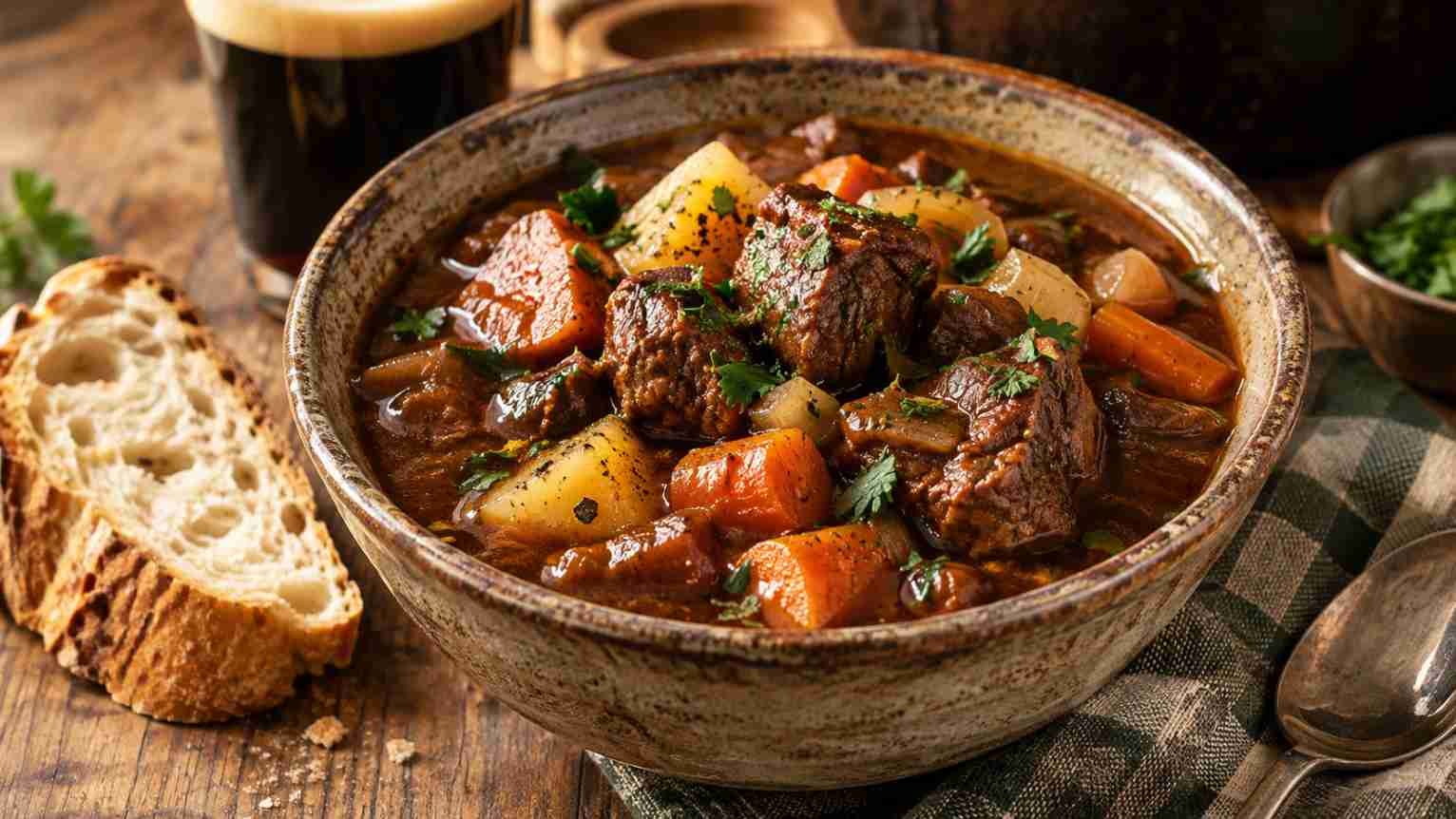
Irish Beef and Guinness Stew takes that familiar comfort food and gives it a richer, darker flavor thanks to a generous splash of Guinness stout. The beef becomes wonderfully tender, the vegetables soften into the gravy, and the sauce develops a savory depth that is difficult to achieve with ordinary beef stock alone.
This is the kind of dinner worth making when you have a quiet afternoon at home. Most of the cooking happens without much attention, and the finished stew tastes even better after the flavors have had a chance to settle. Serve it with buttery mashed potatoes or a thick slice of crusty bread, and you have a complete, comforting meal.
What Makes Guinness Beef Stew Different?
The ingredient that sets this stew apart is Guinness Draught, an Irish stout known for its roasted malt flavor and dark color. As it cooks with beef, vegetables, and stock, it brings a slightly earthy bitterness that balances the richness of the meat. The finished gravy has a deep brown color and a more complex taste than a stew made with stock alone.
Guinness does not make the stew taste overwhelmingly of beer. Its roasted notes blend with the browned beef, tomato paste, and herbs to create a robust sauce. However, some bitterness can remain, especially if the gravy is reduced too aggressively.
Another important detail is the cut of beef. Chuck roast works particularly well because its connective tissue gradually softens during slow cooking. Lean steak may seem like a better choice, but it can become dry and chewy when simmered for several hours.
Recipe Overview
| Details | Information |
|---|---|
| Recipe | Irish Beef and Guinness Stew |
| Cuisine | Irish-inspired |
| Course | Main Course, Dinner |
| Preparation Time | 20 minutes |
| Cooking Time | 2 hours 45 minutes to 3 hours |
| Total Time | Approximately 3 hours 15 minutes |
| Servings | 6 |
| Cooking Method | Stovetop |
| Difficulty | Easy to Moderate |
Also Read: Corned Beef with Cabbage Recipe
Ingredients for Irish Beef and Guinness Stew
This version uses chuck beef, Guinness stout, beef stock, and a few simple vegetables. The ingredients are straightforward, but how you cook them makes a noticeable difference to the final flavor.
For the Beef and Gravy
- 2½ pounds (1.1 kg) beef chuck roast: Cut into large, roughly 2-inch pieces.
- 2 tablespoons olive oil: For browning the beef and cooking the vegetables.
- 4 ounces (115 g) bacon: Chopped into small pieces for extra savory flavor.
- 1 teaspoon salt: Divided, with more added if needed.
- ½ teaspoon freshly ground black pepper: Plus extra to taste.
- 3 tablespoons all-purpose flour: Helps the gravy thicken gradually as the stew cooks.
- 1 can (14.9 fluid ounces/440 ml) Guinness Draught: Provides the characteristic dark, roasted flavor.
- 2½ cups low-sodium beef stock: Creates the main cooking liquid.
- 2 tablespoons tomato paste: Adds sweetness, acidity, and body to the sauce.
- 1 teaspoon Worcestershire sauce: Adds a subtle savory depth.
Vegetables and Aromatics
- 2 medium yellow onions: Roughly chopped.
- 4 garlic cloves: Finely minced.
- 3 medium carrots: Peeled and cut into thick pieces.
- 2 celery stalks: Chopped into bite-sized pieces.
- 2 medium Yukon Gold potatoes: Peeled and cut into large chunks.
- 2 bay leaves: For a gentle herbal background.
- 3 fresh thyme sprigs: Or 1 teaspoon dried thyme.
- 1 tablespoon chopped fresh parsley: Optional, for serving.
How to Make Irish Beef and Guinness Stew
The process is fairly simple: brown the beef, build a flavorful base, add the stout and stock, and let everything simmer until the meat is tender. A heavy-bottomed Dutch oven is ideal because it distributes heat evenly and reduces the chance of the gravy catching on the bottom.
Step 1: Prepare and Season the Beef
Remove the beef from the refrigerator while you prepare the vegetables. Cut it into large chunks, approximately 2 inches across. Avoid cutting the pieces too small because they shrink during cooking and can break apart before the sauce has developed its full flavor.
Pat the beef dry with paper towels. This step is important because excess moisture causes the meat to steam rather than brown. Season with approximately ¾ teaspoon salt and the black pepper.
Step 2: Brown the Beef in Batches
Heat 1 tablespoon olive oil in a large Dutch oven over medium-high heat. Add a portion of the beef, leaving enough space between the pieces for moisture to escape. Cook for approximately 2 to 3 minutes per side, turning until several surfaces develop a deep brown crust.
Transfer the browned beef to a plate and repeat with the remaining pieces, adding the extra tablespoon of oil if necessary. Do not worry if the beef is still raw in the middle. It will finish cooking slowly in the gravy.
The browned bits left on the bottom of the pot are particularly valuable. They will dissolve into the cooking liquid later and give the sauce an additional layer of flavor.
Step 3: Cook the Bacon and Onions
Reduce the heat to medium and add the chopped bacon to the same pot. Cook for 4 to 5 minutes, stirring occasionally, until some of the fat has rendered and the edges begin to brown.
Add the chopped onions and cook for another 5 minutes, stirring to loosen the browned bits. The onions should soften and become slightly golden. Stir in the garlic and cook for about 30 seconds, just until fragrant. Avoid burning it, as scorched garlic can give the gravy an unpleasant bitterness.
Step 4: Add the Tomato Paste and Flour
Stir the tomato paste into the onion mixture and cook for about 1 minute. Cooking it briefly helps remove its raw, sharp taste and brings out a deeper savory sweetness.
Sprinkle the flour evenly over the ingredients and stir continuously for another minute. The mixture may look thick and slightly sticky, which is normal. The flour will eventually disperse into the cooking liquid and help create a smooth gravy.
Step 5: Pour in the Guinness
Slowly pour the Guinness into the pot, stirring as you go. Use a wooden spoon to scrape the bottom thoroughly and release any remaining browned bits. Allow the mixture to bubble gently for 2 to 3 minutes.
The stout may foam when first poured into the hot pot. This is perfectly normal. Once the foam settles, the sauce will begin developing its characteristic dark color.
Step 6: Add the Stock, Herbs, and Beef
Pour in the beef stock and Worcestershire sauce. Return the browned beef to the pot along with any juices collected on the plate. Add the bay leaves and thyme, then stir gently to combine everything.
Bring the liquid to a gentle simmer, reduce the heat to low, and cover the pot with a lid. Cook for approximately 1 hour 30 minutes, maintaining a slow, occasional bubble rather than a vigorous boil.
Step 7: Add the Vegetables
After the beef has been simmering for about 90 minutes, add the carrots, celery, and potatoes. Stir carefully so the vegetables are mostly submerged in the gravy.
Cover and continue simmering for another 45 to 60 minutes. Check occasionally and add a small splash of water or stock if the liquid reduces too much.
The stew is ready for the final stage when the beef is tender enough to separate easily with a fork and the potatoes are cooked through.
Step 8: Reduce and Adjust the Gravy
Remove the lid and let the stew simmer gently for another 15 to 25 minutes, or until the gravy reaches your preferred consistency. Stir occasionally, particularly near the bottom of the pot.
If the gravy seems too thick, add a little warm stock. If it remains thin, continue simmering uncovered. Taste before adding the remaining salt because the bacon and stock already contribute seasoning.
Remove the bay leaves and thyme stems. Turn off the heat and leave the stew to rest for 10 minutes before serving. This short resting period helps the gravy settle and makes the flavors taste more rounded.
Step 9: Serve While Hot
Ladle the beef, vegetables, and generous spoonfuls of gravy into deep bowls. Scatter over a little fresh parsley if desired. Serve immediately with bread, or spoon the stew over creamy mashed potatoes for an especially filling dinner.
Also Read: Affogato Recipe
What You Can Do Better
A good beef stew is forgiving, but a few small decisions can turn an ordinary pot into something much more memorable.
Choose Beef with Enough Marbling
Chuck roast is an excellent choice because its fat and connective tissue provide both flavor and tenderness. Look for meat with some visible marbling rather than completely lean pieces. Boneless short ribs can also work, although they are usually more expensive.
Take Your Time Browning the Meat
Do not rush this stage by putting all the beef into the pot at once. Crowding lowers the temperature and causes the meat to release moisture. A well-browned crust makes the stew more savory and gives the gravy a richer color without needing additional ingredients.
Keep the Simmer Gentle
A stew should barely bubble during most of its cooking time. Rapid boiling can tighten the meat fibers, reduce the liquid too quickly, and cause the vegetables to break apart. Low, steady heat gives the beef time to become tender without making the gravy overly concentrated.
Be Careful with Guinness Bitterness
Guinness brings a roasted, slightly bitter character to the stew. Avoid using strongly hopped beers as substitutes because they may create a harsher flavor when reduced. If the finished sauce tastes slightly too bitter, a small pinch of brown sugar can help balance it. Add only a little at a time and taste before adding more.
Add Potatoes Later
Potatoes do not need the same long cooking time as beef chuck. Adding them halfway through the simmer helps them keep their shape. If you plan to serve the stew over mashed potatoes, you can leave the potatoes out of the pot altogether and add an extra carrot or parsnip instead.
Consider Making It a Day Ahead
Beef stew is an excellent make-ahead dinner. After cooling and refrigerating, its flavors often become more integrated by the next day. Reheat gently and add a little stock if the gravy has thickened in the refrigerator.
What to Serve with Irish Beef and Guinness Stew
This stew has enough meat and vegetables to be a meal on its own, but something to absorb the rich gravy makes it even better.
- Creamy mashed potatoes: A classic pairing that works beautifully with the dark gravy. You can omit the potatoes from the stew when serving it this way.
- Irish soda bread: Its sturdy texture and slightly tangy flavor make it ideal for dipping into the sauce.
- Crusty sourdough bread: A simple option when you want something that requires no additional cooking.
- Buttered cabbage: Adds a lighter vegetable side that complements the richness of the beef.
- Steamed green beans: Their fresh, crisp texture provides a useful contrast to the slow-cooked ingredients.
- Colcannon: Irish-style mashed potatoes with cabbage or kale make the meal especially hearty.
Also Read: Crispy Bizarrely Good Wings
Can You Make Guinness Beef Stew in a Slow Cooker?
Yes. A slow cooker is particularly convenient when you want to prepare dinner early and leave it cooking throughout the day. For the best results, brown the beef and cook the bacon, onions, garlic, tomato paste, and flour on the stovetop before transferring everything to the slow cooker.
Reduce the beef stock to approximately 1½ cups because slow cookers retain more moisture than uncovered pots. Add the Guinness, herbs, beef, and remaining ingredients, then cook on LOW for 7 to 8 hours, or until the beef is fork-tender. Add the potatoes and other vegetables during the final 3 to 4 hours if you want them to hold their shape.
If the sauce needs thickening at the end, transfer some of the cooking liquid to a saucepan and simmer it until reduced, then stir it back into the stew.
How to Store and Reheat Leftover Stew
Refrigerating
Allow the stew to cool slightly, then transfer it to shallow airtight containers and refrigerate promptly, within 2 hours of cooking. It will keep for approximately 3 to 4 days at 40°F (4°C) or below. Avoid leaving a large pot on the counter for several hours because the center can remain warm for too long.
Freezing
Guinness beef stew freezes well. Divide it into individual portions and store in freezer-safe containers for up to 3 months for the best quality. Leave a little space at the top of each container because the liquid expands during freezing.
Potatoes may become softer or slightly grainy after thawing. If you are cooking specifically for the freezer, consider leaving them out and preparing fresh potatoes when serving.
Reheating
Thaw frozen stew overnight in the refrigerator. Reheat in a saucepan over medium-low heat, stirring occasionally and adding a splash of stock if needed. Heat until steaming hot throughout, reaching 165°F (74°C) for safe reheating.
Nutritional Information
The following values are approximate estimates for one of six servings, based on the ingredients in this version of the recipe, including potatoes and bacon. Actual nutrition will vary according to the fat content of the beef, bacon, stock, beer, portion size, and the amount of fat removed after cooking. Side dishes are not included.
| Nutrient | Approximate Amount Per Serving |
|---|---|
| Calories | 650 kcal |
| Protein | 49 g |
| Total Carbohydrates | 30 g |
| Dietary Fiber | 4 g |
| Total Sugars | 6 g |
| Total Fat | 34 g |
| Saturated Fat | 12 g |
| Cholesterol | 160 mg |
| Sodium | 850 mg |
Note: These figures are estimates rather than laboratory-tested values. For medical or dietary tracking, calculate nutrition using the exact ingredient brands and quantities you use.
Also Read: Crispy Baked Chicken Drumsticks
Frequently Asked Questions
Does Guinness Beef Stew Taste Like Beer?
Not in the same way as drinking Guinness. The stout contributes roasted malt flavors, mild bitterness, and a deep color that blend with the beef and vegetables. You may notice a faint stout character in the finished sauce, but it should not overpower the other ingredients.
Can I Make This Stew Without Alcohol?
Yes, although the flavor will be different. Replace the Guinness with additional beef stock and add a little Worcestershire sauce for depth. A small amount of balsamic vinegar can also provide acidity. The result will be a delicious beef stew, but it will not have the characteristic Guinness flavor. Regular Guinness stew should not be considered alcohol-free because cooking does not reliably remove all alcohol.
What Is the Best Cut of Beef for Guinness Stew?
Beef chuck is one of the most reliable choices. It contains enough connective tissue to become tender during long, moist cooking. Boneless beef short ribs or brisket can also work well. Avoid very lean, quick-cooking cuts such as sirloin because they are less suited to prolonged simmering.
Why Is My Beef Still Tough After Two Hours?
Beef chuck sometimes needs additional cooking time, depending on the size of the pieces and the temperature of the simmer. If the meat is still firm, continue cooking gently and check it every 20 minutes. Adding more heat usually will not solve the problem as effectively as giving the connective tissue more time to soften.
Why Is My Guinness Stew Bitter?
A little bitterness is natural because stout contains roasted barley and hops. Excessive bitterness may come from using a strongly hopped beer, reducing the sauce too far, or burning the garlic or tomato paste. Diluting the sauce with a little stock and balancing it with a small pinch of brown sugar can help.
Can I Prepare This Stew in the Oven?
Yes. After browning the meat and combining the ingredients, cover the Dutch oven and place it in an oven preheated to 325°F (163°C). Cook for approximately 2 to 2½ hours, adding the vegetables partway through if desired. Continue cooking until the beef is tender, then uncover briefly if the gravy needs reducing.
Can Children Eat Guinness Beef Stew?
Because the recipe contains beer, some alcohol may remain after cooking. If you are preparing the meal for children or anyone who needs to avoid alcohol completely, use the alcohol-free beef stock variation instead.