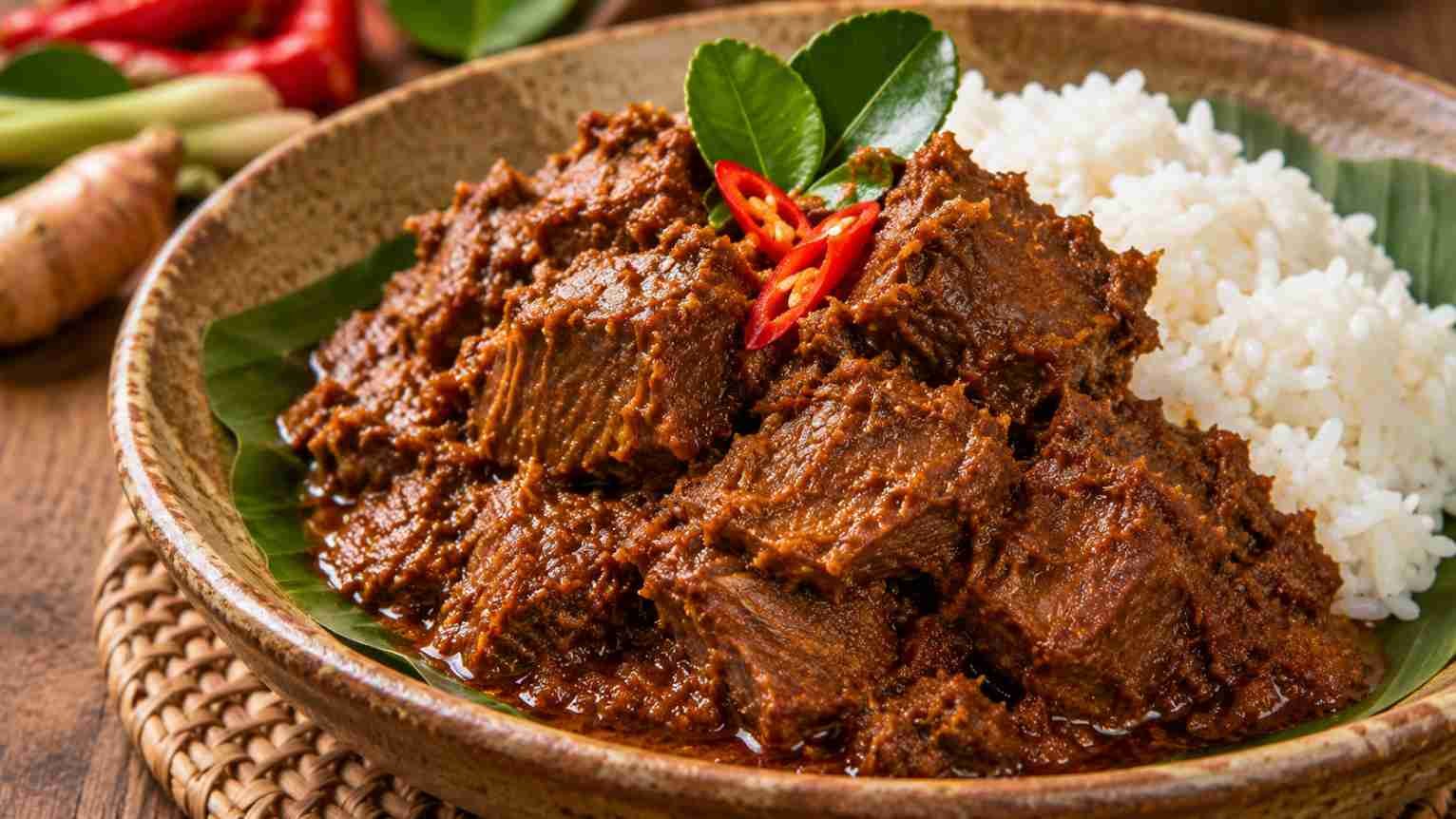
Beef Rendang is the kind of dish that makes you appreciate slow cooking. The beef becomes wonderfully tender, the coconut milk gradually thickens, and the spices develop a deep, rich flavour that is difficult to achieve with a quick curry. By the time it is ready, every piece of meat is covered in a dark, intensely aromatic coating of toasted coconut and spices.
Originating from the Minangkabau people of West Sumatra, Indonesia, rendang has become a much-loved dish throughout Southeast Asia, particularly in Malaysia. Unlike a typical curry with plenty of gravy, traditional rendang is cooked until most of the liquid has evaporated. What remains is concentrated, fragrant and full of flavour.
This homemade Beef Rendang recipe uses slowly simmered beef, coconut milk, fresh aromatics and a carefully balanced mixture of spices. It takes a few hours, but most of that time is spent allowing the ingredients to cook together. Serve it with steamed rice, and you have a satisfying meal that is well worth the effort.
Beef Rendang Recipe Details
| Detail | Information |
|---|---|
| Recipe Name | Beef Rendang |
| Cuisine | Indonesian and Malaysian |
| Course | Main Course |
| Preparation Time | 25 minutes |
| Cooking Time | 2 hours 30 minutes to 3 hours |
| Total Time | Approximately 3 hours to 3 hours 25 minutes |
| Servings | 6 |
| Cooking Method | Stovetop, Slow Simmering |
| Difficulty | Moderate |
What Makes Beef Rendang Different?
The first thing to understand about Beef Rendang is that it should not finish with a large amount of sauce. During cooking, coconut milk and aromatic ingredients surround the beef and slowly reduce. The mixture changes from a light-coloured gravy into a thick coating that clings to the meat.
That reduction is responsible for much of rendang’s distinctive character. As the water evaporates, the coconut solids, spices and natural fats become more concentrated. Gentle frying begins to take place toward the end, creating the deep brown colour and roasted flavour associated with well-made rendang.
The result is rich but not simply hot. Chilli provides warmth, lemongrass and lime leaves bring freshness, and tamarind adds a little sharpness to balance the richness of the coconut milk. The beef should be soft enough to pull apart with a fork while still holding its shape when served.
Ingredients for Beef Rendang
For the best flavour, use fresh ginger, garlic and lemongrass rather than relying entirely on dried seasonings. A heavy-bottomed cooking pot is also useful because it distributes heat more evenly during the long simmer.
For the Rendang Spice Paste
| Ingredient | Quantity |
|---|---|
| Dried red chillies, soaked and drained | 8 to 10, according to preferred heat |
| Shallots, peeled and roughly chopped | 5 medium |
| Garlic cloves | 5 |
| Fresh ginger, peeled and sliced | 30 g |
| Fresh galangal, sliced | 25 g |
| Lemongrass stalks, tender lower sections only | 2 |
| Ground coriander | 1 teaspoon |
| Ground cumin | 1/2 teaspoon |
| Water, for blending | 2 to 4 tablespoons, as needed |
For the Beef and Coconut Sauce
| Ingredient | Quantity |
|---|---|
| Beef chuck, cut into large cubes | 1 kg (2.2 lb) |
| Full-fat coconut milk | 400 ml |
| Water | 200 ml, plus extra if needed |
| Neutral cooking oil | 3 tablespoons |
| Cinnamon stick | 1 medium |
| Star anise | 2 whole |
| Green cardamom pods, lightly crushed | 3 |
| Whole cloves | 2 |
| Makrut lime leaves | 4 |
| Unsweetened desiccated coconut | 40 g (approximately 1/2 cup) |
| Tamarind paste | 2 teaspoons |
| Palm sugar or brown sugar | 2 teaspoons |
| Salt | 1 to 1 1/2 teaspoons, or to taste |
Also Read: Slow Cooker Roast Lamb Leg
Choosing the Right Beef
Beef chuck is particularly suitable for rendang because it contains connective tissue that softens during slow cooking. Lean cuts intended for quick frying can become dry and chewy if simmered for several hours.
Look for beef with a little marbling and cut it into pieces about 4 to 5 cm wide. Small cubes tend to break apart during the final reduction, especially when the sauce becomes thick and requires more frequent stirring. Beef brisket or boneless short ribs are also suitable alternatives, although their cooking times may vary.
How to Make Beef Rendang
There are two important stages in making good rendang: first, cooking the beef gently until tender, and second, reducing the coconut sauce until it becomes dark and concentrated. Rushing either stage can affect the finished texture and flavour.
Step 1: Prepare the Chillies and Aromatics
Place the dried red chillies in a heatproof bowl and cover them with hot water. Leave them to soften for approximately 15 minutes, then drain. Remove the seeds before soaking if you prefer a milder rendang. While the chillies are soaking, peel and chop the shallots, garlic, ginger and galangal. Remove the tough outer layers of the lemongrass and slice the tender lower sections finely. Cutting these ingredients into smaller pieces makes them easier to blend into a smooth paste.
Step 2: Make the Rendang Spice Paste
Transfer the softened chillies, shallots, garlic, ginger, galangal, lemongrass, coriander and cumin to a food processor. Blend until a reasonably smooth paste forms. Add water a tablespoon at a time if the mixture is too thick for the blades to move properly. Avoid adding more water than necessary, since the extra moisture will need to evaporate during cooking. Scrape down the sides of the processor to make sure there are no large pieces of lemongrass or ginger remaining.
Step 3: Toast the Coconut
Place the desiccated coconut in a dry frying pan over low to medium heat. Stir continuously for 4 to 6 minutes, or until it turns golden brown and develops a nutty aroma. Coconut can burn quickly once it begins to colour, so do not leave the pan unattended. Remove it from the heat and allow it to cool. For a smoother sauce, briefly pulse the toasted coconut in a blender or grind it with a mortar and pestle. Set it aside until needed.
Step 4: Brown the Beef
Pat the beef cubes dry with kitchen paper. Heat 1 tablespoon of oil in a large heavy-bottomed pot over medium-high heat. Add the beef in two or three batches, allowing enough space between the pieces for proper browning. Cook briefly on each side until a brown crust develops, then transfer the beef to a plate. The meat does not need to cook through at this point. Browning is an optional variation on traditional methods, but it adds a pleasant roasted note to this version.
Step 5: Cook the Spice Paste
Lower the heat to medium and add the remaining 2 tablespoons of oil to the same pot. Spoon in the prepared spice paste and cook for approximately 6 to 8 minutes, stirring regularly. At first, the paste may look watery and smell strongly of raw onion and garlic. As it cooks, the moisture begins to disappear, the colour deepens and the aroma becomes sweeter and more fragrant. If the paste starts sticking aggressively to the bottom, reduce the heat and add a small splash of water. Cooking the paste thoroughly is essential because raw aromatics can leave an unpleasant harsh flavour in the finished dish.
Step 6: Add the Whole Spices and Coconut Milk
Add the cinnamon stick, star anise, cardamom pods and cloves to the pot. Stir for about 30 seconds to release their aroma. Return the browned beef along with any juices collected on the plate. Pour in the coconut milk and 200 ml of water, then add the makrut lime leaves, tamarind paste, palm sugar and 1 teaspoon of salt. Stir until the spice paste is evenly distributed and the beef is surrounded by the coconut mixture.
Step 7: Simmer Until the Beef Becomes Tender
Bring the mixture just to a gentle simmer, then lower the heat. Partially cover the pot and cook for approximately 1 hour 45 minutes to 2 hours 15 minutes, stirring occasionally. The sauce should bubble softly rather than boil vigorously. Check the liquid level from time to time and add a little water if the mixture becomes too thick before the beef has softened. Cooking time depends on the cut, size and quality of the meat. The beef is ready for the next stage when a fork enters it easily, although the pieces should still remain mostly intact.
Step 8: Add the Toasted Coconut and Reduce
Once the beef is nearly tender, remove the lid completely and stir in the toasted coconut. Continue cooking over low to medium-low heat for another 30 to 45 minutes, or longer if needed. As the excess moisture evaporates, the sauce will thicken considerably. Stir more frequently during this stage, gently turning the meat so that it remains coated without breaking apart. Eventually, the coconut mixture will become darker and small amounts of oil may begin to separate. This is the stage that gives rendang its characteristic texture and concentrated flavour.
Step 9: Adjust the Seasoning
Taste a little of the coating and adjust the salt if necessary. If the dish seems overly sharp, add a small pinch of palm sugar. If it tastes too sweet or heavy, a few drops of tamarind liquid may restore the balance. The final flavour should be savoury and deeply spiced, with gentle sweetness and acidity in the background. Remove the cinnamon stick, star anise and other large whole spices where possible before serving.
Step 10: Rest and Serve
Turn off the heat once the beef is tender and covered with a thick, dark sauce. Allow the rendang to rest for approximately 10 minutes before serving. This brief resting period helps the coating settle around the meat. Spoon the beef onto a serving dish and accompany it with freshly cooked rice. There should be very little loose liquid left in the pot, although the meat itself should remain moist and succulent.
Also Read: Braised Beef Short Ribs in Red Wine Sauce
What You Can Do Better
A good rendang is not difficult because of complicated techniques. The main challenge is recognising when to adjust the heat, when to add moisture and when to stop cooking. These small details can make a noticeable difference.
Use Full-Fat Coconut Milk
Light coconut milk may seem convenient, but it generally produces a thinner sauce with less richness. Full-fat coconut milk provides the fat and coconut solids needed for the proper reduction. Shake the can before opening so that the cream and liquid are mixed together.
Cook the Paste Until It Smells Fragrant
Adding coconut milk immediately after blending the aromatics can leave the finished dish tasting slightly raw. Give the paste enough time in the pan for its excess water to evaporate. It should smell cooked, fragrant and slightly sweet before you add the liquid ingredients.
Keep the Heat Gentle During the Long Simmer
High heat does not necessarily make rendang better or faster. It can reduce the sauce before the beef has become tender and may cause the coconut solids to catch on the bottom of the pot. Maintain a gentle simmer for most of the cooking process and increase the attention you give the pot as the sauce thickens.
Do Not Rush the Final Reduction
The last stage is where rendang develops much of its colour and complexity. A thin, pale sauce means it still needs time to reduce. However, thickened coconut and spice paste can burn rapidly, so keep the heat controlled and stir frequently. If the beef is already falling apart, lift the pieces out temporarily while you finish reducing the sauce, then return them to the pot.
Balance the Chilli Rather Than Eliminating It
The chillies contribute more than heat. They also provide colour and a subtle fruity flavour. If you prefer a mild dish, remove the seeds and reduce the number of chillies rather than leaving them out entirely. You can also combine mild dried red chillies with a smaller quantity of hotter varieties.
Make the Rendang a Day Ahead
Rendang is particularly convenient for entertaining because it reheats well. Preparing it the day before serving allows the spice flavours to settle and blend together. Reheat slowly with a small splash of water if necessary, stirring gently to preserve the meat’s texture.
Also Read: Vegetable Beef Soup
Ingredient Substitutions and Variations
What If You Cannot Find Galangal?
Galangal has a distinctive sharp, citrusy character that is different from ordinary ginger. If it is unavailable, replace it with a similar amount of fresh ginger and a small pinch of black pepper. The flavour will not be identical, but the dish can still turn out well.
Can You Use Fresh Chillies?
Yes. Fresh red chillies can replace dried chillies, although they produce a slightly different taste and colour. Use about 6 to 8 medium red chillies, adjusting the amount according to their heat level. Remove the seeds for a gentler result.
Is Toasted Coconut Necessary?
Toasted coconut adds flavour, texture and body to the sauce. It helps create the slightly nutty finish that makes rendang distinctive. You can prepare it in advance and store it in an airtight container for a short period, but freshly toasted coconut generally has the best aroma.
Can You Make Beef Rendang in a Slow Cooker?
Yes, with a little adjustment. Prepare and fry the spice paste on the stovetop, brown the beef if desired, and transfer everything to the slow cooker with the remaining ingredients. Reduce the additional water to approximately 50 ml initially, since slow cookers retain much more moisture. Cook on low for about 6 to 8 hours, or until the beef is tender. Transfer the mixture to a wide saucepan for the final uncovered reduction. That last step is important if you want a thick, traditional-style finish rather than a coconut-based beef stew.
What to Serve with Beef Rendang
Rendang is intensely flavoured, so the best accompaniments are usually simple. Plain steamed jasmine rice is an excellent choice because it balances the richness without competing with the spices. Coconut rice is another good option when you want a particularly satisfying meal.
For a more varied table, serve the beef with thinly sliced cucumber, lightly pickled vegetables or a fresh herb salad. Their cool, crisp texture provides a welcome contrast to the tender meat. Roti or other soft flatbreads can also be served alongside the rendang, especially when there is a little extra coating left to scoop up.
How to Store and Reheat Beef Rendang
Refrigerator Storage
Allow the cooked rendang to cool briefly, then transfer it into shallow airtight containers and refrigerate within 2 hours of cooking. Properly refrigerated leftovers can be kept for approximately 3 to 4 days at 4°C (40°F) or below. Store the rice separately if you plan to serve it again.
Freezing Instructions
Beef Rendang is suitable for freezing. Divide it into meal-sized portions and place them in freezer-safe containers, leaving a little space at the top. For the best eating quality, use within approximately 2 to 3 months, although food kept continuously frozen at 0°F (-18°C) remains safe for longer. Thaw frozen portions in the refrigerator rather than leaving them on the kitchen counter.
Reheating
Place the rendang in a saucepan with a tablespoon or two of water. Cover and warm gently over low heat, stirring occasionally until the beef is thoroughly heated. Reheat leftovers to 74°C (165°F). Avoid vigorous boiling, which can break apart tender meat and dry out the sauce. If using a microwave, cover the container, stir partway through and make sure the centre is fully hot.
Also Read: Irish Beef and Guinness Stew
Beef Rendang Nutritional Information
The following figures are approximate estimates for one serving when the recipe is divided into six equal portions. Actual nutritional values will vary depending on the beef cut, coconut milk brand, oil absorption and final yield. Rice and other side dishes are not included.
| Nutrient | Estimated Amount Per Serving |
|---|---|
| Calories | 590 kcal |
| Protein | 38 g |
| Total Fat | 43 g |
| Saturated Fat | 23 g |
| Carbohydrates | 13 g |
| Dietary Fibre | 3 g |
| Total Sugars | 5 g |
| Sodium | 680 mg |
Nutrition note: These values are estimates rather than laboratory-tested measurements. For a more precise calculation, use the nutritional labels of your actual ingredients and account for the amount of fat remaining in the finished dish.
Frequently Asked Questions
Why Is My Beef Rendang Still Watery?
The most likely reason is that the sauce has not reduced enough. Remove the lid and continue cooking gently until the water evaporates and the spices form a thick coating around the beef. A wide pot can help moisture escape more quickly, but watch the bottom carefully to prevent scorching.
Why Is the Beef Tough After Cooking?
Beef chuck needs enough time for its connective tissue to soften. If the meat is still tough, add a little water, cover the pot and continue simmering gently. Do not increase the heat dramatically to speed things up. Tough beef often simply needs more time.
Is Beef Rendang Supposed to Be Spicy?
It can be moderately spicy, but the heat depends on the type and quantity of chillies. The flavour should be complex rather than dominated by chilli. For a milder version, use fewer dried chillies and remove their seeds before blending.
What Colour Should Beef Rendang Be?
Well-reduced rendang is generally deep brown rather than bright red or orange. The colour develops as the coconut mixture reduces and the ingredients gradually brown. It is not necessary to force an extremely dark colour if doing so would risk burning the spices.
Can I Make Beef Rendang Without Coconut Milk?
Coconut milk is a defining ingredient in this style of rendang. Removing it changes both the flavour and the cooking process considerably. For a more traditional result, use full-fat coconut milk rather than replacing it with dairy cream or ordinary milk.
Does Beef Rendang Taste Better the Next Day?
Many people enjoy rendang even more after it has been refrigerated overnight. The spices have time to settle, and reheating brings their aromas back to life. It is also a practical dish to prepare ahead for family meals or special occasions.