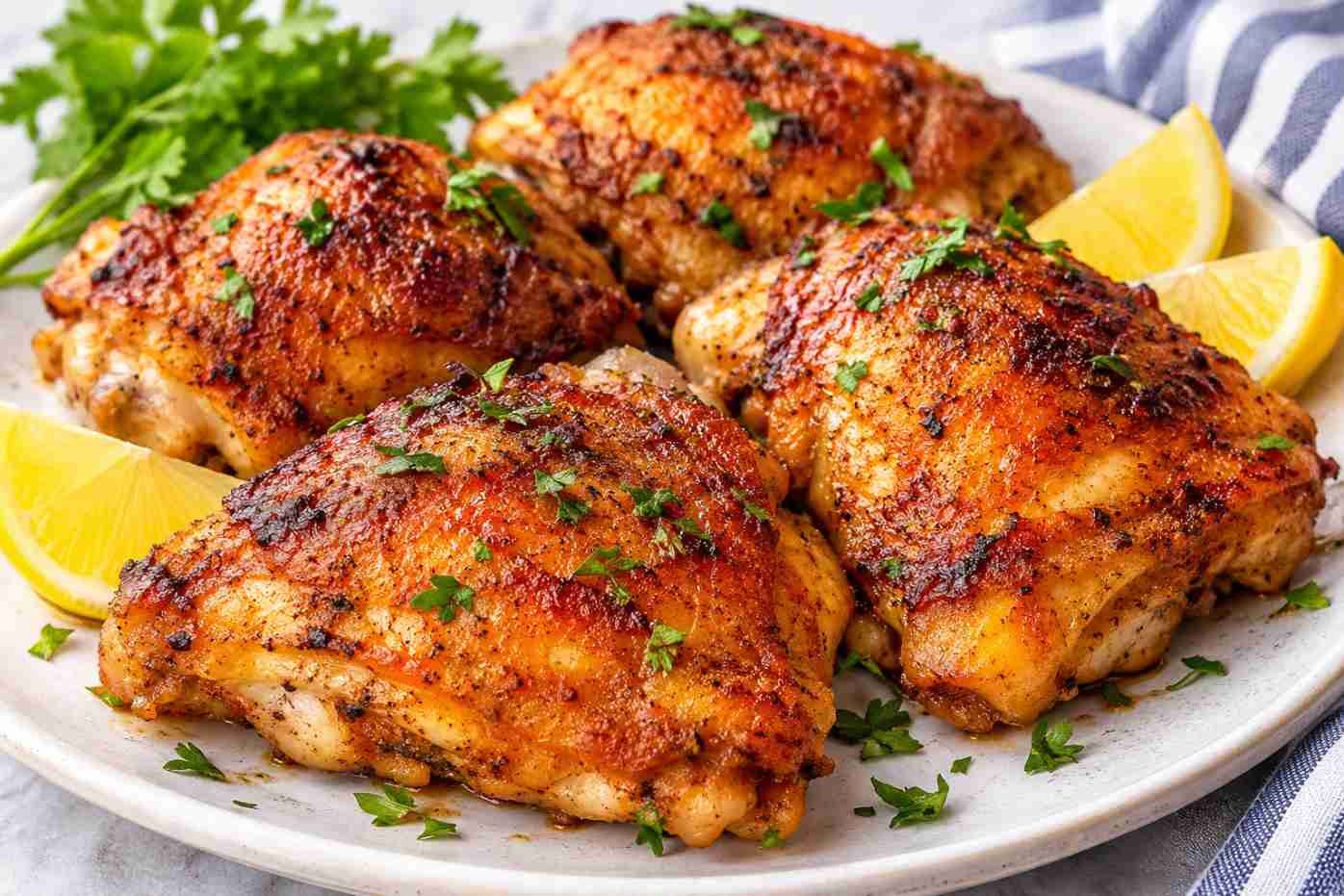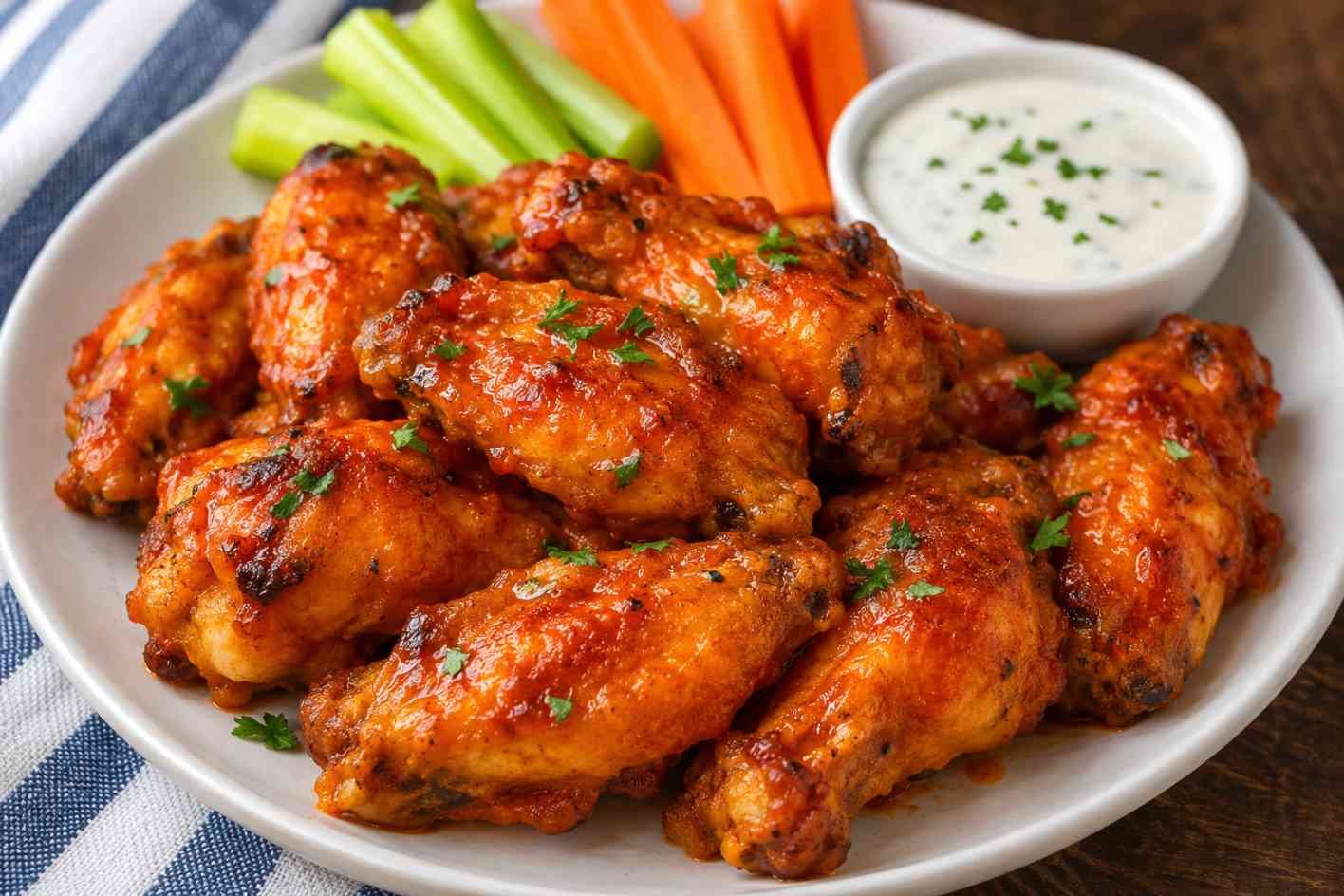
The crispy skin, tender chicken, and buttery hot sauce are a combination that rarely disappoints. Whether you are preparing snacks for a game night, having friends over for dinner, or simply craving something spicy, these baked Buffalo wings are worth making at home.
These wings are baked in the oven until the skin turns golden and crisp, then tossed in a homemade Buffalo sauce made with hot sauce, melted butter, garlic, and a little vinegar. The result is a plate of wings with plenty of flavor, a satisfying crunch, and just the right amount of heat.
One thing that makes a noticeable difference is drying the chicken properly before seasoning it. Excess moisture prevents the skin from crisping, so taking a few extra minutes during preparation pays off. Another important detail is adding the sauce after baking rather than soaking the raw wings in it. This keeps the skin from becoming soft before it has a chance to brown.
Baked Buffalo Wings Recipe Overview
| Recipe Details | Information |
|---|---|
| Recipe Name | Baked Buffalo Wings |
| Course | Appetizer, Snack, Main Course |
| Cuisine | American |
| Preparation Time | 15 minutes |
| Cooking Time | 45–50 minutes |
| Total Time | Approximately 1 hour 5 minutes |
| Servings | 4 |
| Cooking Method | Oven Baking |
| Difficulty | Easy |
| Spice Level | Medium, adjustable |
Ingredients for Baked Buffalo Wings
You do not need a long shopping list for this recipe. Most of the seasonings are pantry staples, and the Buffalo sauce comes together with just a handful of ingredients. For the best texture, use chicken wings that have been completely thawed and dried before cooking.
For the Chicken Wings
- 2 pounds (900 g) chicken wings, separated into drumettes and flats
- 1 tablespoon aluminum-free baking powder (not baking soda)
- 1 teaspoon garlic powder
- 1 teaspoon smoked paprika
- 1/2 teaspoon onion powder
- 1/2 teaspoon freshly ground black pepper
- 1/2 teaspoon salt, or according to taste
- 1 tablespoon olive oil
For the Homemade Buffalo Sauce
- 1/2 cup cayenne pepper hot sauce, preferably a vinegar-based variety
- 3 tablespoons unsalted butter
- 1 teaspoon white vinegar
- 1/2 teaspoon Worcestershire sauce
- 1/4 teaspoon garlic powder
- 1 teaspoon honey, optional for balancing the heat
For Serving
- Celery sticks
- Fresh carrot sticks
- Ranch dressing or blue cheese dressing
- Fresh parsley, optional
- Extra Buffalo sauce for dipping
Also Read: One-Pot Greek Chicken Risoni
How to Make Baked Buffalo Wings
The process is straightforward, but a few small details help produce wings that are crisp on the outside and juicy in the middle. Follow these steps carefully, particularly when preparing the chicken and arranging it on the baking tray.
Step 1: Prepare the Chicken Wings
Start by checking that the chicken wings are completely thawed. If you purchased whole wings, separate them at the joints into drumettes and flats, removing the wing tips if necessary. Place the pieces on a tray lined with paper towels and pat them thoroughly dry. Do not rinse raw chicken, as splashing water can spread bacteria around the kitchen.
Drying the wings is one of the most important parts of this recipe. Moisture on the skin creates steam during baking, making it harder to achieve the crisp texture you want.
Step 2: Preheat the Oven
Preheat your oven to 425°F (220°C). Line a large rimmed baking tray with aluminum foil for easier cleanup, then place an oven-safe wire rack over it. Lightly grease the rack to prevent sticking. The rack allows hot air to circulate around the wings and helps the underside cook without sitting in rendered fat.
If you do not have a wire rack, you can bake the wings directly on a lightly greased tray. Just remember to turn them during cooking so both sides brown evenly.
Step 3: Season the Wings
Place the dried wings in a large mixing bowl. Add the olive oil and toss lightly until the chicken is evenly coated. In a separate small bowl, combine the baking powder, garlic powder, smoked paprika, onion powder, black pepper, and salt.
Sprinkle the seasoning mixture over the wings and toss until every piece has a thin, even coating. Avoid leaving thick patches of baking powder on the skin. The baking powder helps encourage browning and crispness, while the other ingredients provide a savory base beneath the spicy sauce.
Step 4: Arrange and Bake
Place the seasoned wings on the prepared wire rack in a single layer, leaving a little space between each piece. Crowding the tray traps moisture and prevents even browning.
Transfer the tray to the preheated oven and bake for approximately 45–50 minutes. Turn the wings after about 25 minutes and continue baking until they are golden brown and crisp. Cooking time may vary depending on the size of the wings and your oven.
The chicken must reach an internal temperature of at least 165°F (74°C) in the thickest part, without the thermometer touching the bone. Wings often become more tender as they cook beyond this minimum temperature, but avoid baking them so long that the meat dries out.
Step 5: Prepare the Buffalo Sauce
While the wings are baking, prepare the sauce. Place a small saucepan over low heat and add the unsalted butter. Once melted, pour in the hot sauce, white vinegar, Worcestershire sauce, garlic powder, and honey if using.
Whisk gently until the ingredients are combined and the sauce looks smooth. Warm it for 2–3 minutes without allowing it to boil vigorously. High heat can cause the butter to separate, leaving the sauce oily rather than silky.
Taste the sauce and adjust it according to your preference. Add a little more butter for a milder flavor or a small amount of extra hot sauce for stronger heat.
Step 6: Toss the Wings in Buffalo Sauce
Once the chicken wings are crisp and fully cooked, remove them from the oven. Allow them to rest for about 2 minutes, then transfer them to a large heatproof mixing bowl.
Pour approximately three-quarters of the warm Buffalo sauce over the wings and toss gently until every piece is coated. Add the remaining sauce if you prefer generously sauced wings, or reserve it for serving. Tossing the wings just before eating gives you the best balance of crispy skin and spicy coating.
Step 7: Serve Immediately
Arrange the Buffalo wings on a serving platter with celery sticks, carrot sticks, and a small bowl of ranch or blue cheese dressing. Serve while the chicken is still hot and the sauce is fresh.
The cool vegetables and creamy dressing provide a pleasant contrast to the spicy wings. If you enjoy extra heat, place a little more hot sauce on the table so everyone can adjust their portion.
Also Read: Jalapeno Popper Stuffed Chicken
What You Can Do Better
Making good Buffalo wings is easy, but making them consistently crispy takes a little attention. These practical adjustments can improve the texture, flavor, and overall result without making the recipe complicated.
1. Dry the Wings in the Refrigerator
If you have extra time, place the dried wings uncovered on a wire rack in the refrigerator for 2–4 hours before seasoning. The circulating cold air helps remove surface moisture. This is particularly useful when preparing wings for a party because you can complete much of the preparation ahead of time.
2. Use Baking Powder Carefully
A small amount of aluminum-free baking powder helps produce a crisp, browned surface. Do not replace it with baking soda, which is much stronger and can leave an unpleasant taste. Use only the amount specified and distribute it evenly over the chicken.
3. Avoid Adding Sauce Before Baking
Buffalo sauce contains moisture and butter, both of which can interfere with crisping when added too early. Baking the wings with a dry seasoning mixture and tossing them in sauce afterward gives a better result. If you prefer a slightly sticky coating, return the sauced wings to the oven for 3–5 minutes, although this will soften some of the crunch.
4. Adjust the Heat Without Losing Flavor
Not everyone enjoys the same level of spiciness. For milder wings, increase the butter slightly and reduce the hot sauce. For hotter wings, add a pinch of cayenne pepper or a little extra hot sauce. Avoid adding too much vinegar because the sauce may become overly sharp.
5. Give the Wings Enough Space
Using a tray that is too small is a common mistake. When wings touch each other, steam collects between them and slows down browning. Use two trays if necessary, rotating their positions halfway through cooking for more even results.
6. Keep the Sauce Warm
Buffalo sauce tastes best when it is warm enough for the butter to remain smoothly incorporated. If you prepare it early, reheat gently while whisking before tossing it with the wings. Avoid prolonged boiling.
Also Read: Chicken Chasseur
Variations You Can Try
Once you are comfortable with the basic recipe, it is easy to change the flavor without altering the cooking method. The following variations work particularly well for family meals and gatherings.
Honey Buffalo Wings
Add 1–2 tablespoons of honey to the Buffalo sauce for a sweeter, slightly sticky finish. This version balances the acidity of the hot sauce and is a good option when serving people who prefer moderate heat.
Extra-Spicy Buffalo Wings
Add 1/4 teaspoon cayenne pepper and a small splash of your favorite extra-hot pepper sauce. Taste carefully before adding more, since different hot sauces vary considerably in strength.
Garlic Butter Buffalo Wings
Cook 2 finely minced garlic cloves in the melted butter over low heat for about 30 seconds before adding the hot sauce. The fresh garlic gives the wings a deeper, more savory flavor.
Smoky Buffalo Wings
Increase the smoked paprika to 1 1/2 teaspoons and add a small pinch of ground cumin to the seasoning mixture. The smoky flavor works especially well with the tanginess of the Buffalo sauce.
What to Serve with Baked Buffalo Wings
Buffalo wings are satisfying on their own, but a few well-chosen sides can turn them into a complete meal. Crisp vegetables are the traditional choice because they provide freshness between bites of spicy chicken.
- Celery and carrot sticks: A crunchy, refreshing accompaniment that balances the richness of the sauce.
- Blue cheese dressing: A creamy, tangy dip that complements the heat of the wings.
- Ranch dressing: A milder alternative for anyone who prefers a smooth, herby dip.
- Potato wedges: Oven-roasted wedges make the meal more filling without requiring a deep fryer.
- Coleslaw: A chilled cabbage slaw provides freshness and a pleasant contrast to the warm chicken.
- Corn on the cob: Sweet corn pairs particularly well with spicy Buffalo sauce.
Nutritional Information
The following nutritional values are approximate estimates for one serving, assuming the recipe makes four servings. Each serving contains about one-quarter of the chicken wings and Buffalo sauce. The figures do not include ranch dressing, blue cheese dressing, or vegetable sides. Actual values will vary depending on the size of the wings, the amount of skin and meat, and the brands of sauce and butter used.
| Nutrient | Estimated Amount Per Serving |
|---|---|
| Calories | 390 kcal |
| Protein | 29 g |
| Total Fat | 29 g |
| Saturated Fat | 10 g |
| Carbohydrates | 3 g |
| Dietary Fiber | 0.3 g |
| Sugars | 1 g |
| Cholesterol | 125 mg |
| Sodium | 950 mg |
Note: These are planning estimates, not laboratory-tested nutritional values. The sodium content can change significantly depending on the hot sauce, and the calorie count depends on the edible portion of the bone-in wings.
Also Read: Satay Chicken Legs with Peanut Sauce
How to Store and Reheat Buffalo Wings
Refrigerating Leftover Wings
Allow leftover wings to cool briefly, then place them in an airtight container and refrigerate within 2 hours of cooking. Properly refrigerated cooked chicken wings can generally be stored for 3–4 days at 40°F (4°C) or below. Keep any unused sauce that has not touched the cooked chicken in a separate covered container.
Freezing Buffalo Wings
For longer storage, place cooled wings in a freezer-safe container or resealable freezer bag. Remove as much air as possible to reduce freezer burn. For the best eating quality, use them within approximately 2–3 months. Thaw frozen wings in the refrigerator before reheating.
Reheating in the Oven
Preheat the oven to 375°F (190°C). Arrange the wings on a wire rack over a baking tray and heat for approximately 10–15 minutes, or until the center reaches 165°F (74°C). The exact time depends on the size and starting temperature of the wings. A light coating of fresh Buffalo sauce after reheating can restore some of their original flavor.
Reheating in an Air Fryer
Place the wings in a single layer in an air fryer basket and reheat at 350°F (175°C) for approximately 5–8 minutes, checking that they reach 165°F (74°C) internally. Avoid overcrowding the basket. This method is particularly useful when reheating a small portion because it helps the skin regain some crispness.
Frequently Asked Questions
Can I Make Buffalo Wings Without Frying Them?
Yes. This recipe uses oven baking instead of deep frying. A hot oven, thoroughly dried chicken skin, and proper spacing on a wire rack can produce crisp wings without submerging them in oil.
Why Are My Baked Chicken Wings Not Crispy?
The most common reasons are excess moisture, overcrowding, and insufficient oven heat. Make sure the wings are dry before seasoning, leave space between pieces, and preheat the oven completely. Using a wire rack also helps hot air reach more of the skin.
Can I Prepare Buffalo Wings Ahead of Time?
Yes. You can season the wings and refrigerate them on a covered tray until you are ready to bake, following safe raw poultry storage practices. You can also prepare the sauce separately and refrigerate it. For the best texture, bake the wings close to serving time and toss them in warm sauce immediately before eating.
Can I Use Frozen Chicken Wings?
Frozen wings should be thawed completely in the refrigerator before following this recipe. Pat them thoroughly dry after thawing. Cooking directly from frozen would require a different baking time and could prevent the seasoning from adhering evenly.
How Do I Know When Chicken Wings Are Fully Cooked?
Use a food thermometer inserted into the thickest part of a wing without touching the bone. The internal temperature must reach at least 165°F (74°C). Golden skin alone is not a reliable indication that the chicken is safely cooked.
Can I Make the Buffalo Sauce Less Spicy?
Yes. Reduce the amount of hot sauce and increase the butter slightly. A small amount of honey can also soften the sharpness of the sauce. Taste as you go so the finished sauce still has the tangy character associated with Buffalo wings.
Can I Make These Wings Gluten-Free?
The chicken coating does not contain wheat flour, but you should check the labels on the baking powder, hot sauce, Worcestershire sauce, and any dressings you plan to serve. Choose certified gluten-free products where necessary, particularly when preparing food for someone with celiac disease.