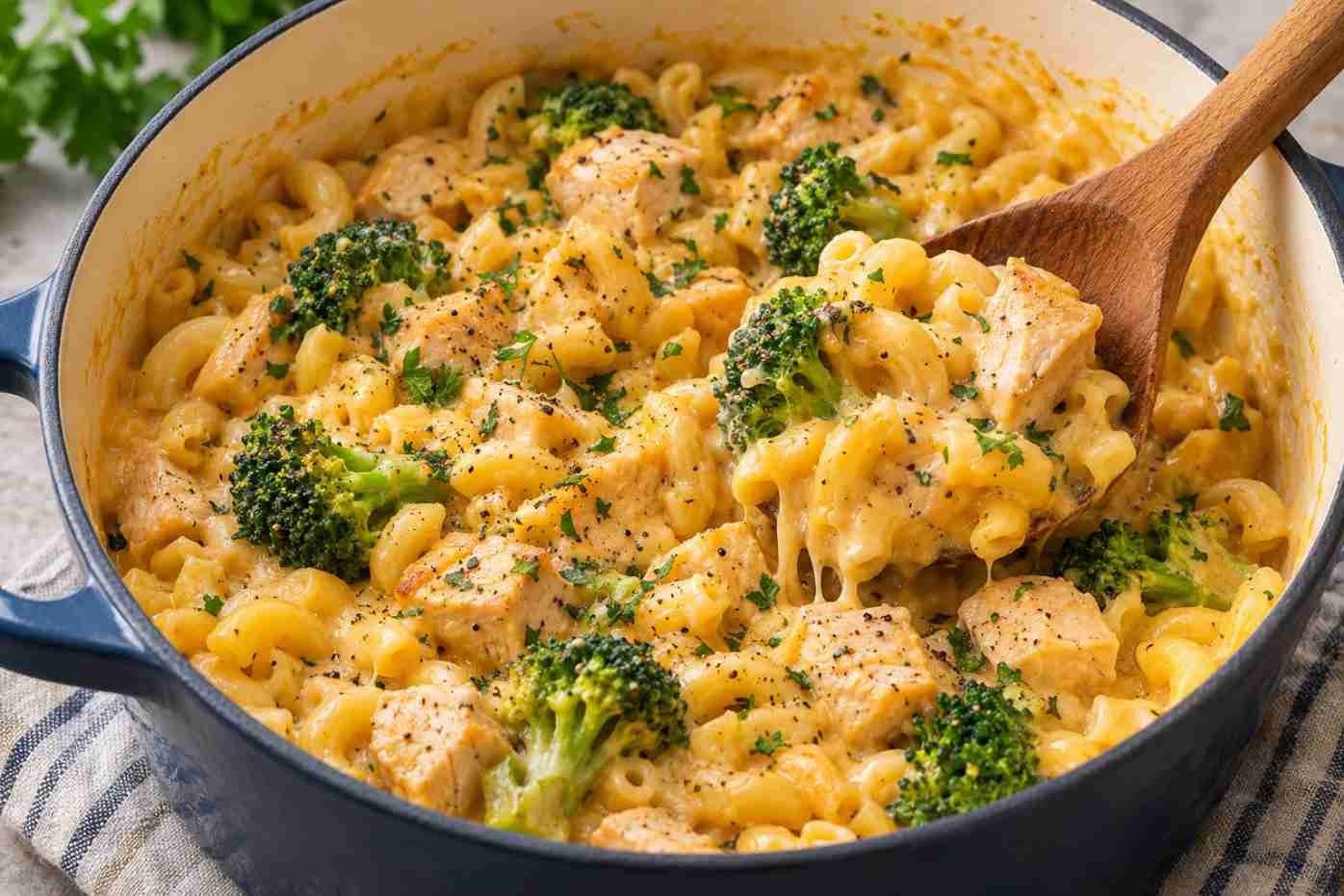
Some evenings call for a proper home-cooked dinner, but the thought of washing three different pans is enough to make you reconsider. That’s when this One Pot Broccoli Chicken Mac and Cheese comes in handy. Tender pieces of chicken, fresh broccoli, and elbow macaroni cook together in a creamy cheddar sauce that feels comforting without being overly heavy.
The best part is that you don’t have to boil the pasta separately. It cooks right in the seasoned milk and chicken broth, absorbing flavor while releasing starch that helps make the sauce silky. A little Dijon mustard, smoked paprika, and sharp cheddar give this version a richer flavor than the usual macaroni and cheese.
It’s the kind of dinner that works on a busy Tuesday but is satisfying enough to serve when everyone is gathered around the table. Everything comes together on the stovetop in about 35 minutes, and you’ll only have one pot to clean afterward.
Recipe Overview
| Recipe Details | Information |
|---|---|
| Recipe Name | One Pot Broccoli Chicken Mac and Cheese |
| Course | Main Course, Dinner |
| Cuisine | American-Inspired |
| Preparation Time | 10 minutes |
| Cooking Time | 25 minutes |
| Total Time | 35 minutes |
| Servings | 6 |
| Cooking Method | One Pot, Stovetop |
| Difficulty | Easy |
Ingredients for One Pot Broccoli Chicken Mac and Cheese
Most of the ingredients are everyday kitchen staples. Fresh broccoli works particularly well because it keeps a little bite after cooking, while sharp cheddar gives the sauce plenty of flavor without needing a large amount of cheese.
For the Chicken
- 1 lb (450 g) boneless, skinless chicken breast, cut into small cubes
- 1 tablespoon olive oil
- 1/2 teaspoon smoked paprika
- 1/2 teaspoon garlic powder
- 1/4 teaspoon freshly ground black pepper
- 1/4 teaspoon salt
For the Macaroni and Cheese
- 10 oz (285 g) dry elbow macaroni
- 3 cups fresh broccoli florets, cut into small pieces
- 2 tablespoons unsalted butter
- 1 small yellow onion, finely chopped
- 3 garlic cloves, minced
- 2 tablespoons all-purpose flour
- 2 cups low-sodium chicken broth
- 2 1/2 cups whole milk, plus extra if needed
- 1 1/2 cups freshly grated sharp cheddar cheese
- 1/2 cup freshly grated Monterey Jack cheese
- 1 teaspoon Dijon mustard
- 1/2 teaspoon dried Italian seasoning
- 1/4 teaspoon black pepper
- Salt, to taste
Optional Garnishes
- 2 tablespoons freshly chopped parsley
- 1 tablespoon grated Parmesan cheese
- A pinch of red pepper flakes
- Freshly cracked black pepper
Also Read: One Pot Cheeseburger Pasta
How to Make One Pot Broccoli Chicken Mac and Cheese
Use a large, heavy-bottomed pot or deep skillet with a lid. A pot with a thick base distributes heat more evenly and helps prevent the milk and pasta from sticking to the bottom.
Step 1: Season the Chicken
Place the cubed chicken in a bowl and season it with smoked paprika, garlic powder, salt, and black pepper. Toss until the pieces are evenly coated. Cutting the chicken into similar-sized pieces helps everything cook at the same rate.
Step 2: Brown the Chicken
Heat the olive oil in a large pot over medium-high heat. Add the seasoned chicken in a single layer and cook for approximately 5–6 minutes, stirring occasionally, until lightly golden and cooked through. The center of the chicken should reach 165°F (74°C). Transfer the chicken to a plate and set it aside. It will return to the pot toward the end, so it won’t spend the entire cooking time simmering in the sauce.
Step 3: Cook the Onion and Garlic
Reduce the heat to medium and add the butter to the same pot. Once melted, add the chopped onion and cook for 2–3 minutes until softened. Stir in the minced garlic and Italian seasoning, cooking for another 30 seconds. Keep the garlic moving so it doesn’t burn. The browned bits left behind by the chicken will add extra flavor to the sauce.
Step 4: Make the Sauce Base
Sprinkle the flour over the onion mixture and stir continuously for about 1 minute. Slowly pour in the chicken broth while stirring to prevent lumps. Add the milk, Dijon mustard, and black pepper, then mix until the liquid looks smooth. The mixture will seem quite thin at this point, which is exactly what you need because the macaroni will absorb much of the liquid as it cooks.
Step 5: Add the Uncooked Macaroni
Stir the dry elbow macaroni directly into the pot. Bring the mixture to a gentle simmer, then reduce the heat to medium-low. Cover loosely and cook for approximately 8–10 minutes, stirring every couple of minutes to keep the pasta from sticking. Avoid a vigorous boil, which can cause the milk to scorch or reduce too quickly.
Step 6: Add the Broccoli
When the macaroni is beginning to soften but still has a firm center, stir in the broccoli florets. Cover and continue cooking for another 4–5 minutes, or until the pasta is tender and the broccoli is bright green. If the liquid reduces before the pasta is ready, add a splash of warm milk or broth. The mixture should still look slightly loose because it will thicken after the cheese goes in.
Step 7: Stir in the Cheese
Turn the heat to low, then add the grated cheddar and Monterey Jack a handful at a time. Stir gently until each addition melts before adding more. Avoid boiling the sauce once the cheese is added, as excessive heat can make it grainy or oily. Taste and adjust the seasoning with salt and pepper.
Step 8: Return the Chicken to the Pot
Add the cooked chicken and any juices collected on the plate. Stir everything together and warm gently for 1–2 minutes. If the sauce looks too thick, loosen it with a little warm milk. The finished macaroni should be creamy enough to coat the chicken and broccoli without becoming soupy.
Step 9: Garnish and Serve
Remove the pot from the heat and let it stand for 2 minutes. Sprinkle with chopped parsley, Parmesan, or a little cracked black pepper. Serve while warm, when the sauce is at its creamiest. Like most macaroni and cheese dishes, it will continue thickening as it sits.
What You Can Do Better
A good chicken mac and cheese doesn’t need complicated ingredients, but a few small decisions can make a noticeable difference. These are the adjustments worth paying attention to.
Use Freshly Grated Cheese
Pre-shredded cheese is convenient, but some brands contain starches or anti-caking agents that can affect how smoothly they melt. Grating a block of cheddar takes an extra minute or two and generally gives you a silkier sauce. Sharp cheddar is particularly useful because its stronger flavor means you don’t have to keep adding more cheese to make the dish taste rich.
Keep the Broccoli Slightly Firm
Broccoli that’s cooked for too long loses its fresh flavor and turns dull and soft. Add it after the macaroni has already started cooking rather than putting everything in the pot at once. Small, evenly cut florets usually need only a few minutes of simmering.
Don’t Overcook the Chicken
Chicken breast is lean and can become dry when cooked for too long. Browning it first and returning it near the end keeps the texture more pleasant. Boneless chicken thighs are another good choice if you prefer meat that stays especially juicy.
Control the Heat When Adding Cheese
One of the easiest ways to ruin a cheese sauce is to boil it after adding the cheese. High heat can cause the proteins and fats to separate, leaving an oily or gritty texture. Keep the heat low, add the cheese gradually, and stir until just melted.
Give the Sauce a Little Extra Flavor
Dijon mustard adds a subtle tang that balances the richness of the cheese. You can also experiment with a pinch of cayenne pepper, a little Worcestershire sauce, or a small amount of smoked Gouda. None of these should overpower the dish; the goal is simply to give the cheese sauce more depth.
Pay Attention to the Pasta
Different macaroni brands absorb liquid at slightly different rates. Start checking the pasta a few minutes before the expected cooking time. If it becomes tender while the sauce is still loose, remove the lid and simmer briefly. If the pot becomes dry before the pasta is cooked, add warm broth or milk in small amounts.
Also Read: Taco Mac Casserole
Easy Variations to Try
Spicy Chicken Mac and Cheese
Add 1/4 teaspoon cayenne pepper to the chicken seasoning and finish the dish with red pepper flakes. For a more noticeable kick, stir a little hot sauce into the finished cheese sauce.
Extra Vegetable Mac and Cheese
Include diced red bell peppers with the onion or stir in a handful of baby spinach just before adding the cheese. Frozen peas also work well and can be added during the final few minutes of cooking.
Three-Cheese Chicken Mac
Replace part of the cheddar with smoked Gouda and finish with freshly grated Parmesan. Keep the total amount of cheese roughly the same so the sauce doesn’t become excessively thick.
Crunchy Baked Finish
For a crisp topping, transfer the finished macaroni to an oven-safe dish if your pot isn’t oven-safe. Sprinkle with 1/3 cup panko breadcrumbs mixed with 1 tablespoon melted butter and 2 tablespoons Parmesan. Broil for 2–3 minutes, watching closely, until golden. This is optional and adds another dish if your cooking pot cannot go under the broiler.
What to Serve with Broccoli Chicken Mac and Cheese
Since this recipe already contains pasta, protein, and vegetables, it works as a complete meal. Still, something fresh or crisp on the side helps balance the creamy sauce.
- Green salad: Mixed lettuce, cucumber, and a light lemon vinaigrette provide a refreshing contrast.
- Garlic bread: Toasted bread with a little garlic butter is useful for scooping up the extra sauce.
- Roasted vegetables: Roasted carrots, zucchini, or asparagus add color without making dinner too heavy.
- Tomato salad: Fresh tomatoes tossed with olive oil, basil, and a splash of vinegar cut through the richness.
Storage and Reheating Instructions
Refrigerating Leftovers
Allow leftovers to cool promptly, then transfer them to an airtight container and refrigerate within 2 hours of cooking. Store at 40°F (4°C) or below and use within 3–4 days. The macaroni will continue absorbing moisture during storage, so the sauce will be noticeably thicker the next day.
Reheating on the Stovetop
Place the leftover macaroni in a saucepan with 2–3 tablespoons of milk per serving. Warm over low to medium-low heat, stirring frequently until heated through to 165°F (74°C). Add more milk if necessary to restore the creamy consistency.
Reheating in the Microwave
Transfer a portion to a microwave-safe bowl and stir in a splash of milk. Cover loosely and heat in short intervals, stirring between each interval until thoroughly hot. Avoid overheating, which can make the chicken tough and cause the cheese sauce to separate.
Can You Freeze It?
Freezing is possible, but it isn’t the best option for this recipe. Dairy-based cheese sauces sometimes separate after thawing, while the broccoli and macaroni can become softer. For the best texture, enjoy the dish fresh or refrigerate leftovers for the next few days.
Also Read: Mississippi Chicken Sliders
Nutritional Information
The following values are approximate estimates for one serving when the recipe is divided into six equal portions. Calculations assume whole milk, chicken breast, sharp cheddar, Monterey Jack, and the listed quantities of butter and oil. Optional garnishes and additional milk are not included. Actual values will vary depending on ingredient brands, portion sizes, and preparation.
| Nutrient | Estimated Amount Per Serving |
|---|---|
| Calories | Approximately 600 kcal |
| Protein | Approximately 43 g |
| Total Carbohydrates | Approximately 53 g |
| Dietary Fiber | Approximately 4 g |
| Total Sugars | Approximately 8 g |
| Total Fat | Approximately 24 g |
| Saturated Fat | Approximately 13 g |
| Cholesterol | Approximately 130 mg |
| Sodium | Approximately 650 mg |
| Calcium | Approximately 430 mg |
| Iron | Approximately 2.5 mg |
Nutrition note: These figures are estimates rather than laboratory-tested nutritional values. For precise dietary tracking, calculate the recipe using the exact products and quantities you use.
Frequently Asked Questions
Can I Use Frozen Broccoli Instead of Fresh?
Yes. Frozen broccoli works well, although it tends to soften faster than fresh broccoli. Add it during the last 3–4 minutes of pasta cooking. There’s usually no need to thaw it first, but large frozen florets may need slightly longer.
Can I Make This Recipe Without Heavy Cream?
Absolutely. This recipe doesn’t require heavy cream. The combination of milk, a small amount of flour, pasta starch, and melted cheese creates a creamy sauce without it. Whole milk gives the richest result, although 2% milk can also work.
Which Pasta Shape Works Best?
Regular elbow macaroni is the easiest option because it cooks relatively quickly and holds the cheese sauce well. Small shells or similarly sized pasta can also work, but cooking times and liquid requirements may vary. Larger pasta shapes may need additional liquid and several extra minutes.
Can I Use Rotisserie Chicken?
Yes. Use approximately 3 cups of shredded, fully cooked rotisserie chicken in place of the raw chicken breast. Skip the chicken-browning step and add the shredded meat during the last few minutes of pasta cooking. Taste before adding salt because rotisserie chicken is often already well seasoned.
How Do I Fix Mac and Cheese That’s Too Thick?
Add warm milk, one or two tablespoons at a time, and stir over low heat until the sauce reaches the consistency you prefer. Avoid adding too much at once. The pasta continues absorbing moisture even after cooking, so a little extra milk may also be useful just before serving.
Can I Prepare It Ahead of Time?
You can chop the broccoli, grate the cheese, and season the chicken ahead of time. Store the chicken and vegetables separately in the refrigerator until you’re ready to cook. For the best creamy texture, however, cook the pasta and make the cheese sauce shortly before serving.
How Can I Make It Lighter?
Use 2% milk instead of whole milk, reduce the butter slightly, and replace some of the cheese with extra broccoli. You can also use a modestly smaller portion of pasta. Keep in mind that changing the amount of dry pasta may require adjusting the cooking liquid, so avoid making large substitutions without monitoring the consistency.