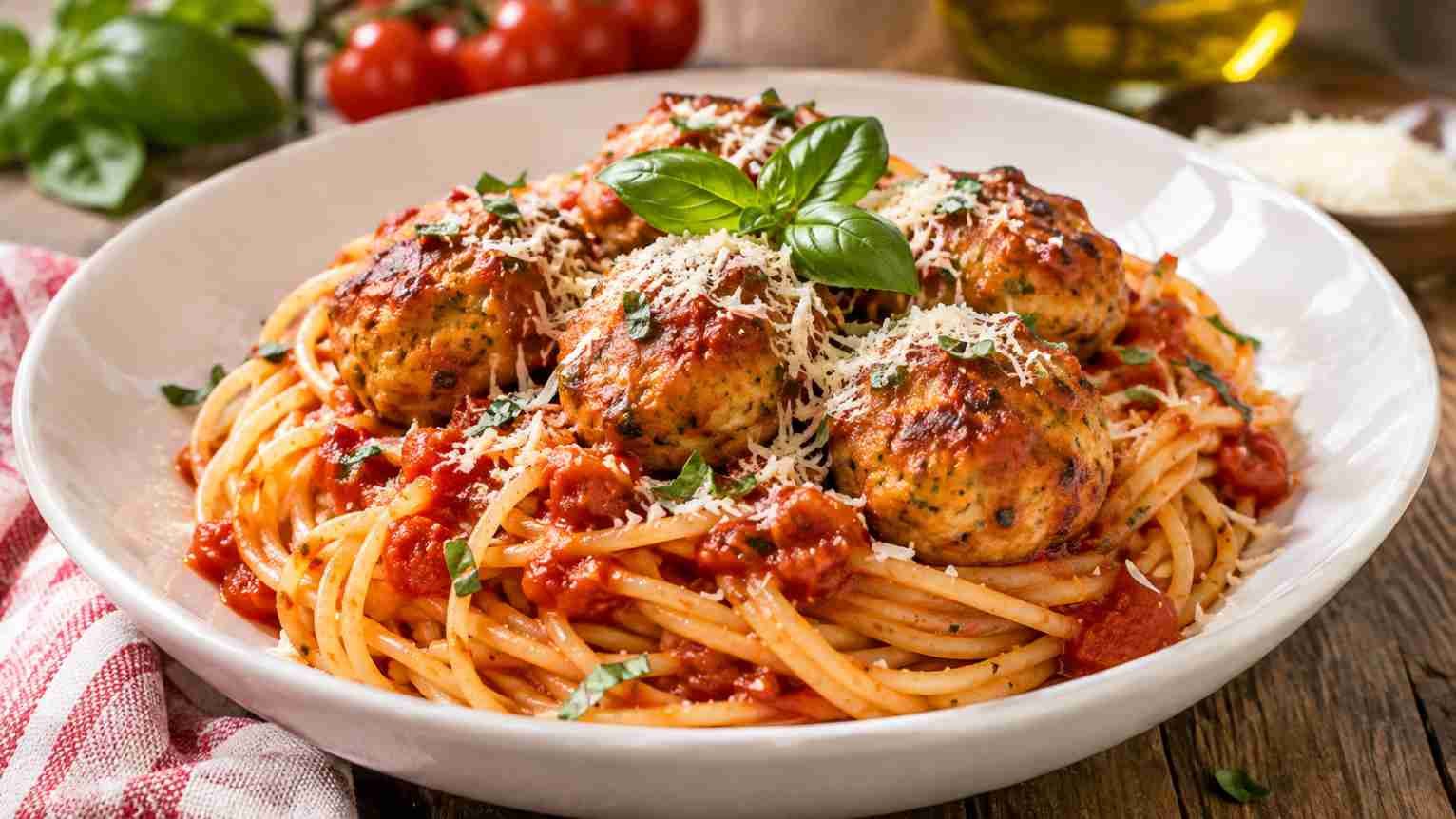
There is something comforting about a plate of spaghetti covered in rich tomato sauce and tender meatballs. It is the sort of dinner that makes everyone come to the table without being called twice. These baked chicken meatballs and spaghetti bring together everything that makes the classic dish so satisfying, with a slightly lighter approach that doesn’t compromise on flavor.
Instead of frying the meatballs in batches, we bake them in the oven until lightly golden. The meatballs stay tender thanks to a combination of milk-soaked breadcrumbs, grated onion, and a little Parmesan cheese. While they bake, there is plenty of time to prepare a homemade tomato sauce and cook the spaghetti.
The finished dish has juicy chicken meatballs, a garlic-and-basil tomato sauce, and pasta that picks up every bit of flavor. It is suitable for a regular weeknight dinner but feels special enough to serve when friends or family come over.
Baked Chicken Meatballs and Spaghetti Recipe
This recipe uses simple ingredients and a straightforward method. The key is to keep the chicken mixture moist, avoid overworking the meat, and give the tomato sauce enough time to develop its flavor.
| Recipe Details | Information |
|---|---|
| Preparation Time | 20 minutes |
| Cooking Time | 30 minutes |
| Total Time | 50 minutes |
| Servings | 4 |
| Course | Main Course, Dinner |
| Cuisine | Italian-American Inspired |
| Cooking Method | Oven Baking and Stovetop |
| Difficulty | Easy |
Ingredients
The ingredients are divided into three parts: the chicken meatballs, the tomato sauce, and the spaghetti. Most are common pantry staples, so there is no need to buy anything particularly expensive.
For the Chicken Meatballs
- 500 g (about 1.1 lb) ground chicken
- 1/2 cup plain breadcrumbs or panko breadcrumbs
- 3 tablespoons milk
- 1 large egg
- 1/3 cup freshly grated Parmesan cheese
- 1/2 small onion, finely grated
- 2 garlic cloves, minced
- 2 tablespoons finely chopped fresh parsley
- 1 teaspoon dried Italian seasoning
- 1/2 teaspoon paprika
- 3/4 teaspoon salt, or to taste
- 1/2 teaspoon freshly ground black pepper
- 1 tablespoon olive oil, for brushing
For the Homemade Tomato Sauce
- 2 tablespoons olive oil
- 1 medium onion, finely chopped
- 3 garlic cloves, finely minced
- 800 g (28 oz) canned crushed tomatoes
- 2 tablespoons tomato paste
- 1/2 cup water or low-sodium chicken broth
- 1 teaspoon dried oregano
- 1/2 teaspoon red pepper flakes (optional)
- 1/2 teaspoon sugar, only if needed to balance acidity
- Salt and freshly ground black pepper, to taste
- 1/4 cup fresh basil leaves, chopped or torn
For the Spaghetti and Serving
- 300 g (about 10.5 oz) dried spaghetti
- Salt for the pasta water
- 1/2 cup reserved pasta cooking water, as needed
- Freshly grated Parmesan cheese, for serving
- Fresh basil or parsley, for garnish
- A little extra virgin olive oil, if desired
Also Read: Piccata Chicken Recipe
How to Make Baked Chicken Meatballs and Spaghetti
The meatballs and sauce can be prepared at the same time, which keeps the overall cooking time manageable. Start by getting the meatballs into the oven, then work on the sauce while they bake.
Step 1: Preheat the Oven
Preheat your oven to 200°C (400°F), or 180°C (350°F) for a fan-assisted oven. Line a large baking tray with parchment paper and lightly brush or spray it with olive oil. Leave enough room on the tray for the meatballs to cook without touching each other.
Step 2: Prepare the Breadcrumb Mixture
Place the breadcrumbs in a large mixing bowl and pour the milk over them. Stir briefly and leave the mixture for about 2 minutes. The breadcrumbs will absorb the milk and soften. This small step helps the meatballs retain moisture as they cook, particularly when using lean ground chicken.
Step 3: Combine the Meatball Ingredients
Add the ground chicken, egg, Parmesan, grated onion, minced garlic, parsley, Italian seasoning, paprika, salt, and black pepper to the softened breadcrumbs. Use a fork or clean hands to gently combine everything until the ingredients are evenly distributed.
Stop mixing as soon as the mixture comes together. Working ground chicken too aggressively can produce firm, rubbery meatballs rather than tender ones. The mixture will naturally feel softer and stickier than a traditional beef meatball mixture.
Step 4: Shape the Chicken Meatballs
Lightly moisten your hands with water or coat them with a little olive oil. Scoop out approximately 1 1/2 tablespoons of the chicken mixture and gently roll it into a ball. Arrange the meatballs on the prepared baking tray, leaving a small gap between them.
You should get approximately 22 to 26 meatballs, depending on their size. Try to make them similar in size so they cook evenly. If the mixture is difficult to handle, refrigerate it for 15 minutes before shaping. Avoid adding large amounts of breadcrumbs, as too much can make the meatballs dry.
Step 5: Bake Until Golden
Lightly brush the tops of the meatballs with olive oil. Place the tray in the preheated oven and bake for approximately 18 to 22 minutes, depending on their size. The outside should develop a light golden color, and the centers must reach an internal temperature of 74°C (165°F).
A meat thermometer is the most reliable way to check doneness. Ground chicken can lose moisture when overcooked, so remove the meatballs once they are safely cooked through rather than leaving them in the oven simply to achieve a darker crust.
Step 6: Start the Tomato Sauce
While the meatballs bake, heat 2 tablespoons of olive oil in a wide skillet or saucepan over medium heat. Add the chopped onion and cook for 4 to 5 minutes, stirring occasionally, until it softens and becomes translucent. Add the minced garlic and cook for another 30 seconds, just until fragrant.
Stir in the tomato paste and cook for about 1 minute. This gives the paste a chance to develop a deeper flavor before the crushed tomatoes are added.
Step 7: Simmer the Sauce
Pour the crushed tomatoes into the pan along with the water or chicken broth. Add the dried oregano, red pepper flakes if using, and a little salt and black pepper. Stir well, bring to a gentle simmer, then reduce the heat to medium-low.
Let the sauce cook uncovered for 12 to 15 minutes, stirring occasionally. It should thicken slightly while remaining loose enough to coat the pasta. Taste before adding sugar; well-balanced canned tomatoes often need none. Stir in the fresh basil near the end of cooking.
Step 8: Cook the Spaghetti
Bring a large pot of water to a boil and season it generously with salt. Add the spaghetti and cook according to the package instructions until al dente, meaning tender but still slightly firm when bitten.
Before draining, scoop out about 1/2 cup of the starchy pasta water and set it aside. Drain the spaghetti without rinsing. The starch remaining on the pasta helps the tomato sauce cling to each strand.
Step 9: Add the Meatballs to the Sauce
Once the chicken meatballs are fully cooked, carefully transfer them into the simmering tomato sauce. Spoon a little sauce over each meatball and let them warm together for 2 to 3 minutes over low heat. This gives the meatballs a chance to pick up the tomato and herb flavors without needing further prolonged cooking.
Step 10: Combine and Serve
Add the cooked spaghetti to the sauce, working around the meatballs to avoid breaking them. Toss the pasta gently until evenly coated. If the sauce appears too thick, add a tablespoon or two of reserved pasta water at a time until it reaches the desired consistency.
Divide the spaghetti between four bowls and arrange the meatballs on top. Finish with freshly grated Parmesan, torn basil leaves, and a small drizzle of olive oil if you like. Serve immediately while the pasta is hot and the sauce is glossy.
Also Read: Chicken Pot Pie with Biscuits
What You Can Do Better
A good plate of spaghetti and meatballs doesn’t require complicated techniques, but a few thoughtful adjustments can make a noticeable difference. These are the details worth paying attention to.
Use Ground Chicken Thigh for More Flavor
Ground chicken breast is lean, but it can dry out quickly. Ground chicken containing some thigh meat generally produces a juicier meatball with a fuller flavor. If you are using very lean ground chicken, the milk-soaked breadcrumbs and grated onion become especially important.
Grate the Onion Instead of Chopping It
Finely grated onion distributes moisture throughout the meatball mixture without leaving noticeable onion pieces. The onion juice also contributes flavor. If chopping the onion instead, make sure the pieces are very small so they soften during baking.
Don’t Pack the Meatballs Too Tightly
When shaping, use a light touch. Rolling the mixture firmly between your palms compresses the meat and can affect the finished texture. Slightly soft, loosely shaped meatballs usually turn out more tender than tightly packed ones.
Let the Tomato Paste Cook
Tomato paste tastes sharper when added directly to liquid. Cooking it briefly with the onions and garlic helps soften that raw taste and develops a richer base for the sauce. It is a small step, but it makes a difference when using an otherwise simple tomato sauce.
Finish the Pasta in the Sauce
Pouring tomato sauce over plain spaghetti is convenient, but tossing the pasta directly in the skillet gives a better result. The warm pasta absorbs a little sauce, and the reserved cooking water helps everything come together. This is particularly useful if the sauce has thickened while the meatballs were baking.
Use Freshly Grated Parmesan
Fresh Parmesan has a more pronounced flavor and blends better into the meatball mixture than many pre-grated varieties. It also makes a better finishing cheese. Because Parmesan is salty, taste the sauce before adding more salt at the end.
Common Mistakes to Avoid
Adding too many breadcrumbs: Breadcrumbs help retain moisture, but an excessive amount can produce meatballs with a heavy, bread-like texture. Begin with the measured amount and only add a small extra quantity if the mixture is unusually wet.
Overmixing the chicken: Mixing until every ingredient is evenly combined is enough. Continued kneading develops a firmer texture.
Making unevenly sized meatballs: Small meatballs cook faster than large ones. Using a tablespoon measure or cookie scoop makes the process easier and helps prevent some meatballs from drying out while others are still cooking.
Overbaking: The meatballs don’t need to become deeply browned. Their safe internal temperature matters more than the color of the crust.
Cooking spaghetti too early: Pasta left sitting in a colander can become sticky. Aim to finish cooking it just as the sauce and meatballs are ready.
Also Read: Asian Chilli Chicken
Easy Recipe Variations
Spinach Chicken Meatballs
Add 1/2 cup of finely chopped spinach to the chicken mixture. If using frozen spinach, thaw it completely and squeeze out excess moisture first. Spinach adds color without dramatically changing the flavor.
Spicy Chicken Meatballs and Spaghetti
Increase the red pepper flakes in the tomato sauce to 1 teaspoon, or add a pinch of cayenne pepper to the meatball mixture. Adjust the heat gradually so it doesn’t overwhelm the tomato and garlic flavors.
Chicken Meatballs with Mozzarella
For a cheese-topped version, transfer the cooked meatballs and tomato sauce to an oven-safe baking dish. Scatter 1/2 cup of shredded mozzarella over the top and broil briefly until the cheese melts and develops a few golden spots. Serve over freshly cooked spaghetti.
Whole Wheat Spaghetti
Replace regular spaghetti with whole wheat spaghetti for a nuttier flavor and additional fiber. Keep an eye on the cooking time, as whole wheat pasta can become overly soft if cooked for too long.
Gluten-Free Version
Use certified gluten-free breadcrumbs in the meatballs and substitute gluten-free spaghetti. Check the labels on seasonings and other packaged ingredients as well if cooking for someone who must avoid gluten.
What to Serve with Chicken Meatballs and Spaghetti
Because the pasta, meatballs, and tomato sauce already make a filling main course, lighter accompaniments work particularly well. A simple green salad with lemon dressing provides a fresh contrast to the rich sauce. Roasted broccoli, sautéed green beans, or asparagus are equally good choices.
Garlic bread is another natural companion, especially when there is extra tomato sauce left in the bowl. If you are serving the meal for a family gathering, consider placing a large salad and a basket of warm bread in the center of the table so everyone can help themselves.
Also Read: Herb Crusted Chicken Recipe
How to Store and Reheat
Refrigerating Leftovers
Allow the cooked food to cool briefly, then transfer it to shallow airtight containers and refrigerate within 2 hours of cooking. Store at 4°C (40°F) or below and use within 3 to 4 days. For the best texture, keep the spaghetti separate from the meatballs and sauce whenever practical.
Freezing the Meatballs
The cooked chicken meatballs freeze well. Let them cool, place them in a single layer on a tray, and freeze until firm. Transfer them to a freezer-safe container or bag, removing as much air as possible. For the best quality, use within approximately 2 to 3 months.
You can also freeze the meatballs together with the tomato sauce. Spaghetti is generally better prepared fresh because previously cooked pasta may become softer after freezing and reheating.
Reheating on the Stovetop
Place the meatballs and sauce in a covered saucepan over medium-low heat. Add a splash of water if the sauce has thickened, and heat until the meatballs are steaming hot throughout and reach 74°C (165°F). Add cooked spaghetti toward the end, stirring gently until heated through.
Reheating in the Microwave
Transfer a serving to a microwave-safe dish, add a spoonful of water, and cover loosely. Heat in short intervals, stirring or rearranging the food between intervals to ensure even heating. Check that the center of the meatballs reaches 74°C (165°F) before serving.
Nutritional Information
The following values are approximate estimates for one serving when the recipe is divided into four equal portions, including spaghetti, meatballs, and tomato sauce. The estimates exclude optional finishing cheese and extra olive oil. Actual nutritional values will vary depending on the fat content of the ground chicken, the type of breadcrumbs, the Parmesan used, and the specific pasta brand.
| Nutrient | Approximate Amount Per Serving |
|---|---|
| Calories | 675 kcal |
| Protein | 47 g |
| Total Carbohydrates | 79 g |
| Dietary Fiber | 7 g |
| Total Sugars | 12 g |
| Total Fat | 19 g |
| Saturated Fat | 5 g |
| Cholesterol | 155 mg |
| Sodium | 1,050 mg |
Nutrition note: These figures are estimates rather than laboratory-tested values. Sodium and fat content can vary significantly depending on ingredient brands, the amount of salt used, and the type of ground chicken.
Also Read: General Tso’s Chicken
Frequently Asked Questions
Can I Make Chicken Meatballs Without Frying Them?
Yes. Baking is an excellent method for cooking chicken meatballs. It eliminates the need to turn individual meatballs in a frying pan and requires comparatively little oil. Baking them at 200°C (400°F) allows the exterior to develop some color while the inside cooks through.
How Do I Keep Baked Chicken Meatballs Moist?
Use ground chicken with a little natural fat, include milk-soaked breadcrumbs, and avoid overmixing. Grated onion is particularly useful because it adds moisture without making the meatball mixture noticeably chunky. Most importantly, avoid cooking the meatballs beyond the point where they reach a safe internal temperature of 74°C (165°F).
Can I Prepare Chicken Meatballs Ahead of Time?
Yes. You can shape the raw meatballs up to one day ahead, arrange them on a covered tray, and keep them refrigerated at 4°C (40°F) or below. Bake them directly from the refrigerator, checking the internal temperature before serving. You can also cook the meatballs ahead and reheat them gently in tomato sauce.
Can I Use Ground Turkey Instead of Chicken?
Ground turkey works well in this recipe. Choose a mixture containing some dark meat if possible, since very lean turkey can dry out just like chicken breast. The cooking time may vary slightly depending on the size of the meatballs, so use a thermometer to confirm that they reach 74°C (165°F).
Why Are My Chicken Meatballs Falling Apart?
The mixture may be too wet, or the ingredients may not be evenly combined. Make sure the egg and breadcrumbs are incorporated throughout the ground chicken. If necessary, refrigerate the mixture for 15 to 20 minutes before shaping. An additional tablespoon of breadcrumbs may help if the chicken has released excessive liquid.
Can I Cook the Meatballs Directly in Tomato Sauce?
Yes, although the texture will be different. Meatballs simmered directly in sauce remain soft but will not develop the lightly browned exterior that baking provides. If cooking them from raw in the sauce, simmer gently until their centers reach 74°C (165°F). Avoid stirring too vigorously before the meatballs have firmed up.
What Pasta Works Best with Chicken Meatballs?
Spaghetti is the traditional choice, but linguine, fettuccine, penne, and rigatoni also work well. Short pasta shapes are particularly convenient when serving children because they are easier to eat with smaller meatballs.
Can I Make This Recipe Without Parmesan Cheese?
Yes. You can omit the Parmesan from the meatballs, although the flavor will be milder. Add a little extra parsley, garlic, or Italian seasoning if needed. Parmesan also contributes saltiness, so taste and adjust the seasoning accordingly.