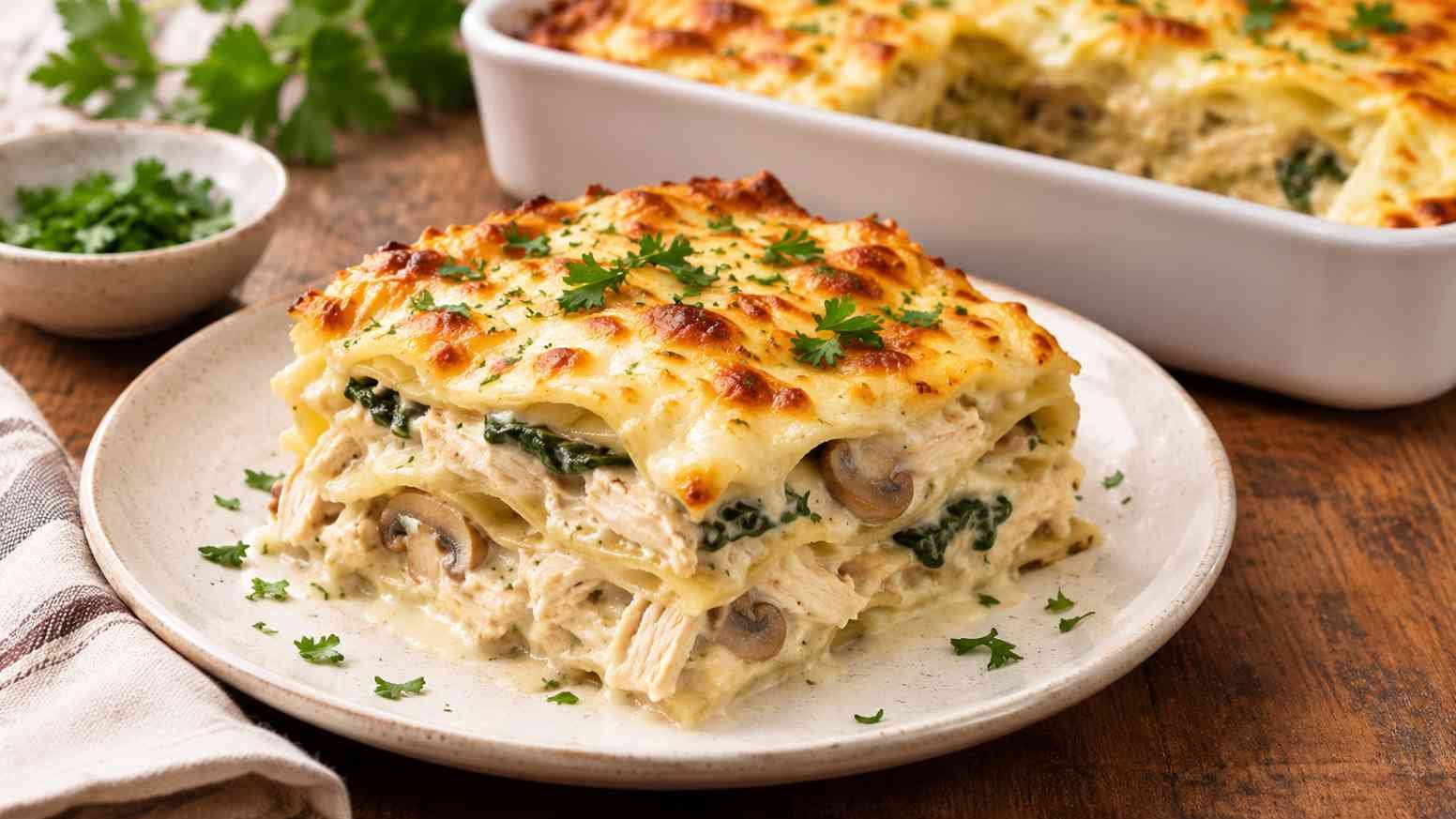
There is something especially comforting about a pan of lasagna coming out of the oven, with bubbling cheese around the edges and a golden crust on top. This White Chicken Lasagna takes that familiar comfort food in a different direction. Instead of tomato sauce and ground beef, it brings together tender shredded chicken, sautéed mushrooms, spinach, and layers of creamy garlic Parmesan sauce.
The sauce is rich without needing heavy cream, the chicken stays moist, and the combination of mozzarella and Parmesan gives every serving a satisfying cheesy finish. It is the kind of dinner that works just as well for a relaxed Sunday meal as it does for a family gathering.
Although making lasagna involves a few separate steps, nothing here is particularly difficult. You prepare the filling, make a simple white sauce, assemble the layers, and let the oven finish the job. The best part is that you can prepare most of it ahead of time.
White Chicken Lasagna Recipe at a Glance
| Preparation Time | 25 minutes |
|---|---|
| Cooking Time | 55 minutes |
| Resting Time | 15 minutes |
| Total Time | 1 hour 35 minutes |
| Servings | 8 |
| Course | Main Course |
| Cuisine | Italian-American |
| Difficulty | Moderate |
| Cooking Method | Stovetop and Oven |
Ingredients for White Chicken Lasagna
This recipe uses three main components: the chicken and vegetable filling, a homemade creamy white sauce, and the pasta and cheese layers. Preparing everything before you start assembling makes the process much easier.
For the Chicken and Vegetable Filling
- 3 cups cooked chicken, shredded (approximately 450 g)
- 2 tablespoons olive oil
- 250 g button mushrooms, thinly sliced
- 3 cups fresh baby spinach, roughly chopped
- 1 medium onion, finely chopped
- 3 garlic cloves, minced
- 1 teaspoon dried Italian seasoning
- 1/2 teaspoon freshly ground black pepper
- 1/4 teaspoon salt, or according to taste
For the Creamy White Sauce
- 5 tablespoons unsalted butter (70 g)
- 5 tablespoons all-purpose flour (approximately 40 g)
- 3 1/2 cups whole milk (840 ml), preferably warm
- 1 cup low-sodium chicken broth (240 ml)
- 3 garlic cloves, finely minced
- 3/4 cup freshly grated Parmesan cheese (approximately 75 g)
- 1/4 teaspoon ground nutmeg, optional
- 1/2 teaspoon black pepper
- Salt to taste
For Assembling the Lasagna
- 9 lasagna sheets, regular or oven-ready
- 2 cups shredded mozzarella cheese (approximately 225 g)
- 1/2 cup grated Parmesan cheese (approximately 50 g)
- 1 tablespoon chopped fresh parsley, for garnish
- Butter or oil for greasing the baking dish
Ingredient note: Rotisserie chicken works particularly well here because it is already cooked and usually well seasoned. Leftover roasted or poached chicken is equally suitable. If using raw chicken, cook it completely before shredding. Choose lasagna sheets according to the cooking instructions on their packaging, since some dried varieties need boiling before assembly.
Also Read: Smothered Chicken Breast
How to Make White Chicken Lasagna
The easiest way to approach this recipe is to finish the filling and sauce before opening the lasagna sheets. Once those components are ready, the layering takes only a few minutes.
Step 1: Prepare the Chicken Filling
Place a large skillet over medium-high heat and add the olive oil. Once heated, add the chopped onion and cook for approximately 3 minutes, stirring occasionally, until it begins to soften.
Add the sliced mushrooms and spread them across the skillet. Allow them to cook for 6 to 8 minutes, stirring occasionally, until their moisture evaporates and their edges start turning golden brown. Avoid stirring continuously because the mushrooms need contact with the hot pan to develop a good color.
Add the minced garlic and cook for another 30 seconds. Stir in the spinach and cook until just wilted, approximately 1 to 2 minutes. If excess liquid collects in the skillet, continue cooking briefly to evaporate it.
Add the shredded chicken, Italian seasoning, black pepper, and salt. Mix everything until evenly combined, then remove the skillet from the heat. Set the filling aside while you prepare the sauce.
Step 2: Make the Creamy Garlic White Sauce
Melt the butter in a medium saucepan over medium heat. Add the minced garlic and stir for approximately 30 seconds, just until fragrant.
Sprinkle in the flour and whisk continuously for 1 to 2 minutes. This butter-and-flour mixture, known as a roux, thickens the sauce and helps give it a smooth consistency. The flour should lose its raw smell but should not brown significantly.
Gradually pour in the warm milk, adding a small amount at first and whisking thoroughly before adding more. Once the mixture becomes smooth, add the remaining milk and chicken broth.
Continue cooking over medium heat for approximately 5 to 7 minutes, stirring regularly, until the sauce thickens enough to lightly coat the back of a spoon.
Reduce the heat to low and stir in the Parmesan cheese, black pepper, and optional nutmeg. Taste before adding salt because Parmesan and chicken broth already contribute saltiness.
The finished sauce should be creamy and easily pourable rather than extremely thick. Lasagna sheets absorb moisture while baking, so a sauce that is too stiff may produce dry layers. If necessary, loosen it with a few tablespoons of additional milk.
Step 3: Preheat the Oven and Prepare the Baking Dish
Preheat your oven to 375°F (190°C). Lightly grease a 9-by-13-inch (23-by-33-cm) baking dish.
If your lasagna sheets require pre-cooking, boil them according to their package instructions and drain carefully. Lay them flat on a lightly oiled surface to prevent sticking. Oven-ready sheets can usually go directly into the baking dish, provided the sauce supplies enough moisture.
Step 4: Assemble the Lasagna Layers
Spread approximately 3/4 cup of white sauce across the bottom of the prepared baking dish. This prevents the first layer of pasta from sticking and helps it cook evenly.
Arrange three lasagna sheets over the sauce. Spread half of the chicken and vegetable mixture across the pasta, followed by approximately one-quarter of the remaining white sauce. Sprinkle with about one-third of the mozzarella.
Place another three lasagna sheets on top. Add the remaining chicken filling, another quarter of the remaining sauce, and another third of the mozzarella.
Finish with the last three lasagna sheets. Spread all the remaining white sauce evenly over the top, making sure the pasta is completely covered, especially around the corners. Sprinkle with the remaining mozzarella and the additional Parmesan cheese.
The final cheese layer should cover the surface without being packed down. This allows it to melt evenly and form a lightly golden crust.
Step 5: Bake Until Golden and Bubbling
Cover the baking dish loosely with aluminum foil, tenting it slightly so the foil does not touch the cheese. Bake in the preheated oven for 30 minutes.
Remove the foil and continue baking for another 15 to 25 minutes, until the cheese is golden in places, the sauce bubbles around the edges, and the pasta is tender when tested with a knife.
If the cheese starts browning too quickly, cover the dish loosely again. If you prefer a darker crust, use the broiler for the final 1 to 2 minutes, watching carefully to prevent burning.
Step 6: Rest Before Serving
Remove the lasagna from the oven and allow it to rest for at least 15 minutes before cutting.
This step makes a noticeable difference. Straight from the oven, the sauce is extremely hot and the layers tend to slide apart. A short resting period allows everything to settle, making it easier to cut neat portions while keeping the inside creamy.
Finish with chopped fresh parsley and serve warm.
Also Read: Caprese Chicken Recipe
What You Can Do Better
A good chicken lasagna should be creamy, but it should not collapse into a puddle of sauce when sliced. A few small adjustments during preparation make a substantial difference to the final texture.
Brown the Mushrooms Properly
Mushrooms contain a considerable amount of water. If they are added directly to the filling without sufficient cooking, that moisture can collect between the pasta layers. Use a wide skillet, avoid overcrowding, and let the mushrooms develop golden edges before adding the spinach.
Keep the Chicken Moist
Chicken breast can become dry when it is cooked twice. If starting with raw chicken, gently poach it until the center reaches 165°F (74°C), then shred it. Chicken thighs are another good choice because they remain tender through baking. Using already-cooked chicken also makes this recipe much quicker.
Make the White Sauce Slightly Looser
One of the most common problems with white lasagna is using sauce that is too thick before baking. The pasta absorbs some of its moisture in the oven, particularly when using oven-ready sheets. Aim for a sauce that pours easily and spreads without dragging across the noodles.
Use Freshly Grated Cheese
Freshly grated Parmesan melts more smoothly into the sauce than some pre-shredded varieties. For the topping, low-moisture mozzarella gives a stretchy, golden finish without releasing too much water. You can also mix in a little Gruyère for a deeper, slightly nutty flavor.
Season Each Component
White sauces are usually milder than tomato-based sauces, making seasoning especially important. Taste the chicken filling and the sauce separately before assembly. Parmesan adds salt, while garlic, pepper, and Italian herbs help bring everything together.
Allow Enough Resting Time
Cutting lasagna immediately after baking may be tempting, but it usually produces messy servings. Fifteen minutes of resting is enough to help the layers hold together without letting the dish become cold.
Variations You Can Try
White Chicken Lasagna with Broccoli
Replace the spinach with 2 cups of small broccoli florets. Steam or blanch them until just tender, then drain thoroughly before combining with the chicken. Broccoli adds a little crunch and works particularly well with Parmesan sauce.
Extra Cheesy Chicken Lasagna
For a richer filling, mix 1 cup of ricotta cheese with a little black pepper and spread it in thin layers over the chicken mixture. You may need to reduce the mozzarella slightly to keep the finished dish from becoming overly heavy.
Chicken and Spinach Lasagna
Skip the mushrooms and increase the spinach to approximately 6 cups of fresh leaves. Cook until wilted and evaporate any excess moisture before assembling. If using frozen spinach, thaw and squeeze it thoroughly.
A Lighter Version
Use part-skim mozzarella and reduced-fat milk in the sauce. You can also increase the vegetables and use slightly less cheese. The result will be less rich, but the garlic and Parmesan will still provide plenty of flavor. Keep in mind that reduced-fat sauces can have a slightly different texture.
Also Read: Crispy Chicken Thighs
What to Serve with White Chicken Lasagna
Because this dish already contains pasta, chicken, and a creamy cheese sauce, something fresh or lightly acidic makes a good accompaniment. A simple green salad with lemon vinaigrette is an excellent choice because it cuts through the richness without competing with the main dish.
Roasted asparagus, steamed green beans, sautéed zucchini, or broccoli with lemon also work well. If you are serving a larger family dinner, garlic bread is a familiar addition, especially for soaking up any extra sauce left on the plate.
How to Store and Reheat White Chicken Lasagna
Refrigerating Leftovers
Allow the lasagna to cool briefly, then transfer leftovers to airtight containers or cover the baking dish tightly. Refrigerate within 2 hours of cooking and keep for up to 3 to 4 days.
Freezing
White Chicken Lasagna can be frozen either before baking or after it has been cooked and cooled. Wrap the dish tightly using a freezer-safe covering, or freeze individual portions in airtight containers. For the best quality, use within 2 to 3 months.
Thaw overnight in the refrigerator before reheating. Freezing may cause a small change in the texture of the dairy-based sauce, but gentle reheating helps preserve its creaminess.
Reheating in the Oven
Place the refrigerated lasagna in an oven-safe dish, add a tablespoon or two of milk around the edges, and cover with foil. Reheat at 350°F (175°C) until thoroughly hot in the center. The required time will depend on the size and thickness of the portion.
Reheating in the Microwave
For individual servings, place a portion on a microwave-safe plate, cover loosely, and heat in intervals until warmed throughout. Adding a small splash of milk can help prevent the sauce from drying out. Reheated leftovers should reach 165°F (74°C) in the center.
Can You Make White Chicken Lasagna Ahead of Time?
Yes. This is a practical recipe to prepare before a busy evening or a family gathering. Assemble the lasagna, cover it tightly, and refrigerate for up to 24 hours before baking.
When ready to cook, remove the dish from the refrigerator while the oven preheats. If using a glass baking dish, follow the manufacturer’s guidance about temperature changes. Bake covered as directed, allowing approximately 10 to 15 additional minutes if the lasagna is still cold. Check that the center reaches 165°F (74°C) before serving.
You can also prepare the chicken filling and white sauce separately a day ahead. Store them in the refrigerator and gently rewarm the sauce with a splash of milk before assembling.
Also Read: Chicken Enchiladas Recipe
Nutritional Information
The following values are approximate estimates for one serving when the lasagna is divided into eight equal portions. Actual nutrition will vary depending on the chicken cut, pasta brand, cheese, milk, and amount of sauce used.
| Nutrient | Estimated Amount Per Serving |
|---|---|
| Calories | 590 kcal |
| Carbohydrates | 37 g |
| Protein | 43 g |
| Total Fat | 29 g |
| Saturated Fat | 15 g |
| Dietary Fiber | 2 g |
| Total Sugars | 8 g |
| Cholesterol | 125 mg |
| Sodium | 760 mg |
| Calcium | 430 mg |
| Iron | 2.5 mg |
Nutrition disclaimer: These figures are estimates, not laboratory-tested nutritional results. For precise dietary tracking, calculate the recipe using the exact ingredients and brands purchased.
Frequently Asked Questions
Can I Use Rotisserie Chicken for White Chicken Lasagna?
Absolutely. Rotisserie chicken is one of the easiest shortcuts for this recipe. Remove the skin and bones, shred the meat, and measure approximately 3 cups. Taste the filling before adding extra salt because store-bought rotisserie chicken may already be heavily seasoned.
Can I Make White Chicken Lasagna Without Mushrooms?
Yes. Replace the mushrooms with cooked broccoli, zucchini, or additional spinach. Just remember that vegetables containing a lot of moisture should be cooked and drained before they are added to the lasagna.
Can I Use No-Boil Lasagna Noodles?
Yes, provided they are intended for oven baking without pre-cooking. Keep the white sauce relatively loose and make sure every sheet is covered with sauce. Check the noodle packaging because different brands have different moisture and baking requirements.
Why Is My Chicken Lasagna Watery?
Excess moisture usually comes from mushrooms or spinach that were not cooked thoroughly, a sauce that has not thickened enough, or slicing the lasagna immediately after baking. Cooking the vegetables until their excess water evaporates and resting the finished lasagna before cutting will usually solve the problem.
Why Did My White Sauce Turn Lumpy?
Lumps generally form when milk is added too quickly to the flour-and-butter mixture. Add the first portion of milk gradually while whisking continuously. If lumps still appear, whisk vigorously or carefully strain the sauce before adding the cheese.
Can I Use Alfredo Sauce from a Jar?
You can use a prepared Alfredo-style sauce when short on time. Choose one with a relatively mild flavor, then adjust the consistency with a little milk or broth if needed. Keep in mind that jarred sauces vary in salt content and thickness, so taste before adding extra seasoning.
How Do I Know When the Lasagna Is Fully Cooked?
The cheese should be melted, the edges should be bubbling, and a knife should slide easily through the pasta layers. For food safety, the center should reach 165°F (74°C). If the pasta still feels firm, cover the dish and continue baking, checking again after a few minutes.