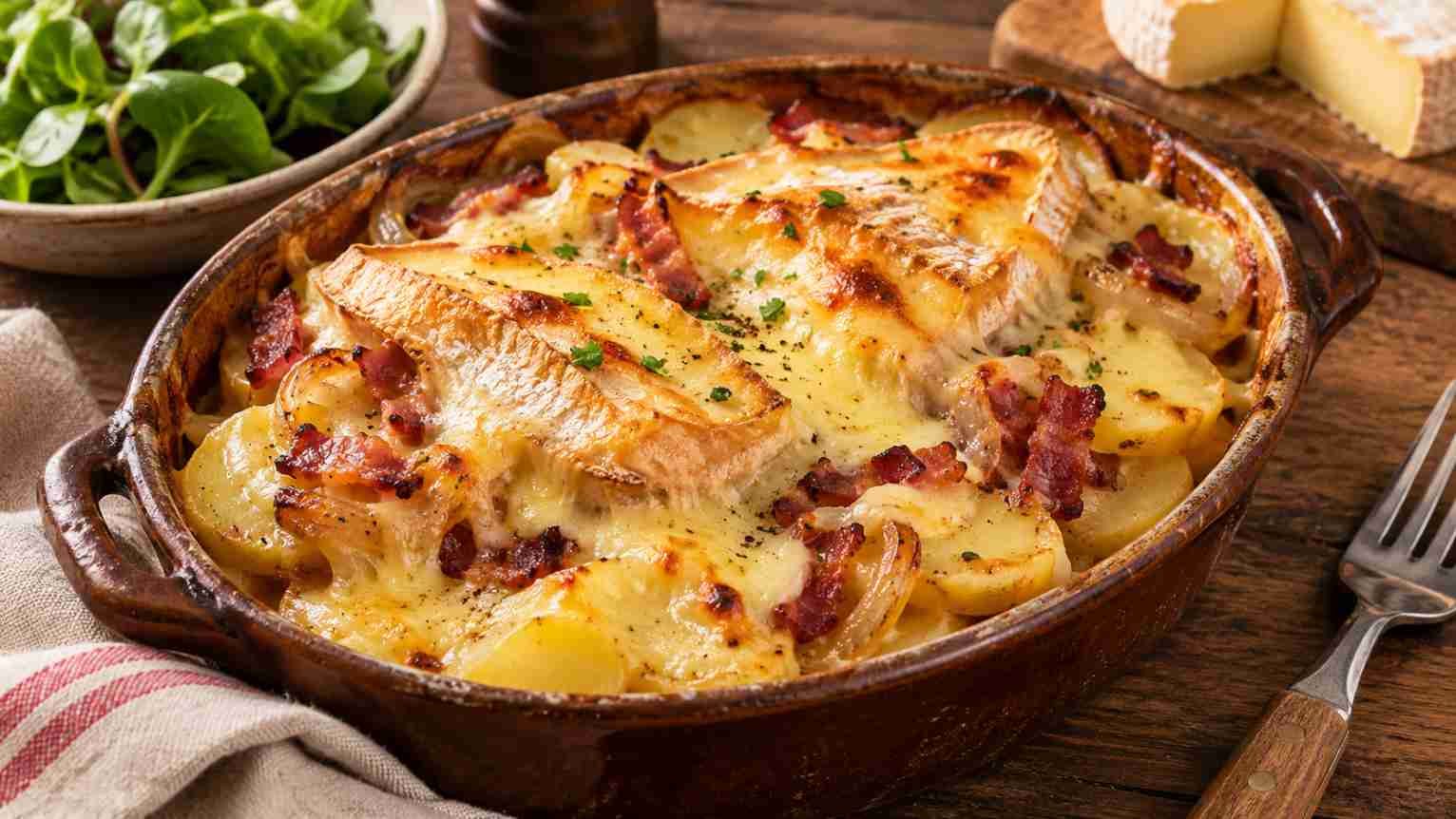
Some meals are made for cold evenings, when all you want is something warm, filling, and straight from the oven. Tartiflette is exactly that kind of food. This traditional French potato bake brings together tender potatoes, smoky bacon, sweet onions, and a generous layer of melting cheese. The result is a bubbling casserole with a golden top and a wonderfully creamy center.
What makes tartiflette different from an ordinary potato gratin is the cheese. Instead of relying on a heavy cream sauce, this dish uses soft, flavorful cheese that melts into the potatoes as everything bakes. The bacon adds a salty, savory bite, while the onions bring a little sweetness that balances the richness.
Originally associated with the Savoie region of the French Alps, tartiflette has become a favorite comfort food in France. It is especially popular during the colder months, often appearing on dinner tables after a long day outdoors. Fortunately, you don’t need to visit a French mountain village to enjoy it. With a handful of ingredients and a baking dish, you can make a delicious version in your own kitchen.
What Is Tartiflette?
Tartiflette is a French baked potato dish traditionally prepared with potatoes, lardons (small pieces of cured pork), onions, white wine, and Reblochon cheese. The ingredients are cooked separately or together before being layered in a baking dish and finished in the oven.
Reblochon is a soft, washed-rind cheese from the French Alps. It has a creamy texture and a distinctive, slightly earthy flavor. When heated, it melts beautifully and coats the potatoes with a rich sauce. The edible rind develops a lovely golden finish during baking.
Although tartiflette is often described as a traditional Alpine recipe, the modern dish became widely popular during the 1980s. Today, it is closely associated with French mountain cooking and is commonly served as a hearty main course alongside a simple green salad.
Tartiflette Recipe at a Glance
| Recipe Details | Information |
|---|---|
| Cuisine | French |
| Course | Main Course |
| Preparation Time | 20 minutes |
| Cooking Time | 55 minutes |
| Total Time | 1 hour 15 minutes |
| Servings | 6 |
| Cooking Method | Stovetop and Oven |
| Difficulty | Easy to Moderate |
Also Read: Chicken Tortilla Casserole
Ingredients for Tartiflette
You don’t need a long shopping list for this recipe. Since there are relatively few ingredients, choosing good-quality potatoes, bacon, and cheese makes a noticeable difference in the finished dish.
Main Ingredients
| Ingredient | Quantity | Purpose |
|---|---|---|
| Potatoes | 1.2 kg (about 2.6 lb) | Forms the tender, hearty base of the dish |
| Reblochon cheese | 450 g (about 1 lb) | Creates the creamy melted cheese topping |
| Smoked bacon or lardons | 250 g (about 9 oz) | Adds smoky, savory flavor |
| Yellow onions | 2 medium | Provide sweetness and depth |
| Dry white wine | 120 ml (1/2 cup) | Adds acidity and balances the richness |
| Unsalted butter | 20 g (about 1 1/2 tbsp) | Helps soften and brown the onions |
| Garlic | 2 cloves, minced | Adds a gentle aromatic flavor |
| Black pepper | 1/2 tsp | Provides mild warmth |
| Salt | As needed | Seasons the potatoes |
| Fresh thyme | 1 tsp leaves (optional) | Adds a subtle herbal note |
Choosing the Right Potatoes
For tartiflette, choose potatoes that become tender without completely falling apart. Yukon Gold potatoes are particularly good because they have a buttery flavor and hold their shape reasonably well after boiling. Maris Piper, King Edward, or other all-purpose potatoes also work.
Avoid cutting the potatoes too thinly. You want distinct, tender pieces that can absorb the melted cheese without turning into mashed potatoes. Slices around 1 cm (approximately 3/8 inch) thick work well for this version.
What Can You Use Instead of Reblochon?
Reblochon gives tartiflette its characteristic taste, but it can be difficult to find outside France. Taleggio is one of the better substitutes because it has a soft texture, a washed rind, and good melting properties. Other mild washed-rind cheeses can also work.
If those aren’t available, Camembert or Brie can produce a pleasant, creamy potato bake, although the flavor will be different from traditional tartiflette. Choose a cheese that melts smoothly rather than one that becomes oily or rubbery.
Also Read: Beef Enchilada Casserole
How to Make Tartiflette
The process is straightforward: cook the potatoes until almost tender, prepare the bacon and onion mixture, assemble everything in a baking dish, and let the oven finish the job. The most important thing is not to overcook the potatoes before baking.
Step 1: Prepare the Potatoes
Peel the potatoes and cut them into slices approximately 1 cm thick. Place them in a large saucepan and cover with cold, lightly salted water. Bring to a gentle boil over medium-high heat.
Cook for about 8–12 minutes, depending on the potato variety and thickness. The slices should be nearly tender but still firm enough to hold together when lifted with a spoon.
Drain thoroughly and leave them in the colander for a few minutes. Allowing the excess steam to escape prevents unwanted moisture from collecting at the bottom of the baking dish.
Step 2: Cook the Bacon
While the potatoes are cooking, cut the bacon into small strips or bite-sized pieces. Place a large frying pan over medium heat and add the bacon.
Cook for 5–7 minutes, stirring occasionally, until the bacon begins to turn golden and releases some of its fat. It doesn’t need to become completely crisp because it will continue cooking in the oven.
Transfer the bacon to a plate, leaving about one tablespoon of the rendered fat in the pan. If there is considerably more fat, carefully remove the excess.
Step 3: Soften the Onions
Peel and thinly slice the onions. Add the butter to the frying pan containing the reserved bacon fat, then add the onions.
Cook over medium-low heat for approximately 8–10 minutes, stirring regularly. The onions should become soft, lightly golden, and naturally sweet. Avoid cooking them over very high heat, which can cause the edges to burn before the centers soften.
Add the minced garlic and optional thyme during the final minute of cooking. Stir gently until fragrant.
Step 4: Add the White Wine
Pour the dry white wine into the pan with the onions. Stir while scraping up any browned bits stuck to the bottom of the pan. These little bits carry plenty of flavor from the bacon and onions.
Allow the wine to simmer for 2–3 minutes, until the liquid has reduced slightly. Return the cooked bacon to the pan and stir everything together. Season with black pepper.
Taste before adding extra salt. Bacon and Reblochon are already fairly salty, so the mixture may need very little additional seasoning.
Step 5: Assemble the Tartiflette
Preheat the oven to 200°C (390°F), or 180°C (355°F) for a fan-assisted oven. Lightly grease a medium-sized baking dish, approximately 25 x 20 cm (10 x 8 inches).
Arrange half of the cooked potatoes across the bottom of the dish. Spoon half of the bacon and onion mixture over the potatoes, spreading it evenly.
Add the remaining potatoes and finish with the rest of the bacon and onions. Pour over any flavorful liquid left in the frying pan.
Try to distribute the ingredients evenly so that every serving contains a good mixture of potatoes, bacon, and onions.
Step 6: Add the Cheese
Cut the Reblochon horizontally through its middle to create two thinner rounds. Depending on the shape of your baking dish, you can leave the halves whole or divide them into smaller sections.
Place the cheese over the potatoes with the rind facing upward and the creamy cut surface touching the potato mixture. Don’t remove the edible rind, as it contributes flavor and develops a golden finish during baking.
If the cheese is too soft to slice neatly, place it in the freezer for around 20–30 minutes first. It should become firmer and easier to handle without freezing solid.
Step 7: Bake Until Golden
Place the baking dish on the middle rack of the preheated oven. Bake uncovered for approximately 25–30 minutes, until the cheese has melted and the top is golden with bubbling edges.
The potatoes should be completely tender, and the melted cheese should have settled into the spaces between them. If the top is browning too quickly, loosely cover the dish with aluminum foil for the remaining cooking time.
Remove the tartiflette from the oven and allow it to rest for 5–10 minutes before serving. This short resting period helps the melted cheese settle slightly, making the portions easier to serve.
Also Read: Beef and Noodle Casserole
What You Can Do Better
Tartiflette is a forgiving dish, but a few small decisions can make the difference between a decent potato bake and one that tastes genuinely special.
1. Don’t Overcook the Potatoes
The potatoes need to finish cooking in the oven. If they are already falling apart after boiling, they will become excessively soft once mixed with the onions and cheese. Check them regularly and drain them while they still have a little firmness.
2. Give the Onions Enough Time
Quickly frying onions over high heat won’t produce the same depth of flavor as slowly softening them. Allow them to cook until lightly golden and sweet. Their mild sweetness is particularly important because it balances the salty bacon and rich cheese.
3. Use Cheese That Melts Properly
The cheese is the heart of tartiflette. Reblochon provides the classic flavor, but if you need a substitute, look for a creamy washed-rind cheese rather than a firm, aged variety. A hard cheese may brown nicely but won’t produce the same soft, flowing sauce.
4. Keep the Bacon Slightly Chunky
Thin bacon pieces can become lost among the potatoes. Cutting the bacon into slightly thicker strips gives the finished dish more texture and ensures that the smoky flavor comes through in each bite.
5. Let Excess Moisture Evaporate
Watery tartiflette is usually the result of insufficiently drained potatoes or too much liquid in the onion mixture. Drain the potatoes well and reduce the wine before assembling. You want the cheese to coat the potatoes, not float in a layer of liquid.
6. Avoid Adding Cream Automatically
Some modern tartiflette recipes include cream, but it isn’t necessary when you’re using a generous amount of good melting cheese. Skipping it allows the natural flavor of the cheese, onions, and bacon to stand out.
7. Rest the Dish Before Serving
It’s tempting to serve tartiflette immediately when it comes out of the oven, but the cheese will be extremely hot and loose. A short rest makes the texture more pleasant and prevents the filling from sliding apart as you serve it.
What to Serve With Tartiflette
Tartiflette is rich enough to serve as a complete meal, so the best accompaniments are generally light, fresh, and slightly acidic. You don’t need anything complicated.
Fresh Green Salad
A simple salad made with lettuce, arugula, or mixed leaves works beautifully. Dress it with Dijon mustard, lemon juice or vinegar, and olive oil. The acidity cuts through the richness of the melted cheese.
Steamed Green Beans
Green beans provide a fresh contrast without competing with the main dish. Steam them until just tender and season with a little black pepper and lemon juice.
Roasted Vegetables
Roasted carrots, asparagus, or Brussels sprouts are excellent choices when serving tartiflette for a larger family dinner. Keep the seasonings simple to avoid overwhelming the cheesy potatoes.
Crusty Bread
A small piece of rustic French bread is perfect for soaking up any melted cheese left on the plate. Since the dish already contains potatoes, bread is best offered as an optional extra rather than a substantial side.
Also Read: Cream Corn Casserole with Cheese
Recipe Variations
Vegetarian Tartiflette
For a meat-free version, replace the bacon with sautéed mushrooms. Cook the mushrooms until their moisture evaporates and their edges begin to brown. A little smoked paprika can add a gentle smoky note. Use a vegetarian-suitable cheese if required.
Chicken Tartiflette
Add approximately 250 g of cooked, shredded chicken to the onion mixture. This makes the dish even more substantial and is a practical way to use leftover roast chicken.
Mushroom and Onion Tartiflette
For a more earthy flavor, add 200 g of sliced mushrooms to the onions. Cook until the mushrooms have released their liquid and started to brown before adding the wine.
Alcohol-Free Tartiflette
Replace the white wine with an equal quantity of unsweetened, non-alcoholic dry white wine. Alternatively, use a little vegetable or chicken stock with one or two teaspoons of lemon juice. Stock changes the flavor slightly, but it still produces a satisfying dish.
How to Store and Reheat Tartiflette
Refrigerating Leftovers
Allow leftover tartiflette to cool briefly, then transfer it to an airtight container. Refrigerate within two hours of cooking and store at 4°C (40°F) or below for up to 3–4 days.
The cheese will firm up considerably in the refrigerator, which is completely normal. It softens again when reheated.
Reheating in the Oven
For the best texture, place the leftover tartiflette in an oven-safe dish and cover loosely with foil. Reheat at 180°C (350°F) for approximately 15–25 minutes, depending on the portion size, until thoroughly hot in the center. Aim for an internal temperature of 74°C (165°F).
Remove the foil during the final few minutes if you want to refresh the golden cheese topping.
Reheating in the Microwave
For individual portions, place the tartiflette on a microwave-safe plate and cover loosely. Heat in short intervals, checking and rotating the portion if necessary, until piping hot throughout.
The microwave is convenient, although the top won’t develop the same crisp finish as it does in the oven.
Can You Freeze Tartiflette?
Freezing is possible, but it isn’t ideal. Cooked potatoes can become slightly grainy or watery after thawing, and soft cheese may separate during reheating. If you do freeze leftovers, cool them promptly, pack them in airtight freezer-safe containers, and use within 1–2 months for the best quality.
Thaw overnight in the refrigerator before reheating thoroughly. For the best flavor and texture, tartiflette is better enjoyed freshly baked or refrigerated for a few days.
Can You Prepare Tartiflette Ahead of Time?
Yes. Tartiflette is a good option when you’re cooking for guests because most of the preparation can be completed in advance.
Cook and drain the potatoes, prepare the bacon and onion mixture, and assemble everything in the baking dish. Allow the cooked ingredients to cool briefly, cover, and refrigerate promptly. Keep the dish refrigerated and bake within 24 hours.
When you’re ready to cook, add the cheese if it hasn’t already been added and bake until the center is thoroughly heated and the topping is golden. A refrigerated casserole may need 10–15 minutes longer than one assembled with warm ingredients.
If your baking dish is made of glass or ceramic, follow the manufacturer’s temperature-change instructions to avoid thermal shock.
Also Read: Chicken & Rice Casserole
Tartiflette Nutritional Information
Tartiflette is a substantial dish containing potatoes, bacon, butter, and cheese. It provides carbohydrates for energy, protein from the cheese and bacon, and calcium from the dairy ingredients. It is also relatively high in saturated fat and sodium, so portion size is worth keeping in mind.
The following nutritional values are approximate estimates for one of six servings, based on the ingredient quantities listed in this recipe. Actual values will vary depending on the cheese, bacon, and potato varieties used.
| Nutrient | Estimated Amount Per Serving |
|---|---|
| Calories | 730 kcal |
| Carbohydrates | 42 g |
| Protein | 31 g |
| Total Fat | 46 g |
| Saturated Fat | 25 g |
| Fiber | 5 g |
| Sugars | 5 g |
| Sodium | 1,150 mg |
| Cholesterol | 130 mg |
| Calcium | 650 mg |
Nutrition Note: These figures are estimates, not laboratory-tested nutritional values. For more precise information, calculate the nutrition using the exact brands and quantities of ingredients you purchase.
Frequently Asked Questions
Is Tartiflette the Same as Potato Gratin?
Not exactly. Traditional potato gratin is often made with cream or milk and may include grated cheese. Tartiflette is distinguished by its bacon, onions, and soft washed-rind cheese, which melts over the potatoes and forms the sauce.
Do You Have to Peel the Potatoes?
Peeling is recommended for a more traditional, smooth texture, but it isn’t absolutely necessary. If you prefer leaving the skins on, scrub the potatoes thoroughly before cooking. Thin-skinned varieties work better for this approach.
Can You Make Tartiflette Without Bacon?
Absolutely. Mushrooms, caramelized onions, and roasted vegetables can replace the bacon. The dish will taste different, but the combination of tender potatoes and melted cheese remains delicious.
Should You Remove the Rind From Reblochon?
No. The rind is edible and contributes to the characteristic flavor of tartiflette. Place the cheese over the potatoes with the rind facing upward so the softer interior melts down into the casserole.
Why Is My Tartiflette Watery?
Excess moisture usually comes from potatoes that haven’t been drained properly or from wine that hasn’t reduced sufficiently. Let the potatoes steam-dry after boiling and make sure the onion mixture isn’t overly liquid before assembling.
Can I Use Cheddar Instead of Reblochon?
Cheddar will melt, but it won’t recreate the traditional texture or flavor of tartiflette. A soft washed-rind cheese such as Taleggio is a closer substitute. If Cheddar is your only option, you can still make a tasty cheesy potato casserole, but the result will be a different dish.
How Do I Know When Tartiflette Is Ready?
The cheese should be completely melted, the edges should be bubbling, and the surface should show golden patches. Insert a knife into the center to check that the potatoes are tender. If the dish was assembled ahead and refrigerated, make sure the center is thoroughly hot before serving.
Is Tartiflette a Main Dish or a Side Dish?
In France, tartiflette is commonly enjoyed as a main course, particularly during winter. However, smaller portions can also be served as a side dish with roasted meat or vegetables. This recipe provides approximately six generous main-course portions or eight to ten smaller side portions.