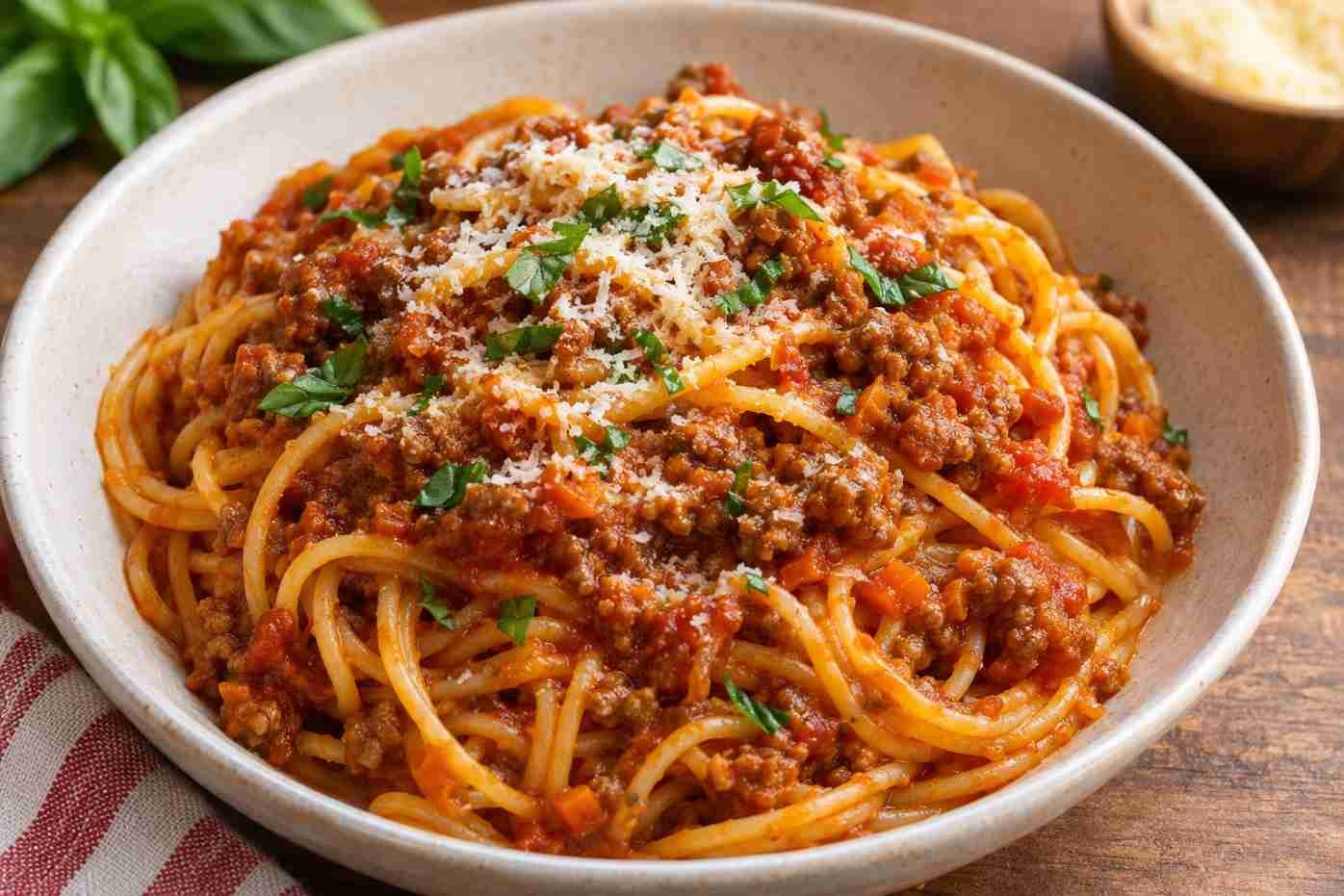
There are evenings when a proper homemade pasta dinner sounds wonderful, but the thought of washing several pots and pans is enough to make you reconsider. That’s where One Pot Pasta Bolognese comes in. It has everything you want from a comforting bowl of pasta: tender spaghetti, savory ground beef, a rich tomato sauce, and plenty of flavor from garlic and herbs. The difference is that everything cooks together in one pot.
Instead of boiling the spaghetti separately, you cook it right in the Bolognese sauce. As the pasta softens, it absorbs the seasoned broth and tomato mixture, while the starch released from the spaghetti helps bring the sauce together. The result is a satisfying, saucy pasta dinner that takes roughly 35 minutes from start to finish.
This isn’t a traditional slow-simmered Italian ragù, and it doesn’t pretend to be. It’s a practical weeknight version that delivers a generous amount of flavor without requiring hours at the stove.
Recipe Overview
| Preparation Time | 10 minutes |
|---|---|
| Cooking Time | 25 minutes |
| Total Time | 35 minutes |
| Servings | 5 |
| Course | Main Course, Dinner |
| Cuisine | Italian-Inspired |
| Cooking Method | Stovetop, One Pot |
Ingredients for One Pot Pasta Bolognese
Most of the ingredients are everyday kitchen staples. The main thing to pay attention to is the type of tomatoes you use. Smooth tomato passata works particularly well because it creates a rich sauce without needing a lengthy simmer.
| Ingredient | Quantity |
|---|---|
| Olive oil | 1 tablespoon |
| Lean ground beef | 500 g (about 1.1 lb) |
| Yellow onion, finely chopped | 1 medium |
| Garlic cloves, minced | 3 |
| Carrot, finely grated | 1 small |
| Tomato paste | 2 tablespoons |
| Tomato passata (strained tomatoes) | 700 g (about 25 oz) |
| Low-sodium beef broth | 3 cups (720 ml) |
| Worcestershire sauce | 1 tablespoon |
| Dried oregano | 1 teaspoon |
| Dried basil | 1 teaspoon |
| Red pepper flakes | 1/4 teaspoon, optional |
| Salt | 1/2 teaspoon, plus more to taste |
| Freshly ground black pepper | 1/2 teaspoon |
| Dry spaghetti | 350 g (about 12 oz) |
| Freshly grated Parmesan cheese | For serving, optional |
| Fresh basil or parsley | For garnish, optional |
Also Read: Rice a Roni Chicken Casserole
Choosing the Right Ingredients
Ground beef: Lean ground beef works well because it gives the sauce a hearty texture without leaving too much grease in the pot. If you’re using beef with a higher fat content, drain the excess fat after browning. Ground turkey or chicken can also work, although the finished sauce will have a lighter flavor.
Tomato passata: Passata is made from strained, pureed tomatoes. Its smooth consistency is especially useful here because the sauce needs enough liquid to cook the pasta while still becoming thick and rich at the end. Plain canned tomato puree can work if it has a similar consistency. Avoid using concentrated tomato paste as a direct replacement.
Beef broth: Broth helps cook the spaghetti and gives the sauce more depth than plain water. Because the pasta absorbs much of this liquid, a low-sodium broth is preferable. You can always add more salt near the end.
Spaghetti: Regular dried spaghetti is a reliable choice. Very thick spaghetti may need additional cooking time and a little extra hot water. Short pasta shapes can also be used, but they may require a different amount of liquid.
How to Make One Pot Pasta Bolognese
Use a large, heavy-bottomed pot or deep Dutch oven. It should be wide enough to accommodate the spaghetti as it softens and deep enough to hold the sauce without splashing over the sides.
Step 1: Cook the Onion and Carrot
Heat the olive oil in a large pot over medium heat. Add the chopped onion and grated carrot, then cook for 4 to 5 minutes, stirring occasionally. The onion should become translucent and the carrot should begin to soften. Add the minced garlic and cook for another 30 seconds, just until fragrant. Keep the garlic moving so it doesn’t burn.
Step 2: Brown the Ground Beef
Increase the heat to medium-high and add the ground beef. Break it into small pieces with a wooden spoon or spatula while it cooks. Continue cooking for about 5 to 6 minutes, until the beef has browned and no pink remains. Allowing some of the meat to develop a little color on the bottom of the pot gives the finished sauce a deeper, more savory flavor. Drain excess grease if necessary.
Step 3: Build the Tomato Sauce
Stir in the tomato paste and cook for about 1 minute. This helps remove its raw, sharp taste. Add the tomato passata, beef broth, Worcestershire sauce, oregano, basil, red pepper flakes, salt, and black pepper. Stir thoroughly, scraping the bottom of the pot to release any browned bits left behind from cooking the beef.
At this point, the mixture will look much thinner than a finished Bolognese sauce. That’s intentional. The spaghetti needs that liquid to cook, and the sauce will gradually thicken as the pasta absorbs it.
Step 4: Add the Dry Spaghetti
Bring the sauce to a steady boil. Add the uncooked spaghetti, spreading the strands across the pot rather than dropping them into one tight bundle. Let the exposed ends soften for 30 to 60 seconds, then gently push the pasta down into the sauce with tongs. Continue until the spaghetti is mostly submerged. If your pot is narrow, you can break the spaghetti in half before adding it.
Step 5: Cook the Pasta in the Sauce
Reduce the heat to maintain an active simmer. Cook the spaghetti for approximately 11 to 14 minutes, depending on its thickness and the instructions on the package. Stir frequently, especially during the last few minutes, to prevent the pasta from sticking together or catching on the bottom of the pot.
As the spaghetti cooks, the sauce will become noticeably thicker. If the liquid disappears before the pasta is tender, add hot water about 1/4 cup at a time. Avoid adding too much at once. The goal is a sauce that coats the spaghetti generously, not a watery tomato broth.
Step 6: Check the Texture and Seasoning
When the spaghetti is just shy of your preferred tenderness, remove the pot from the heat. Toss everything together for about 30 seconds. The pasta will continue absorbing liquid from the hot sauce, so it’s better to finish with slightly more sauce than you think you need. Taste and adjust the salt and pepper if necessary.
Step 7: Serve While Hot
Divide the pasta between warm bowls and finish with freshly grated Parmesan and chopped basil or parsley. Serve immediately, while the sauce is glossy and the spaghetti is tender. A simple green salad or a slice of crusty garlic bread makes a good accompaniment.
Also Read: Chicken & Rice Casserole
What You Can Do Better
A one-pot pasta dinner is straightforward, but a few small changes can make the difference between a good meal and a really satisfying one. The biggest improvement comes from giving the beef enough time to brown. If the meat is cooked over very low heat or stirred constantly, it tends to steam rather than develop those flavorful browned edges. Use a sufficiently large pot and allow some moisture to evaporate before adding the tomatoes.
Toast the Tomato Paste
Don’t rush the tomato paste straight into the liquid. Cooking it briefly with the browned beef concentrates its flavor and softens the raw acidity. It takes only a minute, but that minute makes a noticeable difference in a sauce that isn’t going to simmer for hours.
Keep the Pasta Moving
Unlike spaghetti cooked in a large pot of water, pasta simmering in tomato sauce needs regular attention. The sauce is thicker, and the starch can encourage the strands to stick together. Give the pot a gentle stir every minute or so and a little more frequently as the sauce reduces.
Don’t Cook Away All the Sauce
One of the most common mistakes is waiting until the pot looks completely dry before turning off the heat. Pasta continues soaking up moisture after cooking, and a sauce that looks perfect on the stove can become too thick a few minutes later. Stop cooking while there’s still enough sauce to move freely around the spaghetti.
Use Freshly Grated Parmesan
Freshly grated Parmesan melts more naturally into the hot pasta than many packaged grated cheeses. Add it just before serving, rather than boiling it in the pot. A little freshly ground black pepper over the cheese is also worth the extra few seconds.
Variations and Substitutions
Make It with Ground Turkey
Replace the ground beef with the same weight of ground turkey. Turkey is milder, so you may want to add an extra teaspoon of Worcestershire sauce or a little more tomato paste to strengthen the savory flavor. Chicken broth can replace beef broth for a lighter result.
Add More Vegetables
Finely chopped mushrooms, zucchini, or bell peppers can make the sauce more substantial. Mushrooms are particularly useful because they add a savory, earthy taste. Cook them with the onion until their moisture has mostly evaporated. Avoid adding large quantities of watery vegetables near the end, as they can dilute the sauce.
Make It Spicier
Increase the red pepper flakes to 1/2 teaspoon for a noticeable kick, or add a small pinch of cayenne pepper. Start with less if you’re serving children or anyone who prefers mild food. Chili heat becomes more noticeable as the sauce reduces.
Try a Different Pasta Shape
Penne, fusilli, and rigatoni can replace spaghetti. For 350 g of short pasta, start with approximately 2 1/2 cups of broth instead of 3 cups, then add more hot liquid as needed. Follow the package cooking time as a guide, but check the pasta itself before turning off the heat.
Also Read: Ground Beef and Potato Casserole
What to Serve with Pasta Bolognese
This dish is filling enough to serve on its own, but something fresh alongside it balances the richness of the beef and tomato sauce. A green salad with a lemon vinaigrette is an easy choice. Roasted broccoli, steamed green beans, or a cucumber and tomato salad also work well.
If you’re making dinner for a group, garlic bread is always welcome. Its crisp edges are perfect for scooping up the extra sauce left at the bottom of the bowl. For a lighter meal, skip the bread and serve a larger portion of vegetables on the side.
Storage and Reheating
Refrigerating Leftovers
Allow the pasta to cool slightly, then transfer it to a shallow, airtight container and refrigerate promptly, within 2 hours of cooking. Stored at 4°C (40°F) or colder, leftovers will keep for up to 3 to 4 days. The spaghetti will continue absorbing moisture during storage, so the sauce will become thicker.
Reheating on the Stovetop
Place the leftover pasta in a saucepan with a few tablespoons of water or broth per serving. Warm over medium-low heat, stirring gently until heated all the way through to 74°C (165°F). Add additional liquid if needed to loosen the sauce. A fresh sprinkle of Parmesan can help bring the dish back to life.
Reheating in the Microwave
Transfer a portion to a microwave-safe bowl and add a splash of water. Cover loosely and heat in short intervals, stirring between each one. Continue until the pasta is steaming hot throughout and reaches 74°C (165°F).
Can You Freeze It?
Yes, although the texture of the spaghetti may soften after thawing. Freeze cooled portions in airtight, freezer-safe containers for up to 2 to 3 months for best quality. Thaw overnight in the refrigerator before reheating. If you’re preparing meals specifically for the freezer, freezing the meat sauce separately and cooking fresh spaghetti later usually gives a better texture.
Also Read: Cheesy Zucchini Casserole Recipe
Nutritional Information
The following values are approximate estimates per serving, based on five servings made with lean ground beef, 350 g of dry spaghetti, the listed sauce ingredients, and no optional Parmesan garnish. Actual nutrition will vary depending on the fat content of the beef, the brand of broth, the pasta used, and portion size.
| Nutrient | Approximate Amount Per Serving |
|---|---|
| Calories | 550 kcal |
| Carbohydrates | 67 g |
| Protein | 37 g |
| Total Fat | 15 g |
| Saturated Fat | 5 g |
| Dietary Fiber | 6 g |
| Total Sugars | 12 g |
| Sodium | 700 mg |
| Cholesterol | 75 mg |
Note: These figures are rounded estimates, not laboratory-tested nutritional values. Adding Parmesan, choosing fattier beef, or using regular salted broth will change the nutritional profile.
Frequently Asked Questions
Can you really cook uncooked spaghetti directly in Bolognese sauce?
Yes. The key is starting with enough liquid for the spaghetti to absorb as it cooks. The sauce needs to be thinner than a finished meat sauce when you add the dry pasta. By the time the spaghetti becomes tender, much of that excess liquid will have been absorbed or evaporated.
Why is my one-pot pasta sticky?
Sticky pasta usually means there wasn’t enough liquid, the pasta wasn’t stirred frequently enough, or it cooked too long after the sauce had thickened. Pasta releases starch during cooking, and all that starch remains in the same pot. Frequent stirring and maintaining enough liquid help prevent an unpleasant, gluey texture.
Can I use canned crushed tomatoes instead of passata?
You can, but the sauce will have a chunkier texture and may require adjustment. If the crushed tomatoes are especially watery, the sauce may need extra simmering. If they’re very thick, you may need a little more broth. Blending crushed tomatoes until smooth is another option.
Do I need to cover the pot while the pasta cooks?
No. Cooking uncovered allows some moisture to evaporate while the spaghetti absorbs the rest. It also makes it easier to stir and check the sauce. If evaporation is happening too quickly, reduce the heat slightly and add a small amount of hot water rather than putting on the lid for the entire cooking time.
Can I prepare One Pot Pasta Bolognese ahead of time?
Yes, but it’s best freshly made. You can chop the onion, mince the garlic, grate the carrot, and measure the seasonings ahead of time. You can even prepare the meat sauce in advance and refrigerate it, then bring it to a boil with the broth before adding the dry spaghetti when you’re ready to eat.
Can I make this recipe without beef?
Ground turkey or chicken can be substituted directly. For a meat-free version, cooked lentils and finely chopped mushrooms are good options, although the amount of broth and cooking time may need adjustment. Vegetable broth can replace beef broth.