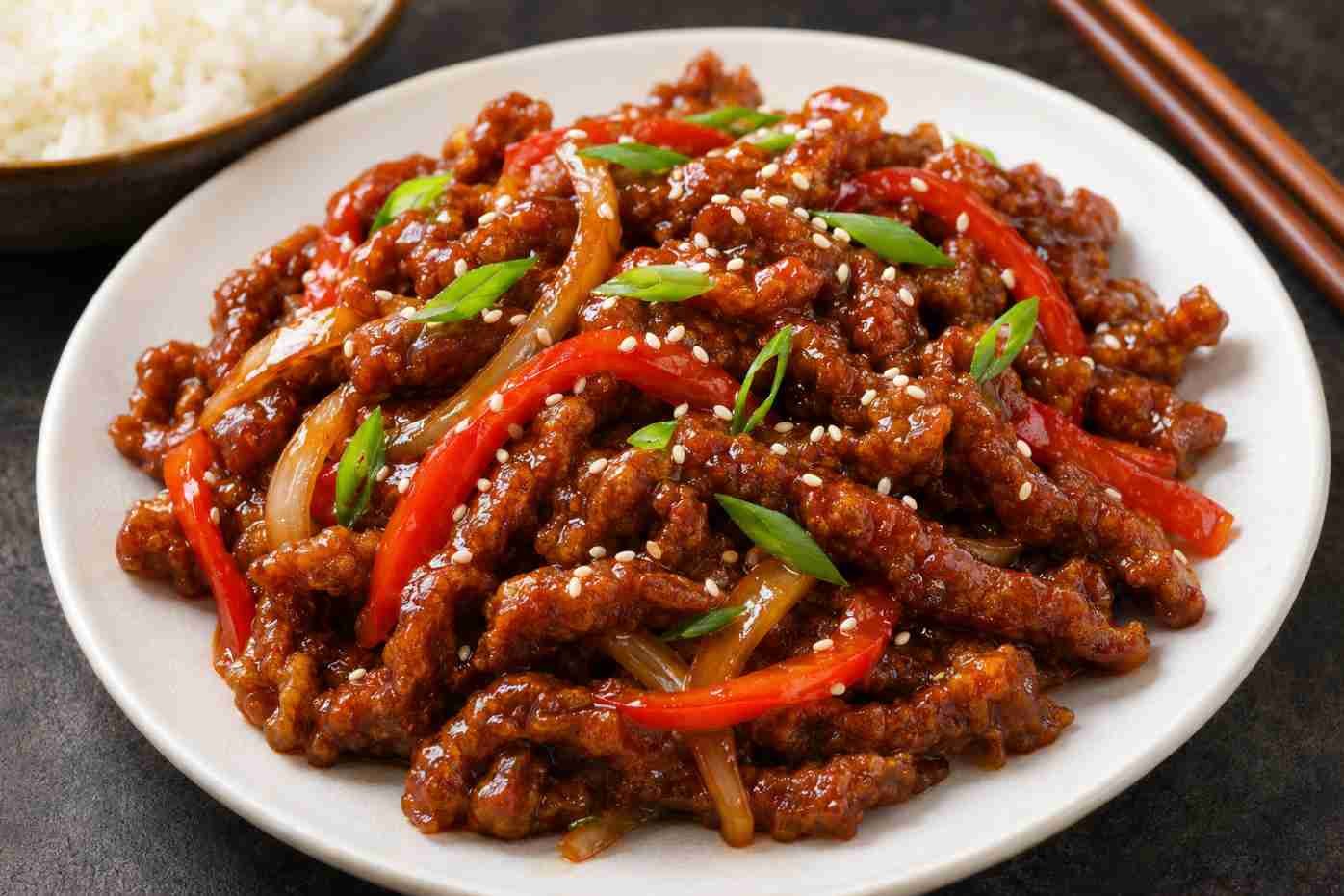
Peking Shredded Beef is the kind of dish that makes you forget about the rest of the takeaway menu. Thin strips of beef are fried until their edges turn crisp, then tossed in a glossy sauce that’s sweet, savory, slightly tangy, and just a little spicy. The first bite has a delicate crunch, followed by tender beef and a rich sauce that clings to every strip.
You don’t need a restaurant wok or a long list of difficult ingredients to make it at home. The trick is to slice the beef thinly, coat it properly, and keep the sauce ready before you start frying. Once the beef hits the hot oil, everything moves quickly.
What Is Peking Shredded Beef?
Peking Shredded Beef is a Chinese restaurant-style dish made with finely sliced beef coated in starch, fried until crispy, and finished in a flavorful sauce. The version commonly served in Chinese takeaways has a noticeable sweetness balanced by soy sauce, vinegar, garlic, and ginger. It is different from a traditional slow-cooked beef dish because its appeal comes from the contrast between the crisp coating and the sticky sauce.
This homemade version uses a little hoisin sauce for depth, tomato ketchup for gentle acidity, and rice vinegar to prevent the sweetness from becoming overpowering. The beef is cooked in small batches, which helps it develop a golden crust instead of steaming in the pan.
Recipe Details
| Preparation Time | 20 minutes |
| Cooking Time | 20 minutes |
| Total Time | 40 minutes |
| Servings | 4 |
| Course | Main Course |
| Cuisine | Chinese-inspired |
| Cooking Method | Shallow frying and stir-frying |
Ingredients for Peking Shredded Beef
Most of the ingredients are easy to find in a well-stocked supermarket. Use a tender, quick-cooking cut of beef and fresh ginger and garlic for the best flavor.
For the Crispy Beef
- 500 g (about 1.1 lb) flank steak, sirloin, or another tender beef cut
- 1 tablespoon light soy sauce
- 1 teaspoon sesame oil
- 1/4 teaspoon white pepper
- 1 large egg white
- 3/4 cup (about 95 g) cornstarch, for coating
- 1/2 cup (120 ml) neutral cooking oil, approximately, for shallow frying
For the Peking-Style Sauce
- 3 tablespoons hoisin sauce
- 2 tablespoons light soy sauce
- 2 tablespoons tomato ketchup
- 2 tablespoons rice vinegar
- 2 tablespoons brown sugar
- 1 tablespoon oyster sauce
- 1 teaspoon chili sauce, or to taste
- 3 tablespoons water
For Stir-Frying and Garnishing
- 3 garlic cloves, finely minced
- 1 tablespoon freshly grated ginger
- 1 small red bell pepper, thinly sliced
- 1 small onion, thinly sliced
- 2 spring onions, sliced diagonally
- 1 teaspoon toasted sesame seeds, optional
Also Read: Beef Satay
How to Make Peking Shredded Beef
Step 1: Slice the Beef into Thin Strips
Place the beef in the freezer for about 15 to 20 minutes if it is too soft to slice neatly. It should firm up slightly without freezing solid. Using a sharp knife, cut the beef against the grain into thin strips approximately 5 mm wide. Cutting against the grain shortens the muscle fibers, helping the meat remain tender even after frying.
Step 2: Season the Beef
Transfer the sliced beef to a mixing bowl. Add the light soy sauce, sesame oil, white pepper, and egg white. Mix thoroughly until the strips are evenly coated. Leave the beef for about 10 minutes while you prepare the sauce and vegetables. Avoid adding too much liquid because a wet coating makes it harder to achieve a crisp finish.
Step 3: Prepare the Sauce
In a small bowl, whisk together the hoisin sauce, light soy sauce, tomato ketchup, rice vinegar, brown sugar, oyster sauce, chili sauce, and water. Stir until the sugar is mostly dissolved. Taste the mixture and adjust the balance if necessary. A little extra vinegar will make it sharper, while an additional teaspoon of sugar will give it a sweeter takeaway-style finish. Set the sauce aside so it is ready when the beef is cooked.
Step 4: Coat the Beef with Cornstarch
Spread the cornstarch in a wide, shallow bowl or tray. Add the beef strips a few at a time and toss them until coated on all sides. Shake off any loose, excessive starch and separate strips that are sticking together. You want a dry, powdery surface rather than a thick paste. Coat the beef shortly before frying so the starch does not absorb too much moisture.
Step 5: Fry Until Golden and Crispy
Pour enough neutral oil into a deep frying pan or wok to create a shallow layer. Heat over medium-high heat to approximately 175°C (350°F). Carefully add the beef in small batches, keeping the strips separated. Fry for about 3 to 4 minutes per batch, turning occasionally, until the coating is golden and crisp and the beef is cooked through. The exact timing depends on the thickness of the strips. Remove with a slotted spoon and drain on a wire rack or paper towels. Keep the batches small because overcrowding lowers the oil temperature and causes the coating to become greasy.
Step 6: Stir-Fry the Aromatics and Vegetables
Carefully pour away the frying oil, leaving about 1 tablespoon in the pan. Add the garlic and ginger and stir for about 20 seconds over medium heat, just until fragrant. Add the sliced onion and red bell pepper. Stir-fry for 2 to 3 minutes until slightly softened but still crisp. Keep the vegetables moving so the garlic does not burn.
Step 7: Thicken the Sauce
Give the prepared sauce another stir and pour it into the pan. Bring it to a gentle bubble and cook for 1 to 2 minutes, stirring frequently. The sauce should become slightly thicker and glossy. It will continue to cling more firmly to the beef as it cools. If it becomes too thick, add a tablespoon of water at a time until it loosens.
Step 8: Toss the Beef and Serve Immediately
Return the crispy beef to the pan and toss briskly for about 20 to 30 seconds, just long enough to coat every strip. Avoid leaving it in the sauce for several minutes because the coating will soften. Turn off the heat, scatter over the spring onions and sesame seeds, and serve immediately with steamed rice or noodles.
Also Read: Spicy Firecracker Beef
What You Can Do Better
Choose the Right Cut of Beef
Flank steak and sirloin work well because they can be sliced thinly and cook quickly. Avoid large chunks or thick strips, which are more likely to become chewy before the coating crisps. If your beef has a visible grain, always slice across it rather than following the direction of the fibers.
Keep the Coating Light and Dry
It is tempting to pile on extra cornstarch, but a heavy coating may create a chalky crust. The beef needs only a thin, even layer. If the coating becomes wet while the remaining batches are waiting, sprinkle on a little fresh cornstarch just before frying.
Pay Attention to Oil Temperature
Oil that is too cool makes the beef absorb more fat. Oil that is excessively hot can darken the coating before the meat cooks. Around 175°C (350°F) works well for these thin strips. If you do not have a thermometer, test the oil with a small coated strip; it should begin bubbling steadily without turning dark almost immediately.
Do Not Overcook the Sauce
The sauce should coat the beef, not form a heavy caramel layer around it. A brief simmer is enough. If your sauce reduces too quickly, lower the heat and add a splash of water.
Combine Everything at the Last Moment
The biggest difference between crispy Peking shredded beef and soggy beef is timing. Prepare the rice, set the table, and have your serving bowls ready before tossing the fried strips in the sauce. Serve as soon as the coating is evenly glazed.
Variations You Can Try
Spicy Peking Shredded Beef
Increase the chili sauce to 2 teaspoons or add finely sliced fresh red chilies with the garlic and ginger. A spoonful of chili crisp can also be stirred in at the end for extra heat and texture.
Extra-Tangy Beef
Add another teaspoon or two of rice vinegar if you prefer a sharper sauce. This is particularly useful when serving the beef with plain white rice, which balances the stronger flavor.
Vegetable-Loaded Version
Add thinly sliced carrots, sugar snap peas, or shredded cabbage. Stir-fry the vegetables until crisp-tender before adding the sauce. Keep their quantity moderate so they do not release too much water into the pan.
Chicken Instead of Beef
Boneless chicken thigh can be cut into thin strips and prepared with the same seasoning and sauce. Fry until the chicken reaches an internal temperature of 74°C (165°F), adjusting the cooking time to the thickness of the pieces.
What to Serve with Peking Shredded Beef
Steamed jasmine rice is an excellent accompaniment because it absorbs the sweet and savory sauce without competing with it. Egg fried rice or simple stir-fried noodles also work well. For a lighter meal, serve the beef alongside steamed broccoli, bok choy, or stir-fried green beans. Thin cucumber strips can provide a refreshing contrast to the sticky glaze.
If you are serving several people, place the beef in a warm dish and bring it straight to the table. It is best enjoyed while the coating still has some crunch.
Storage and Reheating
Refrigerating Leftovers
Let leftovers cool promptly and transfer them to an airtight container. Refrigerate within 2 hours of cooking and use within 3 to 4 days. The beef will lose much of its crispness as it sits in the sauce, but the flavor remains good.
How to Reheat
Reheat the beef in a skillet over medium heat, adding a small splash of water if the sauce has become too sticky. Stir until thoroughly hot. An air fryer can dry the surface slightly, although sauced beef will not become as crispy as freshly fried strips. For food safety, reheat leftovers to 74°C (165°F).
Can You Freeze It?
Freezing the fully sauced dish is possible, but the coating usually softens during thawing. For better results, freeze the cooked, cooled, unsauced beef separately from the sauce. Thaw safely in the refrigerator, reheat thoroughly, and combine just before serving. The freshly made version gives the best texture.
Also Read: Beef in Black Bean Sauce
Nutritional Information
The following values are approximate estimates for one serving when the recipe is divided into four portions. They assume approximately 3 tablespoons of frying oil remain in the finished food in total. Actual nutrition will vary with the beef cut, brands of sauces, and amount of oil absorbed during frying. Rice and other side dishes are not included.
| Nutrient | Approximate Amount Per Serving |
|---|---|
| Calories | 520 kcal |
| Protein | 32 g |
| Carbohydrates | 48 g |
| Total Fat | 22 g |
| Saturated Fat | 5 g |
| Fiber | 2 g |
| Sugars | 17 g |
| Sodium | 1,150 mg |
Nutrition note: These estimates are not laboratory-tested. Frying oil absorption and the sodium content of hoisin, soy sauce, and oyster sauce can vary considerably.
Frequently Asked Questions
Why Is My Shredded Beef Not Crispy?
The most common causes are oil that is not hot enough, too much beef in the pan, or a coating that has become wet before frying. Another possibility is leaving the fried beef in the sauce for too long. Cook in small batches and combine the beef and sauce just before serving.
Can I Make Peking Shredded Beef Without Deep-Frying?
Yes. This recipe already uses shallow frying rather than full deep-frying. You can also cook lightly coated beef in an air fryer with a little oil spray, although the crust will be less even. Arrange the strips in a single layer and cook in batches, checking regularly until they are cooked through.
Can I Use Plain Flour Instead of Cornstarch?
Plain flour can be used in a pinch, but it produces a different texture. Cornstarch creates a lighter, more delicate crust, which is particularly useful for thin strips of beef. Potato starch is another good alternative.
Is Peking Shredded Beef Very Spicy?
Not usually. This version is mainly sweet, savory, and tangy, with a mild chili note. You can omit the chili sauce entirely or add more depending on your preference.
Can I Prepare It Ahead of Time?
You can slice and season the beef, cut the vegetables, and mix the sauce ahead of time. Keep the seasoned beef refrigerated and coat it with cornstarch only when you are ready to fry. Cooking the beef immediately before serving gives the best result.