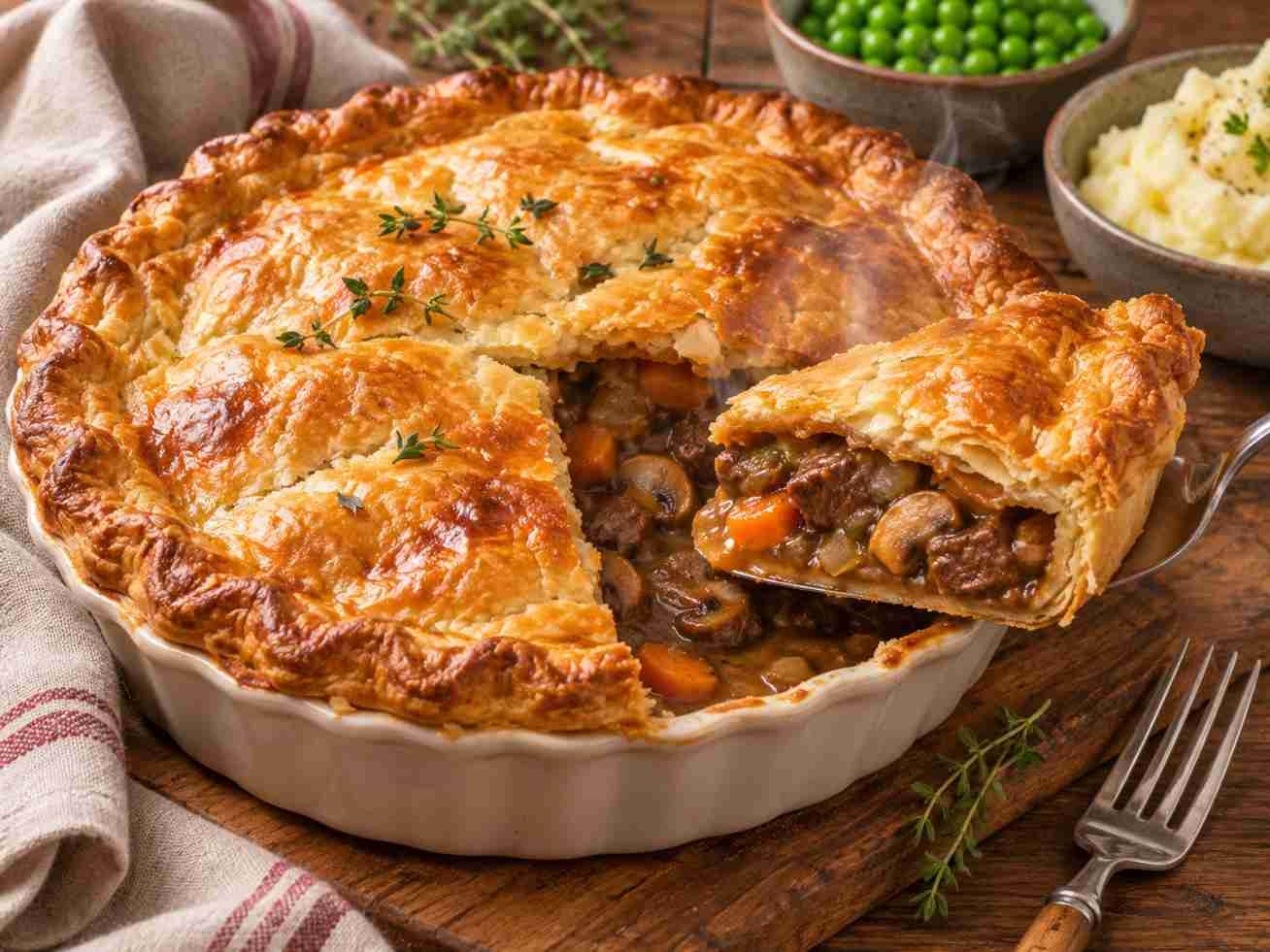
This Family Meat Pie is made for sharing, with tender chunks of beef, vegetables, thick homemade gravy, and a crisp, buttery pastry crust. It is hearty enough for a Sunday dinner, but just as welcome on a chilly weeknight when you want something filling and homemade.
The secret to a good meat pie is giving the filling enough time to develop its flavour. Rather than relying on a quick mince mixture, this recipe uses diced beef that becomes tender as it simmers in stock with mushrooms, carrots, onions, and Worcestershire sauce. The filling is cooked until the gravy is thick enough to stay inside the pie when sliced. A shortcrust pastry base provides structure, while a puff pastry lid gives every serving that lovely flaky finish.
Family Meat Pie Recipe Overview
| Details | Information |
|---|---|
| Recipe | Family Meat Pie |
| Course | Main Course |
| Cuisine | Australian-Inspired |
| Preparation Time | 30 minutes |
| Cooking Time | Approximately 3 hours 15 minutes |
| Cooling Time | At least 1 hour, preferably longer |
| Total Time | Approximately 4 hours 45 minutes |
| Servings | 6 |
| Difficulty | Moderate |
| Cooking Method | Stovetop and Oven |
Ingredients for Family Meat Pie
You do not need an especially long shopping list to make a memorable meat pie. The most important ingredients are a suitable slow-cooking cut of beef, good-quality stock, and pastry that will bake into a crisp crust. The vegetables and seasonings help create a balanced filling without overpowering the beef.
For the Beef Filling
| Ingredient | Quantity |
|---|---|
| Beef chuck, cut into 3 cm cubes | 800 g (1.75 lb) |
| Olive oil | 2 tablespoons |
| Unsalted butter | 2 tablespoons |
| Large onion, finely chopped | 1 |
| Garlic cloves, minced | 3 |
| Medium carrots, diced | 2 |
| Celery stalk, finely chopped | 1 |
| Button mushrooms, sliced | 200 g |
| Tomato paste | 2 tablespoons |
| Worcestershire sauce | 2 tablespoons |
| Beef stock, preferably low-sodium | 500 ml (2 cups) |
| Plain all-purpose flour | 3 tablespoons |
| Dried thyme | 1 teaspoon |
| Bay leaf | 1 |
| Freshly ground black pepper | 1/2 teaspoon |
| Salt | To taste |
For the Pastry
| Ingredient | Quantity |
|---|---|
| Ready-made shortcrust pastry | Approximately 300 g, enough to line a 23 cm pie dish |
| Ready-made butter puff pastry | 1 sheet, approximately 250 g |
| Egg, lightly beaten | 1 |
| Plain flour for dusting | As needed |
Ingredient Note: Beef chuck is particularly suitable because its connective tissue softens during slow cooking. Lean steak cuts can become dry after a long simmer. If you cannot find chuck, boneless beef shoulder is another good option. Keep both types of pastry chilled until you need them, especially the puff pastry, which depends on cold layers of fat to rise properly.
Also Read: Leftover Turkey Pot Pie
How to Make Family Meat Pie
Making this pie is a straightforward process, although it is not a recipe to rush. The beef filling must be cooked until tender, thickened properly, and cooled before being enclosed in pastry. Follow the stages below for a well-baked pie with a rich filling and a crisp base.
Step 1: Prepare and Brown the Beef
Pat the beef pieces dry with kitchen paper, then season with a little salt and black pepper. Heat the olive oil in a large heavy-bottomed saucepan or Dutch oven over medium-high heat. Add the beef in two or three batches, making sure the pieces have enough room to brown rather than steam. Cook each batch for approximately 5 to 7 minutes, turning occasionally until the outside develops a deep brown crust. Transfer the browned beef to a plate. It does not need to be cooked through at this stage because it will become tender during simmering. Leave the browned bits at the bottom of the saucepan, as they will add plenty of flavour to the gravy.
Step 2: Cook the Vegetables
Reduce the heat to medium and add the butter to the same saucepan. Stir in the chopped onion, carrots, and celery. Cook for 5 to 6 minutes until the onion softens and begins to turn translucent. Add the sliced mushrooms and continue cooking for another 5 minutes, allowing most of their released moisture to evaporate. Stir in the minced garlic and cook for about 30 seconds, just until fragrant. The vegetables should be softened but do not need to be completely tender yet.
Step 3: Build the Gravy
Add the tomato paste to the vegetables and stir for about a minute. Sprinkle over the flour and mix thoroughly so that it coats the vegetables. Cook for another minute to remove the raw flour taste. Pour in approximately one-third of the beef stock, stirring continuously to loosen the browned bits from the bottom of the saucepan and form a smooth sauce. Gradually add the remaining stock, followed by the Worcestershire sauce, thyme, bay leaf, and black pepper. Return the browned beef and any collected juices to the saucepan, and stir gently to combine.
Step 4: Slow-Cook the Filling
Bring the mixture to a gentle simmer, then reduce the heat to low. Cover the saucepan with a lid and cook for approximately 1 hour 45 minutes to 2 hours 15 minutes, stirring occasionally to prevent the flour-thickened gravy from sticking. The exact cooking time depends on the size and cut of the beef. If the sauce becomes too thick before the meat is tender, add a small splash of water or stock. Once the beef can be easily pierced with a fork, remove the lid and simmer for another 10 to 15 minutes if necessary to reduce the gravy. The finished sauce should be thick enough to coat the meat without forming a watery pool at the bottom of the saucepan. Remove the bay leaf, taste, and adjust the salt and pepper.
Step 5: Cool the Filling
Transfer the cooked filling to a shallow dish and spread it out to cool more quickly. Allow it to stop steaming, then refrigerate promptly until completely chilled. Do not leave the filling at room temperature for more than 2 hours. This cooling stage is essential: hot filling can soften the shortcrust base and melt the butter layers in the puff pastry before the pie reaches the oven. If possible, prepare the filling the day before and refrigerate it overnight. The flavours develop nicely, and assembling the pie becomes much easier.
Step 6: Prepare the Shortcrust Base
Preheat the oven to 200°C (390°F), or 180°C for a fan-assisted oven. Lightly grease a deep 23 cm (9-inch) pie dish. Roll the shortcrust pastry on a lightly floured surface until large enough to cover the base and sides of the dish. Gently press it into the corners without stretching the pastry. Trim any excess, leaving a small overhang around the rim. Refrigerate the lined dish for 15 minutes, then prick the base lightly with a fork. Line the pastry with baking paper and fill with baking beans or uncooked rice. Bake for 15 minutes, remove the weights and paper, then bake for another 5 to 8 minutes until the base looks dry and lightly golden. Let the pastry shell cool for 10 to 15 minutes.
Step 7: Fill and Seal the Pie
Spoon the chilled beef mixture into the prepared pastry shell and distribute the meat evenly. Avoid adding more filling than the dish can comfortably hold. Brush the outer rim of the shortcrust pastry with beaten egg. Place the puff pastry sheet over the filling, gently pressing the edges against the base to seal. Trim away excess pastry and crimp the edges with a fork. Brush the top generously with beaten egg, then cut two or three small slits near the centre to let steam escape. If the pastry has become soft during assembly, refrigerate the pie for another 10 minutes before baking.
Step 8: Bake Until Golden
Place the pie on the middle oven rack at 200°C (390°F), or 180°C fan, and bake for approximately 40 to 50 minutes. Check after 30 minutes. If the edges are browning too quickly, cover them loosely with strips of foil while allowing the centre to continue cooking. The pie is ready when the puff pastry is well risen and golden brown, the base is fully baked, and the filling is piping hot in the centre. For food safety, the reheated filling should reach at least 74°C (165°F). Allow the finished pie to rest for 15 minutes before slicing so the gravy can settle slightly.
Also Read: Ginger Soy Chicken Meatballs
What You Can Do Better
A good Family Meat Pie depends on a few small decisions made throughout the cooking process. Paying attention to the texture of the beef, the thickness of the gravy, and the temperature of the pastry will make a noticeable difference to the finished dish.
Choose a Cut That Benefits from Slow Cooking
Beef chuck becomes tender and juicy when cooked gently over time. Avoid using very lean cuts intended for quick frying because they do not have enough connective tissue or fat to produce the same result. Cut the beef into reasonably large pieces so it keeps some texture after the long cooking process.
Brown the Beef Properly
It can be tempting to put all the meat in the saucepan at once, particularly when cooking for a family. However, overcrowding traps moisture and stops the surface from browning properly. Cooking in batches gives the beef a deeper savoury flavour and leaves behind the browned bits that form the foundation of the gravy.
Keep the Gravy Thick but Not Dry
The gravy should hold the beef and vegetables together without becoming a heavy paste. If the mixture looks watery, continue simmering uncovered until the excess liquid evaporates. If it becomes too thick, stir in a spoonful of stock. Remember that the filling should be moist enough to stay juicy after baking, but not so loose that it pours out when the pie is cut.
Do Not Skip the Blind Baking
Blind baking gives the pastry base a head start before the heavy filling is added. Without this step, the underside can remain pale and soft even when the top is beautifully browned. A metal pie tin can also help the base bake more evenly because it transfers heat efficiently.
Use Cold Puff Pastry
Puff pastry rises when moisture turns to steam between its layers of dough and fat. Keeping it cold until baking helps preserve those layers. If the pastry becomes warm and sticky while assembling the pie, a brief rest in the refrigerator will make it easier to handle and give it a better chance of puffing evenly.
Prepare the Filling Ahead of Time
This is one of the easiest ways to make the recipe more manageable. Cook the filling the evening before, cool it safely, and refrigerate overnight. The next day, you only need to prepare the pastry, assemble the pie, and bake it. It also makes the recipe more convenient when cooking for guests.
Also Read: Slow Cooker Meat Stew
What to Serve with Family Meat Pie
Family Meat Pie is already a complete and satisfying main dish, so the best side dishes tend to be simple. Creamy mashed potatoes are a classic companion, especially when a little extra gravy escapes onto the plate. Steamed green beans, buttered peas, or roasted carrots bring freshness and colour to the meal. For something lighter, serve the pie with a crisp green salad dressed with lemon juice or a mild vinaigrette. Tomato sauce or ketchup is also a popular addition, particularly with an Australian-style meat pie.
Variations You Can Try
Beef and Mushroom Pie
Increase the mushrooms to 350 g and reduce the beef slightly if you prefer a filling with more vegetables. Brown the mushrooms thoroughly before adding the stock to concentrate their flavour and prevent them from watering down the gravy.
Beef and Potato Pie
Add 200 g of small diced potatoes during the final 25 to 30 minutes of simmering. Choose a potato variety that holds its shape and make sure the pieces are fully tender before cooling the filling. You may need a little additional stock as the potatoes absorb liquid.
Minced Beef Family Pie
For a quicker version, replace the diced chuck with 750 g of minced beef. Brown it thoroughly, breaking up large lumps with a wooden spoon, then simmer the filling for approximately 30 to 40 minutes until the vegetables are tender and the gravy thickens. This produces a softer, more traditional minced-meat texture rather than large, slow-cooked pieces of beef.
Cheesy Meat Pie
Scatter 75 to 100 g of grated mature cheddar over the cooled beef filling before placing the puff pastry lid on top. The cheese melts into the gravy during baking, making the filling richer. Use slightly less salt in the filling because mature cheddar contributes additional seasoning.
Also Read: Frito Pie Recipe
Storage and Reheating
Refrigeration: Allow leftover pie to cool, then transfer it to a covered container and refrigerate within 2 hours of baking. Store for up to 3 to 4 days at 4°C (40°F) or below. Refrigerating individual portions makes them easier to reheat without disturbing the entire pie.
Freezing: Wrap fully cooled pie portions tightly in food-safe wrapping and place them in freezer-safe containers. Freeze at -18°C (0°F) for up to 2 to 3 months for the best flavour and texture. Thaw overnight in the refrigerator before reheating.
Reheating: Place refrigerated pie portions on a baking tray in an oven preheated to 180°C (350°F). Cover loosely with foil if the pastry begins to brown too much, and heat for approximately 20 to 30 minutes, or until the centre reaches 74°C (165°F). Frozen or particularly thick portions may require longer. An oven or air fryer generally preserves the flaky texture better than a microwave, although a microwave is convenient for quicker reheating.
Nutritional Information
The following values are approximate estimates for one serving when the pie is divided into six equal portions. Actual nutrition will vary depending on the fat content of the beef, pastry brand, quantity of added salt, and portion size. These figures are intended as a general guide rather than laboratory-tested nutritional values.
| Nutrient | Approximate Amount Per Serving |
|---|---|
| Calories | 800 kcal |
| Protein | 37 g |
| Total Fat | 48 g |
| Saturated Fat | 21 g |
| Carbohydrates | 52 g |
| Dietary Fiber | 4 g |
| Total Sugars | 6 g |
| Sodium | 900 mg |
| Cholesterol | 145 mg |
Nutrition Note: Family Meat Pie is a substantial meal containing protein from beef, carbohydrates from pastry, and smaller amounts of fibre and micronutrients from vegetables. To make it a little lighter, choose leaner trimmed beef, use a reduced-sodium stock, or prepare the recipe with a puff pastry lid only and no pastry base. These changes will affect the final nutritional values and, in the case of removing the base, the texture and serving style of the pie.
Frequently Asked Questions
Can I make Family Meat Pie the day before?
Yes. In fact, making the beef filling a day ahead is a practical choice. Cool the cooked filling quickly and refrigerate it in a covered container. Prepare the pastry and assemble the pie the following day. The cold filling is easier to handle, and the flavours often taste richer after resting overnight.
Why is the bottom of my meat pie soggy?
A soggy base usually results from filling that contains too much liquid, pastry that was not blind baked, or filling that was still hot during assembly. Prebaking the shortcrust shell, reducing the gravy properly, and thoroughly cooling the filling will help keep the bottom crisp.
Can I use puff pastry for both the base and the lid?
You can, although the base will be softer and less sturdy than shortcrust pastry. If using puff pastry underneath, line the dish while the pastry is cold, prick the base, and blind bake it before filling. A heavier filling may still prevent the bottom pastry from puffing as much as the lid.
How do I know when the filling is thick enough?
Drag a wooden spoon across the bottom of the saucepan. The gravy should move slowly and briefly leave a visible trail before flowing back together. It should coat the beef generously without looking watery. Bear in mind that the gravy will become slightly firmer as it cools.
Can I freeze Family Meat Pie before baking?
Yes, provided the meat filling has been fully cooked and cooled before assembly. Wrap the assembled pie securely and freeze it promptly. For best quality, use within 2 to 3 months. Thaw in the refrigerator before baking, keep the pastry cold, and allow extra baking time as necessary to ensure the filling is thoroughly heated.
What can I use instead of Worcestershire sauce?
A small amount of soy sauce mixed with a little vinegar can provide a similar savoury and tangy note, although the flavour will not be identical. Start with 1 tablespoon of soy sauce and 1 teaspoon of vinegar, then adjust to taste. Because soy sauce contains salt, reduce the other seasoning accordingly.