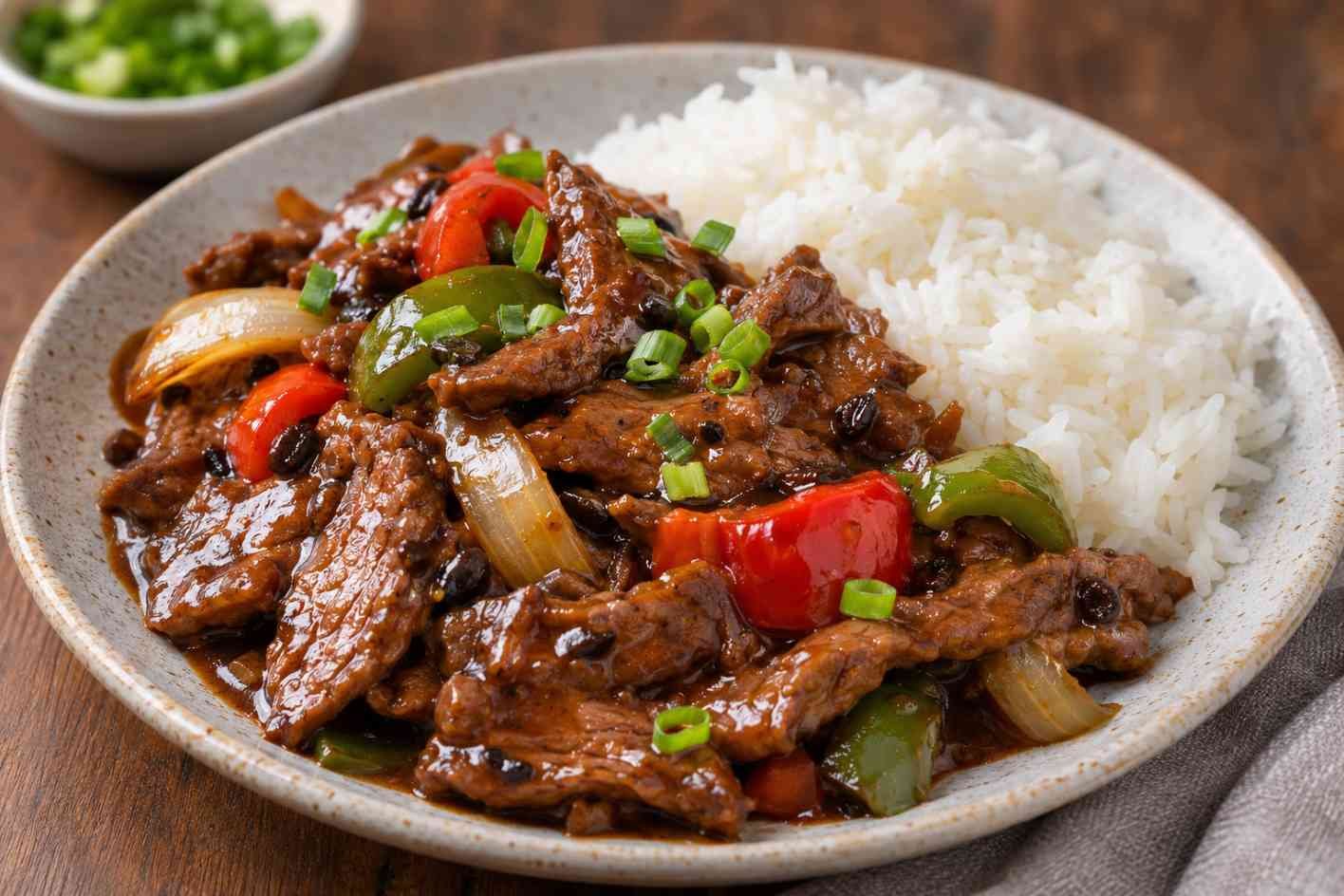
There is something particularly satisfying about a plate of tender beef coated in a rich, glossy black bean sauce. The sauce is deeply savoury, the peppers still have a little crunch, and every spoonful of rice picks up just enough of that delicious gravy. Beef in Black Bean Sauce is a familiar favourite on Chinese takeaway menus, but it is also a dish that works remarkably well in a home kitchen. The ingredients are straightforward once you have fermented black beans, and the actual stir-frying takes only a few minutes. The important part is getting the beef tender without overcooking it and allowing the fermented beans to give the sauce its distinctive flavour.
This version uses thinly sliced beef, green bell pepper, onion, garlic, ginger and a homemade black bean sauce. There is no need for a bottled stir-fry sauce. With a little preparation and a properly heated pan, you can make a generous, restaurant-style meal that tastes fresh rather than overly salty or heavy.
Recipe Overview
| Details | Information |
|---|---|
| Recipe Name | Beef in Black Bean Sauce |
| Cuisine | Chinese-inspired |
| Course | Main Course |
| Preparation Time | 20 minutes |
| Marinating Time | 30 minutes |
| Cooking Time | 10 minutes |
| Total Time | 1 hour |
| Servings | 4 |
| Cooking Method | Stir-frying |
Ingredients for Beef in Black Bean Sauce
The quality of the beef and the type of black beans make the biggest difference here. Look for fermented salted black soybeans, sometimes sold as douchi, at an Asian grocery store. These are quite different from ordinary canned black beans and give the dish its characteristic salty, fermented flavour.
For the Beef and Marinade
- 500 g beef sirloin or rump steak, thinly sliced against the grain
- 1 tablespoon light soy sauce
- 1 tablespoon cornstarch
- 1 teaspoon neutral cooking oil
- 1 teaspoon Shaoxing cooking wine (optional)
- 1/4 teaspoon freshly ground white pepper
For the Black Bean Sauce
- 2 tablespoons fermented salted black beans, rinsed and roughly chopped
- 1 tablespoon light soy sauce
- 1 tablespoon oyster sauce
- 1 teaspoon dark soy sauce
- 1 teaspoon sugar
- 1 teaspoon cornstarch
- 180 ml low-sodium beef stock or water
- 1 teaspoon rice vinegar
For the Stir-Fry
- 2 tablespoons neutral cooking oil, divided
- 1 medium green bell pepper, cut into bite-sized squares
- 1 medium red bell pepper, cut into bite-sized squares
- 1 medium onion, cut into wedges
- 4 garlic cloves, finely chopped
- 1 tablespoon fresh ginger, finely minced
- 2 spring onions, sliced, for garnish
- Steamed jasmine rice, for serving
Also Read: Shredded Sweet Soy Sauce Chicken Breast
Choosing the Right Beef
Sirloin and rump steak are excellent choices for this recipe because they have enough flavour to stand up to the sauce while remaining tender when cooked quickly. You do not need an expensive cut of beef, but you do need to slice it correctly. Always cut across the grain rather than along the muscle fibres. This shortens the fibres and makes each piece easier to chew.
For especially neat slices, place the beef in the freezer for about 15 to 20 minutes before cutting. It should feel firm but not frozen solid. Use a sharp knife to cut slices approximately 3 mm thick. Avoid thick chunks, as they take longer to cook and can become chewy before the vegetables are ready.
Also Read: Braised Beef Short Ribs in Red Wine Sauce
How to Make Beef in Black Bean Sauce
Step 1: Marinate the Beef
Place the thinly sliced beef in a medium mixing bowl. Add the light soy sauce, cornstarch, cooking oil, Shaoxing wine and white pepper. Mix thoroughly until every piece of beef is lightly coated. Cover and refrigerate for 30 minutes. The cornstarch creates a delicate coating that helps the beef remain moist during high-heat cooking, while the soy sauce seasons the meat. This is also a convenient time to prepare the vegetables and sauce.
Step 2: Prepare the Fermented Black Beans
Place the fermented black beans in a small sieve and rinse briefly under cool running water to remove excess surface salt. Drain well, then roughly chop or gently crush about half of them with the back of a spoon. Leave the remaining beans mostly whole. Crushing some of the beans releases more of their flavour into the sauce, while the whole pieces give the finished dish its familiar appearance and occasional bursts of savouriness.
Step 3: Mix the Sauce
In a bowl, combine the light soy sauce, oyster sauce, dark soy sauce, sugar, cornstarch, beef stock and rice vinegar. Stir until the cornstarch has dissolved completely. Keep this mixture beside the stove. The sauce should be fairly thin at this stage; it will thicken rapidly when it reaches the hot pan. Stir it again immediately before adding because cornstarch tends to settle at the bottom.
Step 4: Quickly Cook the Beef
Heat a large wok or heavy frying pan over high heat until hot. Add 1 tablespoon of neutral oil and swirl it around the surface. Add half the marinated beef in a single layer, leaving enough space between the pieces for the moisture to evaporate. Let it sear briefly, then stir-fry for approximately 60 to 90 seconds until the exterior has browned and the meat is nearly cooked. Transfer it to a plate. Repeat with the remaining beef, adding a little extra oil if necessary. Avoid cooking all the beef at once in a small pan. Overcrowding causes the meat to steam rather than sear, and the result is noticeably less flavourful.
Step 5: Stir-Fry the Aromatics and Vegetables
Reduce the heat slightly to medium-high. Add the remaining oil to the wok, followed by the chopped fermented black beans. Stir for about 15 seconds to release their aroma without burning them. Add the garlic and ginger, stirring continuously for another 15 to 20 seconds. Immediately add the onion and both bell peppers. Toss everything over high heat for 2 to 3 minutes. The vegetables should soften around the edges while retaining a pleasant crunch. If the garlic begins to darken too quickly, lower the heat briefly.
Step 6: Add the Sauce
Give the prepared sauce another stir and pour it into the wok. Bring it to a gentle bubble, stirring continuously as it begins to thicken. This should take approximately 30 to 60 seconds. The finished sauce should look glossy and have enough body to coat the vegetables without turning into a thick paste. If it becomes too concentrated, add a tablespoon or two of water and stir until the consistency loosens.
Step 7: Return the Beef to the Wok
Return the cooked beef and any juices collected on the plate to the wok. Toss everything together for another 1 to 2 minutes, or until the beef is fully cooked and the sauce clings evenly to the meat. Taste before adding any extra salt because fermented black beans, soy sauce and oyster sauce already provide plenty of seasoning. Adjust the consistency with a little hot water if needed. Remove from the heat as soon as the beef is cooked through.
Step 8: Serve Immediately
Transfer the Beef in Black Bean Sauce to a serving dish and scatter the sliced spring onions over the top. Serve while hot, preferably with freshly steamed jasmine rice. The rice absorbs the sauce beautifully and balances the strong, savoury character of the fermented beans. For a complete meal, add a simple side of steamed broccoli, bok choy or lightly stir-fried greens.
Also Read: Mexican Chipotle Pork & Beans
What You Can Do Better
Control the Saltiness
Fermented black beans vary considerably in saltiness from one brand to another. Rinsing them briefly helps prevent the sauce from becoming overpowering. If you are using a particularly salty brand, reduce the light soy sauce slightly and add more only after tasting. Using low-sodium stock is another useful way to keep the seasoning balanced without sacrificing flavour.
Keep the Beef Tender
Thin slicing is more important than cooking the beef for a long time. Cut across the grain, use a small amount of cornstarch in the marinade and cook in batches. The beef should spend only a short time over high heat before being returned to the sauce. Leaving it in the wok for several unnecessary minutes can make even a good-quality steak tough.
Do Not Burn the Black Beans
Fermented black beans develop a wonderful aroma when briefly fried in oil, but prolonged exposure to very high heat can make them taste bitter. Add the garlic and ginger soon after the beans become fragrant, then follow with the vegetables. Having everything chopped and ready before cooking makes this much easier.
Use a Large Enough Pan
A wok is useful because it provides plenty of surface area for quick cooking, but a wide heavy frying pan works too. The key is to avoid crowding. If your pan is small, cook the beef in two or three batches and give the vegetables enough room to fry rather than simmer.
Adjust the Sauce to Your Preference
Some people prefer Beef in Black Bean Sauce with plenty of gravy, especially when serving it over rice. Others prefer a thicker coating that clings closely to the beef. For more sauce, add a little extra stock and adjust the cornstarch if necessary. For a more concentrated finish, simmer briefly while stirring. Remember that the sauce continues to thicken slightly as it cools.
Ingredient Substitutions and Variations
Can You Use Another Cut of Beef?
Yes. Rump, sirloin and rib-eye work well, although the more expensive cuts are not essential. Leaner cuts can also be used if sliced very thinly and cooked carefully. Tough stewing cuts are less suitable for this quick version unless they have been properly tenderised beforehand. If you want to use an economical cut, prepare a small test batch first rather than assuming it will soften during a few minutes of stir-frying.
What if You Cannot Find Shaoxing Wine?
The wine adds another layer of flavour but is optional in this version. You can leave it out and add a teaspoon of water to the marinade instead. The fermented beans, ginger, garlic and soy sauces still provide a robust overall taste.
Can You Make It Spicy?
For a hotter version, add a finely chopped fresh red chilli along with the garlic and ginger, or stir in a small spoonful of chilli oil just before serving. Start with a modest amount so the chilli does not overpower the black bean flavour.
Can You Add More Vegetables?
Broccoli florets, sliced mushrooms, sugar snap peas and baby corn all work well. Harder vegetables such as broccoli should be blanched or briefly steamed beforehand so they finish cooking at the same time as the peppers. Be mindful that adding too many vegetables may require a little more sauce.
Also Read: Satay Chicken Legs with Peanut Sauce
What to Serve with Beef in Black Bean Sauce
Steamed jasmine rice is the most straightforward accompaniment. Its gentle fragrance and soft texture balance the salty, umami-rich sauce. Brown rice also works if you prefer something slightly nuttier. For a takeaway-style meal, serve the beef alongside vegetable fried rice or simple egg noodles. If you want a lighter plate, pair it with steamed greens or a bowl of lightly seasoned vegetables. The sauce is sufficiently flavourful that the side dishes do not need much additional seasoning.
Storage and Reheating
Refrigerating Leftovers
Allow leftovers to cool promptly and transfer them to an airtight container. Refrigerate within two hours of cooking and use within 3 days. Keep cooked rice in a separate container and refrigerate it promptly as well. Do not leave the beef or rice standing at room temperature for an extended period.
Freezing
Beef in Black Bean Sauce can be frozen for up to 2 months for best quality. Store it in individual portions in freezer-safe containers. The sauce generally freezes well, although the bell peppers may become softer after thawing. Defrost overnight in the refrigerator before reheating.
Reheating
Reheat the beef in a covered frying pan over medium-low heat with a splash of water to loosen the sauce. Stir occasionally until thoroughly heated and piping hot throughout. Avoid prolonged reheating, which can dry out the beef. Reheat leftover rice separately and make sure it is piping hot before serving.
Nutritional Information
The following values are approximate estimates per serving, based on four servings made with 500 g of relatively lean beef, the listed sauce ingredients and 2 tablespoons of cooking oil. They exclude steamed rice and optional side dishes. Actual values will vary depending on the beef cut, brands of soy sauce and oyster sauce, and the amount of oil retained in the finished dish.
| Nutrient | Approximate Amount Per Serving |
|---|---|
| Calories | 340 kcal |
| Protein | 31 g |
| Total Fat | 17 g |
| Saturated Fat | 5 g |
| Carbohydrates | 15 g |
| Dietary Fibre | 3 g |
| Total Sugars | 5 g |
| Sodium | 950 mg |
| Cholesterol | 85 mg |
Nutrition Note: These figures are estimates rather than laboratory-tested values. Fermented black beans and bottled sauces can contribute substantial sodium. Choosing reduced-sodium sauces and serving the dish with extra vegetables can help create a more balanced meal.
Also Read: Bean and Lentil Soup with Kale
Frequently Asked Questions
What Are Fermented Black Beans?
Fermented black beans, known as douchi, are black soybeans preserved through salting and fermentation. They have a concentrated, savoury flavour and are used in many Chinese dishes. They are not interchangeable with the black beans commonly used in Mexican or Latin American cooking. Ordinary canned black beans lack the fermented flavour that makes this particular sauce distinctive.
Can I Use Bottled Black Bean Sauce Instead?
Yes, although the flavour and saltiness will differ. Bottled black bean sauces often contain garlic, oil, sugar and other seasonings, so they should not be substituted in equal amounts for plain fermented beans. Start with a small quantity of prepared sauce, reduce the additional soy sauce, and adjust after tasting.
Why Is My Beef Tough?
The most common reasons are slicing the beef too thickly, cutting along the grain or cooking it for too long. Overcrowding the pan can also cause the beef to release moisture and cook unevenly. Thin slices, a short marinade and quick cooking in small batches usually produce a much better result.
Why Is My Sauce Too Watery?
The sauce may not have reached a sufficient temperature to activate the cornstarch, or the vegetables may have released extra moisture. Let it simmer briefly while stirring. If necessary, mix 1 teaspoon of cornstarch with 2 teaspoons of cold water and add a little of the slurry at a time until the sauce thickens. Avoid sprinkling dry cornstarch directly into the hot wok, as it can form lumps.
Can I Prepare Beef in Black Bean Sauce Ahead of Time?
You can slice and marinate the beef, chop the vegetables and mix the sauce ingredients in advance. Store the prepared components separately in the refrigerator. Stir-frying is best done shortly before serving because the beef remains more tender and the vegetables retain their texture. If preparing the marinade well ahead, keep the beef refrigerated and cook it within a safe storage period.
Is Beef in Black Bean Sauce Gluten-Free?
Not automatically. Conventional soy sauce often contains wheat, and some oyster sauces or prepared seasonings may also contain gluten. To make a gluten-free version, use certified gluten-free tamari, check the labels on the oyster sauce and fermented beans, and ensure that all remaining ingredients are suitable.