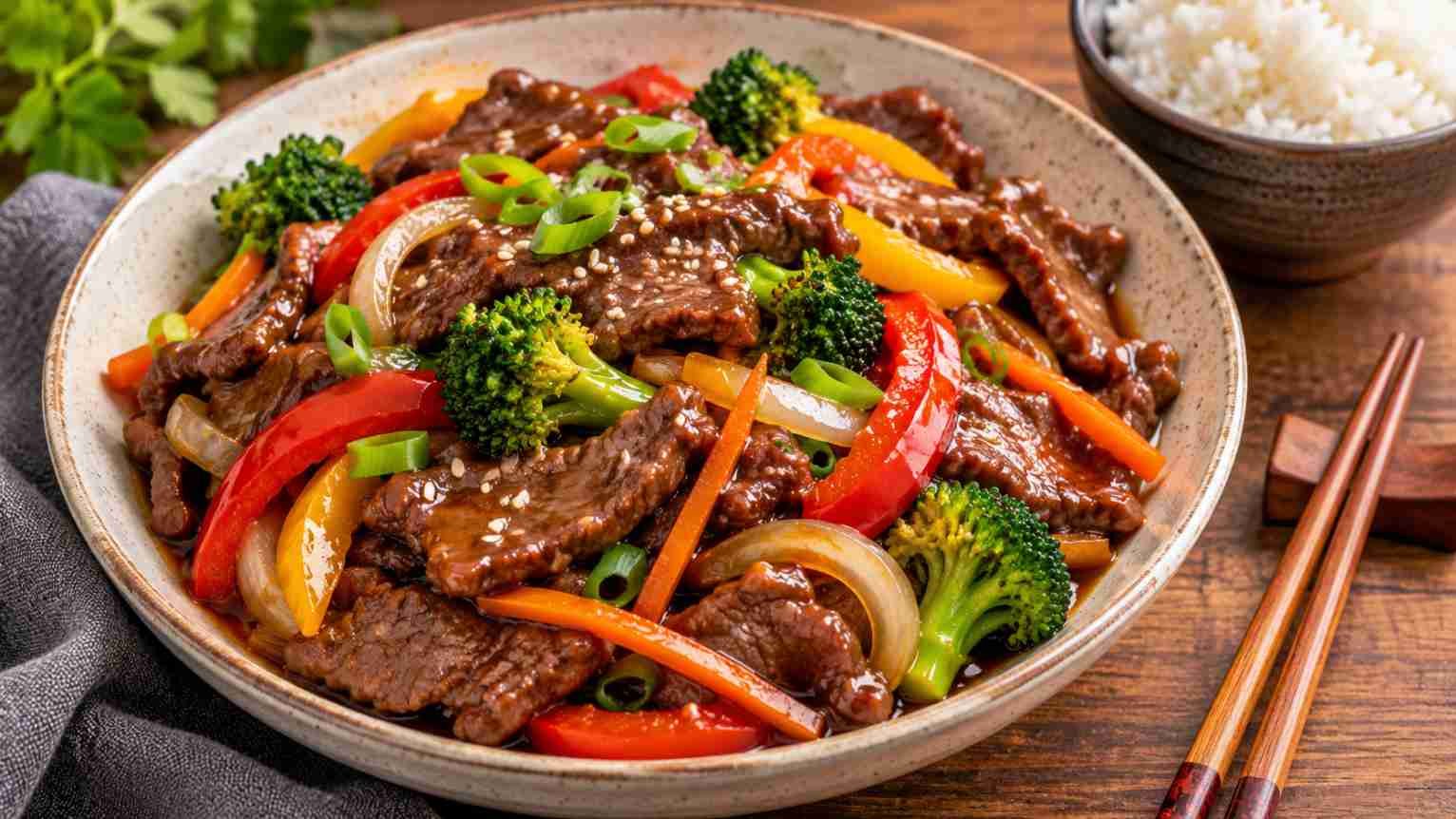
This Easy Chinese Beef Stir Fry is perfect for evenings when you want a proper home-cooked meal without spending an hour at the stove. Thin slices of beef cook quickly with fresh vegetables, garlic, ginger, and a simple sauce made from soy sauce, oyster sauce, and a touch of sweetness. The sauce thickens just enough to cling to everything without turning the dish heavy or sticky.
The most important part is getting the beef right. A quick marinade with cornstarch helps protect the meat from drying out during high-heat cooking. Once the ingredients are prepared, the actual stir-frying takes only a few minutes. Serve it over steamed rice, and dinner is ready.
Easy Chinese Beef Stir Fry Recipe Overview
| Recipe Details | Information |
|---|---|
| Recipe Name | Easy Chinese Beef Stir Fry |
| Cuisine | Chinese-Inspired |
| Course | Main Course, Dinner |
| Preparation Time | 15 Minutes |
| Marinating Time | 15 Minutes |
| Cooking Time | 10 Minutes |
| Total Time | 40 Minutes |
| Servings | 4 |
| Cooking Method | Stir-Frying |
| Difficulty | Easy |
Ingredients for Easy Chinese Beef Stir Fry
Good stir fry does not require a long shopping list. The trick is using the right balance of ingredients and preparing everything before the pan gets hot. Once cooking begins, there is very little time to stop and chop vegetables or measure sauces.
For the Beef and Marinade
- 1 lb (450 g) flank steak, sirloin, or rump steak
- 1 tablespoon light soy sauce
- 2 teaspoons cornstarch
- 1 teaspoon neutral cooking oil
- 1/4 teaspoon white pepper
Flank steak is particularly good for stir-frying because it has a strong beefy flavor and becomes tender when sliced thinly across the grain. Sirloin is another excellent choice. Avoid cutting the beef into thick chunks, as they take longer to cook and can become chewy before the vegetables are ready.
For the Stir Fry Sauce
- 3 tablespoons light soy sauce
- 1 1/2 tablespoons oyster sauce
- 1 tablespoon Shaoxing wine (optional)
- 2 teaspoons brown sugar
- 1 teaspoon toasted sesame oil
- 1 tablespoon cornstarch
- 1/2 cup (120 ml) low-sodium beef broth or water
- 1/4 teaspoon freshly ground black pepper
The combination of soy sauce and oyster sauce provides the deep, savory flavor associated with Chinese-style stir fry dishes. Brown sugar balances the saltiness, while sesame oil adds a subtle nutty aroma. Shaoxing wine brings another layer of flavor, but the recipe still works if you leave it out. Use a little additional broth in its place.
Also Read:
For the Vegetables
- 1 medium red bell pepper, thinly sliced
- 1 medium green bell pepper, thinly sliced
- 1 medium carrot, cut into thin matchsticks
- 1 small onion, sliced
- 1 cup broccoli florets, cut into small pieces
- 3 garlic cloves, finely minced
- 1 tablespoon freshly grated ginger
- 2 tablespoons neutral cooking oil, divided
- 2 green onions, sliced
- 1 teaspoon sesame seeds, optional
You can change the vegetables according to what you have in the refrigerator. Snow peas, mushrooms, baby corn, bok choy, and zucchini are all good options. Just remember that firmer vegetables need more cooking time than soft leafy greens.
How to Make Easy Chinese Beef Stir Fry
This recipe moves quickly once the beef hits the pan. For the best results, prepare the meat, sauce, and vegetables before turning on the heat. A large wok is ideal, but a wide, heavy frying pan works just as well.
Step 1: Slice the Beef Against the Grain
Place the steak on a cutting board and look for the direction of the muscle fibers. Slice across those fibers into thin strips, approximately 1/4 inch thick or slightly thinner. Cutting against the grain shortens the muscle fibers, making the beef easier to chew. If the steak feels too soft to slice neatly, place it in the freezer for about 15 minutes before cutting.
Step 2: Marinate the Beef
Transfer the sliced beef to a mixing bowl. Add 1 tablespoon of soy sauce, 2 teaspoons of cornstarch, 1 teaspoon of neutral oil, and white pepper. Mix until the strips are evenly coated. Leave the beef to marinate for 15 minutes while you prepare the remaining ingredients. The cornstarch forms a light coating that helps retain moisture and gives the cooked beef a smoother texture.
Step 3: Prepare the Stir Fry Sauce
In a small bowl, combine 3 tablespoons of soy sauce, oyster sauce, Shaoxing wine, brown sugar, sesame oil, cornstarch, broth, and black pepper. Whisk until the cornstarch has completely dissolved and the mixture is smooth. Set the sauce aside. Give it another quick stir just before adding it to the pan because cornstarch naturally settles at the bottom.
Step 4: Prepare the Vegetables
Slice the bell peppers into narrow strips, cut the carrot into thin matchsticks, and separate the broccoli into small florets. Slice the onion and mince the garlic and ginger. Keep the garlic and ginger together in a separate bowl because they cook much faster than the other vegetables. For particularly thick broccoli stems, a quick one-minute blanch in boiling water can help them cook evenly.
Step 5: Sear the Beef
Place a wok or large frying pan over medium-high to high heat. Add 1 tablespoon of neutral oil and allow it to heat until shimmering. Arrange half of the beef in a single layer. Let it sear for around 45 seconds before stirring, then continue cooking for another 60 to 90 seconds until the outside is browned and the beef is nearly cooked through. Transfer it to a plate and repeat with the remaining beef, adding a small splash of oil if necessary. Avoid overcrowding the pan, or the meat will release moisture and steam instead of browning.
Step 6: Stir Fry the Vegetables
Add the remaining oil to the same pan. Add the broccoli and carrot first and stir-fry for about 2 minutes. If the broccoli needs help softening, add a tablespoon of water and let it evaporate. Next, add the onion and bell peppers. Cook for another 2 minutes, stirring frequently. The vegetables should become slightly tender but retain their bright colors and a pleasant crunch.
Step 7: Add Garlic and Ginger
Push the vegetables toward the sides of the pan and add the minced garlic and grated ginger to the center. Stir for 20 to 30 seconds until fragrant. Do not leave them unattended because garlic can burn quickly in a hot wok. Once fragrant, toss them through the vegetables so the aromatic flavors are distributed evenly.
Step 8: Combine the Beef and Sauce
Return the cooked beef and any juices from the plate to the pan. Stir the prepared sauce and pour it over the beef and vegetables. Toss continuously for 1 to 2 minutes as the sauce comes to a gentle boil and begins to thicken. The finished sauce should be glossy and lightly coat the ingredients. Make sure the beef is fully cooked before removing the pan from the heat. If the sauce becomes too thick, add a tablespoon or two of water to loosen it.
Step 9: Garnish and Serve
Turn off the heat and scatter sliced green onions over the stir fry. Add sesame seeds if desired. Serve immediately over hot steamed jasmine rice, brown rice, or noodles. Spoon any extra sauce from the pan over the rice so none of the flavor goes to waste.
What You Can Do Better
A homemade beef stir fry can turn out excellent with just a few adjustments. Most disappointing stir fries have the same problems: tough beef, watery vegetables, or a sauce that tastes overly salty. Paying attention to the following details makes a noticeable difference.
Choose the Right Cut of Beef
Flank steak, sirloin, and rump are reliable choices because they cook quickly and have enough flavor to stand up to the sauce. Whatever cut you choose, slice it thinly against the grain. For less tender cuts, you can use a separate baking soda tenderizing method, but do not add extra baking soda directly to this marinade without adjusting the process.
Cook the Beef in Small Batches
Adding all the beef at once is one of the easiest ways to end up with dry, gray meat. Overcrowding lowers the temperature of the pan, causing the beef to release its juices instead of developing a browned surface. Cook in two or more batches if your pan is small. A little extra patience here gives the finished dish much better flavor.
Keep the Vegetables Crisp
Vegetables should still have a little bite when the sauce goes in. Remember that they will continue cooking for another minute or two after the beef is returned to the pan. If you cook them until completely soft beforehand, the final stir fry can become mushy. Add delicate greens, such as spinach or bok choy leaves, during the last minute.
Do Not Overdo the Sauce
A good stir fry should be coated in sauce rather than swimming in it. If the sauce is too thin, allow it to bubble briefly while stirring. If it is too thick, add a splash of water. Because soy sauce and oyster sauce both contain salt, taste the finished sauce before adding any additional seasoning.
Use High Heat, but Stay in Control
High heat encourages browning and keeps the vegetables from becoming soggy. However, there is no need to heat a nonstick pan beyond the manufacturer’s recommended temperature. A well-preheated stainless steel or carbon steel wok works particularly well for high-heat cooking. Keep the ingredients moving and avoid leaving the pan unattended.
Best Vegetables for Chinese Beef Stir Fry
One of the useful things about this dish is how easily you can adapt it to the season or the contents of your refrigerator. You do not need to use exactly the same vegetables every time.
| Vegetable | Preparation | Suggested Cooking Time |
|---|---|---|
| Broccoli | Cut into small florets | 3-4 minutes |
| Bell Peppers | Slice into thin strips | 2-3 minutes |
| Carrots | Cut into thin matchsticks | 3-4 minutes |
| Snow Peas | Trim the ends | 1-2 minutes |
| Mushrooms | Slice evenly | 3-4 minutes |
| Bok Choy | Separate stems and leaves | 2-3 minutes for stems; 1 minute for leaves |
| Zucchini | Cut into half-moons | 2-3 minutes |
| Baby Corn | Halve lengthwise | 2-3 minutes |
These times are approximate and depend on the size of the pieces and how hot the pan is. The goal is tender vegetables that still hold their shape.
What to Serve with Chinese Beef Stir Fry
Steamed jasmine rice is a natural choice because it absorbs the sauce without competing with the beef and vegetables. For a nuttier flavor, try brown rice. If you prefer noodles, cooked egg noodles or rice noodles can be tossed with a small amount of sesame oil and served underneath the stir fry.
For a lighter meal, serve the beef over cauliflower rice or with an extra portion of steamed greens. A simple cucumber salad with rice vinegar also makes a refreshing side dish, especially when the stir fry is served with a little chili heat.
Easy Chinese Beef Stir Fry Variations
Spicy Chinese Beef Stir Fry
For a hotter version, stir 1 to 2 teaspoons of chili garlic sauce into the prepared sauce. You can also add sliced fresh red chilies with the garlic and ginger. Start with a small amount and adjust according to your preference.
Beef and Broccoli Stir Fry
For a more traditional beef and broccoli combination, replace the bell peppers and carrots with additional broccoli. Cut the florets into small pieces and blanch them briefly if they are particularly thick. The rest of the cooking method stays the same.
Beef Stir Fry with Mushrooms
Replace one bell pepper with a cup of sliced shiitake or button mushrooms. Cook the mushrooms until most of their released moisture has evaporated before adding the sauce. Their earthy flavor works especially well with the beef and oyster sauce.
Gluten-Free Beef Stir Fry
Use certified gluten-free tamari instead of regular soy sauce and choose a certified gluten-free oyster sauce or suitable mushroom-based alternative. Also check the broth, Shaoxing wine substitute, and other packaged ingredients for gluten-containing additives.
How to Store and Reheat Leftovers
Refrigeration
Allow the stir fry to cool promptly, then transfer it to an airtight container and refrigerate within two hours of cooking. Properly stored leftovers can be kept in the refrigerator at 40°F (4°C) or below for 3 to 4 days. Store rice separately when possible, and refrigerate cooked rice promptly as well.
Freezing
You can freeze the cooked beef stir fry in freezer-safe containers for up to 2 to 3 months for the best quality. The beef and sauce usually freeze reasonably well, although the vegetables may become softer after thawing. Let the stir fry thaw overnight in the refrigerator before reheating.
Reheating
For the best texture, warm the stir fry in a skillet over medium heat with a small splash of water. Stir gently until the beef and vegetables are heated throughout to 165°F (74°C). You can also reheat individual portions in the microwave, stirring halfway through to promote even heating. Avoid prolonged cooking, which can make the beef tough.
Nutritional Information
Chinese beef stir fry provides a combination of protein from the beef, carbohydrates from the vegetables and sauce, and fats from the beef and cooking oil. The vegetables also contribute dietary fiber and micronutrients. Actual nutritional values depend on the cut of beef, exact ingredient brands, and portion sizes.
The following figures are approximate estimates for one serving when the recipe is divided into four equal portions, excluding rice, noodles, and optional garnishes.
| Nutrient | Approximate Amount Per Serving |
|---|---|
| Calories | 365 kcal |
| Protein | 29 g |
| Total Carbohydrates | 19 g |
| Dietary Fiber | 3 g |
| Total Sugars | 8 g |
| Total Fat | 19 g |
| Saturated Fat | 5 g |
| Cholesterol | 85 mg |
| Sodium | 1,150 mg |
| Potassium | 650 mg |
| Iron | 3 mg |
Nutrition Note: These values are rough estimates rather than laboratory-tested or recipe-software-verified measurements. Sodium can vary substantially depending on the soy sauce, oyster sauce, and broth used. Choosing low-sodium products and serving smaller portions of sauce can help reduce sodium intake. Rice or noodles will add additional calories and carbohydrates.
Frequently Asked Questions
What Is the Best Beef for Chinese Stir Fry?
Flank steak, sirloin, and rump steak are good choices. They offer a balance of flavor, tenderness, and cooking performance. The most important technique is to slice the meat thinly against the grain and avoid cooking it longer than necessary.
How Do Chinese Restaurants Make Their Beef So Tender?
Many Chinese restaurants use a technique known as velveting. Depending on the recipe, it may involve cornstarch, egg white, oil, or a carefully controlled baking soda treatment. These methods help produce the soft texture commonly associated with restaurant stir-fried beef. This recipe uses a simple cornstarch marinade to help protect the meat during cooking.
Can I Make Chinese Beef Stir Fry Without Oyster Sauce?
Yes. You can replace oyster sauce with a mushroom-based stir fry sauce or vegetarian oyster sauce. The flavor will be slightly different, but the dish will still have a savory base. Check the salt level before adding more soy sauce.
Can I Use Frozen Vegetables?
Frozen stir fry vegetables can work when fresh ones are unavailable. Cook them directly from frozen in a hot pan and allow excess moisture to evaporate before adding the sauce. You may need to cook them in smaller batches to prevent the pan from cooling too much.
Why Is My Beef Stir Fry Watery?
Watery stir fry usually happens when the pan is overcrowded, the vegetables release too much moisture, or the sauce has not cooked long enough to thicken. Cook the beef in batches, use a wide pan, and allow the sauce to bubble briefly after adding it. Avoid covering the pan during stir-frying.
Can I Prepare the Ingredients Ahead of Time?
Yes. You can slice the vegetables and prepare the sauce a day in advance. Keep them in separate covered containers in the refrigerator. The beef can also be sliced ahead of time and refrigerated safely, but add the cornstarch marinade closer to cooking. Stir the sauce thoroughly before use.
Can I Make This Recipe Without a Wok?
Absolutely. A large stainless steel skillet or a sturdy frying pan works well. The most important considerations are having enough cooking surface and maintaining good heat. If you have a small pan, cook the beef and vegetables in separate batches.
Is Chinese Beef Stir Fry Healthy?
It can fit into a balanced diet because it provides protein and vegetables in one dish. The overall nutritional profile depends on the beef cut, cooking oil, amount of sauce, and accompanying side dishes. Using a leaner cut of beef, adding more vegetables, and reducing sodium where practical can make it a lighter meal.
Final Thoughts
Easy Chinese Beef Stir Fry is one of those recipes worth keeping in your regular dinner rotation. It does not require complicated techniques or hard-to-find equipment, and you can adjust the vegetables depending on what you already have. The biggest difference between an average stir fry and a really good one comes down to a few simple habits: slice the beef properly, have everything ready before cooking, and give the ingredients enough room to sear.
With tender beef, crisp vegetables, and a savory sauce that coats every piece, this is a satisfying homemade alternative to takeout. Serve it straight from the pan with freshly cooked rice, and enjoy it while the vegetables are still crisp and the sauce is glossy.