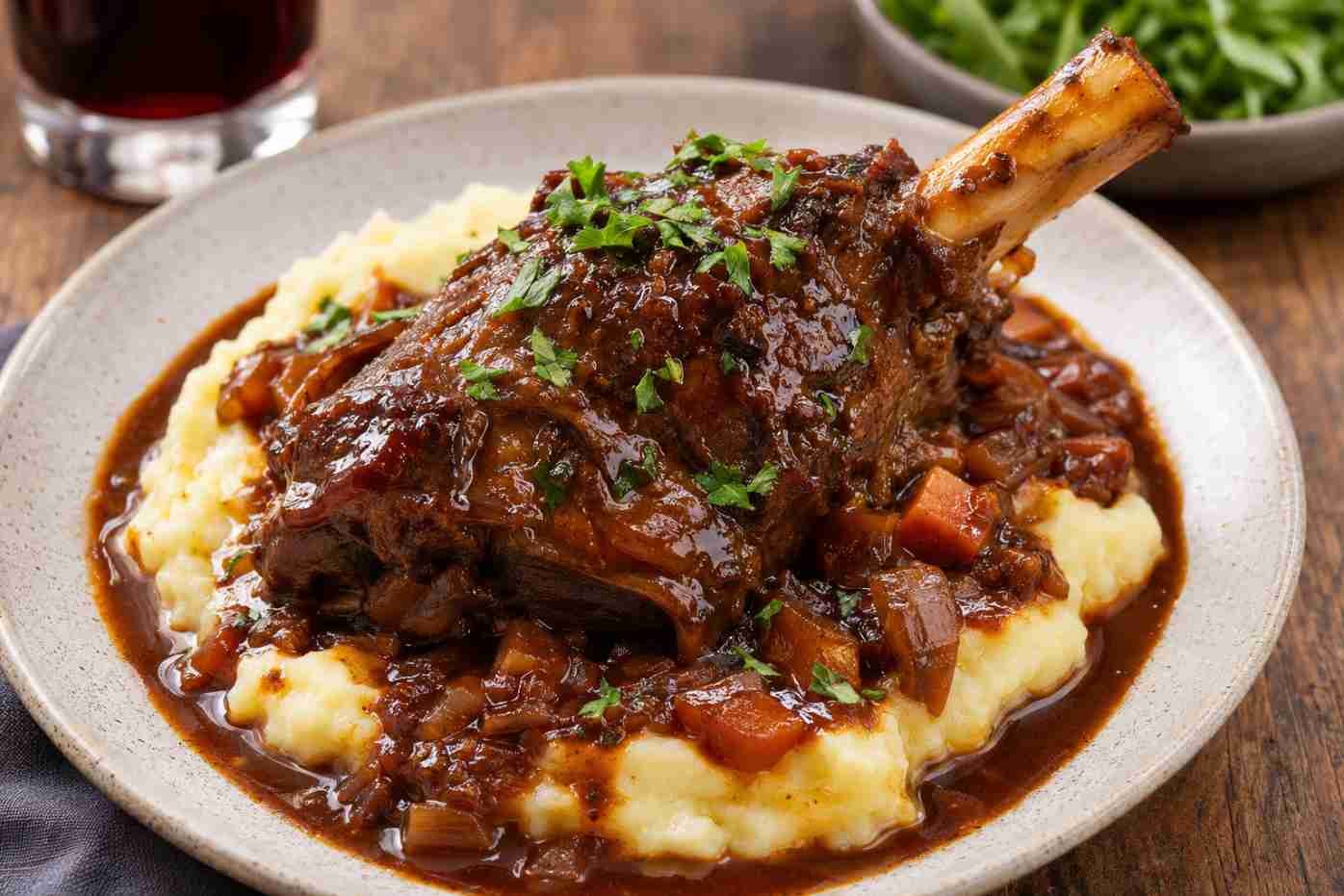
There are few things more satisfying than a lamb shank that has been cooked slowly enough for the meat to slip away from the bone with barely any effort. Add a generous spoonful of dark, glossy port wine sauce, and you have the sort of dinner that feels right at home on a restaurant menu. The good news is that Port Braised Lamb Shanks are surprisingly straightforward to prepare. Most of the work happens in the pot while you get on with something else.
Port wine brings a gentle sweetness and a deep, fruity character to the braising liquid. Combined with beef stock, tomato paste, garlic, vegetables, and fresh herbs, it develops into a rich sauce that works beautifully with the natural flavor of lamb. Serve the shanks over buttery mashed potatoes, with enough sauce to soak into every spoonful, and you have a meal worth making again.
What Are Port Braised Lamb Shanks?
Port Braised Lamb Shanks are lamb shanks slowly cooked in a mixture of port wine, stock, vegetables, and aromatic herbs until the meat becomes tender. Braising involves browning the meat first, then cooking it gently in a covered pot with liquid. This allows a tough, hardworking cut to soften without drying out.
Lamb shanks come from the lower part of the animal’s legs. Because these muscles do a great deal of work, the meat contains connective tissue that needs time to break down. That is exactly why shanks respond so well to slow cooking. After a few hours, the collagen softens into gelatin, giving the meat a succulent texture and adding body to the sauce.
Port is a fortified wine traditionally produced in Portugal. Its concentrated fruit flavors make it particularly useful in slow-cooked meat dishes. Ruby port is a good choice for this recipe because of its dark berry character, although tawny port will produce a slightly nuttier, more mellow sauce.
Port Braised Lamb Shanks Recipe Overview
| Recipe Details | Information |
|---|---|
| Course | Main Course |
| Cuisine | European-Inspired |
| Preparation Time | 20 Minutes |
| Cooking Time | 3 Hours 10 Minutes |
| Total Time | 3 Hours 30 Minutes |
| Servings | 4 |
| Cooking Method | Slow Braising |
| Difficulty | Moderate |
| Best Served With | Mashed Potatoes, Polenta, or Roasted Vegetables |
Ingredients for Port Braised Lamb Shanks
Good lamb and a well-balanced braising liquid are the foundations of this dish. You do not need an expensive bottle of port, but choose one that you would be comfortable drinking. Avoid heavily seasoned or sweetened cooking wines, which can make the finished sauce taste unbalanced.
For the Lamb Shanks
- 4 lamb shanks (approximately 350–450 g each): Choose similarly sized pieces so they cook at roughly the same rate.
- 2 tablespoons olive oil: Used for browning the lamb and cooking the vegetables.
- 1 1/2 teaspoons kosher salt: Adjust according to the saltiness of your stock and personal preference.
- 1 teaspoon freshly ground black pepper: Adds gentle warmth and seasoning.
For the Port Wine Braising Sauce
- 2 medium onions, finely diced: Form a savory, slightly sweet base for the sauce.
- 2 medium carrots, chopped: Add sweetness and depth.
- 2 celery stalks, chopped: Bring a subtle earthy flavor.
- 5 garlic cloves, minced: Add fragrance and complexity.
- 2 tablespoons tomato paste: Provide acidity, color, and concentrated savory flavor.
- 500 ml ruby port wine: Gives the dish its signature fruity richness.
- 250 ml dry red wine: Helps balance the sweetness of the port.
- 500 ml low-sodium beef stock: Creates a flavorful base for the braising liquid.
- 3 sprigs fresh thyme: Add a light herbal aroma.
- 1 small sprig fresh rosemary: Complements the flavor of lamb.
- 2 bay leaves: Provide a subtle aromatic background.
- 1 teaspoon Worcestershire sauce: Adds an extra layer of savory flavor.
- 1 tablespoon cold unsalted butter: Optional, for finishing the sauce.
For Garnishing and Serving
- 2 tablespoons freshly chopped flat-leaf parsley
- Freshly ground black pepper, to taste
- Creamy mashed potatoes, cooked polenta, or your preferred side dish
Also Read: Slow Cooker Roast Lamb Leg
How to Make Port Braised Lamb Shanks
You will need a large Dutch oven or another heavy, oven-safe pot with a tight-fitting lid. The pot should be wide enough to hold the lamb shanks without crowding them excessively. A 5–7 liter Dutch oven is generally suitable for four medium shanks.
Step 1: Prepare and Season the Lamb
Remove the lamb shanks from the refrigerator about 20 minutes before cooking. Pat them thoroughly dry with paper towels and season all over with the salt and black pepper. Drying the meat is important because excess surface moisture causes steaming rather than browning. If the shanks have a thick outer layer of hard fat, trim away some of it, but leave the connective tissue in place. It will soften during cooking.
Step 2: Brown the Lamb Shanks
Preheat your oven to 160°C (320°F). Meanwhile, place a Dutch oven over medium-high heat and add the olive oil. Once the oil is hot, add two lamb shanks and sear them for approximately 6–8 minutes, turning occasionally until well browned on all sides. Transfer the browned shanks to a plate and repeat with the remaining two. Do not rush this stage. The dark golden crust and browned bits left in the pot contribute a great deal of flavor to the finished sauce.
Step 3: Cook the Vegetables
Reduce the heat to medium. Add the onions, carrots, and celery to the same pot. Cook for approximately 7–8 minutes, stirring occasionally, until the onions begin to soften and the vegetables take on a little color. If the bottom of the pot starts to look too dry, add a small splash of stock. Stir in the garlic and cook for another minute, just until fragrant. Avoid burning the garlic because it can give the sauce an unpleasant bitter edge.
Step 4: Add the Tomato Paste
Stir the tomato paste into the vegetables and cook for 2 minutes. The paste should darken slightly and begin to stick to the bottom of the pot. Cooking it briefly removes some of its raw, sharp taste and allows its natural sweetness to develop.
Step 5: Deglaze With Port and Red Wine
Pour in the port wine and dry red wine, scraping the bottom of the pot with a wooden spoon to release the browned bits left behind from searing the lamb. Bring the mixture to a lively simmer and cook uncovered for 8–10 minutes, allowing it to reduce slightly. This concentrates the flavor and mellows the wine’s sharper notes. The mixture will still contain alcohol, and cooking does not guarantee its complete removal.
Step 6: Build the Braising Liquid
Add the beef stock, thyme, rosemary, bay leaves, and Worcestershire sauce. Stir well and bring the liquid back to a gentle simmer. Return the lamb shanks to the pot along with any juices collected on the plate. The liquid should reach at least halfway up the meat, but the shanks do not need to be completely submerged. If necessary, add a little additional stock or water. Turn the shanks so they are coated with the sauce.
Step 7: Braise Slowly in the Oven
Cover the Dutch oven with its lid and transfer it to the preheated oven. Cook for approximately 2 hours 30 minutes to 3 hours, turning the shanks once halfway through if the liquid does not cover them fully. Check after 2 hours 30 minutes. The lamb is ready when a fork slides into the thickest part without much resistance and the meat is beginning to pull away from the bone. Larger shanks may need an additional 20–30 minutes. Keep the braising liquid at a gentle simmer rather than a vigorous boil.
Step 8: Prepare the Port Wine Sauce
Carefully transfer the cooked lamb shanks to a warm plate and cover loosely with foil. Remove the thyme stems, rosemary sprig, and bay leaves from the pot. For a smooth sauce, strain the cooking liquid through a fine-mesh sieve into a saucepan, pressing gently on the vegetables to extract their juices. If you prefer a more rustic sauce, leave the vegetables in place and blend a small portion of them into the liquid.
Skim off the excess fat, then simmer the sauce uncovered over medium heat for 10–20 minutes, or until it reaches your preferred consistency. The exact reduction time depends on how much liquid remains. It should lightly coat the back of a spoon without becoming sticky or syrupy. Taste before adding more salt. If the port makes the sauce slightly too sweet, stir in 1 teaspoon of red wine vinegar, taste, and add a little more only if needed.
Step 9: Finish and Serve
Remove the saucepan from the heat and whisk in the cold butter, if using. This gives the sauce a smooth, glossy finish. Return the lamb shanks to the sauce for a few minutes to warm through and coat them evenly. Place each shank over a generous portion of mashed potatoes, spoon the port wine sauce over the meat, and finish with chopped parsley and freshly ground black pepper. Serve immediately while everything is hot.
Also Read: Lamb Shawarma Chickpea Soup
What You Can Do Better
Port Braised Lamb Shanks are forgiving, but a few details make the difference between a decent slow-cooked meal and one with truly memorable flavor. Most of these improvements require no additional ingredients, only a little more attention during cooking.
Choose the Right Size of Lamb Shanks
Whenever possible, buy lamb shanks of similar weight and thickness. A small shank can become tender considerably earlier than a large one, so uneven sizes can complicate cooking. If your butcher offers both fore shanks and hind shanks, either can work, but check that the pieces will fit comfortably into your pot before buying.
Give the Meat Enough Space to Brown
Crowding four cold shanks into one pot can cause moisture to collect at the bottom, preventing the meat from developing a proper crust. Browning in two batches takes a few extra minutes but produces noticeably better results. Let the surface develop some color before turning the meat rather than moving it constantly.
Balance the Sweetness of the Port
Port is naturally sweeter than ordinary dry red wine. That sweetness is useful, but it needs enough savory flavor and acidity to stay balanced. Dry red wine, tomato paste, and a small amount of vinegar at the end help prevent the sauce from tasting like a dessert reduction. If your sauce already tastes balanced, skip the vinegar entirely.
Cook Until Tender, Not Just Until the Timer Rings
The size, age, and composition of the meat all influence cooking time. If the shank still feels firm after three hours, it usually needs more time rather than higher heat. Continue braising gently and check every 15–20 minutes. The goal is soft, juicy meat that yields easily to a fork but still holds together well enough to serve on the bone.
Make the Dish a Day Ahead
This is one of those meals that reheats particularly well. Preparing it the day before also makes it easier to remove excess fat. Cool the braised lamb promptly, refrigerate it in a covered shallow container within two hours, and allow the fat to firm up on the surface. The next day, skim off the fat and reheat the lamb gently in its sauce until thoroughly hot.
Reduce the Sauce Separately
Once the lamb is tender, remove it before reducing the sauce. Leaving the shanks in the pot during a prolonged reduction can overcook the meat or damage its delicate texture. Reducing the liquid on its own gives you much better control over the final consistency.
Alternative Cooking Methods
Slow Cooker Method
Brown the lamb and prepare the vegetables and wine mixture on the stovetop as described above. Transfer everything to a slow cooker, using approximately 300 ml of beef stock instead of 500 ml because less moisture evaporates during slow cooking. Cook on low for 7–9 hours or until the meat is completely tender. Transfer the lamb to a plate, then reduce the sauce in a saucepan on the stovetop before serving.
Stovetop Method
Follow the recipe through the point where the lamb is returned to the braising liquid. Cover the pot and maintain a very gentle simmer over low heat for approximately 2 hours 30 minutes to 3 hours. Turn the shanks occasionally and check the liquid level to prevent sticking or scorching. Add a small amount of stock if the sauce reduces too quickly. Once the lamb is tender, finish the sauce as directed.
Also Read: Lamb Hummus Platter Recipe
What to Serve With Port Braised Lamb Shanks
Since the sauce is rich and full-bodied, the best side dishes are those that absorb it or provide a fresh contrast. Creamy mashed potatoes are the most traditional choice. Their mild flavor allows the port sauce to remain the centerpiece of the meal, while their soft texture complements the tender lamb.
- Garlic mashed potatoes: A creamy base that catches every spoonful of sauce.
- Soft parmesan polenta: A good alternative to potatoes, particularly for a more elegant dinner.
- Roasted root vegetables: Carrots, parsnips, and turnips bring natural sweetness and some texture.
- Buttered green beans: Their freshness provides a pleasant contrast to the rich meat.
- Cauliflower mash: A lighter accompaniment that still works well with the sauce.
- Crusty bread: Useful for soaking up the last of the port wine reduction.
Storage and Reheating Instructions
Refrigerating Leftovers
Allow the lamb and sauce to cool briefly, then transfer them to shallow airtight containers and refrigerate within two hours of cooking. Store at 4°C (40°F) or below and use within 3–4 days. Keeping the meat in its sauce helps prevent it from drying out while stored.
Freezing
Port Braised Lamb Shanks can be frozen for up to 3 months for best quality. Place individual shanks in freezer-safe containers with enough sauce to cover most of the meat. Leave a little space for expansion, seal tightly, and label with the freezing date. Thaw overnight in the refrigerator before reheating.
Reheating
Place the lamb and sauce in a covered saucepan or oven-safe dish. Add a splash of stock or water if the sauce has thickened excessively. Reheat gently over low heat or in a 160°C (320°F) oven until the meat is heated through to 74°C (165°F). Avoid rapid boiling, which can make the meat fall apart and cause the sauce to reduce too far.
Nutritional Information
The following values are approximate estimates for one serving consisting of one lamb shank and one-quarter of the finished sauce. Actual nutrition depends on the size and fat content of the lamb, the amount of fat removed, sauce reduction, and how much alcohol remains after cooking. Side dishes and optional finishing butter are not included.
| Nutrient | Estimated Amount Per Serving |
|---|---|
| Calories | 650–800 kcal |
| Protein | 48–58 g |
| Total Fat | 28–38 g |
| Saturated Fat | 10–15 g |
| Carbohydrates | 22–35 g |
| Dietary Fiber | 2–4 g |
| Total Sugars | 12–22 g |
| Sodium | 650–950 mg |
| Cholesterol | 150–200 mg |
Nutrition note: These figures are broad estimates rather than laboratory-tested values. Port wine adds sugars and calories, and the amount remaining in the finished sauce varies considerably with reduction. For precise nutritional tracking, calculate the recipe using the actual ingredients and quantities served.
Also Read: Beef Rendang
Frequently Asked Questions
Can I Use Tawny Port Instead of Ruby Port?
Yes. Tawny port works well, although the finished sauce will have a slightly different character. Ruby port tends to provide more pronounced dark fruit flavors, while tawny port brings nuttier, caramel-like notes. Both are suitable for braising lamb.
Do I Need an Expensive Bottle of Port?
No. An affordable, drinkable port is entirely adequate for slow cooking. The wine is combined with stock, meat juices, vegetables, and herbs, so there is little reason to use a rare or premium bottle. However, avoid a wine with flavors you actively dislike, since those characteristics can become more noticeable as the liquid reduces.
Can I Make This Recipe Without Alcohol?
You can make an alcohol-free variation, although it will not have exactly the same flavor as traditional port-braised lamb. Replace the port and red wine with additional low-sodium beef stock, approximately 150 ml unsweetened red grape juice, and 1–2 tablespoons red wine vinegar. Start with the smaller amount of vinegar and adjust after reducing the sauce. The result will be a savory braised lamb dish with a gentle fruity sweetness.
Why Are My Lamb Shanks Still Tough?
Tough lamb shanks usually need more slow cooking. The connective tissue takes time to soften, particularly in larger pieces. Make sure the pot contains sufficient liquid, keep the temperature low, and continue cooking until the meat yields easily to a fork. Raising the heat dramatically is not the best solution because it can cause the meat to tighten and dry out.
How Do I Thicken the Sauce Without Flour?
Reducing the braising liquid is often enough to give it a pleasant consistency, especially when the meat has released plenty of gelatin. If you prefer a thicker sauce, mix 1 teaspoon cornstarch with 1 tablespoon cold water and stir it into the simmering liquid. Cook briefly until thickened, adding more slurry only if necessary. This also avoids the need for wheat flour.
Can I Prepare Port Braised Lamb Shanks for a Dinner Party?
Absolutely. This is a practical dish for entertaining because the majority of the cooking can be completed in advance. Prepare the lamb the day before, refrigerate it safely, and reheat it gently in its sauce before guests arrive. The extra resting time can also help the flavors settle into a more balanced sauce.
Can I Use Boneless Lamb Instead?
Boneless lamb shoulder is a reasonable alternative, although the final presentation and texture will differ. Cut the shoulder into large pieces and braise gently until tender. The cooking time will depend on the size of the pieces, so begin checking earlier than you would for whole shanks.