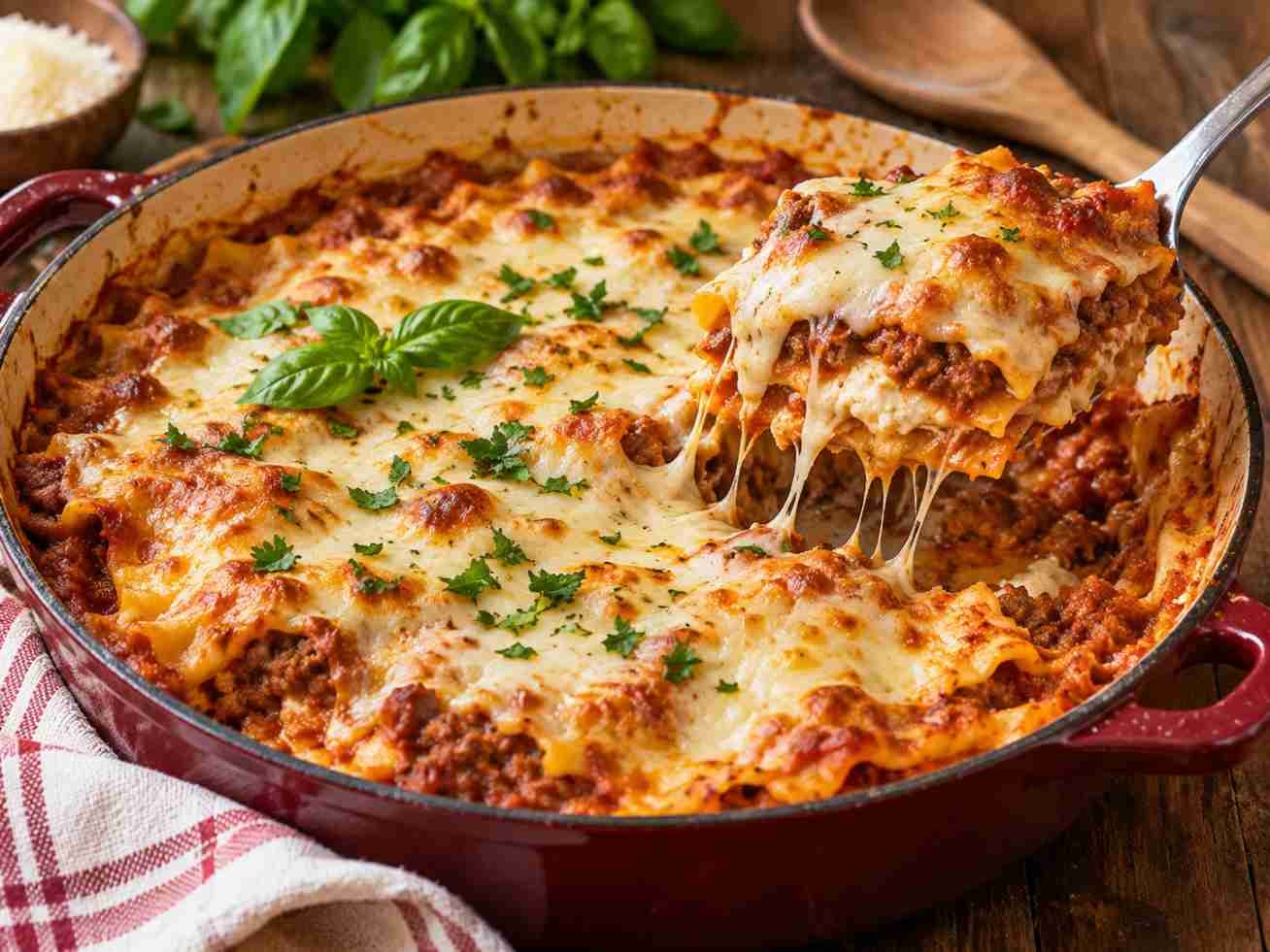
This One Pot Lasagna keeps the best parts of the classic dish while making the process much simpler. The beef sauce cooks in a deep, oven-safe skillet, the pasta sheets go directly into the sauce without boiling, and everything finishes together in the oven. You still get proper layers, plenty of melted cheese, and that comforting homemade flavor without spending the whole evening in the kitchen.
It is the kind of dinner that works just as well for a busy Wednesday as it does for a relaxed weekend meal. Add a green salad or some garlic bread, and you have a satisfying dinner that feels a little more special than the effort involved.
One Pot Lasagna Recipe Overview
| Details | Information |
|---|---|
| Recipe | One Pot Lasagna |
| Cuisine | Italian-Inspired |
| Course | Main Course, Dinner |
| Preparation Time | 20 Minutes |
| Cooking Time | 50 Minutes |
| Resting Time | 10 Minutes |
| Total Time | 1 Hour 20 Minutes |
| Servings | 6 |
| Cooking Method | Stovetop and Oven |
| Difficulty | Easy to Moderate |
Ingredients for One Pot Lasagna
Most of the ingredients are familiar pantry staples. The important thing is to use enough tomato sauce to cook the dry pasta sheets without leaving the finished lasagna watery.
For the Beef Sauce
- 1 tablespoon olive oil: For cooking the vegetables and building the flavor of the sauce.
- 1 medium onion, finely chopped: Adds a gentle sweetness and savory depth.
- 4 garlic cloves, minced: Fresh garlic gives the sauce a fuller flavor.
- 1 small carrot, finely grated: Adds natural sweetness and blends into the sauce.
- 500 g (1 lb) ground beef: Choose beef with a little fat for a richer sauce.
- 2 tablespoons tomato paste: Concentrates the tomato flavor.
- 700 g tomato passata: Smooth, strained tomatoes that form the base of the sauce.
- 1 cup beef broth: Provides additional moisture for cooking the pasta.
- 1 teaspoon dried oregano: Adds a classic Italian-inspired flavor.
- 1 teaspoon dried basil: Complements the tomatoes and garlic.
- 1/2 teaspoon smoked paprika: Adds a subtle warmth without making the dish spicy.
- 1/2 teaspoon sugar: Optional, depending on the acidity of the tomatoes.
- 3/4 teaspoon salt: Adjust according to the saltiness of the broth.
- 1/2 teaspoon freshly ground black pepper: For seasoning.
For the Pasta and Cheese Layers
- 220 g (about 8 oz) oven-ready lasagna sheets: Use dried sheets designed to cook without pre-boiling.
- 200 g ricotta cheese: Creates creamy pockets between the pasta and sauce.
- 1 large egg: Helps the ricotta mixture hold together.
- 180 g shredded mozzarella cheese: Gives the lasagna its stretchy, melted topping.
- 40 g grated Parmesan cheese: Adds a salty, nutty finish.
- 1 tablespoon fresh parsley, chopped: Optional, for serving.
Also Read: Pumpkin Lasagna
How to Make One Pot Lasagna
You will need a deep oven-safe skillet, ideally around 10 to 11 inches wide. A heavy-bottomed pan works particularly well because it distributes heat evenly and prevents the meat sauce from scorching.
Step 1: Prepare the Vegetables
Start by chopping the onion, mincing the garlic, and grating the carrot. Grating the carrot instead of cutting it into large pieces allows it to soften quickly and disappear into the tomato sauce. This is also a useful way to add vegetables without changing the familiar texture of lasagna.
Step 2: Cook the Beef
Heat the olive oil in your oven-safe skillet over medium heat. Add the chopped onion and carrot, then cook for 3 to 4 minutes until the onion begins to soften. Stir in the minced garlic and cook for another 30 seconds, just until fragrant.
Add the ground beef and increase the heat slightly. Break the meat into small pieces using a wooden spoon or spatula. Continue cooking for about 6 to 8 minutes, until the beef is browned and no pink remains. If the pan contains a large amount of rendered fat, carefully spoon off the excess.
Step 3: Build the Tomato Sauce
Stir the tomato paste into the cooked beef and let it cook for about a minute. This brief cooking step helps develop its flavor.
Pour in 550 g of the tomato passata, reserving the remaining 150 g for the final pasta layer. Add the beef broth, oregano, basil, smoked paprika, sugar if needed, salt, and black pepper.
Stir thoroughly, bring the sauce to a gentle simmer, and cook uncovered for 8 to 10 minutes. Stir occasionally, especially around the edges of the skillet.
The sauce should be flavorful and slightly loose rather than thick and dry. Remember, the uncooked lasagna sheets will absorb some of this liquid in the oven.
Step 4: Prepare the Ricotta Mixture
While the meat sauce simmers, combine the ricotta cheese, egg, and half of the Parmesan in a small bowl. Mix until smooth and creamy. The egg is optional if you prefer a softer, less structured cheese filling, but it helps the finished lasagna hold its shape when sliced.
Step 5: Create the Lasagna Layers
Preheat your oven to 180°C (350°F). Remove the skillet from the heat and transfer roughly half of the meat sauce into a bowl. Leave the remaining sauce spread across the bottom of the skillet.
Gently slide the first layer of dried lasagna sheets underneath the sauce remaining in the skillet. Break the sheets into smaller pieces wherever necessary to fit the shape of the pan. Slightly overlapping the pieces is fine.
Spread about half of the ricotta mixture over the sauce, keeping it in small spoonfuls rather than trying to form one perfectly even layer. Sprinkle a little mozzarella over the top.
Add another layer of lasagna sheets. Spoon the reserved meat sauce over them, ensuring that the pasta is covered. Add the remaining ricotta mixture and a little more mozzarella.
Finish with a third layer of pasta sheets. Mix the reserved 150 g passata with 1/4 cup water, then spread this mixture over the top so that no dry pasta edges remain exposed. Scatter the remaining mozzarella and Parmesan evenly across the surface.
Do not worry if the layers are not perfectly straight. The skillet is round, the pasta sheets are usually rectangular, and the finished dish is meant to look generously homemade.
Step 6: Bake Until Golden and Bubbling
Transfer the skillet to the preheated oven and bake for approximately 30 to 35 minutes. The cheese should be melted, the sauce should be bubbling around the edges, and the pasta should be tender when pierced with a knife.
If the cheese starts browning too quickly before the pasta is cooked, loosely cover the skillet with foil. Remove the foil during the final few minutes if you want a more golden surface.
Step 7: Let the Lasagna Rest
This is the one step worth being patient about. Allow the lasagna to rest for at least 10 minutes before serving. Straight from the oven, the sauce is still bubbling and the layers are too soft to hold together properly.
As the skillet cools slightly, the pasta absorbs some remaining moisture and the cheese filling settles. You will get much neater portions and a better texture.
Finish with chopped fresh parsley and serve directly from the skillet.
Also Read: Spinach Lasagna
What You Can Do Better
A few thoughtful adjustments can make an already good skillet lasagna even better. These are the details that have the biggest effect on its flavor and texture.
Brown the Beef Properly
Do not rush the browning stage. If the meat is crowded and releases a lot of moisture, it can steam instead of brown. Allowing some of that moisture to evaporate helps the beef develop a deeper, more savory flavor. That makes a noticeable difference in a sauce that only simmers for a short time.
Keep the Sauce Slightly Loose
A common mistake with one-pot lasagna is reducing the tomato sauce too much before adding the pasta. The dry sheets need moisture to soften in the oven. If your sauce looks unusually thick, add another splash of broth or water before assembling the layers.
Use the Right Pasta Sheets
Oven-ready lasagna sheets are the safest choice for this recipe. Regular dried sheets may also work, depending on the brand, but often need more liquid and a longer cooking time. Fresh pasta sheets cook much faster and can become too soft with this method.
Season the Ricotta
Ricotta is naturally mild. A small pinch of salt, some black pepper, or a little grated Parmesan can keep the creamy layer from tasting bland next to the richly seasoned beef sauce.
Use Two Types of Cheese
Mozzarella provides the familiar melted texture, while Parmesan contributes a stronger savory flavor. Using both gives the topping more character than relying on mozzarella alone.
Check the Pasta Before Serving
Cooking times vary between pasta brands and ovens. Before removing the lasagna, insert a thin knife into the center. It should pass through the pasta without resistance. If the sheets are still firm, add a little hot water around the edges if the pan looks dry, cover loosely with foil, and continue baking for another 5 to 10 minutes.
Common Mistakes to Avoid
Using a Skillet That Is Too Shallow
Choose a deep skillet with enough room for the sauce to bubble without spilling over. A pan approximately 2 inches deep is a practical minimum for this quantity.
Leaving the Top Pasta Sheets Exposed
Any uncovered pasta can dry out and become hard in the oven. Make sure the final layer is coated with tomato sauce before adding the cheese.
Adding Too Much Cheese Between the Layers
Cheese is important, but packing every layer with a thick amount can make the dish overly heavy and prevent the sauce from distributing evenly. Save a generous portion of mozzarella for the top.
Skipping the Resting Time
Lasagna served immediately from the oven tends to collapse into a pool of sauce. The flavor will still be good, but a short rest makes the portions much easier to serve.
Also Read: Keto Lasagna Recipe
Easy Variations of One Pot Lasagna
Chicken Lasagna
Replace the ground beef with ground chicken. Add a little extra olive oil if using very lean meat, and cook the chicken completely before adding the tomato sauce. The result is lighter in flavor while remaining hearty.
Vegetarian One Pot Lasagna
Skip the beef and use a combination of finely chopped mushrooms, zucchini, and cooked lentils. Vegetable broth can replace the beef broth. Cook the mushrooms until their moisture has mostly evaporated before adding the tomatoes, and keep the overall sauce quantity similar.
Spicy Lasagna
Add 1/2 teaspoon crushed red pepper flakes to the meat sauce, or use a pinch of cayenne pepper for extra heat. Spicy Italian sausage can also replace part of the beef for a bolder flavor.
Spinach and Ricotta Lasagna
Stir a handful of cooked, well-drained spinach into the ricotta mixture. Squeeze out excess moisture first so the cheese filling stays creamy rather than watery.
What to Serve with One Pot Lasagna
Because lasagna is already rich and filling, the best side dishes are usually simple. A crisp green salad with lemon vinaigrette balances the cheese and beef sauce nicely. Garlic bread is another natural choice, especially if you enjoy soaking up the extra tomato sauce.
For a more vegetable-focused dinner, serve it with roasted broccoli, steamed green beans, or a tomato and cucumber salad. These sides add freshness without competing with the main dish.
How to Store and Reheat One Pot Lasagna
Refrigerating Leftovers
Allow the lasagna to cool slightly, then transfer leftovers to airtight containers and refrigerate within two hours of cooking. Store for up to 3 to 4 days at 4°C (40°F) or below. Dividing the lasagna into individual portions makes reheating more convenient.
Freezing
One Pot Lasagna can be frozen after baking. Cool it promptly, portion it into freezer-safe containers, and freeze for up to 2 to 3 months for the best quality. Thaw overnight in the refrigerator before reheating. The ricotta may change texture slightly after freezing, but the dish will still taste good.
Reheating in the Oven
Place a portion in an oven-safe dish, add a tablespoon of water or tomato sauce, and cover with foil. Reheat at 175°C (350°F) until thoroughly hot, ideally reaching 74°C (165°F) in the center.
Reheating in the Microwave
Transfer a portion to a microwave-safe plate and cover loosely. Heat in short intervals, checking and rotating as needed, until the center is steaming hot. A little additional sauce helps prevent the pasta from drying out.
Also Read: Slow Cooker Marinara Sauce
Nutritional Information
The following values are approximate estimates for one serving when the recipe is divided into six equal portions. Actual nutrition will vary depending on the fat content of the beef, the specific pasta and cheese brands, the amount of oil retained, and the broth used.
| Nutrient | Approximate Amount Per Serving |
|---|---|
| Calories | 600 kcal |
| Protein | 37 g |
| Total Carbohydrates | 49 g |
| Dietary Fiber | 5 g |
| Total Sugars | 10 g |
| Total Fat | 28 g |
| Saturated Fat | 12 g |
| Cholesterol | 125 mg |
| Sodium | 1050 mg |
Nutrition estimates are intended as a general guide rather than laboratory-verified values. For precise dietary tracking, calculate the recipe using the exact ingredients and brands you use.
Frequently Asked Questions
Can I Make One Pot Lasagna Without an Oven?
Yes, although the texture will be slightly different. Use a deep skillet with a tight-fitting lid and cook over low heat after assembling the layers. Check after 20 minutes and continue cooking until the pasta is tender, adding small amounts of hot water if necessary. The cheese will melt, but you will not get the same golden baked topping.
Do I Need to Boil the Lasagna Sheets First?
No. This recipe is designed for dried, oven-ready lasagna sheets. They cook directly in the tomato sauce and absorb moisture as the dish bakes. Make sure the pasta is properly surrounded by sauce.
Can I Use Cottage Cheese Instead of Ricotta?
Yes. Cottage cheese is a convenient alternative, particularly if you prefer a slightly lighter filling. For a smoother texture, blend it briefly before mixing with the egg and Parmesan. Drain off excess liquid if it seems watery.
Can I Prepare This Lasagna Ahead of Time?
You can prepare the meat sauce and ricotta mixture a day in advance and refrigerate them separately. Assemble the lasagna shortly before baking so the pasta sheets do not sit in the sauce for too long and soften unevenly.
Why Is My One Pot Lasagna Watery?
Too much broth, watery tomatoes, or vegetables that release excess moisture can cause a loose finished dish. The sauce should have enough liquid to cook the pasta without being soupy. Letting the lasagna rest for 10 to 15 minutes after baking will also help the layers settle.
Can I Use a Different Type of Meat?
Absolutely. Ground turkey, ground chicken, or a mixture of beef and Italian sausage can work. Just make sure the meat is fully cooked during the initial stovetop stage and that the sauce remains moist enough for the pasta.
How Do I Know When the Lasagna Is Fully Cooked?
The cheese should be melted and bubbling, and a knife inserted into the center should pass through the pasta easily. If the pasta still feels firm, continue baking for a few more minutes. The cheese topping alone is not a reliable indicator of whether the pasta is done.