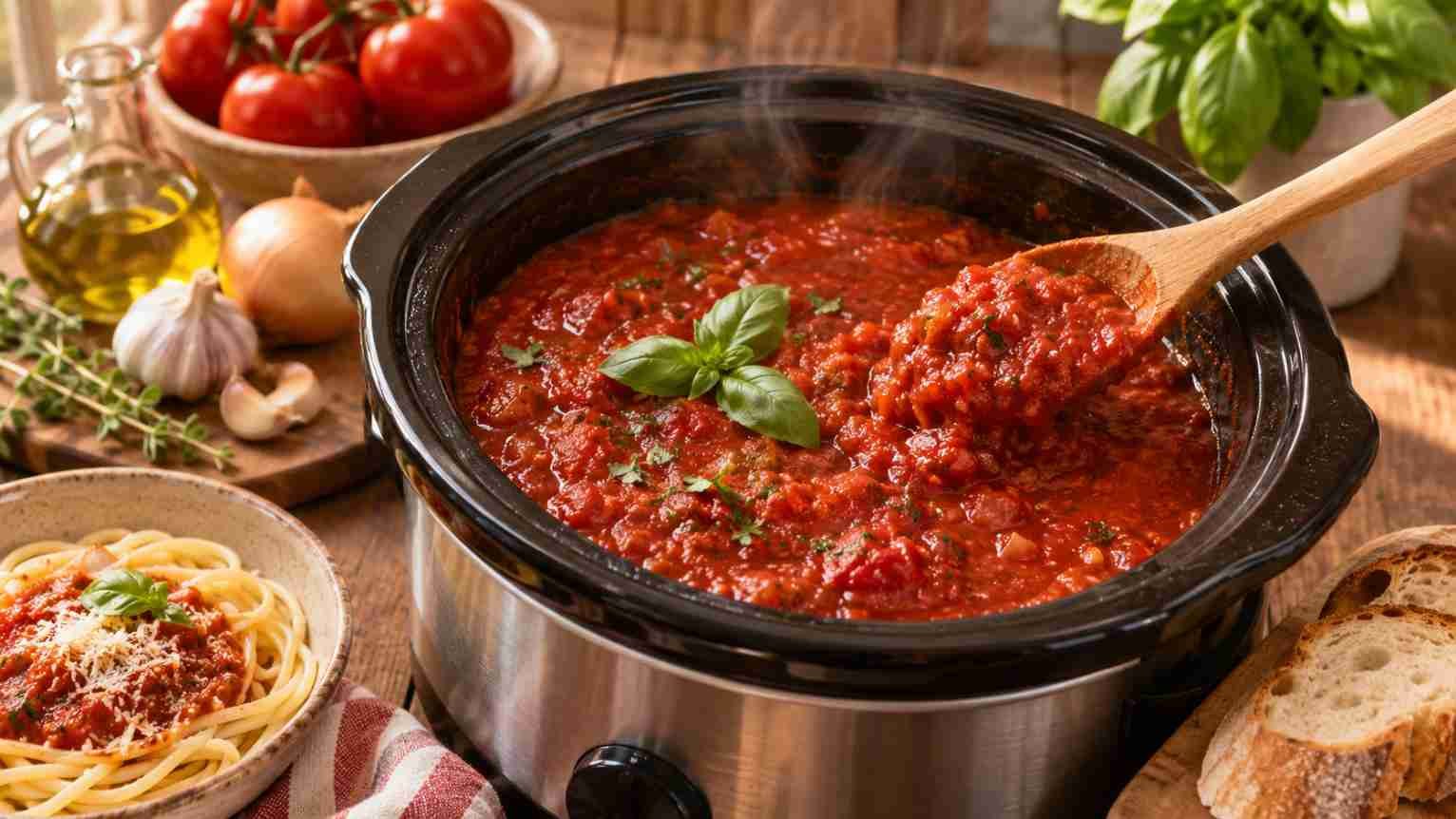
A good marinara sauce doesn’t need a long list of fancy ingredients. Give tomatoes, garlic, onion, and a few herbs enough time to cook together, and they turn into something rich, fragrant, and comforting. This Slow Cooker Marinara Sauce is the kind of recipe worth making in a big batch. It takes very little hands-on work, tastes wonderful over pasta, and leaves you with enough sauce for several meals.
The best part is that you don’t need to stand over a hot stove, stirring a pot every few minutes. Once everything goes into the slow cooker, the sauce develops its flavor gradually while you get on with your day. By dinnertime, the tomatoes have softened, the garlic has mellowed, and the herbs have worked their way into every spoonful.
It’s a simple homemade sauce that works just as well for a quick bowl of spaghetti as it does for lasagna, meatballs, baked pasta, or homemade pizza.
Slow Cooker Marinara Sauce Recipe Overview
| Recipe Details | Information |
|---|---|
| Preparation Time | 15 minutes |
| Cooking Time | 6–8 hours on LOW |
| Total Time | 6 hours 15 minutes to 8 hours 15 minutes |
| Yield | Approximately 6 cups |
| Servings | 12 servings (1/2 cup each) |
| Cuisine | Italian-inspired |
| Course | Sauce |
| Cooking Method | Slow Cooker |
| Dietary Information | Vegetarian, Vegan, Dairy-Free |
Ingredients for Slow Cooker Marinara Sauce
Most of the ingredients are pantry staples, which makes this an easy recipe to put together without a special grocery trip. Good tomatoes make the biggest difference, so choose a brand you already enjoy cooking with.
| Ingredient | Quantity | Purpose |
|---|---|---|
| Canned crushed tomatoes | 2 cans (28 oz each) | Forms the rich tomato base |
| Tomato paste | 1/4 cup | Adds thickness and concentrated tomato flavor |
| Yellow onion, finely chopped | 1 medium | Provides natural sweetness and depth |
| Garlic, minced | 5 cloves | Adds savory aroma |
| Extra virgin olive oil | 2 tablespoons | Rounds out the flavor |
| Dried oregano | 2 teaspoons | Provides classic Italian-style seasoning |
| Dried basil | 1 teaspoon | Adds a gentle herbal flavor |
| Dried thyme | 1/2 teaspoon | Adds an earthy note |
| Bay leaf | 1 | Gives the sauce a subtle background aroma |
| Salt | 1 teaspoon, or to taste | Balances the tomatoes |
| Freshly ground black pepper | 1/2 teaspoon | Adds mild warmth |
| Red pepper flakes | 1/4 teaspoon (optional) | Provides gentle heat |
| Sugar | 1 teaspoon (optional) | Balances excessive acidity if needed |
| Fresh basil leaves | 1/4 cup, loosely packed | Adds freshness at the end |
Also Read: Arrabbiata Sauce
Choosing the Right Tomatoes
Crushed tomatoes are the easiest choice because they already have a texture that works well for pasta sauce. They break down further during slow cooking without leaving large pieces behind. Whole peeled canned tomatoes are another good option, but you’ll need to crush them with your hands or a spoon before adding them.
Avoid canned tomatoes with heavy seasoning if you want full control over the finished flavor. Plain tomatoes give you more flexibility, especially when the sauce will be used in different recipes throughout the week.
How to Make Slow Cooker Marinara Sauce
Step 1: Prepare the Onion and Garlic
Peel and finely chop the onion, then mince the garlic. Smaller pieces blend into the sauce more naturally as it cooks. If you prefer a smoother sauce, there’s no need to worry about cutting everything perfectly because you can blend it later.
Step 2: Sauté for Extra Flavor
Heat the olive oil in a skillet over medium heat. Add the chopped onion and cook for about 4–5 minutes, stirring occasionally, until softened and translucent. Stir in the minced garlic and cook for another 30 seconds, just until fragrant.
Add the tomato paste and stir for about 1 minute. This short cooking step helps deepen its flavor. It’s optional, but particularly worthwhile when you want a sauce with a more rounded, less raw-tasting tomato base.
Step 3: Add Everything to the Slow Cooker
Transfer the onion, garlic, and tomato paste mixture to a 4-quart or larger slow cooker. Pour in both cans of crushed tomatoes, then add the oregano, dried basil, thyme, bay leaf, salt, black pepper, and red pepper flakes if using.
Stir thoroughly, making sure the tomato paste is evenly distributed. Scrape any remaining onion mixture from the skillet into the slow cooker so none of that flavor is left behind.
Step 4: Cook Slowly
Cover the slow cooker with its lid and cook on LOW for 6–8 hours. The sauce should gently simmer, becoming slightly darker and more concentrated as the ingredients soften together.
There’s no need to stir constantly. If you’re nearby, you can give it a stir once or twice, but otherwise leave the lid closed. Opening the slow cooker too often releases heat and can increase the cooking time.
Step 5: Adjust the Texture
Once the sauce has finished cooking, remove and discard the bay leaf. For a rustic marinara, leave the sauce as it is. If you prefer something smoother, carefully use an immersion blender to blend it directly in the slow cooker, provided the insert is suitable for blending.
You don’t have to blend it completely. A few short pulses will reduce the onion pieces while keeping a little texture. If using a countertop blender, allow the sauce to cool slightly and blend carefully in small batches according to the appliance instructions.
Step 6: Finish with Fresh Basil
Chop or tear the fresh basil leaves and stir them into the hot sauce. Taste before making any final adjustments. Add a little more salt if the sauce tastes flat, or a small pinch of sugar if the tomatoes seem unusually sharp.
If the sauce is thinner than you would like, transfer a portion to a saucepan and simmer uncovered until it reaches the right consistency. Slow cookers retain moisture, so some batches may need this extra reduction.
Step 7: Serve
Spoon the warm marinara over freshly cooked pasta, toss it with spaghetti or penne, or use it as the base for your favorite baked Italian dishes. For pasta, start with about 1/2 cup of sauce per serving and adjust according to how generously you like it coated.
A little freshly grated Parmesan and extra basil make a lovely finishing touch if you’re serving it with pasta. For a vegan meal, simply leave out the cheese or use a plant-based alternative.
Also Read: Pepperoni and Cheese Stromboli
What You Can Do Better
Cook the Tomato Paste Before Adding It
It might seem easier to put everything straight into the slow cooker, and that method certainly works. Still, cooking the tomato paste briefly with the onion and garlic gives it a deeper, more savory taste. It’s one small step that makes a noticeable difference in a sauce with relatively few ingredients.
Don’t Add Water Unless Necessary
Canned tomatoes already contain plenty of liquid. Unlike a sauce cooked in an uncovered saucepan, moisture doesn’t evaporate quickly inside a slow cooker. Adding extra water at the beginning often leaves you with a thinner sauce than you intended.
Use Sugar Only When the Tomatoes Need It
Not every batch of marinara needs added sugar. Some canned tomatoes are naturally sweet and balanced, while others have a more pronounced acidity. Taste the sauce toward the end of cooking before adding sugar. You may find that the cooked onions already provide enough sweetness.
Add Fresh Herbs Near the End
Dried oregano and basil benefit from the long cooking time, but fresh basil is different. Adding it during the final few minutes preserves more of its bright flavor. You get the richness of slow-cooked tomatoes along with the freshness of the herb.
Make the Consistency Fit the Dish
A slightly loose marinara works beautifully for pasta because it spreads easily between the noodles. Pizza, on the other hand, needs a thicker sauce so the crust doesn’t become soggy. If you’re making a batch for several meals, divide it into portions and reduce only the amount needed for pizza.
Easy Variations to Try
Spicy Arrabbiata-Style Sauce
Increase the red pepper flakes to 1/2 teaspoon or more, depending on your preference. The result is a warmer, spicier sauce that pairs particularly well with penne and a little olive oil.
Roasted Garlic Marinara
Replace the minced garlic with the soft cloves from one small head of roasted garlic. The flavor becomes sweeter and more mellow, making this version especially good for lasagna and baked pasta.
Vegetable Marinara
Add 1 finely grated carrot or 1/2 cup of finely diced mushrooms along with the onions. The vegetables soften during the long cooking process and add body without changing the basic character of the sauce.
Extra Herb Marinara
Stir in 1 tablespoon of chopped fresh parsley and a little additional fresh basil just before serving. This gives the sauce a fresher finish, especially when it’s being served with a simple pasta dish.
Also Read: Hot Honey Pepperoni Cheese Bites
Best Ways to Use Homemade Marinara Sauce
One of the reasons to make a generous batch is how easily it fits into different meals. You can keep the seasoning relatively simple and use it throughout the week without feeling like you’re eating exactly the same dinner each night.
- Spaghetti and pasta: Toss the sauce with cooked spaghetti, rigatoni, penne, or linguine, adding a splash of pasta cooking water if needed.
- Lasagna: Spread it between pasta sheets, ricotta, vegetables, and cheese for a hearty baked dish.
- Meatballs: Warm fully cooked meatballs in the sauce until heated through.
- Chicken Parmesan: Spoon the marinara over cooked breaded chicken, top with mozzarella, and bake until the cheese melts and the chicken is thoroughly cooked.
- Homemade pizza: Reduce the sauce until thick enough to spread over pizza dough.
- Stuffed peppers: Use it as a topping or baking sauce for peppers filled with rice and vegetables.
- Mozzarella sticks: Warm a small serving and use it as a dipping sauce.
How to Store and Freeze Marinara Sauce
Refrigerating
Transfer the cooked sauce into shallow, airtight containers so it cools quickly. Refrigerate within 2 hours of cooking and store at 40°F (4°C) or below. Use within 3–4 days.
Freezing
For longer storage, divide the sauce into freezer-safe containers or heavy-duty freezer bags. Leave a little space for expansion, label each portion with the date, and freeze. For the best flavor and texture, aim to use frozen marinara within 3 months.
Freezing the sauce in 1-cup or 2-cup portions is particularly useful. You can thaw exactly what you need instead of defrosting an entire batch.
Reheating
Thaw frozen marinara overnight in the refrigerator when possible. Reheat it in a saucepan over medium heat, stirring occasionally, until it reaches a full simmer. Reheat leftovers thoroughly to 165°F (74°C). If the sauce has thickened during storage, stir in a tablespoon or two of water until it loosens.
Nutritional Information
The following values are approximate estimates for this recipe, assuming a finished yield of 6 cups divided into 12 servings of 1/2 cup each. Actual nutrition depends on the tomato brand, the final sauce yield, and any optional ingredients used. Pasta, cheese, and other toppings are not included.
| Nutrient | Approximate Amount Per Serving |
|---|---|
| Calories | 85 kcal |
| Total Fat | 2.7 g |
| Saturated Fat | 0.4 g |
| Carbohydrates | 14 g |
| Dietary Fiber | 3 g |
| Total Sugars | 8 g |
| Protein | 3 g |
| Sodium | 450 mg |
| Cholesterol | 0 mg |
Nutrition note: These are estimated values rather than laboratory-tested figures. Using no-salt-added tomatoes or changing the amount of salt will significantly affect the sodium content.
Also Read: Oven Baked Italian Chicken Tenders
Frequently Asked Questions
Can I Make Marinara Sauce Without Sautéing the Onion and Garlic?
Yes. You can put the chopped onion, minced garlic, tomato paste, olive oil, tomatoes, and seasonings directly into the slow cooker. Stir everything together and cook as directed. Sautéing creates a slightly deeper flavor, but the completely hands-off version still makes a satisfying homemade sauce.
Can I Use Fresh Tomatoes Instead of Canned Tomatoes?
Fresh tomatoes can work, especially when they’re ripe and flavorful. You’ll need roughly 3 1/2 pounds of prepared tomatoes to replace the canned tomatoes in this recipe. Peel and crush them first for a smoother texture. Fresh tomatoes vary in moisture, so the sauce may need additional reduction after slow cooking.
Can I Cook This Marinara Sauce on HIGH?
Yes. If you’re short on time, cook it on HIGH for approximately 3–4 hours, or until the onions are tender and the sauce has developed a well-rounded flavor. The LOW setting is preferable when you have more time because it allows the ingredients to cook together gently.
Why Is My Slow Cooker Marinara Sauce Watery?
Slow cookers keep most of the moisture inside the pot, so the sauce doesn’t reduce as quickly as it would on the stove. The water content of canned tomatoes also varies. If your sauce is too thin, simmer it uncovered in a saucepan until it thickens. Don’t add flour or cornstarch unless you’re deliberately looking for a different texture.
Can I Add Meat to This Sauce?
Absolutely. Brown ground beef, turkey, or Italian sausage in a skillet, drain excess fat, and add the cooked meat to the slow cooker with the tomatoes. Ground meat should be fully cooked before being combined with the sauce. The resulting meat sauce should reach a safe temperature throughout before serving.
Is Homemade Marinara Sauce Vegan?
This recipe is vegan as written because it uses tomatoes, vegetables, herbs, and olive oil without any animal-derived ingredients. If you’re serving it with pasta, check your pasta and toppings as well, particularly if you’re avoiding eggs and dairy.
Can I Make a Double Batch?
Yes, provided your slow cooker has enough capacity. Avoid filling it beyond the manufacturer’s recommended maximum, generally around two-thirds to three-quarters full. A larger batch may take longer to heat and cook evenly. Once finished, divide it into smaller containers for prompt cooling and storage.