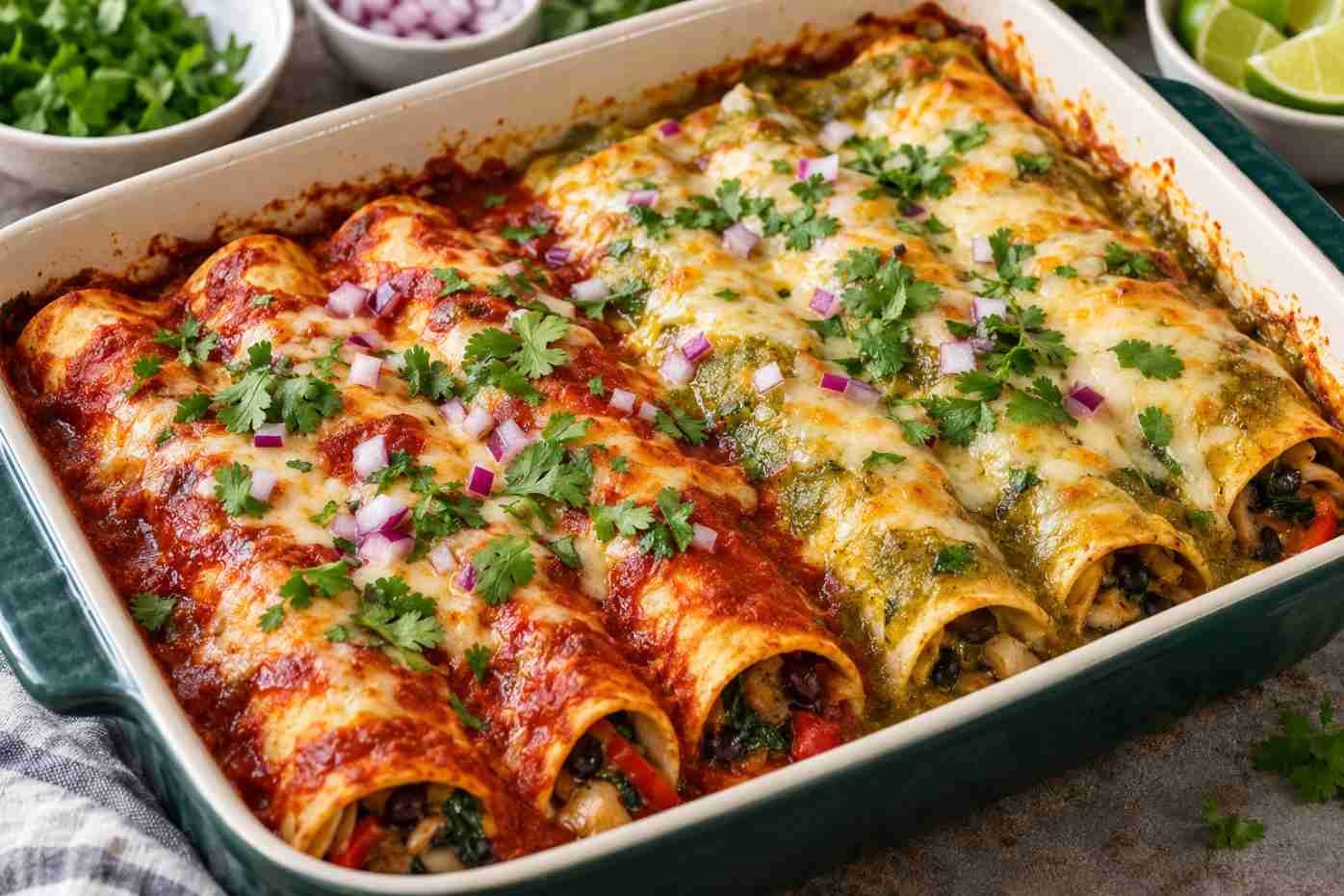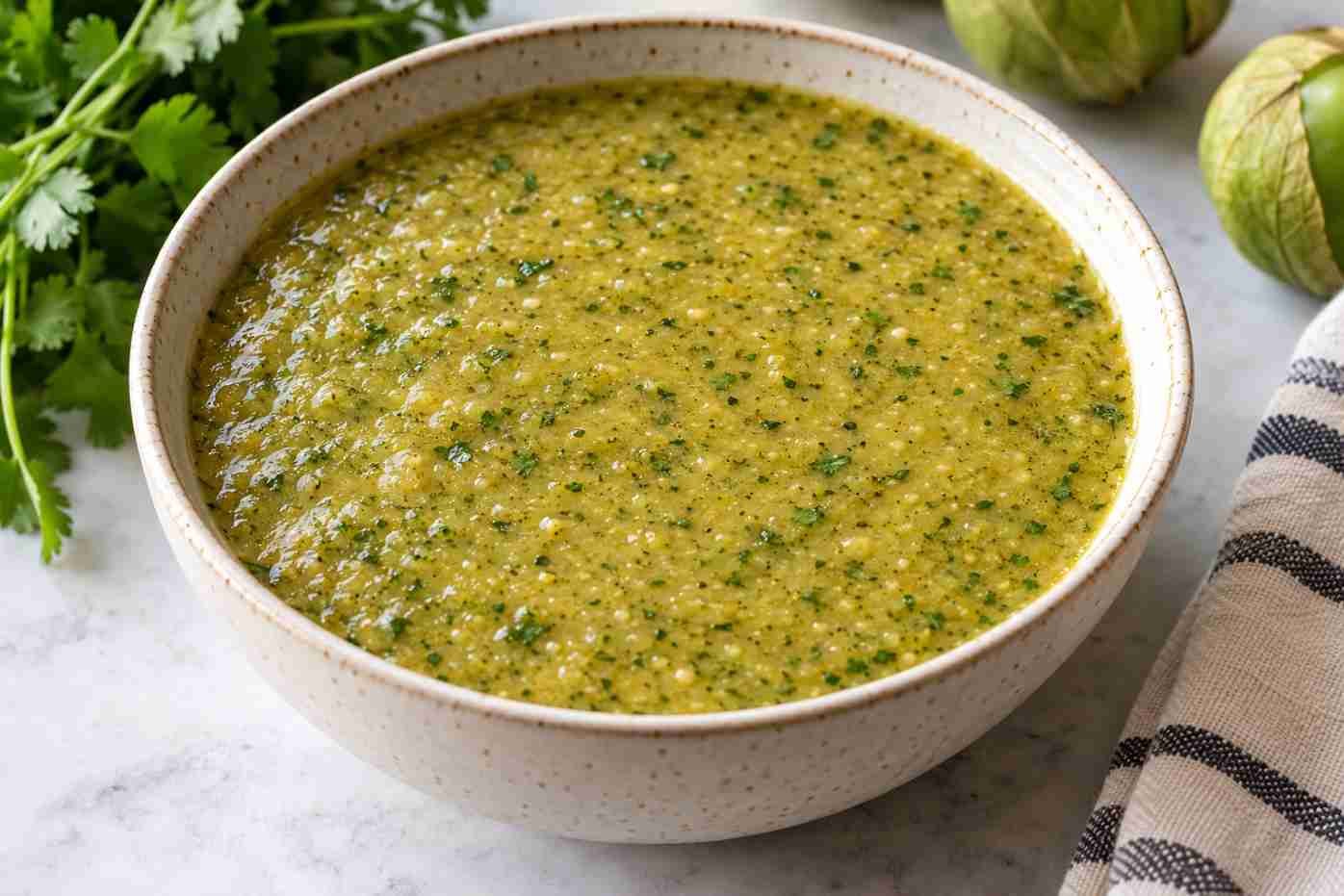
Green enchilada sauce brings a fresh, tangy flavor to homemade enchiladas, burritos, quesadillas, and many other meals. Made with green salsa, fresh cilantro, and a little cream, this easy sauce has a smooth texture and a bright flavor that balances the richness of cheese, beans, vegetables, and meat. You do not need to roast peppers or prepare a long list of ingredients to make a delicious batch at home.
This recipe uses salsa verde as a shortcut, allowing you to prepare a flavorful sauce in about 15 minutes. A short simmer helps concentrate the flavor, while the cream softens the salsa’s sharpness and gives the finished sauce a lightly creamy texture. You can adjust the heat by choosing a mild or medium salsa verde, making this recipe easy to adapt to your taste.
Recipe Overview
| Recipe Detail | Information |
|---|---|
| Recipe Name | Green Enchilada Sauce |
| Preparation Time | 8 minutes |
| Cooking Time | 7 minutes |
| Total Time | 15 minutes |
| Yield | Approximately 2⅓ cups |
| Serving Size | 2 tablespoons (estimated) |
| Cooking Method | Blending and stovetop simmering |
| Cuisine | Mexican-inspired |
| Dietary Notes | Vegetarian and gluten-free when suitable ingredients are used |
What Is Green Enchilada Sauce?
Green enchilada sauce is a savory sauce commonly used to coat tortillas before they are filled, rolled, and baked. Its green color usually comes from ingredients such as tomatillos and green chilies. Depending on the recipe, it may also include onion, garlic, herbs, spices, and broth.
This easy version takes a simpler approach by starting with salsa verde, a green sauce commonly made with tomatillos, green chilies, and seasonings. Fresh cilantro adds an herbal note, while sour cream or another creamy ingredient rounds out the flavor. The result is a tangy, mildly spicy sauce that works well in everyday cooking.
Green enchilada sauce is different from traditional red enchilada sauce, which often relies on dried red chilies and other spices. Green sauce generally tastes brighter and tangier, while red sauce tends to have a deeper, earthier flavor. The exact taste depends on the chilies, seasonings, and preparation method.
Also Read: Christmas Enchiladas
Ingredients for Green Enchilada Sauce
You need only three main ingredients for this quick recipe. Choose a salsa verde you enjoy eating on its own, because it provides most of the sauce’s flavor.
1. Salsa Verde
Use 3 cups (24 ounces) of mild or medium salsa verde. It provides the tangy, savory base and saves you the time required to prepare tomatillos and chilies from scratch. Jarred salsa works well, but homemade salsa verde is another option. Check the ingredient label if you want to control the salt level or avoid particular additives.
2. Fresh Cilantro
Use ⅓ cup of fresh cilantro leaves, including a few tender stems if desired. Cilantro adds a fresh, herbal flavor that complements the acidity of the salsa. There is no need to chop it finely because a blender will break it down.
3. Sour Cream or Heavy Cream
Add ¼ cup of sour cream, heavy cream, or crème fraîche. Sour cream gives the sauce a gentle tang, while heavy cream creates a milder, richer finish. Crème fraîche offers a creamy texture with a subtle tartness. For a dairy-free version, use a suitable plant-based sour cream alternative.
Ingredients Table
| Ingredient | Quantity | Purpose |
|---|---|---|
| Salsa verde | 3 cups (24 ounces) | Provides the main flavor and green color |
| Fresh cilantro leaves | ⅓ cup | Adds freshness and herbal flavor |
| Sour cream, heavy cream, or crème fraîche | ¼ cup | Creates a smooth, creamy finish |
Also Read: Basil Sauce
How to Make Green Enchilada Sauce
Making green enchilada sauce at home is straightforward. Blend the salsa and cilantro, simmer the mixture to concentrate its flavor, and then add the cream. Follow these steps for a smooth sauce that is ready to use in your favorite dishes.
Step 1: Blend the Salsa Verde and Cilantro
Add the salsa verde and fresh cilantro to a blender. Blend until the mixture is smooth and the cilantro is evenly distributed. If you prefer a slightly textured sauce, blend it briefly rather than processing it completely. Transfer the mixture to a large skillet.
Step 2: Simmer the Sauce
Place the skillet over medium heat and bring the mixture to a gentle simmer. Cook for about 5 to 7 minutes, stirring frequently to prevent the sauce from sticking. The liquid should reduce by roughly one-third, concentrating the flavor and giving the sauce a more substantial consistency.
Avoid boiling the mixture too aggressively. A steady, gentle simmer is enough to develop the flavor without making the sauce unnecessarily thick.
Step 3: Add the Cream
If you are using heavy cream or crème fraîche, stir it directly into the warm sauce. If you are using sour cream, take an extra step to prevent curdling. Place the sour cream in a small bowl and stir in about the same amount of warm sauce. Once the mixture is smooth, gradually stir it back into the skillet.
This process, called tempering, gently warms the sour cream before it meets the rest of the sauce. It helps maintain a smooth texture instead of leaving you with small curdled pieces.
Step 4: Taste and Serve
Stir the sauce until everything is combined. Taste it before serving. If the salsa is already salty or spicy, you may not need to add anything else. If you want more heat, you can add a little finely chopped green chili or a pinch of your preferred chili powder.
Use the sauce immediately over enchiladas, burritos, quesadillas, or roasted vegetables. If you are preparing it ahead, let it cool before transferring it to a suitable airtight container.
What You Can Do Better
A few small adjustments can make this simple sauce even more useful in your kitchen. The best approach depends on how you plan to serve it and whether you prefer a tangier, creamier, or spicier result.
Also Read: Cilantro Lime Sauce
Choose Salsa Verde Carefully
Not every salsa verde has the same flavor or heat level. Some varieties are sharp and acidic, while others have a stronger chili flavor. Start with a mild or medium version if you are serving the sauce to a group. You can always add more heat later, but it is harder to tone down an overly spicy batch.
Control the Thickness
Simmering the salsa mixture reduces excess liquid and concentrates its flavor. For enchiladas, aim for a sauce that coats a spoon without becoming pasty. If it gets too thick, stir in a small amount of water or vegetable broth. If it is too thin, let it simmer for another minute or two while stirring.
Keep the Cream Smooth
Sour cream can separate when added directly to very hot sauce. Tempering it first is a simple way to avoid this problem. After adding the cream, keep the heat low and avoid bringing the sauce to a hard boil.
Adjust the Flavor to Suit Your Meal
For a brighter finish, add a small squeeze of lime juice after cooking. For more depth, blend in a little roasted garlic or roasted green chili. If you are serving the sauce with rich fillings such as cheese or beans, its natural tanginess may already provide enough balance.
Make It Dairy-Free
Use a dairy-free sour cream alternative to prepare a plant-based version. Check the product label for ingredients and cooking suitability, since different alternatives behave differently when heated. Add the alternative gradually over low heat and avoid vigorous boiling.
Also Read: Ravioli Sauce
How to Use Green Enchilada Sauce
This sauce is not limited to enchiladas. Its tangy flavor and creamy texture make it a useful addition to quick meals, especially when you want to add moisture and flavor without preparing another dish from scratch.
- Enchiladas: Spread sauce over filled tortillas before baking, then add cheese or your preferred toppings.
- Burritos: Spoon a little over bean, rice, vegetable, chicken, or other fillings.
- Quesadillas: Serve it warm on the side as a dip.
- Nachos: Drizzle a small amount over tortilla chips with beans, cheese, and vegetables.
- Eggs: Add a spoonful over scrambled or fried eggs for a tangy breakfast.
- Roasted vegetables: Pair it with sweet potatoes, bell peppers, squash, or spinach.
- Rice and grain bowls: Use it as a finishing sauce for bowls with black beans, rice, corn, and fresh vegetables.
Tips for the Best Results
- Use fresh cilantro for the brightest herbal flavor.
- Choose a good-quality salsa verde because it forms the base of the recipe.
- Stir the sauce regularly while it simmers so it reduces evenly.
- Temper sour cream before adding it to the hot mixture.
- Taste before adding extra salt, since prepared salsa may already contain plenty.
- For a thicker sauce, simmer it a little longer. For a thinner sauce, add a small splash of water or broth.
- Let the sauce cool before storing it in the refrigerator or freezer.
Storage and Reheating
Allow leftover green enchilada sauce to cool, then transfer it to an airtight container. Refrigerate it promptly and use it within 5 days. For longer storage, freeze it in a freezer-safe container for up to 3 months.
Thaw frozen sauce in the refrigerator before reheating. Warm it gently in a saucepan over low heat, stirring regularly. Cream-based sauces can change texture after freezing, so stir well as the sauce warms. Avoid prolonged boiling, particularly if it contains sour cream.
Green Enchilada Sauce Nutritional Information
The nutritional values below are estimates based on the ingredients and quantities used. Actual values will vary according to the salsa verde brand, its salt content, and whether you choose sour cream, heavy cream, or crème fraîche. The figures are provided as a general guide rather than a laboratory-tested nutrition analysis.
| Nutrient | Estimated Amount per 2 Tablespoons |
|---|---|
| Calories | Approximately 25–35 kcal |
| Protein | Approximately 0.5–1 g |
| Total Fat | Approximately 1–2 g |
| Carbohydrates | Approximately 3–4 g |
| Sugars | Approximately 1–2 g |
| Fiber | Approximately 0.5–1 g |
| Sodium | Varies considerably by salsa brand |
Nutrition note: These are approximate values, not verified measurements. For more accurate figures, calculate the nutrition using the exact salsa and cream products you use, then divide the totals by the number of servings in your finished batch.
Also Read: Tangy Burger Sauce
Frequently Asked Questions
Is green enchilada sauce spicy?
It depends on the salsa verde used. Mild salsa produces a gentler sauce, while medium or hot salsa can add more heat. Check the label and taste the salsa before preparing the recipe.
Can I make green enchilada sauce without a blender?
Yes. Use a food processor or finely chop the cilantro and mix it thoroughly with the salsa. The sauce may have a slightly more textured finish, but it will still work well for enchiladas and other dishes.
Can I use Greek yogurt instead of sour cream?
Plain, full-fat Greek yogurt can work as an alternative, although it may taste tangier and can separate when overheated. Temper it with warm sauce before adding it, and keep the heat low.
Is green enchilada sauce gluten-free?
This three-ingredient version can be gluten-free if the salsa verde and cream products contain no gluten ingredients or relevant cross-contact warnings. Check product labels if you need to avoid gluten strictly.
Can I make the sauce vegan?
Yes. Replace the dairy ingredient with a plant-based sour cream alternative. Choose one that works well in warm sauces, and stir it in over low heat.
How long does homemade green enchilada sauce last?
Store it in an airtight container in the refrigerator for up to 5 days. You can also freeze it for up to 3 months, although the texture may change slightly after thawing.
Can I use green enchilada sauce instead of red sauce?
Yes. Green sauce can replace red enchilada sauce in most recipes. It usually gives the finished dish a brighter, tangier flavor, so choose the version that best suits your filling and toppings.