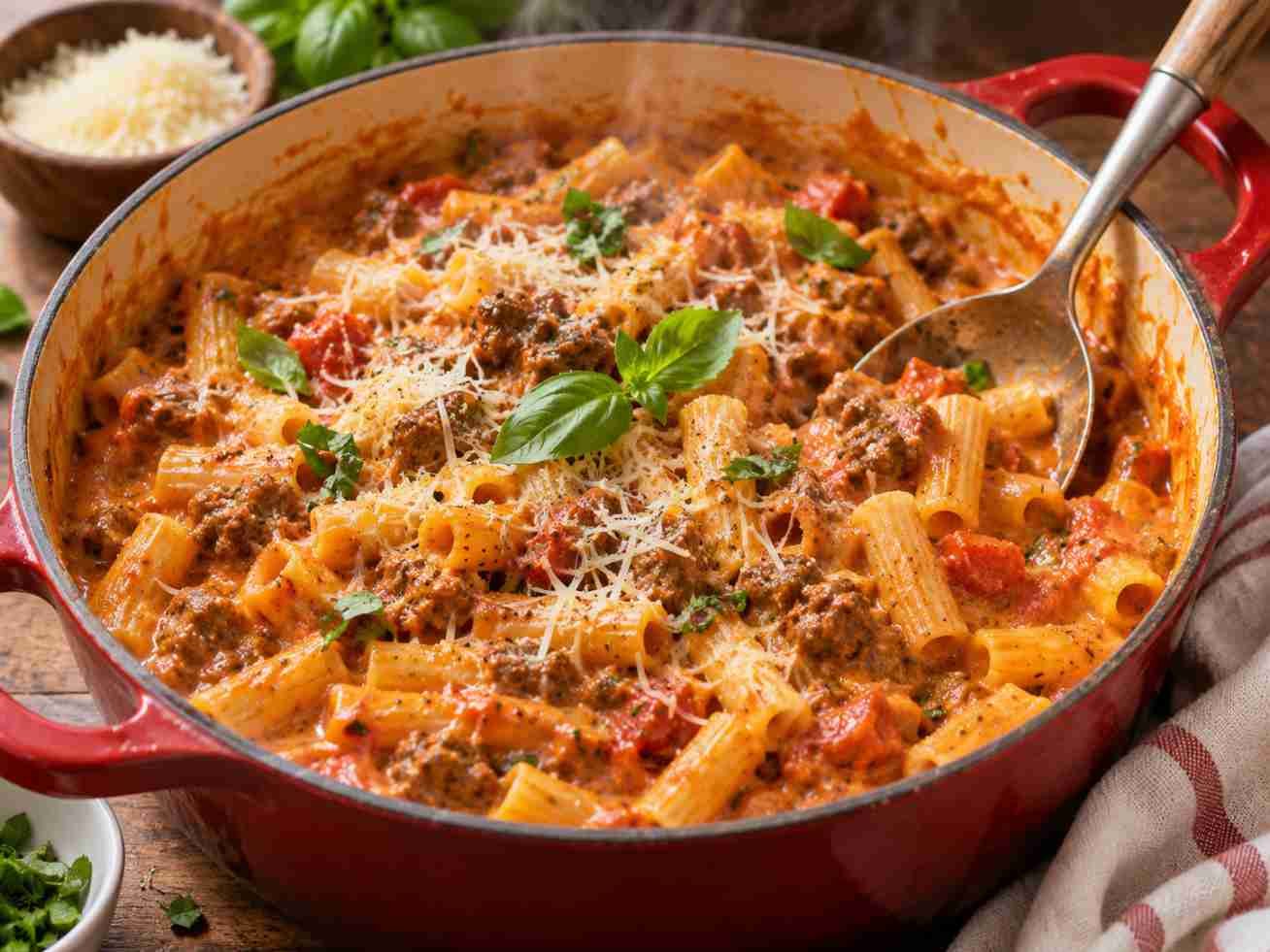
Some evenings, all you want is a proper homemade dinner without spending an hour in the kitchen or leaving a sink full of dirty dishes. That’s when this one pot creamy tomato beef pasta comes in handy. It’s made with tender pasta, well-seasoned ground beef, a rich tomato sauce, and enough cream to bring everything together without making the dish overly heavy.
The best part is that the pasta cooks directly in the sauce rather than in a separate pot of boiling water. As it cooks, it absorbs the flavors of the beef, garlic, tomatoes, and herbs. The starch released by the pasta also helps create a smooth sauce that clings to every piece.
This is the sort of dinner you can make with basic pantry ingredients. It takes around 35 minutes from start to finish, serves four generously, and tastes just as comforting as a pasta dish that requires considerably more effort.
One Pot Creamy Tomato Beef Pasta Recipe
| Recipe Details | Information |
|---|---|
| Preparation Time | 10 minutes |
| Cooking Time | 25 minutes |
| Total Time | 35 minutes |
| Servings | 4 |
| Course | Main Course, Dinner |
| Cuisine | Italian-Inspired |
| Cooking Method | One Pot, Stovetop |
| Difficulty | Easy |
Ingredients
Nothing on this list is particularly difficult to find. Fresh garlic and onion build the base of the sauce, while canned tomatoes and dried herbs provide most of the flavor. Choose a large, heavy-bottomed pot or deep skillet with a lid so the pasta has enough room to cook evenly.
| Ingredient | Quantity | Purpose |
|---|---|---|
| Olive oil | 1 tablespoon | For browning the beef and cooking the vegetables |
| Lean ground beef | 450 g (1 lb) | Adds protein and a rich, savory flavor |
| Yellow onion, finely diced | 1 medium | Provides sweetness and depth |
| Garlic cloves, minced | 4 | Adds aromatic flavor |
| Tomato paste | 2 tablespoons | Concentrates the tomato flavor |
| Crushed tomatoes | 400 g (14 oz) | Forms the base of the sauce |
| Beef broth, low sodium | 3 1/2 cups (840 ml) | Provides cooking liquid for the pasta |
| Uncooked penne or fusilli | 300 g (10.5 oz) | The main pasta ingredient |
| Heavy cream | 1/2 cup (120 ml) | Gives the sauce a creamy finish |
| Italian seasoning | 2 teaspoons | Adds dried herb flavor |
| Smoked paprika | 1/2 teaspoon | Adds gentle smoky warmth |
| Red pepper flakes | 1/4 teaspoon, optional | Adds a little heat |
| Worcestershire sauce | 1 teaspoon | Deepens the savory flavor |
| Parmesan cheese, grated | 1/3 cup (about 30 g) | Adds saltiness and helps finish the sauce |
| Salt | To taste | Balances the flavors |
| Black pepper | 1/2 teaspoon | Adds mild warmth |
| Fresh basil or parsley | 2 tablespoons, chopped | For serving |
Choosing the Right Pasta
Short pasta shapes work best here. Penne, fusilli, rigatoni, and medium shells are especially good because they hold the sauce in their ridges or hollow centers. Fusilli is an excellent choice if you prefer a little sauce with every bite, while penne provides a firmer texture.
Try to avoid delicate fresh pasta for this particular method. It cooks too quickly and can become soft before the sauce has had time to develop. Regular dried pasta gives you much better control over the finished dish.
Also Read: Beef Cheek Ragu Pasta Recipe
How to Make One Pot Creamy Tomato Beef Pasta
The cooking process is straightforward, but a few small details make a noticeable difference. Browning the beef properly, allowing the tomato paste to cook, and keeping an eye on the liquid are the three things worth paying attention to.
Step 1: Brown the Ground Beef
Place a large, heavy-bottomed pot over medium-high heat and add the olive oil. Once hot, add the ground beef and spread it across the bottom of the pot. Leave it undisturbed for about two minutes so some of the meat develops a browned surface. Break it into smaller pieces using a wooden spoon and continue cooking for another four to five minutes, until no pink remains.
If the beef releases a large amount of fat, carefully spoon off the excess. Leave a little behind because it carries flavor into the sauce. Browning rather than simply steaming the meat gives the finished pasta a much deeper taste.
Step 2: Add Onion, Garlic, and Seasonings
Reduce the heat to medium. Add the diced onion to the pot and cook for three minutes, stirring occasionally, until it starts to soften. Add the minced garlic, Italian seasoning, smoked paprika, red pepper flakes, and black pepper. Stir for approximately 30 seconds, just until the garlic becomes fragrant.
Next, add the tomato paste. Stir it through the beef and onion mixture for about one minute. The paste should darken slightly and coat the meat. This short cooking step reduces its raw, sharp taste and makes the sauce richer.
Step 3: Build the Tomato Sauce
Pour in the crushed tomatoes, beef broth, and Worcestershire sauce. Use your spoon to scrape the bottom of the pot, loosening any browned bits left from cooking the beef. These bits contain plenty of flavor, so don’t leave them behind.
Bring the mixture to a gentle boil and taste the liquid. Add a little salt if needed, keeping in mind that the broth and Parmesan will also contribute saltiness.
Step 4: Cook the Pasta in the Sauce
Add the uncooked pasta directly to the pot and stir until it is evenly distributed through the sauce. Reduce the heat to medium-low, cover loosely, and simmer for approximately 12 to 16 minutes, depending on the pasta shape and the instructions on the package.
Stir every two or three minutes, paying particular attention to the bottom of the pot where pasta can stick. The liquid should bubble gently rather than boil aggressively. If the sauce becomes too thick before the pasta is tender, add warm water or broth, about 1/4 cup at a time.
Begin testing the pasta a couple of minutes before the suggested cooking time ends. It should be almost tender but still have a slight bite in the center.
Step 5: Stir in the Cream and Parmesan
Lower the heat and pour in the heavy cream. Stir gently until the tomato sauce turns a warm, creamy orange-red color. Add the grated Parmesan and continue stirring for another one to two minutes until the cheese has melted and the pasta is cooked to your liking.
The sauce should look slightly looser than you want it on the plate. Pasta continues absorbing liquid after the heat is turned off, and a sauce that looks perfect in the pot can become surprisingly thick after a few minutes.
Step 6: Finish and Serve
Turn off the heat and let the pasta rest for two minutes. Give everything one final stir, taste, and adjust the salt or pepper if necessary. Spoon the pasta into warm bowls and finish with chopped basil or parsley and a little extra Parmesan.
Serve immediately while the sauce is still creamy and the pasta is tender. A simple green salad or a piece of garlic bread is all you really need alongside it.
Also Read: Korean Beef Bulgogi Rice Bowls
What You Can Do Better
This recipe is forgiving, but there are a few ways to improve the texture and flavor, particularly if you’re making one-pot pasta for the first time.
Let the Beef Develop Some Color
Don’t rush the browning stage. Ground beef releases moisture when it first hits the pan, and constantly stirring it can prevent proper browning. Giving it a little uninterrupted contact with the hot surface helps develop the savory flavor that carries through the entire sauce.
Use Broth Instead of Plain Water
Because the pasta absorbs most of its cooking liquid, that liquid should taste good. A low-sodium beef broth gives the dish a fuller flavor than water alone. Chicken broth also works if that’s what you have, but beef broth complements the ground beef particularly well.
Keep the Sauce Slightly Loose
One-pot pasta behaves differently from pasta cooked separately. Its starch stays in the pot and gradually thickens the sauce. If you allow all the liquid to disappear during cooking, the pasta may become sticky. Keep a little extra warm broth nearby and add small amounts whenever necessary.
Add the Cream Near the End
Heavy cream doesn’t need a long cooking time. Adding it after the pasta is nearly tender gives you better control over the consistency and keeps the sauce smooth. Once the cream is incorporated, avoid boiling the dish vigorously.
Use Freshly Grated Parmesan
Freshly grated Parmesan usually melts more smoothly than pre-shredded cheese, which may contain ingredients that prevent clumping. For the best texture, stir the cheese into the hot sauce over low heat rather than adding it while the pot is boiling.
Adjust the Seasoning Before Serving
Tomatoes vary in acidity, and different broths contain different amounts of salt. Taste the pasta at the end rather than following the seasoning quantities blindly. If the tomatoes taste especially sharp, a small pinch of sugar can soften the acidity without making the sauce noticeably sweet.
Also Read: Sausage Ragu with Pappardelle Pasta
Easy Variations and Ingredient Substitutions
Make It Extra Cheesy
For a more indulgent version, stir in 1/2 cup of shredded mozzarella during the final minute of cooking. It gives the sauce a stretchy, melted-cheese texture. You may need a splash of broth to maintain a creamy consistency.
Add More Vegetables
Finely diced carrots, mushrooms, zucchini, or bell peppers can be cooked with the onion. Baby spinach is another good addition; stir it in during the final two minutes so it wilts without becoming overcooked. Mushrooms work particularly well because they bring a deep, savory flavor that complements beef.
Use Ground Turkey or Chicken
Ground turkey and chicken can replace the beef in equal amounts. Since these meats are generally milder, consider adding another half teaspoon of Italian seasoning or a little extra Worcestershire sauce. Cook ground poultry thoroughly to an internal temperature of 165°F (74°C).
Make It Lighter
You can replace part of the heavy cream with half-and-half, although the finished sauce will be thinner and less rich. Another option is to use a smaller quantity of cream and stir in a couple of tablespoons of plain cream cheese. Keep the heat low when incorporating dairy into the tomato sauce.
Increase the Heat
If you enjoy spicy pasta, increase the red pepper flakes to 1/2 teaspoon or add a small amount of chili paste. Start with less than you think you need, since the heat becomes more noticeable as the sauce reduces.
What to Serve with Creamy Tomato Beef Pasta
This pasta is filling enough to serve as a complete meal, but something crisp or fresh alongside it provides a nice contrast to the creamy sauce.
- Garlic bread: Ideal for soaking up the tomato sauce left in the bowl.
- Green salad: Lettuce, cucumber, and a simple lemon dressing make the meal feel lighter.
- Roasted broccoli: Its slightly crisp edges pair nicely with the soft pasta.
- Steamed green beans: A quick vegetable side that doesn’t compete with the main dish.
- Tomato and cucumber salad: Fresh vegetables and a little vinegar help balance the richness of the cream.
Nutritional Information
The following values are approximate estimates for one serving when the recipe is divided into four portions. The calculation assumes 90% lean ground beef, regular dried pasta, heavy cream, Parmesan, and low-sodium beef broth. Actual nutrition will vary depending on the brands used, the fat content of the meat, and any additional toppings.
| Nutrient | Approximate Amount Per Serving |
|---|---|
| Calories | 780 kcal |
| Protein | 44 g |
| Total Carbohydrates | 70 g |
| Dietary Fiber | 6 g |
| Total Sugars | 10 g |
| Total Fat | 34 g |
| Saturated Fat | 16 g |
| Cholesterol | 145 mg |
| Sodium | 900 mg |
| Potassium | 1,050 mg |
| Calcium | 180 mg |
| Iron | 5 mg |
Nutrition values are estimates, not laboratory-verified measurements. For precise dietary tracking, calculate the recipe using the exact ingredients and brands you purchase.
Also Read: Beef and Noodle Casserole
How to Store and Reheat Leftovers
Refrigerating
Transfer leftover pasta to a shallow, airtight container and refrigerate promptly, within two hours of cooking. It will keep for three to four days when stored at 40°F (4°C) or below. The sauce will thicken considerably as the pasta absorbs moisture, but this is normal.
Reheating on the Stovetop
Place the pasta in a saucepan with two or three tablespoons of water, milk, or broth per serving. Warm gently over medium-low heat, stirring occasionally, until heated through to 165°F (74°C). Add a little more liquid if the sauce still looks too thick.
Reheating in the Microwave
Put a portion into a microwave-safe bowl and add a splash of water or milk. Cover loosely and heat in short intervals, stirring between them, until the pasta is steaming hot throughout and reaches 165°F (74°C).
Can You Freeze It?
You can freeze this dish for up to two months for best quality, although the texture won’t be quite the same after thawing. Cooked pasta tends to soften, and cream-based sauces may separate slightly. If you plan to freeze portions, slightly undercook the pasta and allow the dish to cool before packing it into freezer-safe containers. Thaw overnight in the refrigerator and reheat thoroughly, adding a little liquid to loosen the sauce.
Common Mistakes to Avoid
Using a Pot That Is Too Small
Pasta needs room to move through the simmering liquid. A cramped saucepan makes stirring difficult and increases the chance of uneven cooking. A large Dutch oven or wide, deep skillet is a better choice.
Cooking Over Excessively High Heat
Once the pasta has been added, the sauce should simmer steadily rather than boil hard. Too much heat can evaporate the liquid before the pasta finishes cooking, leaving you with a dry sauce and firm pasta.
Not Stirring Often Enough
The starch released during cooking can cause pasta to stick to the bottom of the pot. Stir regularly, especially during the final few minutes when the sauce becomes thicker.
Adding Too Much Cream
More cream doesn’t automatically mean a better sauce. Excess cream can overpower the tomatoes and make the dish unnecessarily heavy. Start with the suggested amount, taste the finished pasta, and adjust only if necessary.
Letting the Pasta Sit Too Long Before Serving
The pasta continues to absorb liquid even after the heat is switched off. For the best consistency, serve it shortly after cooking. If dinner is delayed, stir in a splash of warm broth before bringing the pot to the table.
Also Read: Beefaroni Recipe
Frequently Asked Questions
Can I Make One Pot Creamy Tomato Beef Pasta Without Heavy Cream?
Yes. Half-and-half can be used for a lighter sauce, although it won’t be quite as thick. You can also try a combination of milk and cream cheese. Add either substitute over low heat and stir gently to reduce the chance of curdling.
Do I Need to Boil the Pasta Separately?
No. The whole idea of this recipe is to cook the uncooked pasta directly in the tomato and beef sauce. The pasta absorbs the flavored broth while releasing starch, which helps the sauce become creamy.
What Is the Best Pasta Shape for This Recipe?
Fusilli and penne are reliable options. Both hold their shape during simmering and capture plenty of sauce. Medium shells and rigatoni also work, although larger shapes may require a slightly longer cooking time and additional liquid.
Can I Use Fresh Tomatoes Instead of Canned Tomatoes?
Yes, but the results may vary depending on how ripe and juicy your tomatoes are. Use approximately 500 g of chopped, ripe tomatoes and cook them down before adding the broth. If the tomatoes aren’t particularly flavorful, an extra teaspoon of tomato paste can help.
Why Is My One Pot Pasta Too Thick?
Pasta absorbs liquid as it cooks and continues absorbing it after the heat is turned off. If the sauce becomes too thick, add a small splash of hot broth or water and stir until the desired consistency returns. Avoid pouring in too much at once.
Can I Make This Recipe Ahead of Time?
You can prepare it ahead, but it has the best texture when freshly cooked. For easier meal preparation, brown the beef and make the tomato sauce in advance. Refrigerate that mixture safely, then bring it back to a simmer and add the dry pasta, broth, cream, and cheese as directed when you’re ready to eat.
Can I Make This Pasta Without Cheese?
Absolutely. Parmesan adds a savory finish, but the combination of beef, tomato, garlic, herbs, and cream is flavorful enough on its own. Simply leave out the cheese and check the seasoning before serving.
How Do I Know When the Pasta Is Ready?
Take a piece from the pot and bite into it. The pasta should be tender with just a little firmness in the center, rather than hard or chalky. Because cooking times vary by shape and brand, tasting is more reliable than relying only on the clock.