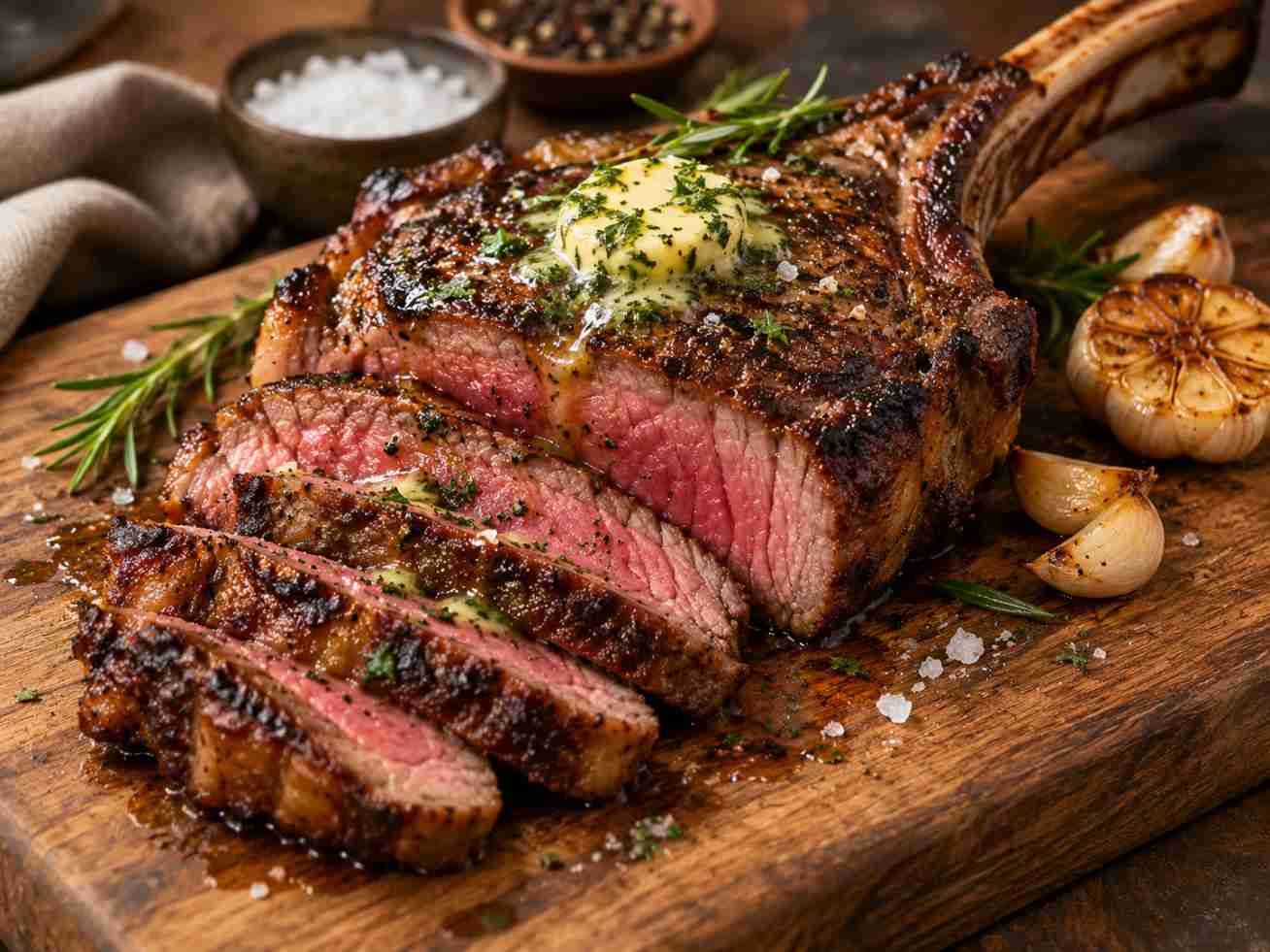
A tomahawk steak is the kind of cut that makes an ordinary dinner feel like an occasion. With its long rib bone, generous marbling, and thick, juicy center, it looks impressive before it even reaches the grill. But cooking such a large steak takes a little more care than preparing an everyday ribeye. The outside needs a beautifully browned crust while the center stays tender and evenly cooked.
The most reliable approach is to cook the steak gently in the oven before finishing it over high heat. This technique, known as reverse searing, gives you better control over the internal temperature and helps prevent the thick, overcooked outer layer that can develop when a large steak is grilled from start to finish. Add a little garlic and herb butter at the end, and you have a steakhouse-style meal without having to leave home.
What Is a Tomahawk Steak?
A tomahawk steak is essentially a thick-cut, bone-in ribeye with a long section of rib bone left attached. The bone is often cleaned of meat and fat to create its distinctive handle-like appearance. The cut gets its name from its resemblance to a tomahawk axe.
The real appeal, however, is the ribeye itself. This section of beef contains fine streaks of intramuscular fat, commonly called marbling. As the steak cooks, the fat contributes moisture, richness, and flavor. A good tomahawk usually weighs between 2 and 3 pounds, although larger cuts are available. Because part of that weight comes from the bone, one steak is generally enough to share between two or three people.
Recipe Overview
| Detail | Information |
|---|---|
| Recipe | Tomahawk Steak |
| Course | Main Course |
| Cuisine | American |
| Preparation Time | 15 minutes |
| Cooking Time | 50–75 minutes, approximately |
| Resting Time | 10 minutes |
| Total Time | 1 hour 15 minutes to 1 hour 40 minutes |
| Servings | 3 |
| Cooking Method | Reverse Sear (Oven and Grill) |
Ingredients for Tomahawk Steak
The beef is the main attraction, so there is no need to cover it with a complicated marinade. Salt, freshly ground pepper, and a little oil create a flavorful crust. Garlic butter is optional, but it adds a rich finishing touch that works particularly well with ribeye.
For the Steak
- 1 tomahawk steak, approximately 2.5 pounds (1.1 kg), about 2 inches thick
- 2 teaspoons kosher salt, or to taste
- 1 teaspoon freshly ground black pepper
- 1 tablespoon avocado oil or another high-smoke-point cooking oil
- 1 teaspoon finely chopped fresh rosemary, optional
For the Garlic Herb Butter
- 3 tablespoons unsalted butter, softened
- 2 garlic cloves, finely minced
- 1 teaspoon chopped fresh parsley
- 1/2 teaspoon fresh thyme leaves
- 1/2 teaspoon lemon zest
- A small pinch of black pepper
Also Read: Roasted Cauliflower Steak
How to Make Tomahawk Steak
The important thing to remember is that the thickness of the steak matters more than its weight. Two tomahawk steaks can weigh the same but cook at different speeds depending on the size of the bone and the thickness of the meat. A digital meat thermometer is the best way to get consistent results.
Step 1: Prepare and Season the Steak
Remove the tomahawk steak from its packaging and pat it thoroughly dry with paper towels. Moisture on the surface makes browning more difficult, so take a moment to dry the top, bottom, and sides.
Season the meat generously with kosher salt and freshly ground black pepper. If you have time, place the seasoned steak uncovered on a wire rack in the refrigerator for 4 to 12 hours. This allows the salt to penetrate the meat while the surface gradually dries. For a quicker preparation, season immediately before cooking instead.
Step 2: Preheat the Oven
Preheat your oven to 250°F (120°C). Position a wire rack over a rimmed baking tray and place the steak on the rack. This allows warm air to circulate around the meat, promoting more even cooking. Keep the long bone positioned so the steak fits safely inside the oven.
Step 3: Cook the Steak Slowly
Place the tray on the middle oven rack and insert an oven-safe meat thermometer into the thickest part of the steak, away from the bone and large pockets of fat.
For medium-rare steak, cook until the internal temperature reaches approximately 115–120°F (46–49°C). A steak around 2 inches thick may take 40–65 minutes, although actual cooking time depends on its thickness, starting temperature, and oven performance. Begin checking early rather than relying entirely on the clock.
At this stage, the steak will look relatively pale. That is completely normal. The final sear will take care of the color and crust.
Step 4: Prepare the Garlic Herb Butter
While the steak cooks, combine the softened butter, minced garlic, parsley, thyme, lemon zest, and black pepper in a small bowl. Mix until everything is evenly distributed. Refrigerate the butter briefly if you prefer a firmer consistency. You can prepare this mixture a day ahead and keep it covered in the refrigerator.
Step 5: Heat the Grill
When the steak is close to its target oven temperature, preheat a gas or charcoal grill to high heat. The cooking surface should be thoroughly hot before the beef goes on it. If using charcoal, arrange the coals to create both a hot searing zone and a cooler area where you can move the steak if flames become difficult to control.
Remove the steak from the oven and lightly coat the meat with avocado oil. The oil helps promote even contact and browning during the final cooking stage.
Step 6: Sear the Steak
Place the steak over the hot grill and sear for about 1–2 minutes per side, turning as needed until a deep brown crust develops. Use long tongs to carefully sear the fatty edges as well. Because ribeye contains a considerable amount of fat, dripping juices may cause flare-ups. Move the steak temporarily to a cooler section if flames become too strong.
Check the internal temperature frequently during this stage. For medium-rare, aim to remove the steak when it reaches approximately 125–130°F (52–54°C), allowing a little room for the temperature to rise as the meat rests. The exact increase will depend on the thickness of the steak and how aggressively it was seared.
Step 7: Rest and Finish with Butter
Transfer the steak to a clean cutting board or wire rack and let it rest for approximately 10 minutes. Resting allows the temperature to settle and reduces the amount of juice lost when the meat is sliced.
Place the garlic herb butter over the warm steak during the final few minutes of resting. It will gradually soften and melt over the crust, adding a subtle garlic aroma and a fresh herbal finish.
Step 8: Slice and Serve
Use a sharp knife to separate the meat from the long rib bone. Cut the steak into slices about 1/2 inch thick, working against the grain wherever possible. Arrange the slices on a warm serving platter and spoon over any remaining melted butter and resting juices. Serve immediately while the outside is still beautifully browned and the center is warm and tender.
Also Read: Cube Steak with Gravy
Tomahawk Steak Temperature Guide
The temperature inside the meat is a more accurate measure of doneness than color or cooking time. The following temperatures represent approximate finished temperatures after resting, rather than the point at which you should necessarily remove the steak from the heat.
| Doneness | Final Internal Temperature | Appearance |
|---|---|---|
| Rare | 120–125°F (49–52°C) | Cool red center |
| Medium Rare | 130–135°F (54–57°C) | Warm red-pink center |
| Medium | 140–145°F (60–63°C) | Warm pink center |
| Medium Well | 150–155°F (66–68°C) | Slightly pink center |
| Well Done | 160°F (71°C) or higher | Little or no pink |
Food Safety Note: The USDA recommends cooking whole beef steaks to a minimum internal temperature of 145°F (63°C), followed by a rest of at least 3 minutes. Rare and medium-rare preparations fall below that recommendation and carry additional food safety risk. Use a properly calibrated thermometer and choose a cooking temperature appropriate for those being served.
How to Cook Tomahawk Steak Without a Grill
You can still prepare a tomahawk steak if you do not have an outdoor grill. The easiest alternative is to finish it under the oven broiler, provided the steak and its bone fit safely inside your oven.
Follow the same low-temperature roasting method, but remove the steak slightly earlier, at approximately 110–115°F (43–46°C) for a medium-rare finish. Preheat the broiler and position the meat so that its upper surface is roughly 4–6 inches from the heating element. Keep the exposed bone away from direct contact with the element.
Broil the steak for 2–4 minutes per side, watching it constantly and checking its internal temperature. The precise time will vary with the broiler and the distance from the heat. If one portion is browning faster than another, carefully adjust the steak’s position. Remove it once the crust is developed and the meat is close to your chosen final temperature.
Let the steak rest before carving. Broilers vary considerably in strength, so watch carefully to prevent the fat from burning.
Also Read: Hamburger Steak with Gravy
What You Can Do Better
Choose the Right Thickness
A tomahawk should be thick enough to benefit from slow cooking. Look for a steak around 2 inches thick with visible, evenly distributed marbling. Extremely thin cuts are harder to reverse sear effectively because their centers heat too quickly during the final browning stage.
Season Ahead When Possible
Salting the steak several hours before cooking improves seasoning and helps dry its surface. Avoid salting it and then leaving it uncovered at room temperature for an extended period. If you are preparing ahead, keep it in the refrigerator until you are ready to cook.
Use a Thermometer Instead of Guessing
A large tomahawk is an expensive piece of beef, and cutting into the center repeatedly is not an ideal way to check doneness. A reliable digital thermometer takes the uncertainty out of the process. Always measure the thickest portion of the meat without touching the bone.
Keep the Butter for the Finish
Butter burns relatively easily over high heat. Rather than placing it on the steak before the final sear, add it afterward. This preserves the delicate flavor of the garlic and herbs without turning the butter bitter.
Control the Grill Flames
The marbling that makes ribeye delicious can also create sudden flare-ups. Keep a cooler section of the grill available, avoid leaving the steak unattended, and move it away from direct flames whenever necessary. A rich brown crust tastes better than a blackened, bitter exterior.
Slice Only When Ready to Eat
Carving the steak too early causes it to cool more quickly. Leave it whole during resting, then slice just before serving. This also makes for a better presentation when sharing one large steak at the table.
What to Serve with Tomahawk Steak
Because tomahawk steak is rich and substantial, side dishes with contrasting textures or a little acidity work particularly well. Crispy roasted potatoes are a natural choice, especially when seasoned with rosemary and sea salt. Creamy mashed potatoes make the meal feel more traditional, while grilled asparagus, green beans, or roasted broccoli bring some freshness to the plate.
For a lighter dinner, try a simple arugula salad with shaved Parmesan and lemon dressing. The peppery greens help balance the richness of the beef. A spoonful of chimichurri or a small amount of horseradish sauce also works well if you prefer something sharper than garlic butter.
Also Read: Beef Cube Steak Recipe
Nutritional Information
The following values are approximate estimates for one serving when the recipe is divided among three people. They assume approximately 750 g of edible raw steak after accounting for the bone and trimming, along with the listed oil and garlic butter. Actual nutrition will vary significantly depending on marbling, fat trimming, cooking losses, and the amount of butter consumed.
| Nutrient | Approximate Amount Per Serving |
|---|---|
| Calories | 750 kcal |
| Protein | 47 g |
| Total Fat | 62 g |
| Saturated Fat | 26 g |
| Carbohydrates | 1 g |
| Fiber | 0 g |
| Sugar | 0 g |
| Cholesterol | 190 mg |
| Sodium | 850 mg |
| Iron | 4 mg |
Nutrition values are estimates, not laboratory-tested figures. They exclude side dishes and optional sauces beyond the garlic herb butter included in the recipe.
How to Store and Reheat Leftover Steak
Leftover tomahawk steak can make an excellent sandwich, steak salad, or breakfast hash the following day. Let the cooked meat cool briefly, then transfer it to an airtight container and refrigerate within 2 hours of cooking. Store it at 40°F (4°C) or below and use within 3–4 days.
For the best texture, refrigerate the meat in larger pieces rather than slicing everything in advance. When reheating, place the steak in a covered oven-safe dish with a small splash of beef broth. Warm it gently in the oven until heated through. For food safety, reheat leftovers to 165°F (74°C). This will cook a previously medium-rare steak further, so another good option is to use thinly sliced leftovers cold in a sandwich or salad.
If you want to freeze the leftovers, wrap the meat tightly and place it in a freezer-safe container or bag. For the best eating quality, aim to use it within 2–3 months.
Also Read: Steak Fried Rice
Frequently Asked Questions
Is a tomahawk steak better than a regular ribeye?
Both steaks come from the same general section of beef, so the underlying flavor and texture are very similar when the quality and marbling are comparable. A tomahawk offers a dramatic presentation and is usually cut thicker, but its long bone does not automatically make the meat taste better. A high-quality boneless ribeye can be just as delicious.
How long does it take to cook a tomahawk steak?
A 2-inch-thick tomahawk generally needs around 40–65 minutes in a 250°F oven, followed by a short high-heat sear and resting time. Larger or thicker steaks may need longer. Always follow internal temperature rather than treating the cooking time as an exact measurement.
Do you need to marinate tomahawk steak?
No. A well-marbled ribeye already has plenty of natural flavor. Salt and pepper are usually sufficient, although fresh herbs, garlic butter, or a sauce can add another layer of flavor. Strong marinades may overwhelm the beef rather than improve it.
Should you wrap the bone in foil?
Wrapping the exposed bone is generally unnecessary for the low-temperature oven stage. If the cleaned bone begins darkening too quickly during high-heat finishing, you can protect it with a small piece of foil, keeping the foil away from direct flames and heating elements.
Can you cook a frozen tomahawk steak?
It is better to thaw it completely before using this method. Because the cut is so thick, starting from frozen makes it harder to achieve an evenly cooked center. Thaw the steak in the refrigerator on a tray, allowing enough time for the entire piece to defrost safely. Never thaw it on the kitchen counter.
How many people does one tomahawk steak feed?
A tomahawk weighing approximately 2.5 pounds, including the bone, will generally serve two hungry adults or three people when accompanied by side dishes. The amount of usable meat depends on the length of the bone and how much fat is trimmed away.