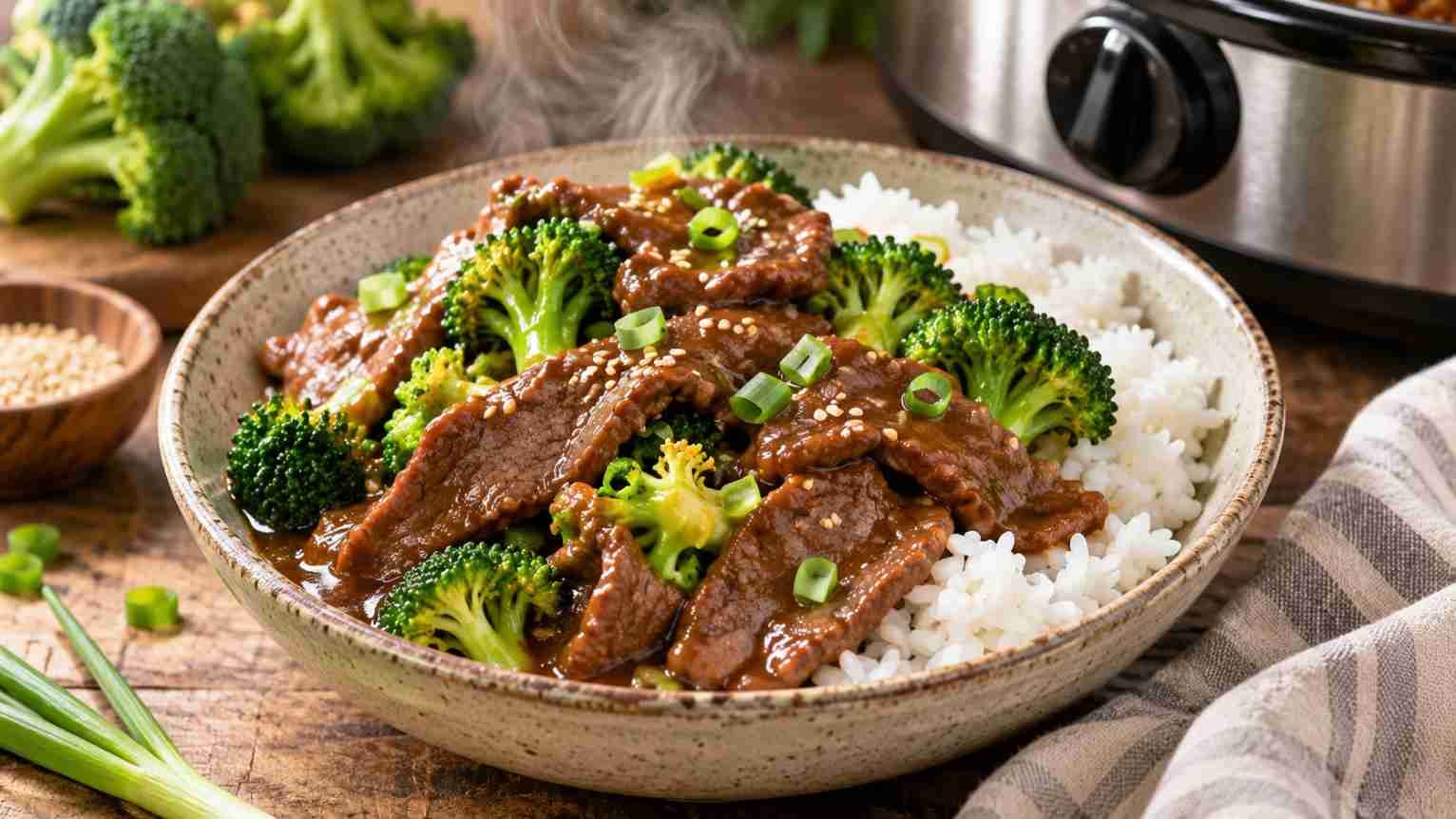
Some dinners are worth waiting for, especially when most of the cooking happens without you standing over the stove. Slow Cooker Beef and Broccoli is one of those meals. The beef becomes tender as it cooks in a savory garlic and ginger sauce, while the broccoli adds a fresh bite that keeps the dish from feeling too heavy.
This is a good recipe to have around when you want something similar to Chinese takeout but would rather make dinner at home. It uses everyday ingredients, requires very little preparation, and makes enough for four generous servings. Spoon it over steamed rice, and you have a satisfying meal with plenty of sauce to go around.
The trick is knowing when to add the broccoli. Beef benefits from several hours of gentle cooking, but broccoli doesn’t. Keeping the vegetables separate until the end makes a noticeable difference to both the texture and appearance of the finished dish.
Recipe Overview
| Recipe Details | Information |
|---|---|
| Preparation Time | 15 minutes |
| Cooking Time | 4–5 hours on LOW or 2–3 hours on HIGH, plus finishing time |
| Total Time | Approximately 4 hours 30 minutes to 5 hours 30 minutes on LOW |
| Servings | 4 |
| Course | Main Course |
| Cuisine | Chinese-American Inspired |
| Cooking Method | Slow Cooker |
Ingredients for Slow Cooker Beef and Broccoli
You don’t need a long shopping list for this recipe. Most of the flavor comes from the sauce, which combines soy sauce, garlic, ginger, and a little sweetness. Choose a beef cut that can handle slow cooking rather than an expensive steak that is better suited to quick cooking.
For the Beef and Broccoli
- 1 1/2 pounds (680 g) boneless beef chuck roast, trimmed and cut into thin strips
- 4 cups fresh broccoli florets (about 300–350 g)
- 1 tablespoon neutral cooking oil, optional
- 1 tablespoon sesame seeds, for garnish
- 2 green onions, thinly sliced
- Cooked white or brown rice, for serving
For the Sauce
- 1/2 cup low-sodium soy sauce
- 3/4 cup low-sodium beef broth
- 3 tablespoons packed brown sugar
- 4 garlic cloves, finely minced
- 1 tablespoon freshly grated ginger
- 1 tablespoon oyster sauce
- 2 teaspoons toasted sesame oil
- 1 tablespoon rice vinegar
- 1/4 teaspoon freshly ground black pepper
- 1/4 teaspoon red pepper flakes, optional
For Thickening the Sauce
- 2 tablespoons cornstarch
- 3 tablespoons cold water
Also Read: Quick and Easy Meatball Sliders
Choosing the Best Beef
Beef chuck roast is a particularly good choice for this dish. It contains connective tissue that softens during slow cooking, giving the finished beef a tender texture without requiring an expensive cut.
Look for a piece with moderate marbling and trim away large pieces of exterior fat. Slice the beef against the grain so the muscle fibers are shorter and easier to chew. Strips around 1/4 to 1/2 inch thick work well, although the exact thickness is less important than keeping the pieces reasonably uniform.
Boneless blade roast is another option. Leaner cuts can work, but they may become dry or stringy if cooked too long. Avoid using delicate cuts such as tenderloin, which are expensive and don’t benefit much from extended cooking.
How to Make Slow Cooker Beef and Broccoli
Step 1: Prepare the Beef
Place the beef on a cutting board and remove any large pieces of fat. Cut it into evenly sized strips, slicing across the direction of the muscle fibers. If the beef is difficult to slice, place it in the freezer for about 15–20 minutes to firm it slightly.
Transfer the strips to the slow cooker and spread them out so the sauce can reach the meat evenly.
Step 2: Mix the Sauce
In a medium bowl, whisk together the low-sodium soy sauce, beef broth, brown sugar, minced garlic, grated ginger, oyster sauce, sesame oil, rice vinegar, black pepper, and optional red pepper flakes. Stir until most of the sugar has dissolved.
Pour the mixture over the beef. Turn the meat gently with a spoon or tongs to coat it. The liquid does not need to completely cover the beef because the meat will release additional juices as it cooks.
Step 3: Cook Until the Beef Is Tender
Cover the slow cooker with its lid and cook on LOW for approximately 4–5 hours or HIGH for 2–3 hours, until the beef is fork-tender. Cooking times vary depending on the thickness of the meat and the slow cooker model.
Try not to lift the lid repeatedly. Each time you open it, heat escapes and the cooking process slows down. Start checking the beef near the earlier end of the suggested cooking range. The meat should be tender but should not have completely fallen apart.
Step 4: Thicken the Sauce
Once the beef is tender, stir the cornstarch and cold water together in a small bowl until smooth. Pour this slurry into the hot liquid in the slow cooker, stirring gently to distribute it without breaking the beef into small pieces.
Cover and cook on HIGH for another 15–25 minutes, or until the sauce begins to thicken. If your slow cooker heats slowly or the sauce is still thin, transfer the liquid to a saucepan and simmer it briefly until it reaches your preferred consistency, then return it to the beef.
The sauce should lightly coat the back of a spoon rather than becoming thick and sticky. Remember that it will thicken a little more as it cools.
Step 5: Cook the Broccoli Separately
While the sauce thickens, bring a small amount of water to a simmer in a saucepan fitted with a steamer basket. Add the broccoli florets, cover, and steam for approximately 3–5 minutes, depending on their size.
The broccoli should be bright green and tender enough to pierce with a fork while still retaining some firmness. Drain it well. Excess water clinging to the florets can dilute the sauce when everything is mixed together.
Step 6: Combine and Serve
Add the steamed broccoli to the slow cooker and fold it gently into the beef and sauce. Let everything sit together for a minute or two so the vegetables become coated.
Serve the beef and broccoli over freshly cooked rice. Finish with sesame seeds and sliced green onions. If you enjoy a little heat, add a small pinch of chili flakes just before serving.
Also Read: Beef and Noodle Casserole
What You Can Do Better
This recipe is straightforward, but a few small decisions can improve the final result. The biggest difference usually comes from controlling the sauce consistency and preventing the broccoli from overcooking.
Brown the Beef for More Flavor
Browning the beef isn’t essential, which is useful when you want a quick preparation. However, if you have an extra ten minutes, heat a tablespoon of neutral oil in a large skillet and sear the beef in small batches before transferring it to the slow cooker.
Let the meat develop some color without cooking it all the way through. The browned surface adds a deeper, roasted flavor that makes the finished sauce more interesting. Avoid overcrowding the skillet, as the beef will steam instead of brown.
Keep the Broccoli Out Until the End
Adding raw broccoli at the beginning might seem convenient, but it will spend far too long in the heat. Instead of remaining green and slightly crisp, it can become soft, dull, and watery.
Steaming it separately takes only a few minutes and gives you much more control. For an especially crisp texture, cook the broccoli just until tender-crisp before mixing it with the sauce.
Adjust the Sauce Before Serving
Different brands of soy sauce and oyster sauce contain different amounts of salt. Taste the finished sauce before adding anything else. If it seems too salty, add a little unsalted broth or water. If you prefer a sweeter sauce, stir in a small amount of brown sugar.
For extra tang, add a splash of rice vinegar. If the sauce seems too sweet, a little additional vinegar can help balance it without adding more salt.
Don’t Overcook the Beef
Slow cooking is forgiving, but that doesn’t mean beef should cook indefinitely. Thinly sliced meat can become stringy or break into very small pieces after excessive cooking. Start checking at the minimum recommended time, particularly if your slow cooker runs hot.
Use Fresh Ginger and Garlic
Garlic powder and ground ginger are convenient substitutes, but fresh ingredients make the sauce more aromatic. Grate the ginger finely so it blends into the cooking liquid, and mince the garlic rather than leaving it in large pieces.
Also Read: Pumpkin Mac and Cheese
Variations You Can Try
Spicy Beef and Broccoli
For a hotter version, add one or two teaspoons of chili garlic sauce to the cooking liquid. Sriracha also works, although it brings extra sweetness and acidity. Start with a small amount, then adjust the heat after cooking.
Beef and Broccoli with Mushrooms
Sliced mushrooms are an easy addition. For better texture, sauté them separately until their moisture evaporates, then fold them into the finished dish with the broccoli. This also prevents the cooking sauce from becoming overly watery.
Lower-Sugar Version
Reduce the brown sugar to one tablespoon if you prefer a more savory sauce. The flavor will be less sweet than a typical takeout-inspired version, but the garlic, ginger, and sesame oil will still provide plenty of character.
Extra Vegetable Version
Add steamed snow peas, sliced bell peppers, or lightly cooked carrots along with the broccoli. These vegetables add color and texture without changing the basic cooking method. Keep them tender-crisp rather than cooking them for several hours with the beef.
What to Serve with Beef and Broccoli
Steamed jasmine rice is a natural choice because it absorbs the sauce without competing with the garlic and ginger. Long-grain white rice and brown rice work equally well, depending on what you have available.
For something different, serve the beef and broccoli with plain rice noodles. You can also spoon it over cauliflower rice for a lighter meal. If you are serving several people, a simple cucumber salad makes a refreshing side dish and helps balance the rich sauce.
How to Store and Reheat Leftovers
Refrigerating
Transfer leftovers to shallow airtight containers and refrigerate within two hours of cooking. Store them at 40°F (4°C) or below and use within 3–4 days. If you plan to eat the dish over several days, keeping the broccoli separate from the beef and sauce helps preserve its texture.
Freezing
The cooked beef and sauce freeze well for up to 2–3 months for best quality. Allow the food to cool promptly, transfer it to freezer-safe containers, and leave a little room for expansion. Broccoli can also be frozen, but its texture will soften after reheating.
For the freshest result, freeze the beef and sauce without the broccoli and prepare fresh vegetables when you are ready to serve.
Reheating
Thaw frozen leftovers overnight in the refrigerator. Reheat the beef and sauce in a covered saucepan over medium-low heat, stirring occasionally. Add a splash of broth or water if the sauce has become too thick. Heat leftovers thoroughly to 165°F (74°C).
If the broccoli was stored separately, warm it briefly and mix it with the beef just before eating. Avoid simmering it for too long because it will lose its firm texture.
Also Read: Beefaroni Recipe
Nutritional Information
The following values are estimates for one serving when the recipe is divided into four portions. They include the beef, broccoli, sauce, and garnish but exclude rice or other side dishes. Actual nutrition will vary depending on the beef’s fat content, how much fat is trimmed, and the brands of sauces used.
| Nutrient | Estimated Amount per Serving |
|---|---|
| Calories | Approximately 435 kcal |
| Protein | 38 g |
| Total Carbohydrates | 22 g |
| Dietary Fiber | 3 g |
| Total Sugars | 12 g |
| Total Fat | 22 g |
| Saturated Fat | 8 g |
| Cholesterol | 115 mg |
| Sodium | 1,100 mg |
| Potassium | Approximately 750 mg |
Nutrition note: These figures are approximate planning estimates, not a laboratory analysis or a verified calculation from specific product labels. The sodium content can be substantial even with reduced-sodium soy sauce, so choose your ingredients accordingly.
Frequently Asked Questions
Can I use frozen broccoli?
Yes, frozen broccoli works in this recipe. Steam or microwave it separately according to the package directions, stopping before it becomes too soft. Drain it thoroughly before adding it to the beef. Frozen broccoli generally has a softer texture than fresh broccoli, so take care not to overcook it.
Can I cook the beef on LOW for eight hours?
It depends on the beef cut, the thickness of the slices, and your slow cooker. Larger chunks of chuck roast can tolerate a longer cooking period than thin strips. For this recipe, begin checking after four hours on LOW. Cooking thinly sliced beef for eight hours may cause it to fall apart.
Do I have to brown the beef first?
No. You can place the raw beef directly in the slow cooker and still get a flavorful meal. Browning adds another layer of flavor, but the sauce contains enough garlic, ginger, soy sauce, and other seasonings to make the simpler method worthwhile.
Why is my sauce too thin?
Beef releases moisture as it cooks, so the finished liquid can be thinner than expected. Make sure the cornstarch is mixed with cold water before adding it to the hot sauce. The sauce also needs sufficient heat to thicken. If necessary, simmer the liquid in a separate saucepan until it reduces slightly.
Can I make this recipe gluten-free?
Yes, with suitable substitutions. Replace regular soy sauce with a certified gluten-free tamari and use gluten-free beef broth. Oyster sauce may also contain wheat, so check its label and choose a gluten-free variety. Verify the labels of all packaged ingredients before cooking.
Can I prepare everything the night before?
You can slice the beef, mix the sauce, and prepare the broccoli ahead of time. Refrigerate the raw beef and sauce mixture in a covered food-safe container at 40°F (4°C) or below. Keep the broccoli separate. Transfer the refrigerated ingredients to the slow cooker when you are ready to cook, following your appliance’s instructions for using chilled ingredients.
Can I double the recipe?
Yes, provided your slow cooker is large enough. Avoid filling the appliance beyond the manufacturer’s recommended capacity. A larger batch may need more time to reach cooking temperature, so check the beef for tenderness rather than relying only on the clock. Cook the broccoli in batches if necessary.