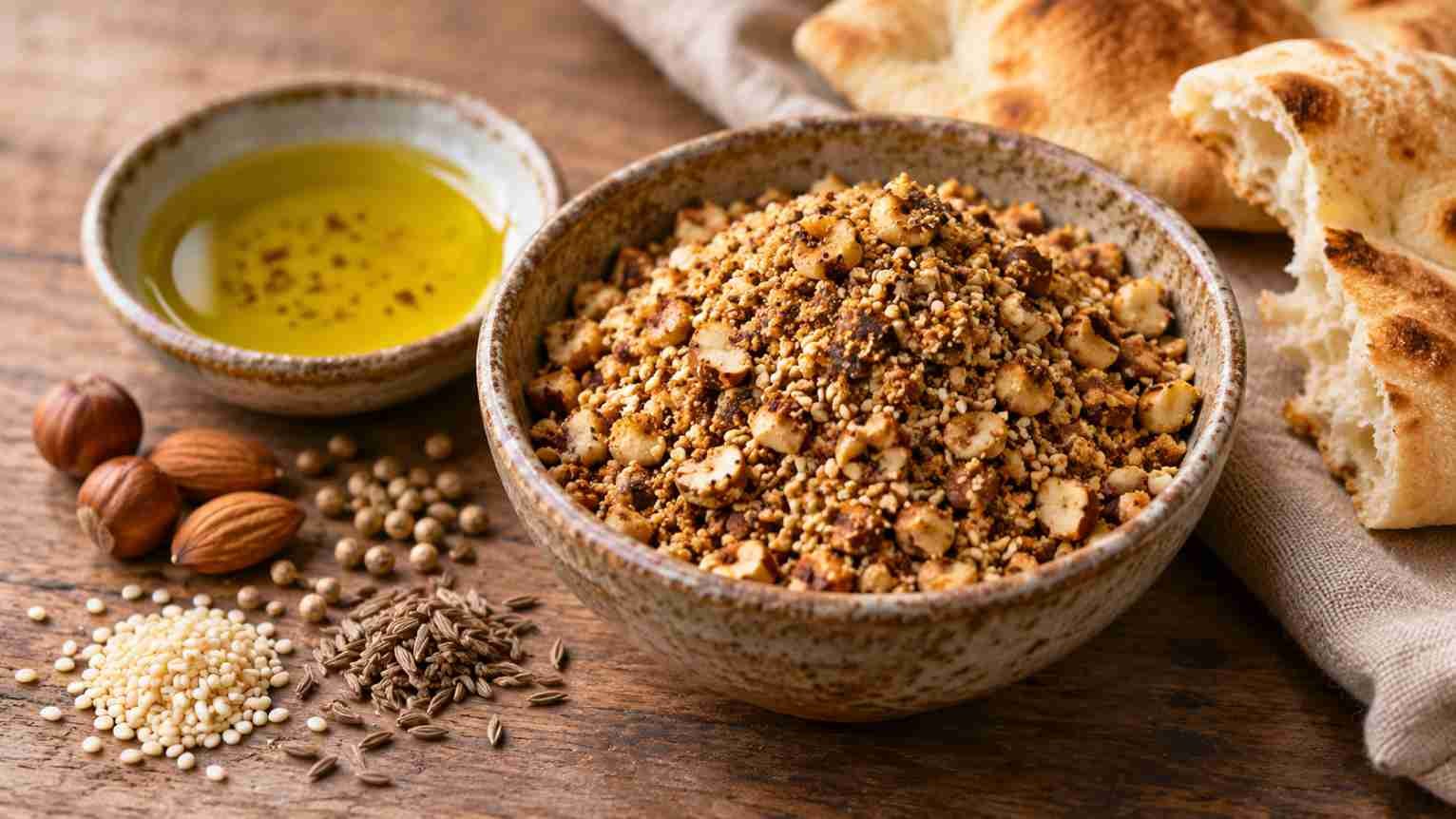
Dukkah is one of those simple kitchen staples that can make an ordinary meal taste far more interesting. Made with toasted nuts, sesame seeds, coriander, cumin, and fragrant spices, this traditional Egyptian seasoning has a crunchy texture and a wonderfully warm, nutty flavor. A spoonful over roasted vegetables, eggs, or freshly baked bread adds plenty of character without requiring much extra cooking.
Unlike finely ground spice mixes, dukkah is deliberately coarse. You should be able to taste the individual pieces of toasted nuts and seeds along with the earthy spices. It is particularly good with warm bread and olive oil, but keeping a small jar in the pantry opens up plenty of other possibilities.
This homemade version combines hazelnuts, almonds, sesame seeds, and pistachios with a carefully balanced mixture of spices. It takes less than half an hour, including cooling time, and makes enough to use throughout the week or share with someone who enjoys cooking.
What Is Dukkah?
Dukkah, sometimes spelled duqqa or dukka, is a traditional Egyptian condiment made by combining toasted nuts, seeds, and spices. Its name is associated with an Arabic word meaning to pound or crush, which describes the preparation method. Traditionally, the ingredients are crushed using a mortar and pestle rather than ground into a smooth powder.
There is no single fixed recipe for dukkah. Some households prefer hazelnuts, while others use almonds, peanuts, or pistachios. Coriander and cumin are among the most recognizable spices, although fennel, black pepper, and other seasonings may be included. What remains consistent is the satisfying crunch and deeply toasted flavor.
In Egypt, dukkah is commonly eaten with bread dipped first in olive oil and then into the nut mixture. It can also be used as a seasoning for vegetables, fish, chicken, salads, and dips.
Dukkah Recipe Overview
| Recipe Details | Information |
|---|---|
| Recipe Name | Homemade Dukkah |
| Cuisine | Egyptian / Middle Eastern |
| Course | Condiment, Seasoning, Appetizer |
| Preparation Time | 5 minutes |
| Cooking Time | 10 minutes |
| Cooling Time | 10 minutes |
| Total Time | 25 minutes |
| Yield | Approximately 1 cup |
| Servings | 16 (1 tablespoon each) |
| Difficulty | Easy |
| Cooking Method | Dry Toasting and Crushing |
Also Read: Spinach Artichoke Dip Recipe
Ingredients for Homemade Dukkah
Most of the ingredients are easy to find in supermarkets or stores selling nuts and spices. Fresh, unsalted nuts and whole spices give the finished mixture its best flavor.
| Ingredient | Quantity | Purpose |
|---|---|---|
| Raw hazelnuts | 1/3 cup (45 g) | Provide a rich, roasted nut flavor |
| Raw almonds | 1/4 cup (35 g) | Add crunch and mild sweetness |
| Unsalted pistachios | 2 tablespoons (15 g) | Bring color and a delicate nutty taste |
| White sesame seeds | 3 tablespoons (27 g) | Add toasted aroma and texture |
| Whole coriander seeds | 2 teaspoons | Provide warm, citrusy flavor |
| Whole cumin seeds | 1 teaspoon | Add an earthy, slightly smoky character |
| Fennel seeds | 1/2 teaspoon | Provide subtle sweetness |
| Freshly ground black pepper | 1/4 teaspoon | Add gentle heat |
| Fine sea salt | 1/2 teaspoon, or to taste | Balance the flavors |
| Red pepper flakes (optional) | 1/4 teaspoon | Add mild spiciness |
Choosing the Right Nuts and Spices
Hazelnuts: Hazelnuts give dukkah a distinctive roasted flavor. If you are using nuts with skins, roasting makes the skins easier to remove. Rub the warm hazelnuts in a clean kitchen towel to remove most of the loose skin.
Almonds: Whole almonds or blanched almonds both work. The skins of almonds are less bitter than those of hazelnuts, so removing them is optional.
Pistachios: Unsalted pistachios add a pleasant color and a slightly buttery taste. Walnuts or cashews make useful replacements.
Sesame seeds: White sesame seeds are a classic choice. They toast quickly, so they need attention to prevent burning.
Coriander and cumin: Whole seeds are worth using because their flavor becomes more pronounced after toasting. Ground spices can be substituted, but they should be added after the nuts have cooled.
Fennel: A small amount provides a delicate aromatic sweetness. Too much can overpower the coriander and cumin.
Also Read: Greek Tzatziki Sauce
How to Make Dukkah at Home
The preparation is straightforward, but the order in which you toast the ingredients makes a difference. Nuts need more time in the pan than small seeds, and crushing everything while hot can make the mixture oily.
Step 1: Prepare the Nuts
Measure the hazelnuts, almonds, and pistachios. Roughly chop any particularly large nuts so they toast evenly. If the hazelnuts still have their skins, you can roast them separately and rub away the loose skins before proceeding.
Step 2: Toast the Nuts
Place a large, dry frying pan over medium-low heat. Add the hazelnuts and almonds, stirring regularly for about 5 to 7 minutes. When they begin to smell fragrant and develop a light golden color, add the pistachios and continue cooking for another 1 to 2 minutes. Transfer the nuts to a plate to cool. Cooking times will vary depending on the pan and whether the nuts were previously roasted.
Step 3: Toast the Sesame Seeds
Add the sesame seeds to the same dry pan. Stir constantly for approximately 2 to 3 minutes, until they turn lightly golden and release a nutty aroma. Sesame seeds can change from perfectly toasted to burnt very quickly, so remove them from the pan as soon as they are ready.
Step 4: Toast the Whole Spices
Reduce the heat to low. Add the coriander seeds, cumin seeds, and fennel seeds to the pan. Toast for approximately 1 to 2 minutes, shaking the pan frequently. Once the spices become fragrant, transfer them to the plate with the nuts and sesame seeds. Avoid letting them darken excessively, as burnt spices will leave a bitter aftertaste.
Step 5: Allow Everything to Cool
Leave the toasted ingredients for approximately 10 minutes, or until completely cool. This step is particularly important if you are using a food processor. Warm nuts release their natural oils more easily, which can cause the mixture to clump together instead of remaining crumbly.
Step 6: Crush the Ingredients
Place the cooled nuts, sesame seeds, and toasted spices in a small food processor. Add the black pepper, salt, and optional red pepper flakes. Pulse briefly several times, checking the texture between pulses. Stop when the mixture resembles coarse breadcrumbs with small, visible pieces of nuts. If you prefer a more traditional preparation, crush the ingredients in small batches using a mortar and pestle.
Step 7: Taste and Adjust
Taste a small amount of dukkah. Add a little more salt if necessary, or a pinch of black pepper for additional warmth. If the flavor seems too heavily spiced, mix in a tablespoon of extra toasted nuts or sesame seeds.
Step 8: Serve or Store
Transfer the finished dukkah to a clean, completely dry airtight jar. It is ready to serve immediately, although allowing the mixture to rest for a short while helps the flavors settle together. Stir or shake the jar before serving because the smaller spice particles naturally collect near the bottom.
Also Read: 3 Ingredient Chili Cheese Dip
How to Serve Dukkah
The traditional bread-and-olive-oil combination is a wonderful place to start, but dukkah is versatile enough to use in both everyday cooking and special meals.
With Bread and Olive Oil
Pour good-quality extra virgin olive oil into a shallow bowl and place dukkah in another. Serve with warm pita bread, flatbread, sourdough, or freshly baked rolls. Dip a piece of bread into the olive oil, then press it into the dukkah so the crunchy mixture sticks. The combination of soft bread, fruity olive oil, and aromatic nuts is simple but satisfying.
On Roasted Vegetables
Sprinkle dukkah over roasted carrots, cauliflower, sweet potatoes, pumpkin, or zucchini just before serving. It adds texture to vegetables that have become soft during roasting. A little lemon juice or yogurt sauce makes an excellent finishing touch.
With Chicken and Fish
Use dukkah as a finishing seasoning for grilled chicken, baked salmon, or pan-seared white fish. For a crunchy coating, mix it with breadcrumbs and press the mixture onto the protein before cooking. Keep the heat moderate because the nuts can burn under intense direct heat.
With Eggs and Breakfast Dishes
A spoonful of dukkah makes scrambled eggs, boiled eggs, avocado toast, and savory breakfast bowls much more interesting. It is especially good over poached eggs served with thick yogurt and a drizzle of olive oil.
As a Topping for Dips and Salads
Try sprinkling dukkah over hummus, labneh, whipped feta, or a simple cucumber and tomato salad. Its crunch contrasts nicely with creamy dips and juicy vegetables.
What You Can Do Better
Making good dukkah is mostly about getting the toast level and texture right. A few small adjustments can improve the flavor considerably.
Toast Ingredients Separately
Nuts, sesame seeds, and whole spices do not toast at the same speed. Cooking them separately gives you greater control and reduces the risk of burning the smaller ingredients while waiting for the nuts to brown.
Keep the Texture Coarse
A common mistake is processing dukkah until it resembles ordinary ground seasoning. The mixture should contain small pieces of nuts and seeds that you can actually feel when eating it. A few quick pulses are usually enough.
Start With Fresh Spices
Old coriander and cumin seeds may still smell slightly aromatic, but they lack the lively flavor of fresh spices. Buy whole spices in manageable quantities and store them away from heat, moisture, and sunlight.
Be Careful With Salt
Dukkah is often eaten with bread, cheese, or other foods that may already contain salt. Start with the recommended quantity and adjust after crushing. If you plan to use the mixture mainly as a topping for salty dishes, consider reducing the salt slightly.
Experiment With Different Nuts
There is no need to use exactly the same combination every time. You can prepare a simpler batch with almonds and sesame seeds, or try walnuts for a deeper, slightly earthy flavor. Just remember that different nuts have different oil contents and toasting times.
Add Dukkah at the Right Time
For roasted vegetables and grilled meats, adding dukkah near the end of cooking or just before serving protects its flavor and crunch. Leaving the mixture in a very hot oven for too long can burn the nuts and turn the spices bitter.
Also Read: Easy Homemade Teriyaki Sauce
Dukkah Variations Worth Trying
Almond Dukkah
Replace the hazelnuts and pistachios with an equal quantity of almonds. This version is slightly milder and works particularly well over salads, grilled vegetables, and yogurt-based dips.
Pistachio Dukkah
Use pistachios as the main nut and reduce the almonds. The mixture develops a lovely green color and a rich taste that pairs nicely with roasted carrots, feta cheese, and flatbread.
Spicy Dukkah
Increase the red pepper flakes to 1/2 teaspoon or add a small pinch of cayenne pepper. This variation is useful for seasoning chicken, roasted potatoes, and grilled vegetables.
Peanut Dukkah
Replace the more expensive nuts with unsalted roasted peanuts. The result is more economical while still delivering a satisfying crunch. It is not identical to the hazelnut version, but it is excellent over noodles, vegetables, and savory snacks.
How to Store Homemade Dukkah
Because dukkah contains nuts and seeds, proper storage is important. Their natural oils can gradually become rancid, especially in a warm kitchen.
| Storage Method | Recommended Duration | Instructions |
|---|---|---|
| Cool, dry pantry | Up to 2 weeks | Keep in an airtight jar, away from sunlight and heat. |
| Refrigerator | Up to 2 months | Store in a tightly sealed container to prevent moisture and odors from entering. |
| Freezer | Up to 3 months for best flavor | Use a freezer-safe airtight container and remove only what you need. |
Always use a clean, dry spoon when taking dukkah from the jar. If it develops a stale, paint-like, or unpleasantly bitter smell, discard it. Storage times are approximate and assume that the nuts and seeds were fresh when the mixture was prepared.
Dukkah Nutrition Information
Dukkah is a concentrated mixture of nuts and seeds, so it provides healthy unsaturated fats, plant-based protein, fiber, and minerals. It is also relatively calorie-dense, which is worth considering when using it as a generous topping.
The following values are approximate estimates for one tablespoon (about 10 grams) of this homemade recipe. Actual nutritional content will depend on the nuts used, the final yield, and the quantity of salt added.
| Nutrient | Amount Per Serving |
|---|---|
| Calories | 55 kcal |
| Total Fat | 4.8 g |
| Saturated Fat | 0.5 g |
| Carbohydrates | 2.2 g |
| Dietary Fiber | 1.1 g |
| Total Sugars | 0.4 g |
| Protein | 1.9 g |
| Sodium | 75 mg |
| Cholesterol | 0 mg |
Nutrition disclaimer: Values are estimates, not laboratory-tested figures. They exclude any bread, olive oil, meat, vegetables, or other foods served with the dukkah.
Also Read: Spinach Sauce Recipe
Frequently Asked Questions About Dukkah
Is dukkah the same as za’atar?
No. Both are popular seasonings associated with Middle Eastern cooking, but they have different ingredients and textures. Dukkah is primarily a crunchy combination of nuts, seeds, and spices. Za’atar is generally a finer herbal seasoning containing ingredients such as dried za’atar herb or thyme, sumac, sesame seeds, and salt, with regional variations.
Can I make dukkah without hazelnuts?
Yes. Almonds, walnuts, cashews, pistachios, and peanuts can all be used. The flavor will change depending on your selection, but the essential combination of toasted nuts, seeds, and fragrant spices will remain.
Can I prepare dukkah without a food processor?
Absolutely. A mortar and pestle is a traditional and effective option. You can also place the cooled nuts and seeds in a sturdy food-safe bag and crush them gently with a rolling pin. Grind the toasted whole spices separately if necessary, then combine everything.
Is homemade dukkah gluten-free?
This recipe contains no gluten-containing ingredients. However, anyone who needs to avoid gluten strictly should check that the packaged nuts, seeds, and spices have not been cross-contaminated during processing or handling. Dukkah also contains tree nuts and sesame, both important food allergens.
Can I use ground coriander and cumin?
Yes. Substitute approximately 1 teaspoon of ground coriander for the 2 teaspoons of whole coriander seeds, and 1/2 teaspoon of ground cumin for the 1 teaspoon of whole cumin seeds. Add the ground spices after the toasted nuts and seeds have cooled. The flavor will be slightly different, but the recipe will still work.
Why has my dukkah turned into a paste?
This usually happens when the nuts are processed for too long or while they are still warm. Nuts contain natural oils that are released during grinding. Use short pulses and stop as soon as you have a coarse, crumbly mixture. If necessary, mix in additional toasted sesame seeds to improve the texture.
Can dukkah be made ahead of time?
Yes, and it is a convenient seasoning to prepare ahead for meals throughout the week. Store it in a tightly sealed jar and shake or stir before using. For the freshest flavor, prepare smaller batches instead of keeping a large quantity at room temperature for months.