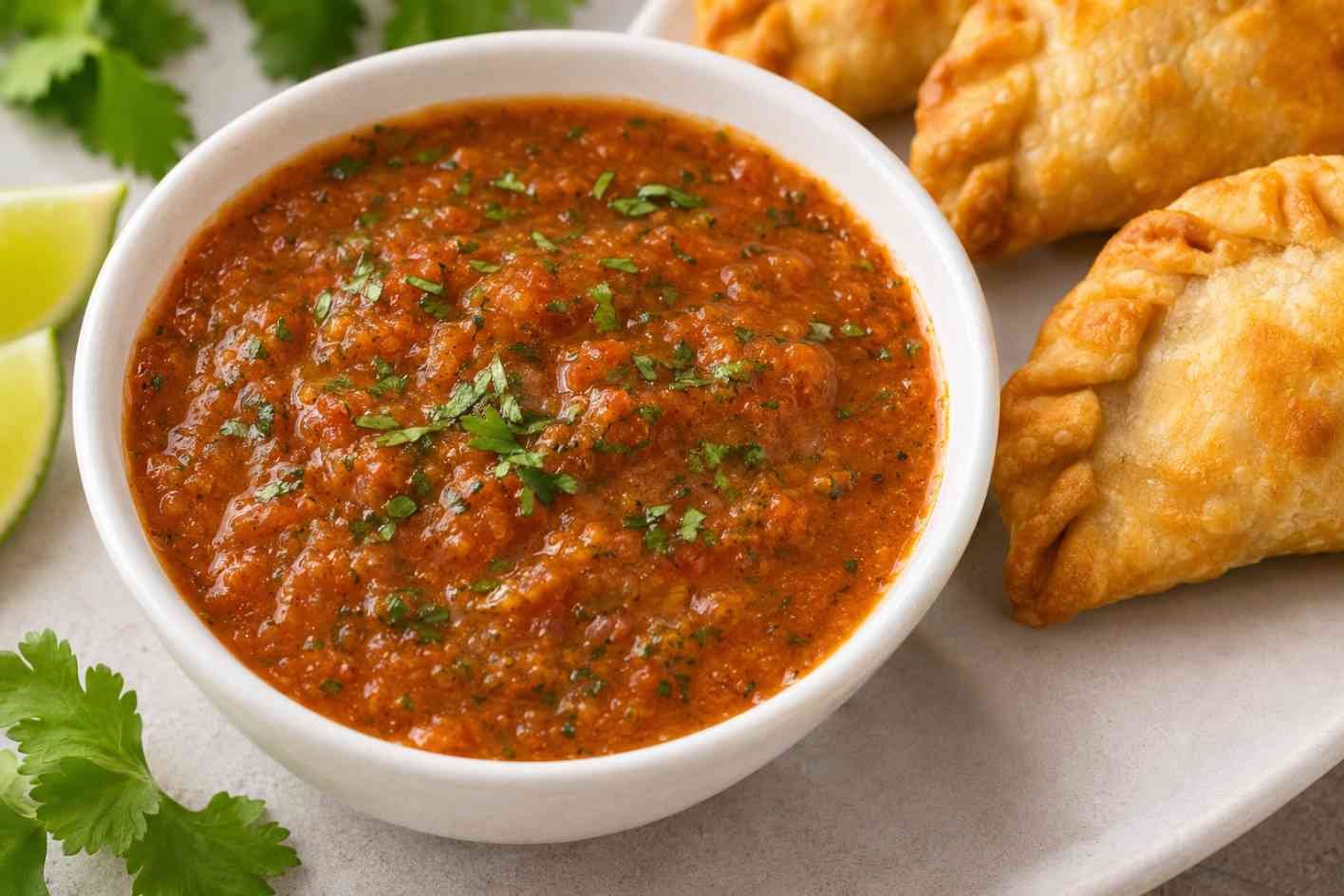
A good empanada is delicious on its own, but the right dipping sauce makes every bite even better. This homemade empanada sauce combines roasted tomatoes, garlic, lime juice, and a handful of fresh herbs for a dip that’s smoky, a little tangy, and gently spicy. It’s thick enough to cling to a crispy empanada without running down your fingers, and it has the kind of fresh flavor that bottled sauces often lack.
There are plenty of sauces you can serve with empanadas, from Argentine chimichurri to Colombian-style tomato sauces. This version takes a little inspiration from roasted tomato salsa and uses cumin, smoked paprika, and cilantro to give it a warm, savory flavor. It’s particularly good with beef empanadas, although chicken, cheese, potato, and vegetable fillings work just as well.
The best part is that you don’t need any unusual ingredients. Most of what goes into this sauce is probably already in your kitchen. A quick roast in the oven does most of the work, and a food processor brings everything together in seconds.
What Is Empanada Sauce?
Empanada sauce is a dipping sauce served alongside empanadas, the savory stuffed pastries popular throughout Latin America and Spain. There isn’t one universal recipe. The sauce changes depending on the country, the filling, and local cooking traditions.
In Argentina, chimichurri is a common accompaniment to savory foods, while Colombian hogao is a cooked tomato and onion sauce often served with traditional dishes. Other variations use fresh cilantro, lime, hot peppers, garlic, or roasted vegetables.
This recipe is a roasted tomato-based dipping sauce rather than a strictly traditional regional preparation. Roasting the tomatoes develops their natural sweetness, while lime juice and fresh cilantro keep the finished sauce from tasting too heavy.
Empanada Sauce Recipe at a Glance
| Recipe | Homemade Empanada Sauce |
| Preparation Time | 10 minutes |
| Cooking Time | 25 minutes |
| Total Time | 35 minutes |
| Servings | 8 servings |
| Yield | Approximately 1 cup |
| Difficulty | Easy |
| Flavor | Smoky, tangy, savory, and mildly spicy |
| Cooking Method | Oven roasting and blending |
Ingredients for Homemade Empanada Sauce
This recipe uses fresh tomatoes as its base rather than tomato paste or bottled salsa. The vegetables develop most of their flavor in the oven, so choose ripe tomatoes and avoid rushing the roasting process.
| Ingredient | Quantity | Purpose |
|---|---|---|
| Ripe Roma tomatoes | 3 medium (about 300 g) | Provide the base and natural sweetness |
| Garlic | 3 cloves, peeled | Adds savory depth |
| Red onion | 1/4 medium onion | Provides sweetness and mild sharpness |
| Olive oil | 1 tablespoon | Helps the vegetables roast and adds richness |
| Ground cumin | 1/4 teaspoon | Adds warm, earthy flavor |
| Smoked paprika | 1/4 teaspoon | Enhances the smoky taste |
| Cayenne pepper | 1/8 teaspoon | Provides gentle heat |
| Fresh lime juice | 2 teaspoons | Balances sweetness with acidity |
| Fresh cilantro | 2 tablespoons, chopped | Adds freshness |
| Salt | 1/4 teaspoon, or to taste | Balances the flavors |
| Black pepper | 1/8 teaspoon | Adds mild warmth |
| Sugar | 1/4 teaspoon, optional | Balances overly acidic tomatoes |
Choosing the Right Tomatoes
Roma tomatoes are a good choice because their flesh is relatively firm and they contain less water than many large salad tomatoes. They roast well and produce a sauce that doesn’t need much thickening. If you only have regular round tomatoes, use them. You may simply need a few extra minutes in the oven to evaporate some moisture.
Very ripe tomatoes usually produce the sweetest sauce. Tomatoes that are still pale and firm can make the finished dip taste sharper, particularly after adding lime juice.
Can You Use Different Herbs?
Cilantro gives this sauce a fresh finish, but it isn’t essential. Flat-leaf parsley works well if you don’t enjoy cilantro. You can also use a tablespoon of chopped green onion for a slightly different flavor. Avoid adding too many herbs at once, as they can overwhelm the roasted tomatoes.
Also Read: Chipotle Sauce
How to Make Empanada Sauce
The method is straightforward: roast the vegetables until they develop some color, blend them with the seasonings, and adjust the sauce to taste. The roasting step matters most because it creates the deeper flavor that makes this sauce different from ordinary fresh tomato salsa.
Step 1: Prepare the Oven and Vegetables
Preheat your oven to 425°F (220°C), or 400°F (200°C) for a fan-assisted oven. Line a baking tray with parchment paper for easier cleanup.
Wash the tomatoes and cut them in half lengthwise. Remove the tough stem cores, but leave the flesh and seeds intact. Peel the garlic cloves and cut the red onion into two or three thick pieces.
Step 2: Season the Tomatoes and Onion
Place the tomato halves and onion pieces in a bowl. Drizzle with the olive oil and toss until lightly coated. Arrange them on the prepared baking tray with the tomatoes cut-side up. Leave a little space between the pieces so they roast rather than steam.
Keep the garlic aside for now. Adding it later prevents the cloves from burning before the tomatoes finish cooking.
Step 3: Roast Until Soft and Lightly Charred
Roast the tomatoes and onion for 15 minutes. Remove the tray, add the peeled garlic cloves, and carefully turn them in a little of the hot oil on the tray. Return everything to the oven for another 10 minutes, or until the tomatoes have softened and developed browned patches around the edges.
The garlic should be tender and lightly golden. If the vegetables still look pale, give them another 3 to 5 minutes, watching closely. You want some roasted color, not a tray of burned vegetables.
Step 4: Let the Vegetables Cool Slightly
Remove the tray from the oven and leave the vegetables for about 5 minutes. They don’t need to cool completely, but letting the steam settle makes blending safer.
Keep the juices collected on the baking tray. Those juices contain plenty of concentrated tomato flavor and should go into the sauce.
Step 5: Blend the Sauce
Transfer the roasted tomatoes, onion, garlic, and tray juices to a food processor or blender. Add the cumin, smoked paprika, cayenne pepper, salt, black pepper, and lime juice.
Pulse several times until the mixture reaches your preferred consistency. For a rustic dipping sauce, leave a little texture. For a smoother sauce, blend longer. If using a blender with hot ingredients, follow the manufacturer’s hot-blending instructions and avoid sealing hot steam inside the jug.
Step 6: Add the Fresh Cilantro
Add the chopped cilantro and pulse once or twice to distribute it throughout the sauce. Keeping the cilantro until the end helps preserve its fresh flavor and green color.
Taste the sauce before serving. Add a little more lime juice if it tastes flat, a pinch of salt if the flavors seem muted, or the optional sugar if the tomatoes are noticeably acidic.
Step 7: Serve with Warm Empanadas
Transfer the sauce to a small serving bowl. You can serve it slightly warm, at room temperature, or chilled. It tastes especially good alongside freshly baked or fried empanadas, when the pastry is still crisp and the filling is hot.
Also Read: Cranberry Sauce Recipe
What You Can Do Better
A few small adjustments can make a noticeable difference to the finished sauce. These are worth keeping in mind, particularly if you’re preparing it for guests or serving it with a large batch of empanadas.
Roast for Flavor, Not Just Softness
Soft tomatoes aren’t necessarily well-roasted tomatoes. Look for lightly browned edges and a few darker spots on the skin. That color develops a richer flavor and gives the dip more character. Don’t leave the tomatoes in the oven until they’re completely dried out, though, or the sauce will become too thick.
Adjust the Thickness Before Serving
Different tomatoes release different amounts of liquid. If your sauce is too thick, add a teaspoon of water or lime juice at a time. If it is too thin, transfer it to a small saucepan and simmer gently for a few minutes, stirring occasionally, until some of the excess moisture evaporates.
Don’t Overdo the Spices
Cumin and smoked paprika should complement the tomatoes, not dominate them. Start with the recommended quantities and increase them only after tasting. Too much smoked paprika can make the sauce taste closer to barbecue sauce than a fresh tomato dip.
Let the Sauce Rest for Ten Minutes
If you have time, let the blended sauce stand for about 10 minutes before serving. The garlic, spices, lime, and tomato flavors settle together, creating a more balanced dip. Taste it again after resting because the seasoning may need a small adjustment.
Match the Sauce to the Filling
For beef empanadas, keep the full amount of cumin and smoked paprika. For chicken empanadas, try an extra teaspoon of lime juice. With cheese empanadas, a little additional cayenne pepper works nicely against the rich filling. For vegetable empanadas, extra cilantro can provide a fresher finish.
Empanada Sauce Variations
Once you have made the basic recipe, it’s easy to adjust it depending on what you’re serving. The roasted tomato base is versatile enough to handle a few changes without losing its character.
Spicy Empanada Sauce
For a hotter dipping sauce, roast half a jalapeño with the tomatoes, or add a little more cayenne pepper during blending. Remove the jalapeño seeds for moderate heat, or leave some in for a stronger kick. Taste before adding any additional chili.
Creamy Empanada Sauce
For a creamy variation, cool the sauce completely and stir in 2 to 3 tablespoons of plain Greek yogurt or sour cream. The result is smoother, milder, and particularly good with spicy chicken or beef empanadas. Keep this version refrigerated and use it within 3 days.
Fresh Cilantro and Lime Sauce
Increase the cilantro to 1/4 cup and use an extra teaspoon of lime juice. This variation tastes brighter and works especially well with vegetable, potato, and cheese fillings.
Extra-Smoky Empanada Sauce
Add a small amount of finely chopped chipotle pepper in adobo sauce during blending. Start with 1/2 teaspoon and adjust carefully. Chipotle gives the sauce a deeper smoky flavor along with noticeable heat.
Also Read: Spinach Sauce Recipe
What to Serve with Empanada Sauce
Although this sauce was designed for empanadas, it works with several other foods. Its acidity helps balance rich or fried dishes, while the roasted tomato flavor makes it suitable for casual snacks and appetizers.
- Beef empanadas: The smoky tomato flavor complements seasoned ground beef and onion fillings.
- Chicken empanadas: Lime and cilantro brighten savory shredded chicken.
- Cheese empanadas: The tangy sauce cuts through rich, melted cheese.
- Vegetable empanadas: A good pairing for potato, corn, spinach, and mushroom fillings.
- Fried plantains: The savory, slightly acidic dip contrasts with the natural sweetness of ripe plantains.
- Tortilla chips: Serve it as an alternative to regular tomato salsa.
- Grilled chicken: Spoon a little over chicken just before serving.
- Roasted potatoes: Use it as a dipping sauce for potato wedges or crispy oven fries.
How to Store Empanada Sauce
Refrigerator Storage
Allow the sauce to cool, then transfer it to a clean, airtight container. Refrigerate promptly and use within 3 to 4 days. The flavor may become slightly stronger after a night in the refrigerator, particularly if you’ve added extra garlic or chili.
Always use a clean spoon when serving from the container. Discard the sauce if it develops mold, an unusual odor, or other signs of spoilage.
Can You Freeze Empanada Sauce?
Yes. The basic roasted tomato sauce freezes well. Divide it into small freezer-safe containers or an ice cube tray so you can thaw only what you need. For best quality, use within 2 to 3 months.
Thaw it overnight in the refrigerator and stir well before serving. The texture may become slightly watery after freezing, but a quick stir or short blend usually brings it back together. If possible, add fresh cilantro after thawing for the best flavor.
Can You Make It Ahead of Time?
This is a convenient sauce to prepare a day before serving. Keep it covered in the refrigerator and take out only the portion you need. Stir before serving and taste for salt or lime juice. A little fresh cilantro added at the last minute will brighten the flavor.
Empanada Sauce Nutritional Information
The following values are approximate estimates for the basic recipe, divided into eight servings of about 2 tablespoons each. Actual nutrition will vary depending on tomato size, the amount of oil retained after roasting, and any ingredient substitutions. These figures do not include empanadas or other foods served with the sauce.
| Nutrient | Amount Per Serving |
|---|---|
| Calories | 29 kcal |
| Total Fat | 1.8 g |
| Saturated Fat | 0.3 g |
| Carbohydrates | 3.2 g |
| Dietary Fiber | 0.7 g |
| Total Sugars | 1.5 g |
| Protein | 0.5 g |
| Sodium | 76 mg |
| Cholesterol | 0 mg |
Nutrition values are estimates, not laboratory-tested measurements. The optional sugar is not included in the calculations.
Also Read: Coney Sauce Recipe
Common Problems and How to Fix Them
Why Is My Empanada Sauce Watery?
Watery sauce is usually the result of tomatoes with high moisture content or insufficient roasting. Simmer the blended sauce over low heat until it thickens. Next time, use Roma tomatoes and roast them until some of their liquid has evaporated.
Why Does My Sauce Taste Too Sour?
Some tomatoes are naturally acidic, and adding lime juice can make that acidity more noticeable. Try mixing in a small pinch of sugar or a little extra roasted onion. Taste again before adding more. The goal is to balance the sharpness, not make the sauce sweet.
How Do I Fix Sauce That Is Too Spicy?
Blend in another roasted tomato or some additional roasted onion to dilute the heat. For a creamy version, a spoonful of plain yogurt can also mellow the spice, although it will change the flavor and texture.
Can I Make the Sauce Without a Blender?
Yes. Chop the roasted vegetables finely and mash them with a fork or potato masher. Stir in the spices, lime juice, and herbs. The texture will be chunkier, but it still works well as a dipping sauce. For a finer texture, press the softened vegetables through a coarse sieve.
Frequently Asked Questions
What Sauce Traditionally Goes with Empanadas?
It depends on the region and the type of empanada. Chimichurri, tomato-based sauces, hot pepper sauces, and fresh herb sauces are all popular accompaniments in different places. Some empanadas are traditionally eaten without any dipping sauce.
Is Empanada Sauce the Same as Chimichurri?
No. Chimichurri is usually a herb-based sauce made with parsley, garlic, oil, vinegar, and seasonings. This empanada sauce has roasted tomatoes as its main ingredient, giving it a different texture and a sweeter, smokier flavor.
Can I Use Canned Tomatoes?
Yes, although the flavor will be slightly different. Use about 1 cup of drained canned whole tomatoes. Cook them in a skillet with the onion and garlic until the excess moisture evaporates and the mixture thickens. Add the remaining ingredients and blend as directed.
Is This Empanada Sauce Vegan?
Yes. The basic recipe contains no meat, dairy, eggs, or other animal-derived ingredients. If you’re serving it with empanadas, check the pastry and filling separately, since those may contain butter, cheese, eggs, or meat.
Can I Use Lemon Juice Instead of Lime Juice?
Absolutely. Fresh lemon juice provides a similar acidic balance, although it has a slightly different aroma. Start with the same amount and adjust to taste. A small splash of mild vinegar can also work if you don’t have fresh citrus.
Should Empanada Sauce Be Served Hot or Cold?
Both are acceptable. This roasted tomato version tastes particularly good at room temperature or slightly warm, but it can also be served chilled. If you’ve prepared it ahead of time, stir it well before serving.
How Much Sauce Do I Need for a Party?
One batch makes approximately 1 cup, enough for around eight modest dipping portions. If you’re serving a large platter of empanadas, especially as the main appetizer, consider doubling the recipe. Extra sauce can be refrigerated or frozen for another meal.