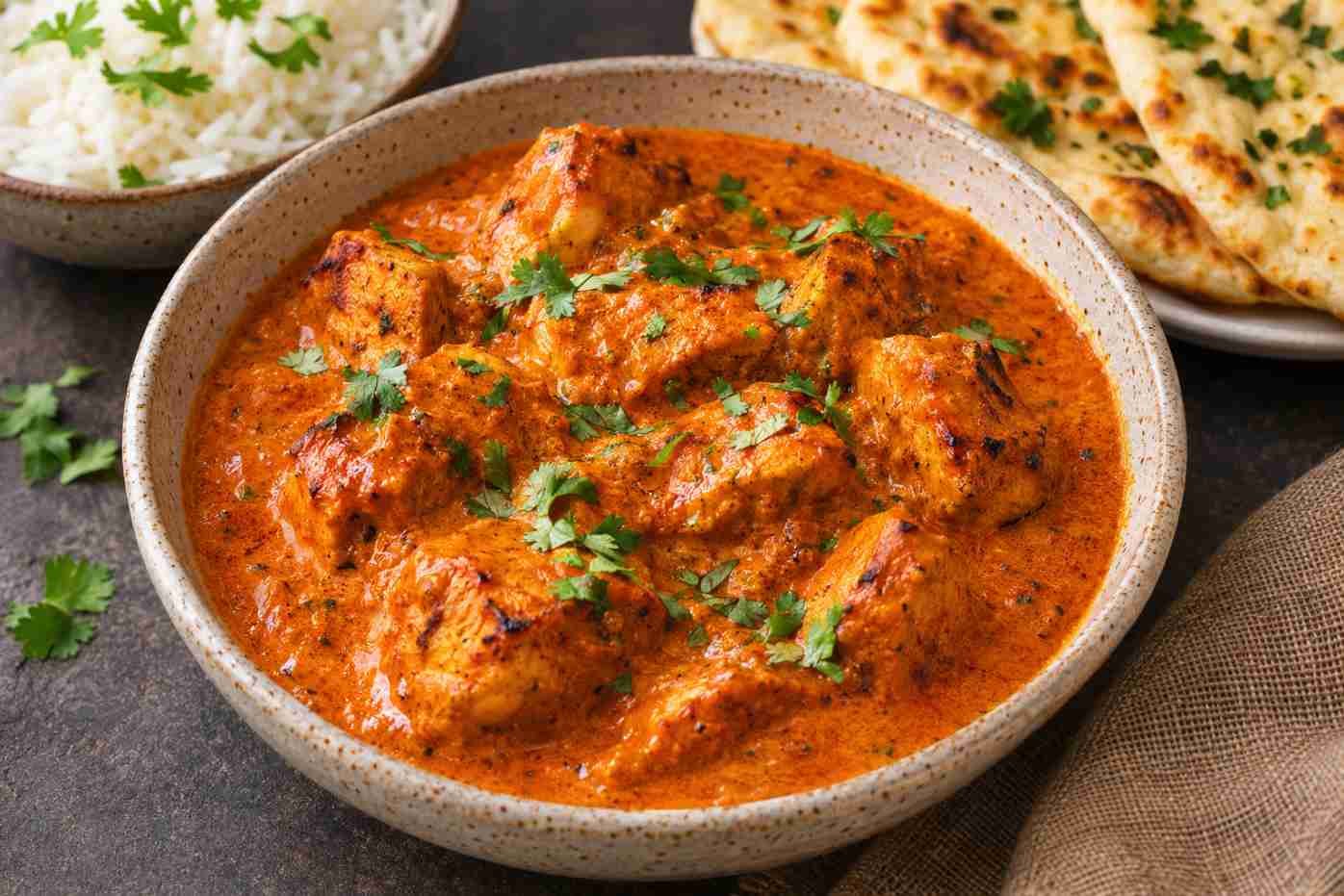
There is something hard to resist about a bowl of Chicken Tikka Masala. The chicken is tender, the sauce is thick and creamy, and every spoonful carries the warmth of toasted spices, tomatoes, ginger, and garlic. Add some freshly cooked basmati rice or warm naan, and you have the sort of dinner that makes everyone linger at the table a little longer.
Making Chicken Tikka Masala at home does take a little planning, mainly because the chicken needs time to marinate. The actual cooking is surprisingly manageable. You don’t need a tandoor, special equipment, or a cupboard full of unusual ingredients. A hot skillet, a saucepan, and a handful of everyday spices will get you most of the way there.
The trick is to cook the chicken separately before adding it to the sauce. This gives the meat those lightly charred edges that make chicken tikka different from chicken simply simmered in a curry. The finished dish is rich without being overwhelmingly heavy, with a gentle tang from yogurt and tomatoes balancing the cream.
Chicken Tikka Masala Recipe Overview
| Recipe | Chicken Tikka Masala |
| Cuisine | Indian-inspired, British-Indian |
| Course | Main Course |
| Preparation Time | 20 minutes |
| Marinating Time | At least 2 hours |
| Cooking Time | 40 minutes |
| Total Time | 3 hours (including marinating) |
| Servings | 4 |
| Difficulty | Moderate |
| Spice Level | Mild to Medium |
Ingredients for Chicken Tikka Masala
The recipe has two main parts: marinated chicken tikka and a tomato-based masala sauce. Several spices appear in both, so the shopping list is shorter than it first looks. For the best texture, use boneless chicken thighs. They stay juicy during high-heat cooking and are more forgiving than chicken breast.
For the Chicken Marinade
- 700 g boneless, skinless chicken thighs, cut into bite-sized pieces
- 1/2 cup plain thick yogurt, preferably full-fat
- 1 tablespoon lemon juice
- 1 tablespoon ginger-garlic paste
- 1 teaspoon Kashmiri red chili powder
- 1 teaspoon ground cumin
- 1 teaspoon ground coriander
- 1 teaspoon garam masala
- 1/4 teaspoon turmeric powder
- 3/4 teaspoon salt, or to taste
- 1 tablespoon vegetable oil
For the Masala Sauce
- 2 tablespoons vegetable oil
- 1 tablespoon unsalted butter
- 1 large onion, finely chopped
- 1 tablespoon ginger-garlic paste
- 1 1/2 cups tomato puree (about 360 ml)
- 1 teaspoon ground cumin
- 1 1/2 teaspoons ground coriander
- 1 teaspoon Kashmiri red chili powder
- 1/2 teaspoon turmeric powder
- 1 teaspoon garam masala
- 1/2 teaspoon paprika, optional
- 1/2 teaspoon sugar, or as needed
- 1/2 cup heavy cream (120 ml)
- 1/2 to 3/4 cup water, depending on the desired consistency
- Salt to taste
- 1 teaspoon crushed dried fenugreek leaves (kasuri methi)
- 2 tablespoons chopped fresh cilantro, for garnishing
Also Read: Mexican Chicken Bake
How to Make Chicken Tikka Masala
The chicken and sauce are prepared separately before being combined. Give the chicken enough time to absorb the marinade, and don’t rush the onions or tomato sauce. Those two steps make a noticeable difference to the finished curry.
Step 1: Marinate the Chicken
Place the yogurt, lemon juice, ginger-garlic paste, Kashmiri chili powder, cumin, coriander, garam masala, turmeric, salt, and oil in a large mixing bowl. Stir until everything is combined into a smooth, reddish-orange marinade. Add the chicken pieces and mix thoroughly so every piece is coated. Cover the bowl and refrigerate for at least 2 hours. If possible, leave it overnight. The yogurt helps tenderize the meat while the spices have time to develop their flavor. Keep the chicken refrigerated throughout marinating rather than leaving it on the kitchen counter.
Step 2: Sear the Chicken
Heat a heavy skillet or cast-iron pan over medium-high to high heat. Lightly coat the surface with oil if necessary. Arrange the marinated chicken in a single layer, leaving a little space between the pieces. Cook in batches if your pan is small. Let the first side develop browned, lightly charred patches before turning. Continue cooking until the outside has good color. The chicken does not have to be completely cooked at this stage because it will finish simmering in the sauce. Transfer it to a plate, along with any juices that collect.
Don’t overcrowd the skillet. When too many pieces go in at once, moisture collects and the chicken begins steaming instead of browning. This is one of the biggest differences between an ordinary homemade curry and chicken tikka with a more pronounced roasted flavor.
Step 3: Cook the Onion and Aromatics
Place a deep pan or saucepan over medium heat. Add the vegetable oil and butter. Once the butter melts, add the chopped onion and cook for 8 to 10 minutes, stirring regularly, until soft and lightly golden. Add the ginger-garlic paste and continue cooking for about a minute, just until its raw smell fades. Lower the heat if the garlic starts catching on the bottom of the pan.
Step 4: Build the Masala Sauce
Add the cumin, coriander, Kashmiri chili powder, turmeric, and paprika. Stir the spices into the onion mixture for about 30 seconds, then pour in the tomato puree. Mix well, scraping the bottom of the pan to loosen any flavorful bits. Cook over medium-low heat for 10 to 12 minutes, stirring occasionally. The tomato mixture should thicken and lose its sharp, raw taste. If it becomes too dry or begins sticking, add a small splash of water.
This stage deserves patience. A sauce made with undercooked tomato puree can taste acidic and one-dimensional, even after cream is added. Cooking it down gives the tomatoes a more rounded flavor and allows the spices to blend properly.
Step 5: Make the Sauce Creamy
Add 1/2 cup of water and stir until the sauce loosens. For a smoother, restaurant-style texture, carefully blend the sauce with an immersion blender until the onions disappear into the tomato mixture. Keep the blender head submerged to avoid splashing. You can skip blending if you prefer a slightly rustic sauce. Reduce the heat to low and stir in the heavy cream, sugar, and a little salt. Let the sauce warm through gently. Avoid boiling it vigorously once the cream has been added.
Step 6: Add the Chicken
Return the seared chicken and any collected juices to the saucepan. Stir gently until every piece is covered with sauce. Simmer over low to medium-low heat for approximately 6 to 10 minutes, depending on the size of the chicken pieces, until the chicken is fully cooked and reaches an internal temperature of 165°F (74°C). Add more water if the sauce becomes thicker than you like. It should coat the chicken generously but still be loose enough to spoon over rice.
Step 7: Finish with Garam Masala and Fenugreek
Sprinkle in the remaining garam masala and crush the dried fenugreek leaves between your palms before adding them to the pan. Stir and cook for another minute. Taste the sauce and adjust the salt, sugar, or chili as needed. The finished curry should taste savory and gently spiced, with enough acidity to balance the richness of the cream. Turn off the heat and scatter fresh cilantro over the top.
Step 8: Serve While Hot
Spoon Chicken Tikka Masala into a serving bowl and serve with steamed basmati rice, garlic naan, or plain roti. A small spoonful of cream can be swirled over the surface if you want a richer presentation, but the sauce should already be creamy enough without it.
Also Read: White Chicken Lasagna
What You Can Do Better
Chicken Tikka Masala is fairly forgiving, but a few adjustments can take it from a decent homemade curry to something genuinely memorable. Most of them involve technique rather than extra ingredients.
Choose Chicken Thighs for Better Texture
Chicken breast works if that’s what you have, but thighs are usually the better choice for this dish. They contain a little more fat and stay moist when exposed to the high heat needed for browning. If using chicken breast, cut the pieces evenly and watch the cooking time closely. Remove them from the pan as soon as they develop color, then finish cooking gently in the sauce.
Give the Marinade Enough Time
A quick 30-minute marinade adds some surface flavor, but two hours gives the spices and yogurt more time to work. Overnight marinating is even better when your schedule allows it. Use thick yogurt instead of runny yogurt, as excess moisture makes browning difficult. There is no need to scrape the marinade off before cooking; just allow any excess to drip away.
Get Some Char on the Chicken
Those darker patches on the chicken are part of what gives tikka masala its distinctive flavor. A cast-iron skillet works especially well because it holds heat effectively. You can also cook the chicken under a hot oven broiler or on a grill. The goal is a browned exterior with a little char, not a completely blackened crust. If you’re using a nonstick skillet, stay within the manufacturer’s recommended temperature limits rather than overheating the empty pan.
Don’t Rush the Tomato Sauce
Tomatoes need time to cook down before cream goes into the pan. If the sauce still tastes noticeably raw or sharply sour, continue cooking it gently for a few more minutes. A pinch of sugar can balance acidity, but it should never be used to disguise undercooked tomatoes. Taste first, then adjust.
Use Kasuri Methi for the Final Flavor
Dried fenugreek leaves are a small ingredient with a surprisingly noticeable effect. They add a warm, slightly earthy aroma that makes creamy tomato curries taste more complete. Add them near the end rather than frying them for several minutes. If you cannot find kasuri methi, the recipe will still work without it, though the flavor will be slightly different.
Adjust the Cream Instead of Overloading the Sauce
More cream does not automatically mean a better curry. Too much can dull the spices and make the sauce taste flat. Start with the amount listed and add a little more only if the tomatoes are especially acidic or you prefer a milder result. For a lighter version, some of the heavy cream can be replaced with cooking cream, though the finished sauce will be less rich.
What to Serve with Chicken Tikka Masala
Because the curry has a generous amount of sauce, it pairs particularly well with foods that can absorb it. Plain basmati rice is an easy choice and lets the spices remain the focus. Jeera rice adds a little extra warmth without competing with the curry. Garlic naan is ideal for scooping up the thick sauce, while plain roti makes a simpler everyday accompaniment.
For a more complete dinner, add sliced cucumber, red onion, and a squeeze of lemon on the side. A bowl of cucumber raita is also useful, especially if you’ve made the curry spicier than usual. The cool yogurt balances the heat and keeps the meal from feeling too heavy.
Also Read: Bang Bang Chicken Bowl Recipe
How to Store and Reheat Chicken Tikka Masala
Refrigerating
Allow leftovers to cool promptly and transfer them to shallow, airtight containers. Refrigerate within 2 hours of cooking. Chicken Tikka Masala can be stored in the refrigerator for 3 to 4 days at 40°F (4°C) or below. Keep the rice in a separate container so it doesn’t absorb the sauce during storage.
Freezing
The cooked curry can be frozen for up to 3 months for best quality. Divide it into meal-sized portions and use freezer-safe containers, leaving a little room for expansion. Cream-based sauces sometimes look slightly separated after thawing, but gentle reheating and stirring usually help restore a smoother consistency.
Reheating
Thaw frozen curry in the refrigerator overnight. Reheat it in a saucepan over medium-low heat, stirring frequently. Add a splash of water if the sauce has thickened. Heat leftovers thoroughly to 165°F (74°C). Avoid prolonged boiling because it can make the chicken tough and cause the cream to separate. Reheat only the portion you intend to eat.
Chicken Tikka Masala Nutrition Information
The nutritional values below are approximate estimates per serving, based on dividing the recipe into four portions. They include the chicken, marinade, and curry sauce but exclude rice, naan, and other side dishes. Actual values depend on the fat content of the chicken and dairy products, the amount of oil retained during cooking, and the brands of ingredients used.
| Nutrient | Approximate Amount per Serving |
|---|---|
| Calories | 575 kcal |
| Protein | 36 g |
| Total Fat | 40 g |
| Saturated Fat | 16 g |
| Carbohydrates | 17 g |
| Dietary Fiber | 3 g |
| Total Sugars | 9 g |
| Cholesterol | 190 mg |
| Sodium | 850 mg |
Note: These are rounded recipe estimates, not laboratory-tested nutritional values. Adding a serving of cooked rice or naan will increase the total calories and carbohydrates.
Also Read: Baked Chicken Breast
Frequently Asked Questions
Is Chicken Tikka Masala the Same as Butter Chicken?
They are closely related dishes, but they aren’t quite the same. Chicken Tikka Masala usually features chicken that has been grilled or seared before being mixed into a boldly spiced tomato sauce. Butter chicken generally has a smoother, more buttery sauce and often tastes a little sweeter and milder. Recipes vary considerably between restaurants and households, so there is plenty of overlap.
Can I Make Chicken Tikka Masala Without Heavy Cream?
Yes. You can replace the heavy cream with a smaller amount of cooking cream or a smooth cashew paste made by blending soaked cashews with water. Cashews create a rich texture and work particularly well with tomato-based gravies. Plain yogurt is another possibility, but it should be stirred in carefully over very low heat to reduce the chance of curdling. Each substitution changes the flavor and nutritional profile slightly.
Can I Make It Spicier?
Absolutely. Kashmiri chili powder provides plenty of color without excessive heat. To increase the spice level, add a little cayenne pepper or finely chopped green chili to the sauce. Start with a small amount and taste before adding more. You can also finish individual portions with fresh green chili if some people at the table prefer their food milder.
Can I Prepare Chicken Tikka Masala Ahead of Time?
Yes, and preparing the components separately is especially convenient. Marinate the chicken the night before and make the tomato sauce in advance if necessary. Store both safely in the refrigerator, keeping the raw chicken separate from the prepared sauce. When you’re ready to eat, sear the chicken, warm the sauce, and combine them. Finish with cream, garam masala, and kasuri methi for the freshest flavor.
Why Is My Chicken Tikka Masala Sauce Too Thin?
The most common causes are too much added water or insufficient simmering. Leave the sauce uncovered over low heat for a few minutes so some liquid can evaporate. Stir regularly to prevent sticking. If the sauce is already creamy, avoid increasing the heat too aggressively. It will also thicken a little as it cools.
Can I Cook Chicken Tikka Masala in the Oven?
Yes. Arrange the marinated chicken pieces on a lightly oiled rack over a lined baking tray and roast at 425°F (220°C) until nearly cooked through, generally around 12 to 18 minutes depending on their size. For additional browning, briefly place the chicken under the broiler while watching closely. Transfer it to the sauce and simmer until the center reaches 165°F (74°C). This approach is particularly useful when cooking a larger batch.