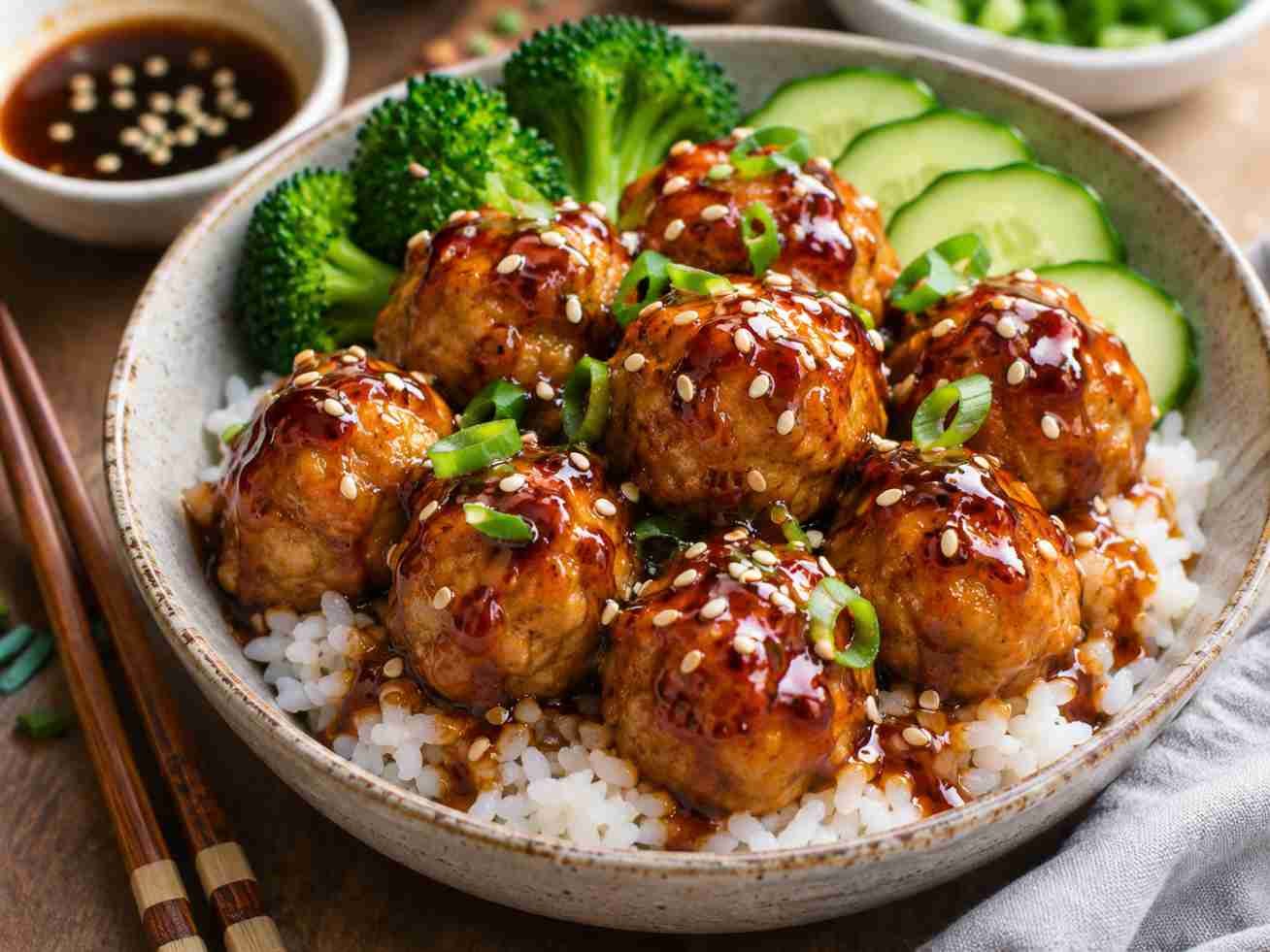
Tender chicken meatballs are browned in a skillet, then coated in a glossy homemade teriyaki sauce with just the right balance of sweetness, saltiness, garlic, and ginger. Spoon them over a bowl of warm rice, add a few vegetables, and you have a satisfying dinner without spending the entire evening in the kitchen.
Ground chicken is a great choice for meatballs, although it needs a little care to keep it from drying out. A small amount of breadcrumbs and egg helps hold everything together, while grated onion adds moisture. Instead of cooking the meatballs completely before adding the sauce, this recipe finishes them gently in the skillet. That gives the sauce time to cling to each meatball without leaving the chicken tough or rubbery.
The recipe makes enough sauce to coat the meatballs generously, with a little extra for rice or noodles. It is suitable for a regular weeknight dinner, but the meatballs are also small enough to serve as a party appetizer.
Recipe Overview
| Details | Information |
|---|---|
| Recipe | Teriyaki Chicken Meatballs |
| Prep Time | 15 minutes |
| Cook Time | 20 minutes |
| Total Time | 35 minutes |
| Servings | 4 |
| Yield | Approximately 20 meatballs |
| Cooking Method | Stovetop |
| Cuisine | Asian-inspired |
| Difficulty | Easy |
Ingredients for Teriyaki Chicken Meatballs
This recipe uses everyday ingredients for the meatballs and a simple sauce made from soy sauce, honey, ginger, and garlic. The sauce has a familiar teriyaki-style flavor without requiring bottled teriyaki sauce.
Also Read: Crunchy Chicken Taco Fingers
For the Chicken Meatballs
- 1 pound (450 g) ground chicken: Ground chicken thigh works particularly well because it contains a little more fat and stays moist during cooking.
- 1/2 cup panko breadcrumbs: Helps bind the mixture while keeping the texture relatively light.
- 1 large egg: Holds the meatballs together during shaping and cooking.
- 2 tablespoons finely grated onion: Adds moisture and mild sweetness.
- 2 garlic cloves, minced: Adds a savory background flavor.
- 1 teaspoon freshly grated ginger: Gives the meatballs a gentle warmth.
- 1 tablespoon low-sodium soy sauce: Seasons the chicken mixture.
- 1/4 teaspoon black pepper: Adds a little sharpness without making the dish spicy.
- 1 tablespoon neutral cooking oil: For browning the meatballs in the skillet.
For the Homemade Teriyaki Sauce
- 1/4 cup low-sodium soy sauce: Provides the main savory flavor.
- 3 tablespoons honey: Adds sweetness and gives the finished sauce a glossy appearance.
- 2 tablespoons rice vinegar: Balances the sweetness with a gentle acidity.
- 1 tablespoon brown sugar: Adds a light caramel note.
- 2 teaspoons freshly grated ginger: Brings freshness to the sauce.
- 2 garlic cloves, minced: Deepens the flavor.
- 1/2 cup water: Keeps the sauce from becoming too concentrated.
- 2 teaspoons cornstarch: Thickens the sauce so it coats the meatballs.
- 1 teaspoon toasted sesame oil: Adds a nutty finishing flavor.
Optional Garnishes
- 2 tablespoons chopped green onions
- 1 teaspoon toasted sesame seeds
- A pinch of red pepper flakes for extra heat
Also Read: Kung Pao Chicken Recipe
How to Make Teriyaki Chicken Meatballs
The entire recipe comes together in one skillet after the meatball mixture and sauce have been prepared. Keep the heat moderate when cooking the chicken so the outside browns without becoming dry.
Step 1: Prepare the Meatball Mixture
Place the ground chicken in a large mixing bowl. Add the panko breadcrumbs, egg, grated onion, minced garlic, ginger, soy sauce, and black pepper. Use a fork or clean hands to combine everything until the ingredients are evenly distributed. Avoid mixing for too long because excessive handling can make the cooked meatballs dense. The mixture will be softer and slightly stickier than a typical beef meatball mixture. That is normal.
Step 2: Shape the Meatballs
Lightly oil your hands and divide the mixture into approximately 20 equal portions. Roll each portion into a ball about 1 1/2 inches wide. Place them on a plate or tray as you work. If the mixture seems too soft to shape, refrigerate it for 15 to 20 minutes before rolling. Try to keep the meatballs similar in size so they cook at the same rate.
Step 3: Mix the Teriyaki Sauce
In a medium bowl, whisk together the soy sauce, honey, rice vinegar, brown sugar, grated ginger, garlic, water, cornstarch, and sesame oil. Continue whisking until the cornstarch dissolves and no visible lumps remain. Set the sauce aside. Give it another stir immediately before adding it to the skillet because cornstarch tends to settle at the bottom.
Step 4: Brown the Chicken Meatballs
Heat the cooking oil in a large nonstick skillet over medium heat. Carefully add the meatballs in a single layer, leaving a little space between them. Cook for approximately 6 to 8 minutes, turning gently every couple of minutes to develop golden-brown patches on several sides. Work in batches if your skillet is small. The meatballs do not need to be completely cooked at this stage because they will finish cooking in the sauce.
Step 5: Add the Teriyaki Sauce
Reduce the heat to medium-low and stir the prepared sauce once more. Pour it into the skillet around the meatballs. As the sauce warms, gently move the meatballs through it using a spoon or spatula. Let everything simmer for approximately 5 to 7 minutes, turning the meatballs occasionally. The sauce will gradually thicken into a shiny glaze. The chicken must reach an internal temperature of 165°F (74°C), measured at the center of a meatball.
Step 6: Adjust the Sauce
Once the meatballs are fully cooked, check the sauce consistency. If it becomes too thick, add water one tablespoon at a time until it loosens. If it looks too thin, let it simmer briefly while stirring. Taste before adding any additional seasoning because soy sauce already contributes plenty of salt. For a sharper finish, stir in a small splash of rice vinegar.
Step 7: Garnish and Serve
Remove the skillet from the heat. Sprinkle the meatballs with sliced green onions and toasted sesame seeds. Serve immediately over steamed jasmine rice, brown rice, or noodles. Spoon any remaining sauce from the skillet over the top.
What You Can Do Better
A few small decisions make a noticeable difference when preparing chicken meatballs. The first is choosing the right ground chicken. Very lean chicken breast mince can produce a firmer, drier meatball, especially if it cooks too long. Ground chicken thigh, or a combination of thigh and breast, gives a softer result.
Keep the mixture moist: Grated onion does more than add flavor. It releases moisture into the chicken, helping the meatballs stay tender. Grate the onion finely so it blends into the mixture rather than leaving noticeable chunks.
Do not add too many breadcrumbs: Breadcrumbs are useful for binding, but adding more than necessary can make the meatballs heavy. If the mixture feels sticky, chilling it is usually better than adding a large amount of extra breadcrumbs.
Brown without overcooking: The skillet should be hot enough to give the meatballs some color but not so hot that the outside burns. Remember that the chicken will continue cooking once the sauce is added.
Adjust the sweetness to your preference: Honey and brown sugar create the sticky glaze. If you prefer a less sweet sauce, reduce the brown sugar slightly rather than removing all the honey. The honey also contributes to the sauce’s texture.
Use fresh ginger when possible: Ground ginger can work in a pinch, but freshly grated ginger gives the finished sauce a brighter flavor.
Make extra sauce for rice bowls: The sauce is often the first thing to disappear when the meatballs are served over rice. Prepare an additional half batch if you like a particularly saucy dinner.
Also Read: Chicken Roulade
Can You Bake Teriyaki Chicken Meatballs?
Yes. Baking is convenient when preparing a larger batch or when you would rather avoid turning individual meatballs in a skillet. Preheat the oven to 400°F (200°C) and line a baking sheet with parchment paper. Arrange the shaped meatballs in a single layer, leaving space between them. Lightly brush or spray them with oil, then bake for approximately 15 to 20 minutes, depending on their size, until the centers reach 165°F (74°C).
While the meatballs bake, pour the prepared teriyaki sauce into a small saucepan. Heat over medium-low heat, stirring frequently, until it thickens. Transfer the cooked meatballs to a serving bowl and toss them gently in the warm sauce. Baking produces slightly less browning than skillet cooking, but it is a practical option when making food for several people.
Also Read: Slow Cooker Ritz Chicken
What to Serve with Teriyaki Chicken Meatballs
Teriyaki chicken meatballs work especially well with simple side dishes that balance the sweetness of the sauce. Steamed jasmine rice is an easy choice because it absorbs the glaze without competing with the flavor. Brown rice also works if you prefer a nuttier taste and slightly firmer texture.
For a lighter meal, serve the meatballs alongside steamed broccoli, sautéed green beans, or a crunchy cucumber salad. The vegetables bring freshness to a dish that is otherwise fairly rich and savory. You can also add sliced carrots, cabbage, and bell peppers for a colorful rice bowl.
If you prefer noodles, toss cooked udon or rice noodles with a small spoonful of sesame oil, then arrange the meatballs over the top. For an appetizer, transfer the glazed meatballs to a shallow serving dish and provide small cocktail forks or toothpicks. Keep them warm until serving.
Easy Variations to Try
Spicy Teriyaki Chicken Meatballs
Mix 1 to 2 teaspoons of sriracha into the teriyaki sauce, or add red pepper flakes while the sauce simmers. Start with a small amount and adjust according to your preference. The heat balances the sweetness of the honey.
Pineapple Teriyaki Meatballs
Add 1/2 cup of small pineapple chunks during the final few minutes of cooking. Pineapple brings a sweet-tart flavor that works well with soy sauce and ginger. Fresh or canned pineapple can be used, but drain canned pineapple before adding it.
Turkey Teriyaki Meatballs
Ground turkey can replace the chicken in equal quantities. Choose turkey mince with a little fat for the best texture and cook it to the same safe internal temperature of 165°F (74°C).
Gluten-Free Teriyaki Meatballs
Use certified gluten-free breadcrumbs in place of panko and gluten-free tamari instead of regular soy sauce. Check the labels of all packaged ingredients to confirm they meet your dietary requirements.
How to Store and Reheat Leftovers
Refrigerating
Allow the cooked meatballs to cool briefly, then transfer them with their sauce to an airtight container. Refrigerate within two hours of cooking and use within 3 to 4 days. Keeping the meatballs in the sauce helps prevent them from drying out during storage.
Freezing
Cooked meatballs can be frozen for up to 2 to 3 months for the best quality. Arrange them in a freezer-safe container with enough room for the sauce. You can also freeze the cooked meatballs separately and prepare fresh sauce when serving. Label the container with the freezing date.
Reheating
Place refrigerated meatballs and sauce in a covered skillet over low heat. Add one or two tablespoons of water if the sauce has thickened during storage. Warm gently, stirring occasionally, until the meatballs reach 165°F (74°C). You can also reheat them in the microwave in short intervals, stirring between intervals for even heating.
Also Read: Honey Sriracha Chicken Wings
Nutritional Information
The following values are approximate estimates for one serving, based on dividing the complete recipe into four equal portions. Each serving contains about five meatballs with sauce. Rice, noodles, vegetables, and optional garnishes are not included. Actual nutrition will vary depending on the fat content of the chicken, soy sauce brand, and exact ingredient measurements.
| Nutrient | Approximate Amount Per Serving |
|---|---|
| Calories | 365 kcal |
| Protein | 26 g |
| Total Fat | 16 g |
| Saturated Fat | 4 g |
| Carbohydrates | 29 g |
| Dietary Fiber | 1 g |
| Total Sugars | 19 g |
| Sodium | 850 mg |
| Cholesterol | 135 mg |
Nutrition note: These are illustrative estimates rather than laboratory-tested or software-verified nutritional values. For precise dietary tracking, calculate the recipe using the actual products and quantities you use.
Frequently Asked Questions
How do you keep chicken meatballs from falling apart?
Egg and breadcrumbs are the main binding ingredients. Make sure the chicken mixture is combined evenly and shape the meatballs gently but firmly. If the mixture is particularly wet, refrigerate it before shaping. Avoid moving the meatballs too frequently during the first few minutes of cooking, when they are still delicate.
Can I make the meatballs ahead of time?
Yes. Shape the meatballs and store them in a covered container in the refrigerator for up to 24 hours before cooking. Keep the prepared sauce in a separate covered container and refrigerate it as well. Stir the sauce thoroughly before using it.
Can I use store-bought teriyaki sauce?
Absolutely. Bottled teriyaki sauce is convenient when you are short on time. However, different brands vary significantly in sweetness, thickness, and salt content. Taste the sauce first and dilute it with a little water if necessary. A homemade version gives you more control over those flavors.
Why are my chicken meatballs dry?
Overcooking is the most common reason. Very lean ground chicken can also produce dry meatballs. Use a meat thermometer rather than relying on cooking time alone, and remove the skillet from the heat once the meatballs reach 165°F (74°C). Adding a small amount of grated onion to the mixture also helps retain moisture.
Can I make this recipe without honey?
Yes. Maple syrup can replace honey, although the flavor will change slightly. You can also use a little additional brown sugar dissolved in water. Adjust the quantity gradually because the sweetness and consistency may differ.
Is teriyaki sauce the same as soy sauce?
No. Soy sauce is a salty, fermented seasoning, while teriyaki sauce typically combines soy sauce with sweet ingredients and other flavorings. The homemade sauce in this recipe also includes ginger, garlic, and vinegar. Cornstarch gives it the thicker consistency needed to coat the meatballs.