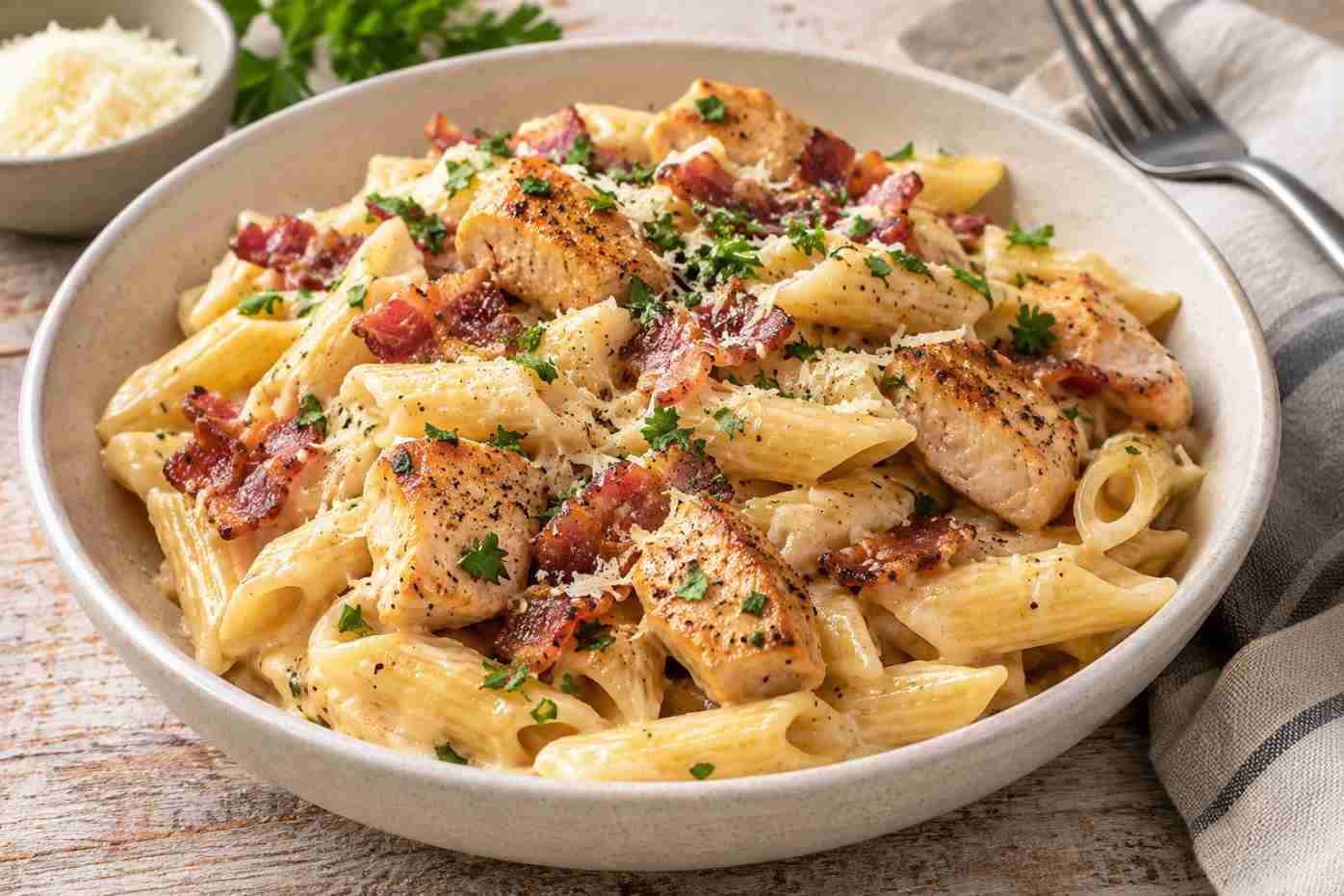
There are evenings when a bowl of creamy pasta sounds better than anything else on the dinner menu. This Chicken and Bacon Pasta brings together tender pieces of chicken, crispy bacon, garlic, Parmesan cheese, and pasta in a rich, silky sauce. It’s comforting without being complicated, and most of the cooking happens in one skillet while the pasta boils.
The bacon adds a smoky, salty flavor that works particularly well with the mild chicken and creamy sauce. A little lemon juice at the end helps balance the richness, while freshly grated Parmesan gives the sauce a lovely savory finish. You can make this dish with penne, fettuccine, or whatever pasta you have in the cupboard. It’s a good option for a busy weeknight, but it’s also the sort of dinner you can serve when friends come over.
Chicken and Bacon Pasta Recipe Overview
| Details | Information |
|---|---|
| Recipe | Chicken and Bacon Pasta |
| Preparation Time | 15 minutes |
| Cooking Time | 25 minutes |
| Total Time | 40 minutes |
| Servings | 4 |
| Course | Main Course, Dinner |
| Cuisine | American-Inspired |
| Cooking Method | Stovetop |
| Difficulty | Easy |
Ingredients for Chicken and Bacon Pasta
Most of the ingredients are familiar kitchen staples. Fresh garlic, good-quality bacon, and Parmesan make a noticeable difference, so use the best you can reasonably get.
For the Pasta and Chicken
- 300 g (10.5 oz) penne or fettuccine pasta
- 400 g (14 oz) boneless, skinless chicken breast, cut into bite-sized pieces
- 150 g (5.3 oz) bacon, chopped into small strips
- 1 tablespoon olive oil, if needed
- 1/2 teaspoon smoked paprika
- 1/2 teaspoon dried Italian seasoning
- 1/4 teaspoon freshly ground black pepper
- Salt, as needed
For the Creamy Sauce
- 1 tablespoon unsalted butter
- 4 garlic cloves, finely minced
- 1 small onion, finely chopped
- 1 cup (240 ml) heavy cream
- 1/2 cup (120 ml) low-sodium chicken broth
- 3/4 cup (about 75 g) freshly grated Parmesan cheese
- 1/2 teaspoon Dijon mustard
- 1 teaspoon fresh lemon juice
- 1/4 teaspoon crushed red pepper flakes (optional)
- 1/2 cup reserved pasta cooking water, or as needed
For Garnishing
- 2 tablespoons chopped fresh parsley
- Extra grated Parmesan cheese
- Freshly ground black pepper
Also Read: Elbow Noodle Pasta Salad
How to Make Chicken and Bacon Pasta
The easiest way to prepare this recipe is to cook the pasta while you work on the chicken and bacon. Have the sauce ingredients measured before you begin, because the final stages move fairly quickly.
Step 1: Cook the Pasta
Bring a large pot of water to a rolling boil and season it generously with salt. Add the pasta and cook until it is about one minute short of al dente, following the package instructions as a guide. The pasta will finish cooking in the sauce, so avoid boiling it until completely soft.
Before draining, reserve about one cup of the starchy cooking water. You may not need all of it, but having extra is useful when adjusting the sauce. Drain the pasta without rinsing it.
Step 2: Fry the Bacon
Place the chopped bacon in a large skillet over medium heat. Cook for approximately 6 to 8 minutes, stirring occasionally, until the pieces are golden and crisp. If the bacon is particularly lean, add a small amount of olive oil to prevent sticking.
Transfer the cooked bacon to a plate lined with paper towels. Leave about one tablespoon of rendered bacon fat in the skillet and carefully discard the excess. That small amount of fat will give the chicken extra flavor without making the finished sauce greasy.
Step 3: Season and Cook the Chicken
Pat the chicken pieces dry with paper towels. Season with smoked paprika, Italian seasoning, black pepper, and a little salt. Remember that bacon and Parmesan are already salty, so it is better to season lightly at this stage.
Increase the skillet heat to medium-high. Add the chicken in a single layer, cooking in batches if necessary. Let the pieces develop a golden surface before turning them. Cook for approximately 5 to 7 minutes, depending on their size, until the chicken reaches an internal temperature of 165°F (74°C).
Transfer the cooked chicken to a clean plate. Keep any browned bits in the skillet because they will add flavor to the sauce.
Step 4: Prepare the Garlic and Onion Base
Reduce the heat to medium and add the butter to the same skillet. Once melted, add the chopped onion and cook for 3 to 4 minutes, stirring occasionally, until softened and lightly golden.
Add the minced garlic and crushed red pepper flakes, if using. Stir for about 30 seconds, just until the garlic becomes fragrant. Avoid letting it brown too much, as burnt garlic can give the cream sauce a bitter taste.
Step 5: Make the Creamy Parmesan Sauce
Pour in the chicken broth and scrape the bottom of the skillet with a wooden spoon to release the flavorful browned bits. Allow the broth to simmer for about one minute.
Lower the heat and stir in the heavy cream and Dijon mustard. Let the mixture warm gently for 2 to 3 minutes, stirring occasionally. Do not bring it to a vigorous boil.
Add the grated Parmesan in small handfuls, stirring until each addition has melted into the sauce. The mixture should become smooth and lightly thickened. If it looks too thick, add a splash of the reserved pasta water. If it is too thin, allow it to simmer gently for another minute.
Step 6: Combine the Pasta, Chicken, and Bacon
Add the drained pasta to the skillet and toss it gently through the creamy sauce. Pour in approximately 1/4 cup of the reserved pasta water and continue stirring over low heat for 1 to 2 minutes. The starch in the water helps the sauce cling to the pasta rather than collecting at the bottom of the pan.
Return the cooked chicken and most of the crispy bacon to the skillet. Toss everything together until evenly coated and heated through. Add a little more pasta water if necessary to keep the sauce silky.
Step 7: Finish and Serve
Turn off the heat and stir in the fresh lemon juice. Taste the pasta before adding any additional salt. Sprinkle with chopped parsley, the remaining crispy bacon, extra Parmesan, and freshly ground black pepper.
Serve immediately while the sauce is warm and creamy. As the pasta sits, it continues to absorb moisture, so the dish is at its best straight from the skillet.
Also Read: Ground Chicken Pizza Crust Recipe
What You Can Do Better
A creamy pasta dish doesn’t require complicated techniques, but a few small decisions can make the difference between a heavy, greasy sauce and one that coats every piece of pasta beautifully.
1. Cook the Bacon Slowly Enough to Render Its Fat
Starting bacon over medium heat gives the fat time to render before the edges become too dark. You want crisp pieces with a pleasant smoky flavor, not bacon that has turned hard or bitter. Reserve some of the crispy pieces for garnishing so they retain their texture.
2. Avoid Overcooking the Chicken
Chicken breast cooks quickly when cut into small pieces. Remove it from the skillet once it reaches 165°F (74°C). Keeping the pieces reasonably uniform helps them cook evenly. Chicken thighs are another good choice if you prefer darker meat with a little more richness.
3. Grate the Parmesan Freshly
Freshly grated Parmesan generally melts more smoothly than packaged shredded cheese, which may contain anti-caking ingredients. Add it gradually over low heat. Excessive heat can make a cheese sauce grainy or cause the fat to separate.
4. Use Pasta Water Instead of More Cream
If the sauce becomes too thick, don’t immediately reach for another carton of cream. Add a tablespoon or two of the reserved pasta water and toss the pasta. This loosens the sauce without making it unnecessarily heavy.
5. Balance the Richness
Bacon, cream, and Parmesan all contribute richness. A small amount of lemon juice brightens the finished dish without making it taste lemony. Fresh parsley also helps balance the flavor. Add both at the end rather than cooking them for several minutes.
Variations You Can Try
Chicken and Bacon Pasta with Mushrooms
Add 200 g of sliced mushrooms after cooking the chicken. Sauté them until their moisture evaporates and their edges become golden. Remove them from the pan and return them with the chicken during the final mixing stage. Mushrooms add a savory, earthy flavor that complements the bacon particularly well.
Chicken and Bacon Pasta with Spinach
Stir two generous handfuls of fresh baby spinach into the sauce just before adding the cooked pasta. Allow the leaves to wilt for about a minute. This is an easy way to add vegetables without significantly changing the preparation time.
Spicy Chicken and Bacon Pasta
Increase the crushed red pepper flakes to 1/2 teaspoon, or add a small pinch of cayenne pepper to the chicken seasoning. You can also finish the pasta with a little chili oil, although it is best to use it sparingly because the sauce is already rich.
Chicken and Bacon Pasta Without Heavy Cream
For a lighter variation, replace the heavy cream with 3/4 cup of evaporated milk and 1/4 cup of chicken broth. The sauce will be less rich and may not thicken as much. Warm it gently and add the Parmesan gradually to maintain a smooth consistency.
Also Read: Chicken Ragu
What to Serve with Chicken and Bacon Pasta
Since this pasta is filling and creamy, simple side dishes tend to work best. A crisp green salad with a lemon vinaigrette offers a refreshing contrast, while roasted broccoli or asparagus adds texture and color. Garlic bread is another popular choice, particularly when you want something to soak up the remaining sauce.
For a more substantial dinner, serve the pasta alongside roasted cherry tomatoes or a cucumber salad. Their freshness helps balance the salty bacon and rich Parmesan.
Storage and Reheating Instructions
How to Store Leftovers
Allow the pasta to cool briefly, then transfer it to an airtight container and refrigerate within two hours of cooking. Store at 40°F (4°C) or below and consume within 3 to 4 days. Because the pasta continues absorbing the sauce, leftovers will usually be thicker than the freshly cooked dish.
How to Reheat
Place the leftover pasta in a skillet over low to medium-low heat. Add two or three tablespoons of milk or chicken broth per serving and stir gently until the sauce loosens and the pasta is heated throughout. Reheat to 165°F (74°C).
You can also reheat individual portions in the microwave. Cover loosely, heat in short intervals, and stir between intervals for more even heating. Avoid prolonged high heat, which can make the chicken dry and cause the sauce to separate.
Can You Freeze Chicken and Bacon Pasta?
Freezing is possible, but it is not the best option for maintaining the original texture. Cream-based sauces sometimes separate after thawing, and cooked pasta can become soft. If you do freeze it, use a freezer-safe container and aim to consume it within 1 to 2 months for better quality. Thaw overnight in the refrigerator before reheating gently.
Also Read: Beer Can Chicken Recipe
Nutritional Information
The following values are approximate estimates for one serving when the recipe is divided into four equal portions. Actual nutrition will vary depending on the bacon, cream, Parmesan, pasta brand, and amount of rendered fat discarded during cooking.
| Nutrient | Estimated Amount Per Serving |
|---|---|
| Calories | 820 kcal |
| Carbohydrates | 62 g |
| Protein | 44 g |
| Total Fat | 43 g |
| Saturated Fat | 23 g |
| Fiber | 3 g |
| Sugars | 4 g |
| Sodium | 1,050 mg |
| Cholesterol | 175 mg |
Nutrition note: These figures are estimates rather than laboratory-tested values. For precise dietary tracking, calculate the recipe using the nutritional labels of the specific ingredients you purchase.
Frequently Asked Questions
What type of pasta works best with chicken and bacon?
Penne, rigatoni, fettuccine, and tagliatelle all work well. Short pasta shapes such as penne hold the creamy sauce in their hollow centers, while long pasta varieties create a more traditional creamy pasta presentation. Choose whichever texture you prefer.
Can I use leftover cooked chicken?
Yes. Leftover roasted or grilled chicken works well, provided it has been stored safely. Cut it into bite-sized pieces and add it near the end of cooking. Since the chicken is already cooked, it only needs to be reheated thoroughly rather than browned again.
Can I make chicken and bacon pasta ahead of time?
You can prepare the chicken, bacon, and chopped vegetables in advance. However, the best texture comes from cooking the pasta and finishing the sauce shortly before serving. If you must prepare the entire dish ahead, reserve extra broth or milk for reheating.
Why is my creamy pasta sauce too thick?
Pasta absorbs moisture as it sits, and Parmesan also thickens the sauce. Add a small splash of warm pasta water, milk, or broth and stir over low heat. Repeat gradually until the sauce reaches your preferred consistency.
Why did my Parmesan sauce become grainy?
Graininess can happen when the sauce is overheated or the cheese is added too quickly. Use finely grated Parmesan, reduce the heat before adding it, and stir in small portions. Avoid boiling the sauce once the cheese has melted.
Can I use turkey bacon instead of regular bacon?
Yes. Turkey bacon can be used, although it usually renders less fat and has a different flavor. Add a little olive oil when cooking it, and use that oil to sauté the chicken. Check the seasoning before serving because salt levels vary between brands.
How can I make this pasta less rich?
Use a smaller amount of bacon, replace some of the cream with low-sodium chicken broth, and add vegetables such as spinach, peas, or broccoli. The sauce will be lighter, although it will also have a different texture from the original creamy version.