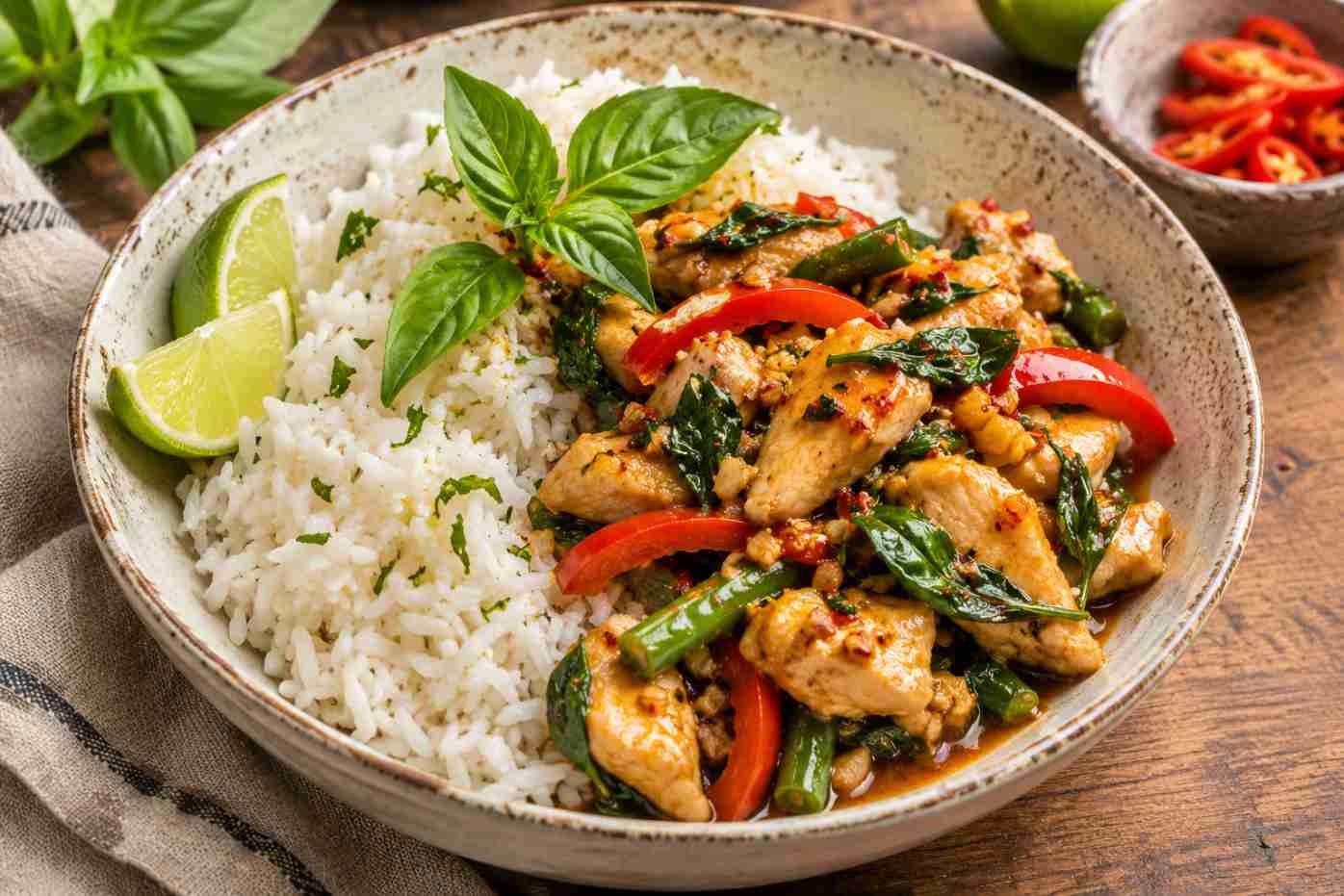
Thai Basil Chicken & Coconut Rice is a satisfying dinner that brings together tender chicken, fresh vegetables, fragrant Thai basil, and creamy coconut rice. The chicken is cooked in a sweet, savoury, and slightly spicy sauce with garlic, lime juice, fish sauce, and a touch of brown sugar. The coconut rice balances these bold flavours with its mild sweetness and rich texture.
This dish takes inspiration from Thai basil chicken, a popular Thai-style stir-fry known for its aromatic herbs, chilli, garlic, and savoury sauce. Adding coconut rice makes the meal a little different from the traditional version while keeping the fresh and vibrant flavours that make Thai-inspired cooking so enjoyable.
It is a great choice for a weeknight dinner when you want something more interesting than ordinary rice and chicken. You can prepare the chicken and rice together, making it a complete meal without needing several side dishes.
Recipe Details
| Detail | Information |
|---|---|
| Recipe Name | Thai Basil Chicken & Coconut Rice |
| Preparation Time | 15 minutes |
| Cooking Time | 30 minutes |
| Total Time | 45 minutes |
| Servings | 4 |
| Cuisine | Thai-inspired |
| Course | Main Course |
| Cooking Method | Stovetop |
| Difficulty | Easy |
Ingredients
For the Thai Basil Chicken
- 500 g boneless, skinless chicken breast, cut into thin strips or bite-sized pieces
- 1 cup fresh Thai basil leaves
- 1 cup green beans, trimmed and cut into small pieces
- 1 red bell pepper, thinly sliced
- 4 garlic cloves, finely minced
- 1 small red or green chilli, thinly sliced
- 2 tablespoons vegetable oil
- 3 tablespoons coconut milk
- 2 tablespoons fish sauce
- 1 tablespoon soy sauce
- 1 tablespoon fresh lime juice
- 1 tablespoon brown sugar
- 1 teaspoon cornstarch
- 2 tablespoons water
- Salt and black pepper, as needed
For the Coconut Rice
- 1½ cups jasmine rice
- 1 cup full-fat coconut milk
- 1¼ cups water
- ½ teaspoon salt
- 1 teaspoon sugar (optional)
For Garnishing
- Fresh Thai basil leaves
- Lime wedges
- Sliced red chilli
- Chopped spring onions (optional)
Also Read: Blackberry Basil Vodka Smash
How to Make Thai Basil Chicken & Coconut Rice
Step 1: Prepare the Chicken
Start by cutting the chicken breast into thin strips or small bite-sized pieces. Try to keep the pieces similar in size so they cook evenly. Pat the chicken dry with a paper towel and season lightly with salt and black pepper. Keep it aside while you prepare the vegetables and sauce.
Step 2: Prepare the Sauce
Take a small bowl and add fish sauce, soy sauce, lime juice, brown sugar, coconut milk, cornstarch, and water. Whisk everything until the sugar dissolves and the cornstarch is properly mixed. The sauce should have a smooth consistency. This mixture will give the chicken its savoury, slightly sweet, and tangy flavour while helping it develop a light coating during cooking.
Step 3: Cook the Chicken
Heat vegetable oil in a large skillet or wok over medium-high heat. Add the chicken pieces in a single layer and cook for about 5–7 minutes, turning occasionally. Cook until the chicken is golden on the outside and completely cooked through. If your pan is small, cook the chicken in batches rather than overcrowding it. Transfer the cooked chicken to a plate and keep it aside.
Step 4: Cook the Vegetables
Using the same skillet, add a little more oil if needed. Add the minced garlic and sliced chilli. Stir for about 30 seconds until fragrant, taking care not to burn the garlic. Add the green beans and red bell pepper. Cook for 3–4 minutes until the vegetables become slightly tender but still retain some crunch. This small amount of texture makes the final dish much more enjoyable.
Step 5: Combine the Chicken and Sauce
Return the cooked chicken to the skillet with the vegetables. Pour in the prepared sauce and stir well so everything gets evenly coated. Reduce the heat to medium-low and allow the mixture to simmer for 3–5 minutes. The sauce will gradually thicken and cling to the chicken and vegetables. Turn off the heat and stir in the fresh Thai basil leaves. The remaining heat will release their aroma without making them lose all their freshness.
Step 6: Prepare the Coconut Rice
Rinse the jasmine rice under cold running water until the water becomes mostly clear. This helps remove excess starch and prevents the rice from becoming overly sticky. Add the rinsed rice to a saucepan along with coconut milk, water, salt, and optional sugar. Stir gently and bring the mixture to a gentle boil over medium heat.
Once it starts boiling, reduce the heat to low and cover the saucepan with a tight-fitting lid. Cook for approximately 15–18 minutes, or until the rice has absorbed the liquid and become tender. Avoid lifting the lid repeatedly because the trapped steam helps cook the rice evenly. Turn off the heat and let it rest, covered, for another 5–10 minutes. Fluff gently with a fork before serving.
Step 7: Assemble and Serve
Spoon a generous portion of coconut rice onto each serving plate or bowl. Add the Thai basil chicken and vegetables alongside or over the rice. Finish with fresh basil leaves, sliced chilli, and a squeeze of lime juice. Serve immediately while the rice is warm and the chicken is freshly cooked.
What You Can Do Better
A few small changes can make this recipe even more enjoyable without making the cooking process complicated.
- Use fresh Thai basil: Thai basil has a slightly peppery, anise-like aroma that gives the chicken its characteristic flavour. Regular sweet basil can work as a substitute, but the taste will be different.
- Avoid overcooking the chicken: Chicken breast can become dry if left in the pan for too long. Cut it into evenly sized pieces and remove it as soon as it reaches a safe internal temperature of 165°F (74°C).
- Keep the vegetables slightly crunchy: Green beans and bell peppers taste better when they retain some texture. Cooking them for too long can make the dish feel soft and heavy.
- Adjust the chilli according to taste: Use less chilli for a mild family-friendly meal or add extra fresh red chilli if you enjoy a stronger kick.
- Choose full-fat coconut milk for the rice: It creates a richer, creamier texture. If you prefer lighter rice, use light coconut milk and adjust the water accordingly.
- Do not skip the resting time: Allowing the rice to sit covered for a few minutes after cooking helps the remaining steam distribute evenly.
- Add lime just before serving: Fresh lime juice brightens the flavours and balances the richness of coconut milk.
Also Read: Burrata with Tomatoes & Basil
What to Serve with Thai Basil Chicken & Coconut Rice
This recipe is already a complete meal, but a few simple additions can make the serving more interesting.
- Thai cucumber salad: Thinly sliced cucumber with lime juice, a little sugar, and chilli provides a refreshing contrast.
- Fresh spring rolls: Vegetable or chicken spring rolls add a light, crunchy side to the meal.
- Steamed vegetables: Broccoli, carrots, or bok choy work well if you want to include more vegetables.
- Lime wedges: A little fresh lime juice brings out the savoury and aromatic flavours of the chicken.
- Chilli sauce: Serve a small bowl of chilli sauce on the side for anyone who prefers extra heat.
Storage and Reheating
Store leftover chicken and coconut rice in separate airtight containers in the refrigerator for up to 3 days. Allow the food to cool slightly before refrigerating, but do not leave cooked chicken and rice at room temperature for more than 2 hours.
To reheat the chicken, place it in a skillet with a tablespoon of water and warm over medium-low heat until steaming hot. For the rice, add a splash of water, cover, and reheat in the microwave or on the stovetop. Stir occasionally to distribute the heat evenly.
Avoid reheating the same portion multiple times. For the best flavour and texture, add a few fresh Thai basil leaves and a squeeze of lime after reheating.
Nutritional Information
The following nutritional values are approximate estimates per serving, assuming the recipe makes four servings. Actual values may vary depending on the chicken cut, coconut milk brand, rice quantity, and amount of oil used.
| Nutrient | Approximate Amount |
|---|---|
| Calories | 650 kcal |
| Protein | 43 g |
| Carbohydrates | 67 g |
| Total Fat | 22 g |
| Saturated Fat | 12 g |
| Dietary Fibre | 3 g |
| Sugar | 5 g |
| Sodium | 850 mg |
Also Read: Basil Sauce
Frequently Asked Questions
1. Can I use regular basil instead of Thai basil?
Yes. Regular sweet basil is a suitable substitute if Thai basil is unavailable. However, Thai basil has a slightly peppery and anise-like flavour that gives the dish its distinctive taste.
2. Can I make this recipe with chicken thighs?
Absolutely. Boneless, skinless chicken thighs work very well. They have slightly more fat than chicken breast, which helps keep the meat juicy and tender during cooking.
3. Can I make coconut rice without jasmine rice?
Yes. Basmati rice is a good alternative. However, the texture and aroma will be slightly different. Adjust the cooking liquid and time according to the rice variety.
4. Is Thai Basil Chicken spicy?
It can be mildly spicy or quite hot, depending on the amount of chilli you use. You can reduce or skip the chilli for a milder version.
5. Can I prepare the chicken in advance?
Yes. You can cut the chicken, prepare the vegetables, and mix the sauce a few hours ahead. Keep everything covered in the refrigerator until you are ready to cook.
6. Can I make this recipe without fish sauce?
Yes. Replace fish sauce with additional soy sauce and a small splash of rice vinegar. The flavour will not be exactly the same, but it will still taste delicious.
7. How do I prevent coconut rice from becoming mushy?
Rinse the rice before cooking, measure the liquid carefully, and cook over low heat with the lid covered. Let the rice rest before fluffing it with a fork.