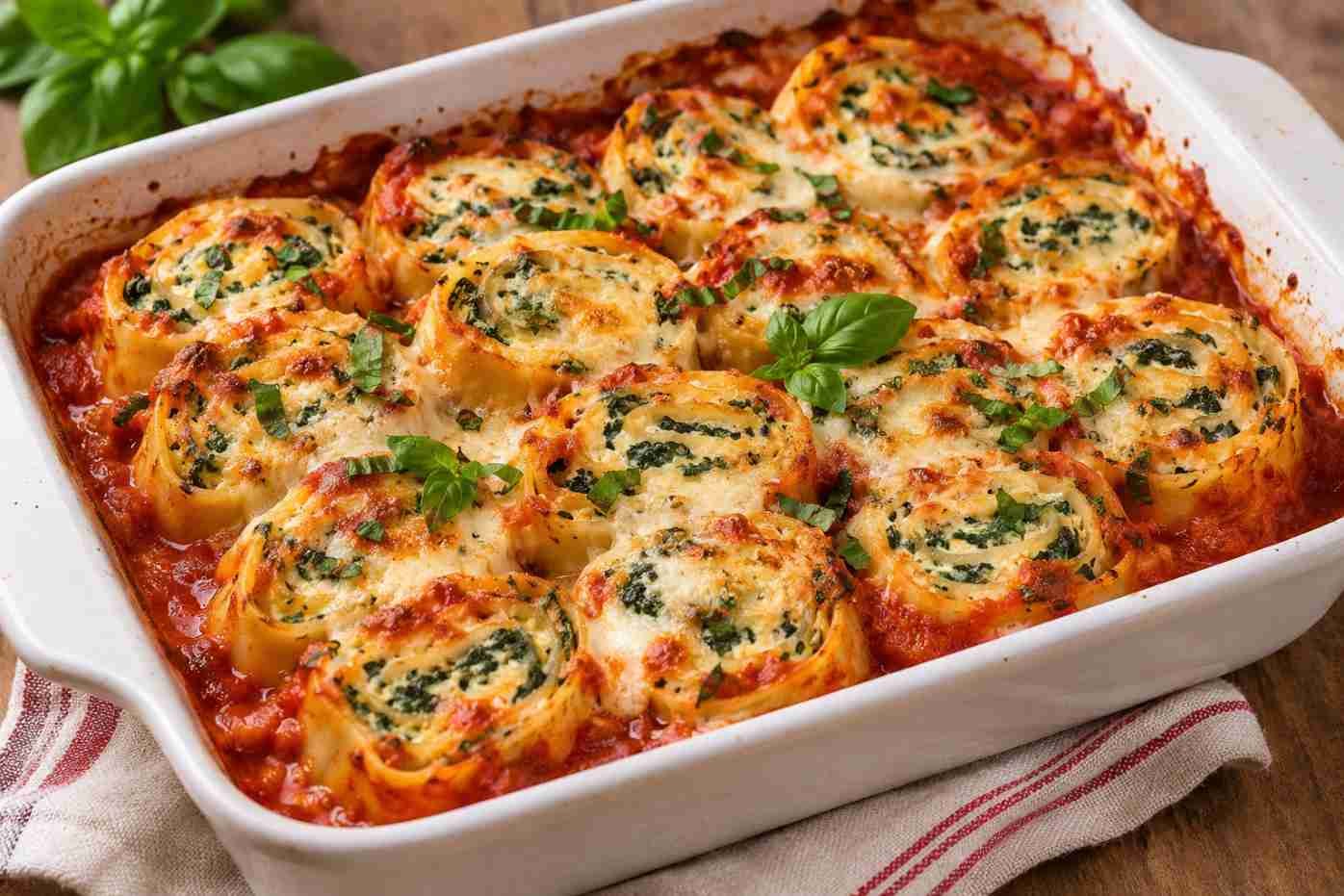
Spinach and Ricotta Rotolo is the sort of Italian pasta bake that looks rather impressive when it comes out of the oven, yet doesn’t require any particularly complicated cooking skills. Soft pasta spirals filled with creamy ricotta and spinach sit in a rich tomato sauce, with melted mozzarella and lightly crisped edges on top. It’s comforting, filling, and a little different from the usual lasagna.
The best part is the contrast in texture. The pasta stays tender where it meets the sauce, while the exposed edges become slightly golden during baking. Inside, the ricotta filling is creamy without being heavy, and the spinach adds a pleasant earthy flavor. A little lemon zest and fresh basil keep everything tasting fresh.
This baked version is especially convenient for family dinners because most of the preparation can be finished ahead of time. Once the rolls are assembled, the oven does the remaining work.
What Is Spinach and Ricotta Rotolo?
Rotolo is an Italian pasta dish traditionally made by spreading a filling over a large sheet of fresh pasta, rolling it into a cylinder, and cooking it before slicing. The word “rotolo” refers to something rolled or coiled.
This recipe takes a simpler approach. Instead of preparing one large pasta roll, individual lasagna sheets are filled, rolled, and cut into smaller spirals. The pieces are arranged upright in tomato sauce and baked until tender.
Unlike conventional lasagna, which has layers of pasta and filling, rotolo has visible swirls of ricotta and spinach. It also offers more exposed pasta edges, which become deliciously crisp under the oven’s heat.
Also Read: Tater Tot Bacon Cheeseburger Casserole
Recipe Overview
| Details | Information |
|---|---|
| Recipe Name | Spinach and Ricotta Rotolo |
| Cuisine | Italian |
| Course | Main Course |
| Preparation Time | 30 minutes |
| Cooking Time | 50 minutes |
| Total Time | 1 hour 20 minutes |
| Servings | 6 |
| Cooking Method | Oven-Baked |
| Difficulty | Moderate |
Ingredients for Spinach and Ricotta Rotolo
The ingredients are divided into three parts: the spinach and ricotta filling, the tomato sauce, and the pasta and cheese topping. Fresh lasagna sheets make assembly easier because they are flexible enough to roll without cracking.
For the Spinach and Ricotta Filling
- 400 g ricotta cheese, preferably whole milk
- 350 g frozen chopped spinach, thawed and thoroughly drained
- 1 large egg
- 1/2 cup freshly grated Parmesan cheese
- 1/2 cup shredded mozzarella cheese
- 2 garlic cloves, finely minced
- 1 teaspoon finely grated lemon zest
- 1/4 teaspoon ground nutmeg
- 1/2 teaspoon salt, or to taste
- 1/4 teaspoon freshly ground black pepper
For the Tomato Sauce
- 2 tablespoons olive oil
- 1 medium onion, finely chopped
- 3 garlic cloves, minced
- 700 g tomato passata
- 1 tablespoon tomato paste
- 3/4 cup water
- 1 teaspoon dried oregano
- 1/2 teaspoon dried basil
- 1/4 teaspoon red pepper flakes (optional)
- 1/2 teaspoon sugar, only if the tomatoes taste too acidic
- Salt and black pepper, to taste
- 6 fresh basil leaves, roughly torn
For Assembly and Topping
- 9 fresh lasagna sheets, approximately 15 x 20 cm each
- 3/4 cup shredded mozzarella cheese
- 2 tablespoons grated Parmesan cheese
- 1 tablespoon olive oil
- Fresh basil leaves, for serving
Also Read: Cream Corn Casserole with Cheese
How to Make Spinach and Ricotta Rotolo
Prepare the sauce first, followed by the filling. Having both ready before you start rolling the pasta makes assembly much easier. Use a baking dish approximately 23 x 33 cm (9 x 13 inches), preferably one with sides at least 5 cm deep.
Step 1: Prepare the Spinach
Thaw the frozen spinach completely, then place it in a clean kitchen towel or several layers of paper towels. Squeeze firmly until most of the liquid has been removed. This step matters more than it might seem. Wet spinach releases moisture during baking and can make the ricotta filling watery.
Transfer the drained spinach to a cutting board and chop it a little more if the pieces are large. Set it aside while you prepare the other ingredients.
Step 2: Cook the Tomato Sauce
Heat 2 tablespoons of olive oil in a saucepan over medium heat. Add the chopped onion and cook for about 5 minutes, stirring occasionally, until softened. Add the minced garlic and cook for another 30 seconds, just until fragrant.
Stir in the tomato paste and cook for 1 minute. Pour in the passata and water, then add oregano, dried basil, red pepper flakes, salt, and black pepper. Stir everything together and bring the sauce to a gentle simmer.
Cook uncovered for 10–12 minutes, stirring occasionally. The sauce should develop a deeper tomato flavor while remaining fairly loose. Avoid reducing it too much because the pasta will absorb some moisture during baking. Taste and add a little sugar only if necessary. Stir in the fresh basil and remove from the heat.
Step 3: Make the Ricotta Filling
Place the ricotta cheese in a large mixing bowl. Add the drained spinach, egg, Parmesan, mozzarella, minced garlic, lemon zest, nutmeg, salt, and black pepper.
Mix with a spoon until the ingredients are evenly distributed. The filling should be thick enough to spread without running off the pasta. If your ricotta seems unusually wet, drain it through a fine-mesh sieve before mixing.
Taste a small amount of the mixture before adding the raw egg if you want to check the seasoning. Once the egg has been mixed in, avoid tasting the uncooked filling.
Step 4: Prepare the Pasta Sheets
Preheat the oven to 190°C (375°F), or 170°C (340°F) for a fan-assisted oven. Lightly oil the sides of the baking dish.
Lay the fresh lasagna sheets on a clean work surface. If they feel stiff or begin cracking when bent, dip them briefly in hot water until flexible, then pat dry.
If using dried lasagna sheets, boil them according to the package instructions until flexible enough to roll. Drain carefully and arrange them separately on a lightly oiled tray so they do not stick together.
Step 5: Fill and Roll the Pasta
Spread a thin, even layer of the spinach and ricotta filling over each pasta sheet, leaving a small border around the edges. Divide the filling evenly among all nine sheets.
Starting from a shorter edge, roll each sheet into a firm cylinder without squeezing out the filling. Place the seam underneath to help the roll hold its shape.
Using a sharp knife, cut each cylinder into three equal pieces. You should have approximately 27 small pasta spirals, depending on the size of your sheets.
Step 6: Arrange the Rotolo
Spread about two-thirds of the tomato sauce across the bottom of the prepared baking dish. Stand the pasta spirals upright in the sauce with their cut sides facing upward. Arrange them close together but avoid packing them too tightly.
Spoon the remaining tomato sauce around the rolls and lightly over some of their tops. Leave portions of the pasta exposed so they can brown during baking. Drizzle with 1 tablespoon of olive oil.
Step 7: Bake Until Tender
Cover the baking dish loosely with aluminum foil, making sure it does not press directly against the pasta. Bake for 30 minutes.
Remove the foil and check whether the pasta is becoming tender. Sprinkle the mozzarella and Parmesan evenly over the rolls. Return the dish to the oven, uncovered, and bake for another 15–20 minutes.
The rotolo is ready when the sauce is bubbling around the edges, the pasta is fully tender, and the cheese has melted into golden patches. If the cheese needs more color, place the dish under the broiler for 1–2 minutes, watching closely to prevent burning.
Step 8: Rest and Serve
Remove the baking dish from the oven and let it stand for 8–10 minutes. This short resting period helps the filling settle and makes the pasta spirals easier to lift without falling apart.
Scatter fresh basil leaves over the top and serve warm, spooning some of the tomato sauce from the bottom of the dish onto each plate.
Also Read: Chicken and Rice Casserole Recipe
What You Can Do Better
A few small adjustments can make a noticeable difference to the finished rotolo, particularly when it comes to the filling, pasta texture, and tomato sauce.
Drain the Spinach Thoroughly
Excess moisture is one of the main reasons spinach and ricotta fillings become loose. After thawing, squeeze the spinach in small batches rather than trying to drain everything at once. The spinach should feel relatively dry before it goes into the mixing bowl.
Choose Ricotta with a Thick Texture
Ricotta varies considerably between brands. Some varieties are firm and slightly grainy, while others contain more liquid. A thicker ricotta gives the filling a better texture and helps the pasta spirals retain their shape. If necessary, refrigerate the ricotta in a fine-mesh strainer for 20–30 minutes before using it.
Keep the Tomato Sauce Slightly Loose
A thick pasta sauce might seem desirable, but rotolo needs enough liquid to cook the pasta evenly. If the sauce looks too concentrated before assembly, stir in a few tablespoons of water. The finished sauce will naturally thicken in the oven.
Use Freshly Grated Cheese
Freshly grated Parmesan gives the filling a more pronounced savory flavor. Mozzarella grated from a block also generally melts more smoothly than some pre-shredded varieties. Low-moisture mozzarella is particularly useful for the topping because it browns without releasing too much water.
Leave Some Pasta Edges Exposed
Covering every spiral completely with tomato sauce prevents the tops from developing their characteristic golden edges. Keep enough sauce around the bottom to cook the pasta, but allow the upper edges to remain visible.
Don’t Skip the Resting Time
Rotolo is easier to serve after a short rest. Cutting or lifting the spirals immediately after baking can cause the filling to spill out. Waiting a few minutes allows the cheese and filling to firm up slightly.
Also Read: Cheesy Zucchini Casserole Recipe
Ingredient Substitutions and Variations
Using Fresh Spinach Instead of Frozen
Fresh spinach works well in this recipe. Start with approximately 600–700 g of fresh leaves. Wash thoroughly, cook in a covered pan until wilted, and allow to cool. Squeeze out the moisture and chop finely before adding to the ricotta. Measure the cooked, drained spinach to match approximately the amount obtained from the frozen spinach.
Adding Mushrooms
For a more savory filling, sauté 150 g of finely chopped mushrooms until their moisture has evaporated. Cool completely before mixing them into the spinach and ricotta. Mushrooms add an earthy flavor without overwhelming the cheese.
Making a Spicier Tomato Sauce
Increase the red pepper flakes to 1/2 teaspoon or add a small amount of finely chopped fresh chili while cooking the garlic. The gentle heat works particularly well with the creamy filling.
Making It Without Egg
The egg helps bind the ricotta filling, but it can be omitted. Use well-drained ricotta and add an extra 2 tablespoons of finely grated Parmesan to give the mixture more body. The filling will be slightly softer but should still hold together after baking and resting.
Using Cottage Cheese
If ricotta is unavailable, well-drained cottage cheese can be used as a substitute. Blend it briefly for a smoother consistency, then drain any excess liquid. The flavor will be a little tangier and the texture less rich than traditional ricotta.
What to Serve with Spinach and Ricotta Rotolo
Because rotolo already contains pasta, cheese, vegetables, and tomato sauce, it works well as a complete main course. If you want to add something alongside it, choose a lighter side that balances the richness of the filling.
- Green Salad: A simple salad with arugula, cucumber, and lemon vinaigrette adds freshness.
- Garlic Bread: Toasted bread is useful for soaking up the tomato sauce left on the plate.
- Roasted Vegetables: Zucchini, bell peppers, or asparagus provide a lighter accompaniment.
- Tomato and Basil Salad: Fresh tomatoes dressed with olive oil and a little vinegar complement the baked pasta.
- Steamed Broccoli: A straightforward vegetable side that doesn’t compete with the main dish.
Also Read: Eggplant Parmigiana
Make-Ahead and Storage Instructions
Can You Prepare Rotolo in Advance?
Yes. Prepare the tomato sauce and ricotta filling up to one day ahead and refrigerate them separately in covered containers. You can also assemble the complete dish several hours before baking. Cover and refrigerate, then add a little extra water to the sauce if it has thickened while standing.
When baking directly from the refrigerator, allow approximately 10–15 additional minutes of covered cooking time. Check that the center is thoroughly hot before serving.
How to Store Leftovers
Allow leftover rotolo to cool slightly, then transfer it to an airtight container and refrigerate promptly, within 2 hours of cooking. Properly refrigerated leftovers can be kept for 3–4 days.
Can You Freeze Spinach and Ricotta Rotolo?
Yes. Rotolo can be frozen before or after baking. For an unbaked dish, assemble it in a freezer-safe container with a little extra sauce, cover tightly, and freeze for up to 2 months for best quality. Thaw overnight in the refrigerator before baking.
Cooked leftovers can also be frozen in individual portions. Keep them in airtight freezer-safe containers and thaw in the refrigerator before reheating.
How to Reheat Rotolo
Place the rotolo in an oven-safe dish and add a spoonful or two of water or tomato sauce to prevent drying. Cover with foil and reheat at 180°C (350°F) until steaming hot throughout, ideally reaching 74°C (165°F) in the center. Remove the foil for the last few minutes if you want to restore the lightly crisped top.
Nutritional Information
The following values are approximate estimates for one serving, based on dividing the complete recipe into six equal portions. Actual nutritional content will vary depending on the pasta sheets, ricotta, mozzarella, Parmesan, and tomato products used.
| Nutrient | Amount Per Serving (Approx.) |
|---|---|
| Calories | 490 kcal |
| Carbohydrates | 45 g |
| Protein | 25 g |
| Total Fat | 24 g |
| Saturated Fat | 11 g |
| Dietary Fiber | 5 g |
| Total Sugars | 9 g |
| Sodium | 780 mg |
| Calcium | Approximately 400 mg |
| Iron | Approximately 3 mg |
Nutrition estimates are provided for general reference and are not laboratory-tested values. For dietary tracking, calculate the figures using the exact brands and quantities used in your kitchen.
Also Read: One Pot Pasta Bolognese
Frequently Asked Questions
Can I Make Spinach and Ricotta Rotolo with Dried Lasagna Sheets?
Yes, but the dried sheets must be cooked until flexible before rolling. Follow the package directions and avoid overcooking them, as very soft pasta can tear during assembly. Once drained, place the sheets separately on a lightly oiled surface.
Why Is My Ricotta Filling Watery?
The most common causes are insufficiently drained spinach or ricotta containing too much liquid. Both ingredients should be drained before mixing. Adding more cheese will not always solve the problem, so removing excess moisture first is the better approach.
Can I Make Rotolo Without Tomato Sauce?
Yes. A light béchamel sauce can replace the tomato sauce for a creamier version. However, the sauce must remain loose enough to provide moisture while the pasta bakes. A combination of béchamel and a small amount of tomato sauce also works well.
How Do I Know When the Pasta Is Fully Cooked?
Insert a small knife into the center of one of the spirals. It should pass through the pasta without meeting a firm or chewy layer. If the pasta is still undercooked, add a little hot water around the rolls, cover the dish, and continue baking for another 5–10 minutes.
Is Spinach and Ricotta Rotolo Vegetarian?
The recipe contains no meat or fish, but traditional Parmesan is often made with animal rennet. For a strictly vegetarian version, choose Parmesan-style hard cheese and mozzarella made with microbial or vegetarian rennet.
Can I Use Homemade Pasta?
Homemade fresh pasta is an excellent choice. Roll the dough into thin sheets that are flexible enough to form spirals without cracking. Depending on thickness, the sheets may need a brief blanching before assembly.