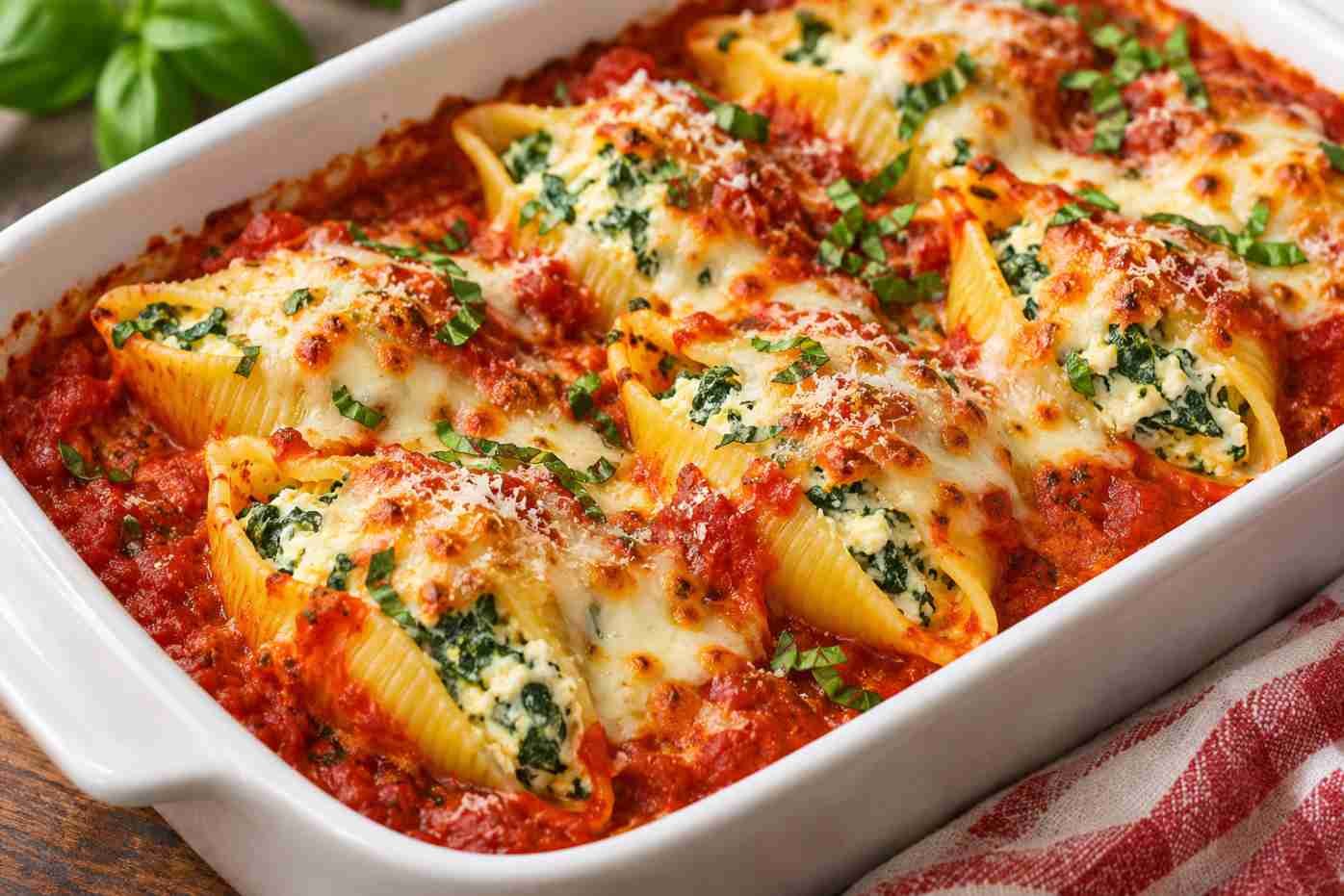
There is something particularly satisfying about pulling a baking dish of spinach ricotta stuffed shells from the oven. The tomato sauce is bubbling around the edges, the mozzarella has melted into a golden layer, and underneath it all are tender pasta shells packed with creamy ricotta and spinach. It is the kind of dinner that feels a little special without requiring complicated ingredients or restaurant-level cooking skills.
These stuffed pasta shells are a wonderful choice for a family dinner, a weekend meal, or an evening when you want something comforting that can be prepared ahead of time. The filling is rich but not overly heavy, thanks to the spinach, while the tomato sauce brings enough acidity to balance the cheese. You can assemble the entire dish earlier in the day and simply bake it when dinner approaches.
Recipe Overview
| Recipe Details | Information |
|---|---|
| Recipe Name | Spinach Ricotta Stuffed Shells |
| Cuisine | Italian-American |
| Course | Main Course |
| Preparation Time | 25 minutes |
| Cooking Time | 45 minutes |
| Total Time | 1 hour 10 minutes |
| Servings | 6 |
| Difficulty | Easy to Moderate |
| Cooking Method | Stovetop and Oven |
Ingredients for Spinach Ricotta Stuffed Shells
You do not need an especially long shopping list to make good stuffed shells. What matters most is using creamy ricotta, properly drained spinach, and a tomato sauce with enough flavor to hold its own against the cheese.
For the Pasta and Filling
- 24 jumbo pasta shells (conchiglioni), plus a few extra in case some break
- 15 oz (425 g) whole-milk ricotta cheese
- 10 oz (280 g) frozen chopped spinach, thawed and thoroughly drained
- 1 cup shredded mozzarella cheese
- 1/2 cup freshly grated Parmesan cheese
- 1 large egg
- 2 garlic cloves, finely minced
- 1 tablespoon chopped fresh parsley
- 1/2 teaspoon Italian seasoning
- 1/4 teaspoon ground nutmeg (optional)
- 1/2 teaspoon salt, or to taste
- 1/4 teaspoon freshly ground black pepper
For the Tomato Sauce
- 2 tablespoons olive oil
- 1 small yellow onion, finely chopped
- 3 garlic cloves, minced
- 28 oz (800 g) crushed tomatoes
- 2 tablespoons tomato paste
- 1 teaspoon dried oregano
- 1/2 teaspoon dried basil
- 1/2 teaspoon sugar, if needed
- 1/2 teaspoon salt, adjusted to taste
- 1/4 teaspoon black pepper
- 1/2 cup water
For the Topping
- 1 cup shredded mozzarella cheese
- 2 tablespoons grated Parmesan cheese
- Fresh basil leaves, for garnishing
- A little olive oil, optional
Also Read: Pulled Pork Recipe
How to Make Spinach Ricotta Stuffed Shells
The recipe comes together in four main parts: preparing the tomato sauce, cooking the pasta, mixing the filling, and assembling the baking dish. Once everything is ready, the oven takes care of the remaining work.
Step 1: Prepare the Tomato Sauce
Heat the olive oil in a medium saucepan over medium heat. Add the chopped onion and cook for about 4 to 5 minutes, stirring occasionally, until softened and lightly translucent. Add the minced garlic and cook for another 30 seconds, just until fragrant. Stir in the tomato paste and let it cook for about a minute. This helps develop a deeper tomato flavor rather than leaving the sauce tasting sharp or raw.
Add the crushed tomatoes, water, oregano, basil, salt, and black pepper. Stir well and bring the mixture to a gentle simmer. Reduce the heat and cook uncovered for 12 to 15 minutes, stirring occasionally. Taste the sauce before removing it from the heat. If the tomatoes are particularly acidic, add a small pinch of sugar. The finished sauce should be flavorful and slightly loose, as some moisture will be absorbed during baking.
Step 2: Cook the Jumbo Pasta Shells
Bring a large pot of generously salted water to a boil. Add the jumbo pasta shells and cook them for about 2 minutes less than the package instructions recommend. The shells should be flexible enough to fill but still slightly firm in the center. They will finish cooking in the oven, so there is no need to make them completely tender at this stage.
Drain the shells carefully and rinse briefly with cool water to stop the cooking process. Arrange them in a single layer on a lightly oiled tray or large plate. Keeping them separated makes stuffing easier and prevents them from sticking together or tearing.
Step 3: Prepare the Spinach Ricotta Filling
Place the thawed spinach in a clean kitchen towel and squeeze firmly to remove as much liquid as possible. This step makes a noticeable difference to the finished dish. Spinach that still contains excess water can make the ricotta filling loose and cause liquid to collect in the baking dish.
In a large mixing bowl, combine the ricotta cheese, drained spinach, mozzarella, Parmesan, egg, minced garlic, parsley, Italian seasoning, nutmeg, salt, and black pepper. Stir until everything is evenly distributed. The filling should be creamy and thick enough to hold its shape on a spoon. Taste can be adjusted through the seasonings before adding the raw egg, or by cooking a small sample of the mixed filling.
Step 4: Fill the Pasta Shells
Preheat the oven to 375°F (190°C). Spread approximately 1 cup of prepared tomato sauce across the bottom of a 9-by-13-inch baking dish. This layer prevents the pasta from sticking and keeps the bottoms of the shells moist while baking.
Take one cooked pasta shell and gently open it with your fingers. Spoon approximately 1 to 1 1/2 tablespoons of the spinach ricotta mixture into the center, depending on the shell’s size. Place it filling-side up in the baking dish. Repeat with the remaining shells, arranging them in neat rows. They can sit close together, but avoid squeezing them tightly enough to tear.
Step 5: Add the Sauce and Cheese
Spoon the remaining tomato sauce around the shells and lightly over their edges, leaving some of the creamy filling visible. Make sure the exposed pasta edges have enough sauce to prevent them from drying out. Sprinkle the remaining mozzarella evenly over the dish, followed by the Parmesan cheese. A little extra mozzarella is fine if you prefer a particularly cheesy topping, but covering the filling completely is not necessary.
Step 6: Bake Until Bubbling
Cover the baking dish loosely with aluminum foil, taking care that the foil does not press directly against the cheese. Bake for 25 minutes, then remove the foil and return the dish to the oven for another 10 to 15 minutes. The sauce should be bubbling, the cheese should be melted, and the shells should be fully tender. If you prefer a lightly browned surface, switch on the broiler for the final 1 to 2 minutes, watching closely to prevent burning.
Step 7: Rest and Serve
Remove the baking dish from the oven and let the stuffed shells rest for approximately 5 to 10 minutes before serving. This short resting period helps the filling settle and makes the shells easier to lift without breaking. Scatter a few torn basil leaves over the top and serve with extra sauce spooned from the baking dish.
Also Read: Rump Cap Roast
What You Can Do Better
A good stuffed shells recipe does not require any fancy techniques, but several small decisions can improve the final result. These are the details worth paying attention to, especially if you are preparing the dish for guests or making it for the first time.
Choose Ricotta with a Creamy Texture
Whole-milk ricotta generally produces a softer, richer filling than low-fat varieties. If your ricotta looks watery when you open the container, let it drain briefly in a fine-mesh strainer. You want a creamy mixture, not a filling with liquid pooling at the bottom of the bowl. Avoid overmixing once the ingredients are combined.
Do Not Overcook the Pasta
One of the most common problems with stuffed shells is pasta that becomes too soft after baking. Because the shells spend additional time in hot tomato sauce, slightly undercooking them on the stovetop gives better results. They should bend without cracking but still have some firmness when you fill them.
Remove Moisture from the Spinach
This is probably the most important step in preparing the filling. Frozen spinach retains plenty of water even after thawing. Squeezing it thoroughly prevents a watery filling and improves the balance between spinach and cheese. If using fresh spinach, cook it until wilted, let it cool, and squeeze out the moisture before chopping.
Season the Filling Properly
Ricotta has a mild flavor, so it benefits from garlic, Parmesan, herbs, and enough salt. A small pinch of nutmeg works particularly well with spinach, although it should remain subtle. For a slightly brighter flavor, you can also add a little finely grated lemon zest to the filling.
Keep Enough Sauce in the Dish
Stuffed pasta shells can become dry if the baking dish contains too little sauce. Make sure the bottom is well covered and there is enough sauce around the pasta to keep it moist. If your prepared sauce has thickened considerably, stir in a few tablespoons of water before assembling the dish.
Also Read: Irish Beef and Guinness Stew
Easy Variations to Try
Spinach Ricotta Stuffed Shells with Mushrooms
Finely chop about 1 cup of mushrooms and sauté them in a little olive oil until their moisture evaporates. Allow them to cool before mixing them into the ricotta filling. Mushrooms contribute a savory, earthy flavor and work especially well with garlic and Parmesan.
Extra Cheesy Stuffed Shells
For a richer filling, replace a small portion of the ricotta with softened cream cheese or add a few tablespoons of shredded provolone. You can also combine mozzarella and fontina on top for a more pronounced melted-cheese flavor.
Stuffed Shells with Fresh Spinach
If you prefer fresh spinach, start with approximately 1 pound (450 g) of leaves. Cook them briefly in a skillet until wilted, then cool, squeeze dry, and chop finely. Fresh spinach provides a pleasant flavor, but removing the moisture is just as important as it is with frozen spinach.
Spicy Tomato Stuffed Shells
Add 1/4 to 1/2 teaspoon of crushed red pepper flakes to the tomato sauce while sautéing the garlic. The gentle heat balances the richness of the filling without overwhelming the spinach or ricotta.
What to Serve with Spinach Ricotta Stuffed Shells
Because the pasta is already filling, lighter side dishes usually make the best accompaniments. A simple green salad dressed with olive oil and lemon juice adds freshness, while roasted zucchini, broccoli, or asparagus brings another vegetable to the plate. Garlic bread is also a natural partner, especially when there is plenty of tomato sauce left in the baking dish. For a more substantial dinner, serve smaller portions of the shells alongside a large Italian-style salad with cucumbers, tomatoes, red onion, and a tangy vinaigrette.
Make-Ahead and Storage Instructions
Can You Prepare Stuffed Shells Ahead of Time?
Yes. Assemble the stuffed shells with the cooled sauce in the baking dish, cover tightly, and refrigerate for up to 24 hours before baking. Because the ingredients will be cold, allow approximately 5 to 10 additional minutes of covered baking time. Check that the center is hot and the pasta is fully tender before serving.
How to Store Leftovers
Allow the cooked shells to cool slightly, then transfer them to an airtight container and refrigerate within 2 hours of cooking. Properly refrigerated leftovers can be stored for 3 to 4 days. Keep some tomato sauce with the shells so they remain moist when reheated.
Can You Freeze Spinach Ricotta Stuffed Shells?
Yes. For convenient individual portions, freeze the fully cooked and cooled shells with some sauce in freezer-safe containers. They are best used within 2 to 3 months for good texture and flavor. Thaw overnight in the refrigerator before reheating. You can also freeze an assembled, unbaked dish, but use a freezer-safe pan and thaw it in the refrigerator before baking.
How to Reheat Stuffed Shells
For oven reheating, place the shells in a baking dish with a few spoonfuls of tomato sauce or water. Cover with foil and warm at 350°F (175°C) until heated through. Individual servings can also be reheated in the microwave in a covered microwave-safe container. Heat leftovers thoroughly to an internal temperature of 165°F (74°C).
Also Read: Gazpacho Recipe
Nutritional Information
Spinach ricotta stuffed shells provide carbohydrates from the pasta, protein from the cheese and egg, and nutrients from spinach and tomatoes. The dish is fairly substantial, so serving it with a vegetable side can help create a balanced meal. The following values are approximate estimates for one of six servings, based on the ingredients listed in this recipe.
| Nutrient | Estimated Amount Per Serving |
|---|---|
| Calories | 530 kcal |
| Carbohydrates | 43 g |
| Protein | 28 g |
| Total Fat | 28 g |
| Saturated Fat | 14 g |
| Dietary Fiber | 5 g |
| Total Sugars | 9 g |
| Sodium | 880 mg |
| Cholesterol | 115 mg |
| Calcium | Approximately 450 mg |
| Iron | Approximately 3 mg |
Nutrition Note: These figures are estimates rather than laboratory-tested values. Actual nutrition will depend on the brands of pasta and cheese, the amount of filling used per shell, and the final serving size. Using reduced-sodium tomatoes and adjusting the added salt can help lower the sodium content.
Also Read: Tuna Casserole Bake Recipe
Frequently Asked Questions
Do I Need to Boil the Pasta Shells Before Stuffing?
For this recipe, yes. The shells are partially cooked before filling, which makes them flexible and helps them finish cooking evenly during the relatively short baking time. Some stuffed shell recipes use uncooked pasta, but those require considerably more liquid and longer covered baking. The two methods should not be swapped without adjusting the sauce and cooking time.
Why Are My Spinach Ricotta Stuffed Shells Watery?
Excess moisture usually comes from spinach that was not squeezed thoroughly or ricotta that contains too much liquid. Draining both ingredients when necessary helps the filling maintain its texture. A very thin tomato sauce can also contribute excess moisture, so simmer the sauce until it is slightly thickened before assembling.
Can I Make These Stuffed Shells Without an Egg?
Yes. The egg helps bind the ricotta mixture, but the dish can be made without it. The filling may be somewhat softer after baking. If omitting the egg, use well-drained ricotta and spinach, and consider adding a little extra grated Parmesan to create a firmer mixture.
Can I Use Cottage Cheese Instead of Ricotta?
Cottage cheese can be used if ricotta is unavailable, although the texture and flavor will be different. For a smoother filling, blend the cottage cheese briefly and drain any excess liquid before mixing it with the spinach and seasonings.
How Many Stuffed Shells Should I Serve Per Person?
For this recipe, four large stuffed shells make a reasonable main-course portion when served with salad or vegetables. The exact amount depends on the size of the pasta shells and how generously they are filled. For a larger appetite, offer an extra shell or two along with additional sauce.
How Do I Keep the Cheese from Browning Too Quickly?
Keep the baking dish covered during the first part of baking and remove the foil only for the final 10 to 15 minutes. If the cheese begins browning before the filling is fully heated, loosely cover the dish again and continue baking until everything is cooked through.