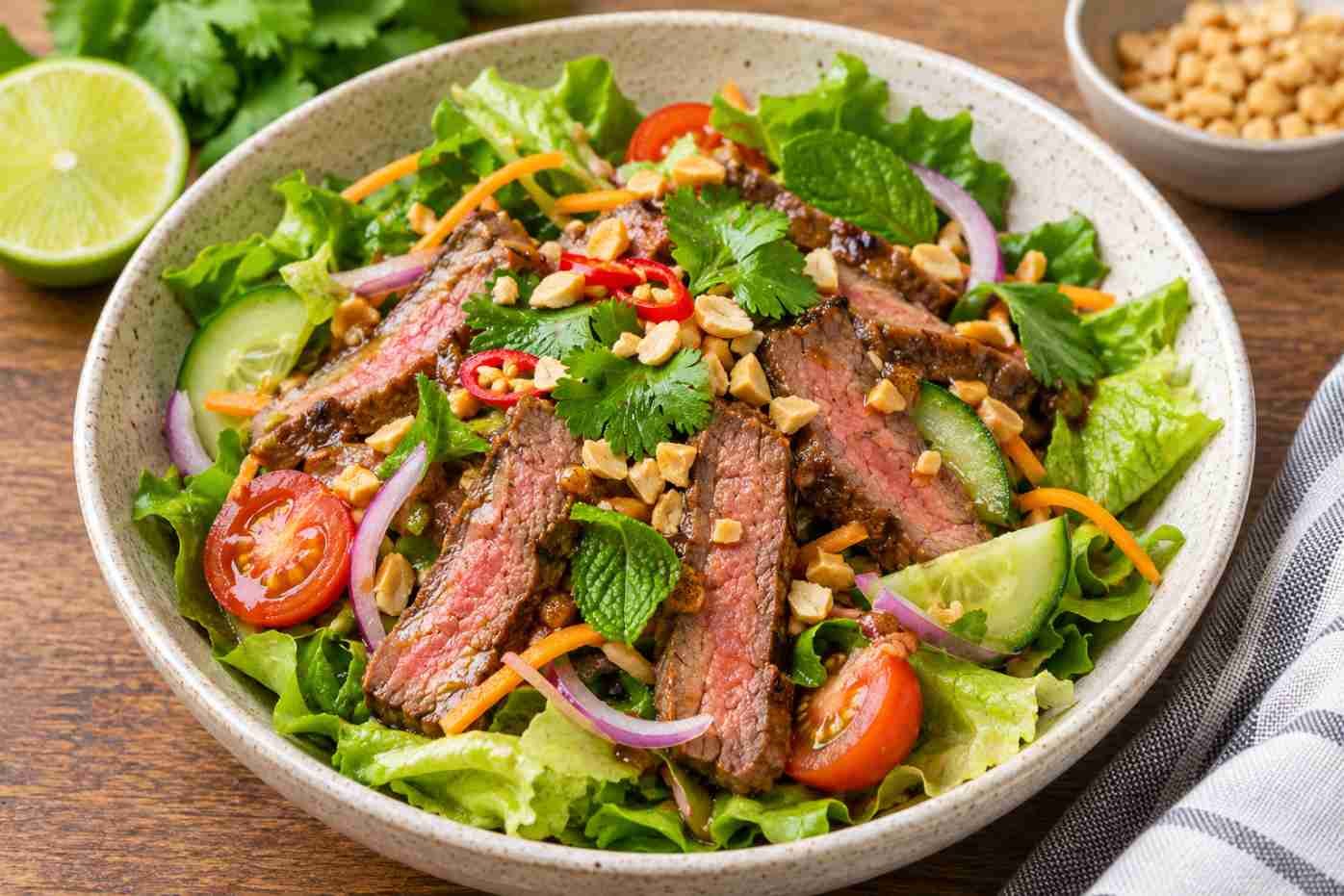
A good beef salad should be more than a few slices of steak sitting on top of lettuce. The beef needs a proper sear, the vegetables should stay crisp, and the dressing must be bold enough to bring everything together without overpowering the meat. This Beef Salad takes inspiration from the bright, punchy flavors of Thai cooking, combining tender steak with cucumber, tomatoes, fresh herbs, crunchy peanuts, and a tangy lime dressing. It is fresh, filling, and surprisingly straightforward to make at home.
What makes this recipe particularly useful is that it works just as well for a quick weeknight dinner as it does for a weekend lunch. You can prepare the vegetables and dressing while the steak cooks, and the whole meal comes together in about 30 minutes. There is no complicated marinade or lengthy cooking process. A hot pan, a decent cut of beef, and a handful of fresh ingredients do most of the work.
Beef Salad Recipe Overview
| Recipe Details | Information |
|---|---|
| Preparation Time | 20 minutes |
| Cooking Time | 10 minutes |
| Total Time | 30 minutes |
| Servings | 2 generous portions |
| Course | Lunch, Dinner, Main Course |
| Cuisine | Thai-Inspired |
| Difficulty | Easy |
Ingredients for Beef Salad
This salad uses everyday ingredients, although fresh lime juice and herbs are especially important. Their sharp, fragrant flavor gives the dish its character. Choose a tender steak suitable for quick pan-searing, and keep the vegetables chilled until you are ready to assemble everything.
For the Beef
- 300 g (about 10.5 oz) sirloin or flank steak
- 1 tablespoon neutral cooking oil
- 1/2 teaspoon freshly ground black pepper
- 1/4 teaspoon salt
For the Salad
- 3 cups mixed lettuce leaves, washed and dried
- 1 medium cucumber, thinly sliced
- 10 cherry tomatoes, halved
- 1 small red onion, thinly sliced
- 1/4 cup fresh coriander (cilantro) leaves
- 1/4 cup fresh mint leaves
- 1 small carrot, cut into thin strips
- 2 tablespoons roasted peanuts, roughly chopped
- 1 small red chili, thinly sliced, optional
For the Lime Dressing
- 3 tablespoons freshly squeezed lime juice
- 1 tablespoon fish sauce
- 1 tablespoon light soy sauce
- 2 teaspoons brown sugar
- 1 teaspoon finely grated fresh ginger
- 1 garlic clove, finely minced
- 1 tablespoon neutral oil
- 1 teaspoon finely chopped coriander stems
Also Read: Steak Salad Recipe
How to Make Beef Salad
The easiest way to prepare this salad is to make the dressing first, get the vegetables ready, and cook the steak last. That way, the beef is still slightly warm when it meets the cool, crunchy vegetables.
Step 1: Prepare the Dressing
Combine the lime juice, fish sauce, soy sauce, brown sugar, grated ginger, minced garlic, oil, and chopped coriander stems in a small bowl. Whisk until the sugar dissolves and the ingredients are well mixed. Taste before setting it aside. The dressing should have a noticeable sourness from the lime, a savory depth from the sauces, and just enough sweetness to round everything out. If it tastes too sharp, add a small pinch of sugar. If it seems overly sweet, squeeze in a little more lime juice.
Step 2: Prepare the Vegetables
Wash the lettuce thoroughly and dry it well using a salad spinner or clean kitchen towel. Excess water can dilute the dressing, so this step makes a real difference. Slice the cucumber, halve the cherry tomatoes, and cut the red onion into thin strips. If the onion tastes particularly strong, soak the slices in cold water for five minutes, then drain. Cut the carrot into fine strips and roughly chop the coriander and mint only if the leaves are large. Place the prepared vegetables in a bowl and refrigerate while you cook the beef.
Step 3: Season the Steak
Pat the steak dry with paper towels. Moisture on the surface prevents proper browning, so take a moment to do this thoroughly. Rub the steak with the cooking oil, then season both sides with salt and black pepper. There is no need to marinate the beef because the lime dressing provides plenty of flavor once the salad is assembled.
Step 4: Cook the Beef
Heat a heavy skillet or cast-iron pan over medium-high to high heat until hot. Add the steak and cook without moving it unnecessarily. For a steak approximately 2 cm thick, start with about 2 to 3 minutes per side, adjusting according to thickness and the desired doneness. A meat thermometer is more reliable than cooking time alone. For medium-rare beef, aim for a final internal temperature of around 57°C (135°F) after resting; for medium, around 63°C (145°F). For the food-safety recommendation for whole beef steaks, cook to at least 63°C (145°F) and rest for 3 minutes. Remove the steak from the pan once it reaches the appropriate temperature for your preference and food-safety needs.
Step 5: Rest and Slice the Steak
Transfer the cooked beef to a cutting board and leave it to rest for 5 to 10 minutes. This allows the juices to settle instead of spilling out immediately when the meat is cut. Once rested, slice the steak thinly against the grain. Cutting across the muscle fibers is especially important when using flank steak, which can become chewy if sliced in the wrong direction.
Step 6: Assemble the Salad
Place the lettuce, cucumber, tomatoes, red onion, carrot, mint, and coriander in a large mixing bowl. Add approximately half of the dressing and toss gently until the vegetables are lightly coated. Arrange the sliced beef over the salad, then spoon over the remaining dressing according to taste. Finish with chopped roasted peanuts and fresh chili if using. Serve immediately while the vegetables are crisp and the beef is still slightly warm.
What You Can Do Better
Choose the right beef: Sirloin is a reliable choice because it is tender, flavorful, and cooks quickly. Flank steak also works beautifully, particularly when sliced thinly against the grain. You do not need the most expensive steak, but avoid cuts intended for slow cooking because they can remain tough after a quick sear.
Get a proper sear: A hot pan and a dry steak are essential for developing a flavorful browned surface. Avoid overcrowding the skillet, which traps moisture and causes the beef to steam instead of sear. If you are doubling the recipe, cook the steaks in batches.
Keep the dressing balanced: Lime juice, fish sauce, soy sauce, and sugar contribute acidity, saltiness, umami, and sweetness. Small adjustments can change the character of the salad considerably. Taste the dressing before pouring it over the vegetables rather than trying to correct the flavor after everything has been mixed.
Slice the vegetables thinly: Thick chunks of onion or cucumber can dominate individual bites. Thin slices distribute the crunch and flavor more evenly, so you get a little of everything with each forkful.
Do not overdress the lettuce: Add the dressing gradually, especially if your tomatoes and cucumber are particularly juicy. The salad should be glossy and well seasoned, not sitting in a pool of liquid.
Add the herbs at the end: Fresh coriander and mint give this salad much of its fragrance. Mixing them too aggressively or leaving them in acidic dressing for too long can make the leaves wilt. Add them shortly before serving for the freshest result.
Also Read: Cucumber Salad Vinegar Recipe
Ingredient Substitutions and Variations
Make It Less Spicy
Leave out the fresh chili entirely, or remove the seeds and use just a few thin slices. The dressing still tastes fresh and lively without the extra heat.
Try Different Vegetables
Thinly sliced red bell pepper, shredded purple cabbage, bean sprouts, or finely sliced radishes work well in this recipe. They provide extra crunch without changing the overall character of the dish. Keep the proportions balanced so the steak remains the main ingredient.
Make a More Filling Meal
Serve the beef salad with steamed jasmine rice or rice noodles. Both absorb the flavorful dressing and turn the salad into a more substantial dinner. If adding noodles directly to the bowl, prepare a little extra dressing because the noodles will soak up some of the liquid.
Use an Alternative to Peanuts
Toasted cashews or sunflower seeds provide a similar crunch. You can also skip the garnish entirely if you prefer a simpler salad. For a peanut allergy, check packaged ingredients and avoid cross-contact.
Adjust the Dressing
If fish sauce is unavailable, use an additional small amount of soy sauce, tasting as you go. The result will have a slightly different flavor because fish sauce contributes a distinctive savory depth. For a gluten-free version, use certified gluten-free tamari instead of regular soy sauce and verify that the fish sauce is gluten-free.
Also Read: Arugula Salad Recipe
What to Serve with Beef Salad
This salad is satisfying enough to serve on its own, particularly for lunch. If you are preparing a larger meal, steamed jasmine rice makes a natural accompaniment because its mild flavor balances the sharp dressing. Rice noodles are another good option, especially during warmer weather when you want something light but filling.
For a dinner spread, pair the salad with lightly stir-fried vegetables or a simple clear soup. Avoid overly rich side dishes because the salad already has a generous amount of flavor from the lime, herbs, garlic, and sauces.
Storage and Meal Preparation
Beef Salad tastes best immediately after assembling, but most of the components can be prepared in advance. Store the washed vegetables in an airtight container lined with a paper towel to absorb moisture. Keep the dressing in a separate sealed jar in the refrigerator and shake it before using.
Cooked steak can be refrigerated in an airtight container for 3 to 4 days when promptly cooled and stored at 4°C (40°F) or below. For meal preparation, refrigerate the cooked beef separately and slice it when needed. Once the lettuce and vegetables have been mixed with the dressing, they begin to lose their crispness, so avoid storing the fully dressed salad for long periods.
If you are packing this dish for lunch, arrange the vegetables in one container, the sliced beef in another compartment, and the dressing in a small leakproof container. Combine everything shortly before eating.
Also Read: Cucumber Tomato Onion Salad Recipe
Nutritional Information
This Beef Salad provides a substantial amount of protein from the steak, along with vegetables, fresh herbs, and moderate amounts of fat from the oil and peanuts. The values below are approximate estimates for one serving when the full recipe is divided into two portions. Actual values vary depending on the beef cut, trimming, brands of sauces, and the amount of dressing consumed.
| Nutrient | Approximate Amount Per Serving |
|---|---|
| Calories | 440 kcal |
| Protein | 38 g |
| Total Fat | 25 g |
| Saturated Fat | 7 g |
| Carbohydrates | 19 g |
| Dietary Fiber | 4 g |
| Total Sugars | 11 g |
| Sodium | 1,100 mg |
| Cholesterol | 105 mg |
Nutrition note: These figures are estimates rather than laboratory-tested values. Fish sauce and soy sauce contribute a significant amount of sodium, so reduced-sodium products or smaller amounts may be preferable when limiting salt intake.
Frequently Asked Questions
What is the best cut of beef for salad?
Sirloin, flank steak, and flat iron steak are all suitable choices. Sirloin is generally tender and easy to cook, while flank steak has a pronounced beef flavor and works particularly well when thinly sliced against the grain. Choose a cut that can be cooked quickly over high heat.
Can I make Beef Salad ahead of time?
Yes, but store the components separately. The dressing, chopped vegetables, and cooked beef can be prepared in advance and refrigerated. Combine them just before serving to prevent the lettuce from becoming soggy.
Can I use leftover steak?
Absolutely. Leftover cooked steak is convenient for this recipe. Slice it thinly and add it cold or gently warmed, provided it has been stored safely in the refrigerator. Avoid overheating it, as repeated cooking can make the meat dry and chewy.
Is Beef Salad served hot or cold?
It is best served with warm or room-temperature beef and cool, crisp vegetables. This contrast makes the dish particularly enjoyable. However, fully chilled beef also works well, especially when using leftovers for lunch.
Can I make Beef Salad without fish sauce?
Yes. Replace the fish sauce with a smaller amount of soy sauce or tamari and adjust to taste. The dressing will be less traditionally Thai in character, but the lime, ginger, garlic, and herbs will still give the salad plenty of flavor.
How do I prevent the beef from becoming tough?
Avoid overcooking, allow the steak to rest, and slice it thinly against the grain. These three steps have a noticeable effect on texture. Using a meat thermometer also helps prevent accidentally cooking the steak beyond your preferred doneness.