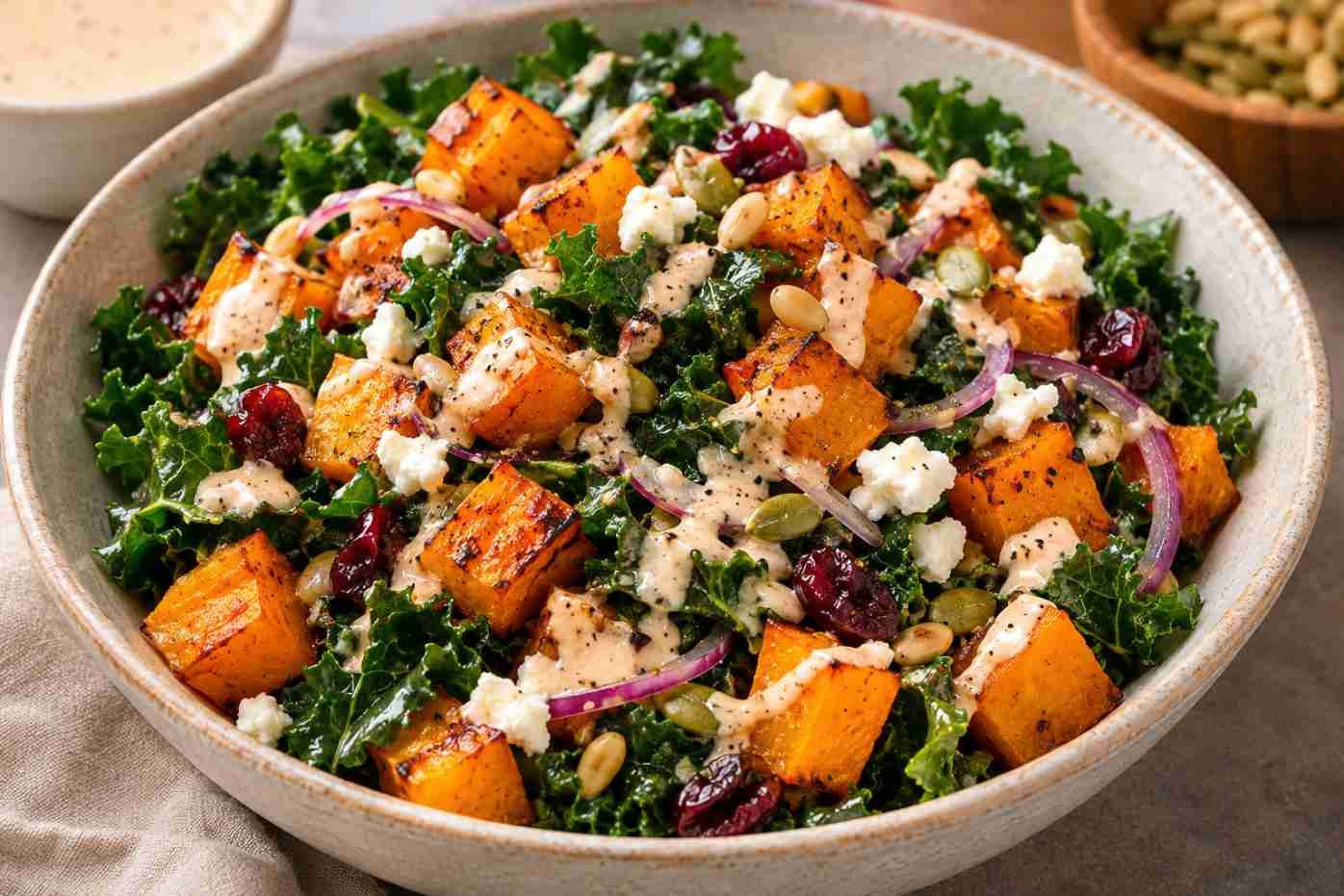
Some salads are meant to be light and refreshing. Others are hearty enough to make you forget you’re eating a salad at all. This roasted butternut squash salad falls somewhere in the middle, with warm, caramelized squash, tender kale, sweet dried cranberries, creamy goat cheese, and a generous handful of toasted nuts and seeds.
The dressing is what brings everything together. Instead of the usual sweet vinaigrette, we’re making a creamy chipotle ranch with a little smokiness, a little heat, and enough tang to balance the sweetness of the roasted squash. It’s a lovely combination, especially when the squash is still slightly warm.
This is the kind of salad that works just as well for a weekday lunch as it does on a Thanksgiving table. You can prepare most of it ahead of time, and it doesn’t rely on delicate lettuce that wilts the moment you add dressing.
Roasted Butternut Squash Salad at a Glance
| Recipe Details | Information |
|---|---|
| Preparation Time | 20 minutes |
| Cooking Time | 30 minutes |
| Total Time | 50 minutes |
| Servings | 6 side servings |
| Course | Salad, Side Dish |
| Cuisine | American-Inspired |
| Cooking Method | Oven Roasting |
| Difficulty | Easy |
Ingredients for Roasted Butternut Squash Salad
There are three parts to this recipe: the roasted squash, the fresh salad ingredients, and the homemade chipotle ranch dressing. Most ingredients are easy to find, and there is plenty of room for substitutions.
For the Roasted Butternut Squash
- 1 medium butternut squash, about 2 pounds whole, peeled and cut into 3/4-inch cubes (approximately 4 cups)
- 1 1/2 tablespoons olive oil
- 1/2 teaspoon smoked paprika
- 1/2 teaspoon garlic powder
- 1/2 teaspoon kosher salt
- 1/4 teaspoon freshly ground black pepper
For the Salad
- 5 cups chopped Tuscan kale, stems removed
- 1/3 cup dried cranberries
- 1/3 cup crumbled goat cheese
- 1/4 cup toasted pumpkin seeds (pepitas)
- 2 tablespoons toasted pine nuts
- 1/4 small red onion, very thinly sliced
- 1 teaspoon olive oil, for massaging the kale
For the Chipotle Ranch Dressing
- 1/3 cup plain Greek yogurt
- 2 tablespoons mayonnaise
- 3 tablespoons buttermilk
- 1 chipotle pepper in adobo sauce, finely minced
- 1 teaspoon adobo sauce from the can
- 1 tablespoon fresh lime juice
- 1 teaspoon honey
- 1/2 teaspoon dried dill
- 1/4 teaspoon garlic powder
- 1/4 teaspoon onion powder
- Salt and black pepper, to taste
- 1–2 tablespoons water, if needed to thin the dressing
Also Read: Kale Power Salad
How to Make Roasted Butternut Squash Salad
The process is straightforward. Roast the squash until the edges turn golden, prepare the dressing while it’s in the oven, and assemble everything just before serving. The only part worth taking your time with is roasting the squash. That caramelized exterior makes a noticeable difference to the finished salad.
Step 1: Preheat the Oven and Prepare the Squash
Preheat your oven to 425°F (220°C). Line a large baking sheet with parchment paper for easier cleanup.
Peel the butternut squash, slice it in half lengthwise, and scoop out the seeds with a spoon. Cut the flesh into roughly 3/4-inch cubes. Try to keep the pieces similar in size so they cook evenly.
If you’re using packaged, pre-cut squash, check for oversized pieces and cut them down if necessary. Smaller, evenly sized cubes roast more consistently.
Step 2: Season and Roast the Squash
Place the squash cubes in a large bowl. Add olive oil, smoked paprika, garlic powder, salt, and black pepper. Toss until the pieces are evenly coated.
Spread the squash over the prepared baking sheet in a single layer. Leave a little space between the cubes rather than piling them together.
Roast for 25–30 minutes, turning the squash halfway through cooking. The pieces should be tender when pierced with a fork, with golden brown edges and a few darker caramelized spots.
Remove the baking sheet from the oven and let the squash cool for about 5–10 minutes. You want it warm, not piping hot, when it goes into the salad.
Step 3: Prepare the Kale
While the squash is roasting, wash the kale thoroughly and dry it well. Remove the thick central stems and chop the leaves into bite-sized pieces.
Place the kale in a large salad bowl and drizzle with 1 teaspoon of olive oil. Massage the leaves gently with clean hands for about 1–2 minutes.
This simple step softens the kale and makes it much more pleasant to eat. You’ll notice the leaves become darker, slightly glossy, and less stiff. There’s no need to massage them until they’re completely limp.
Step 4: Make the Chipotle Ranch Dressing
In a medium bowl, combine the Greek yogurt, mayonnaise, buttermilk, minced chipotle pepper, adobo sauce, lime juice, honey, dill, garlic powder, and onion powder.
Whisk until smooth and creamy. Taste the dressing before adding salt and pepper, as the adobo sauce already contributes seasoning.
If the dressing seems too thick to drizzle, add a tablespoon of water and whisk again. Continue adding a little water until you reach your preferred consistency.
For a completely smooth dressing, blend everything in a small food processor or blender. Refrigerate until ready to use.
Step 5: Toast the Nuts and Seeds
Place the pine nuts and pumpkin seeds in a dry skillet over medium-low heat. Toast for 2–4 minutes, stirring frequently, until fragrant and lightly golden. Transfer them to a plate immediately to prevent further browning.
Pine nuts can burn quickly, so keep a close eye on the pan. If your pumpkin seeds are already roasted, you can skip toasting those.
Step 6: Assemble the Salad
Add the warm roasted butternut squash to the bowl of prepared kale. Scatter the dried cranberries, sliced red onion, toasted pumpkin seeds, and pine nuts over the top.
Drizzle with about half the chipotle ranch dressing and toss gently to combine. Add more dressing gradually, depending on how creamy you like your salad.
Finish with crumbled goat cheese and a little freshly ground black pepper. Adding the cheese last helps keep the crumbles intact rather than blending them into the dressing.
Step 7: Serve
Serve immediately while the squash is still slightly warm, or allow the assembled ingredients to cool and enjoy the salad at room temperature.
Keep any extra dressing on the side. That way, everyone can add more without making the salad overly heavy.
What You Can Do Better
A good roasted squash salad doesn’t require complicated techniques, but a few small adjustments can make the difference between something ordinary and a salad you’ll want to make again.
Give the Squash Enough Room
One of the most common mistakes when roasting vegetables is overcrowding the baking sheet. When the squash is packed too tightly, moisture gets trapped and the cubes steam instead of browning. Use two baking sheets if necessary. A little extra space helps develop those sweet, caramelized edges.
Don’t Cut the Squash Too Small
Very small pieces can become mushy before they develop much color. Aim for cubes around 3/4 inch. They should be soft in the center but still hold their shape when tossed with the kale.
Balance the Sweetness
Butternut squash and dried cranberries both bring natural sweetness to the salad. That’s why the lime juice, smoky chipotle, and tangy goat cheese matter. Taste the dressing before serving. If the salad seems too sweet, a little extra lime juice can bring everything back into balance.
Control the Heat
Chipotle peppers in adobo sauce can vary in intensity. Start with half a pepper if you prefer a mild dressing. You can always add more after tasting. For a spicier version, increase the amount of adobo sauce or add another small piece of chipotle.
Keep the Crunch Until the End
Toasted nuts and seeds taste best when they’re added shortly before serving. If you’re preparing the salad for a gathering, keep them in a separate container and sprinkle them over the top at the last minute.
Also Read: Patty Pan Squash Recipe
Easy Variations and Ingredient Substitutions
This salad is flexible enough to work with whatever you have in the kitchen. You can change the greens, use different nuts, or add a protein to turn it into a complete lunch.
Make It Vegan
Replace the goat cheese with a dairy-free alternative or omit it altogether. Use unsweetened plant-based yogurt, vegan mayonnaise, and a little unsweetened plant milk in place of the dairy-based dressing ingredients. Substitute maple syrup for honey.
Use a Different Green
Baby spinach, arugula, and mixed greens all work well. Arugula adds a peppery flavor that pairs particularly nicely with sweet squash. If using delicate greens, allow the roasted squash to cool completely before combining.
Add More Protein
For a more filling meal, add cooked chickpeas, grilled chicken, roasted tofu, or cooked quinoa. Chickpeas are especially convenient because they can be tossed directly into the salad without much extra preparation.
Change the Cheese
Feta is a good substitute for goat cheese if you prefer a saltier, firmer texture. Crumbled blue cheese also works, although its stronger flavor will be more noticeable alongside the chipotle dressing.
Try Different Nuts
Toasted pecans, walnuts, or sliced almonds can replace the pine nuts. Pecans are particularly good with roasted squash because of their naturally buttery flavor.
Make It Less Spicy
Leave out the chipotle pepper and use a little smoked paprika instead. You’ll still get a hint of smoky flavor without the same level of heat.
What to Serve with Roasted Butternut Squash Salad
Because this salad has a mix of sweet, savory, creamy, and smoky flavors, it pairs well with simple main dishes. Roast chicken, grilled turkey, baked salmon, or a bowl of hearty vegetable soup all make good companions.
For a holiday meal, it provides a fresh contrast to rich dishes such as mashed potatoes, stuffing, and casseroles. The cranberries and roasted squash also give it the kind of color that looks right at home on a fall dinner table.
If you’re serving it as a main course, add quinoa or chickpeas and offer some warm crusty bread on the side. That makes the meal more substantial without changing the character of the salad.
Also Read: Acorn Squash Recipe
Make-Ahead and Storage Instructions
Can You Make This Salad Ahead of Time?
Yes, and it’s a useful recipe for entertaining because nearly everything can be prepared in advance.
Roast the butternut squash up to 2 days ahead and refrigerate it in an airtight container. Wash, chop, and dry the kale in advance as well. Store the dressing separately in the refrigerator, and keep the toasted nuts and seeds in a sealed container.
When you’re ready to serve, gently reheat the squash if you prefer a warm salad, then assemble everything. The kale is sturdy enough to handle a little warmth without immediately wilting.
How Long Does It Last in the Refrigerator?
Undressed salad components can generally be refrigerated for up to 3 days when stored properly. Once the salad has been tossed with dressing, it’s best eaten within 24 hours for the freshest texture.
Store leftover dressing in a covered container in the refrigerator and use within 3–4 days. Stir well before serving because some separation is normal.
Can You Freeze Roasted Butternut Squash Salad?
Freezing the assembled salad isn’t recommended. Kale, cheese, and creamy dressing don’t maintain their original texture after thawing.
However, you can freeze the roasted squash separately for up to 2 months. Let it cool, transfer it to a freezer-safe container, and thaw it in the refrigerator before reheating. The texture may be slightly softer than freshly roasted squash.
Nutritional Information
Butternut squash provides fiber, potassium, and beta-carotene, which the body can convert into vitamin A. Kale contributes vitamin K, vitamin C, and additional fiber. Pumpkin seeds and pine nuts add unsaturated fats, while Greek yogurt and goat cheese provide some protein.
The following values are approximate estimates for one of six side servings, including a share of the dressing. Actual nutrition will vary depending on ingredient brands, squash size, and how much dressing is used.
Estimated Nutrition Per Serving
| Nutrient | Approximate Amount |
|---|---|
| Calories | 275 kcal |
| Total Fat | 17 g |
| Saturated Fat | 4 g |
| Cholesterol | 15 mg |
| Sodium | 360 mg |
| Total Carbohydrates | 27 g |
| Dietary Fiber | 5 g |
| Total Sugars | 12 g |
| Protein | 7 g |
| Potassium | Approximately 600 mg |
Nutrition disclaimer: These figures are estimates, not laboratory-tested values. For dietary or medical requirements, calculate the recipe using the exact ingredients and quantities you use.
Also Read: Arugula Salad Recipe
Frequently Asked Questions
Do You Have to Peel Butternut Squash Before Roasting?
For this salad, peeling is recommended. Butternut squash skin is technically edible when cooked, but it can remain fairly tough. Removing it gives the roasted cubes a more tender texture that works better with the kale and creamy dressing.
Can I Use Frozen Butternut Squash?
Yes. Frozen squash is convenient, although it often releases more moisture during cooking. Roast it directly from frozen at 425°F, spreading it out well on the baking sheet. It may need an additional 5–10 minutes to brown properly.
Should Roasted Butternut Squash Salad Be Served Warm or Cold?
Either works. My preference is to serve it with slightly warm squash and room-temperature kale. The contrast is especially nice with the cool dressing and creamy goat cheese. If you’re making the salad for meal prep, it’s also good served chilled.
What Can I Use Instead of Kale?
Baby spinach, arugula, spring greens, or finely shredded Brussels sprouts are all reasonable alternatives. Just remember that tender greens should be combined with cooled squash to prevent wilting.
Is Roasted Butternut Squash Salad Gluten-Free?
The ingredients in this recipe are naturally gluten-free, but check packaged items such as adobo sauce, mayonnaise, and seasonings if you need to avoid gluten strictly. Cross-contact during preparation is also important for anyone with celiac disease.
How Do I Keep the Salad from Getting Soggy?
Dry the kale thoroughly after washing, avoid adding hot squash directly to the greens, and don’t pour all the dressing on at once. If preparing the salad ahead, store the dressing and crunchy toppings separately until serving.
Can I Make the Dressing Without Buttermilk?
Yes. Mix regular milk with a small squeeze of lemon juice, or thin plain yogurt with water until it reaches a pourable consistency. The flavor will be slightly different, but the dressing will still be creamy and tangy.