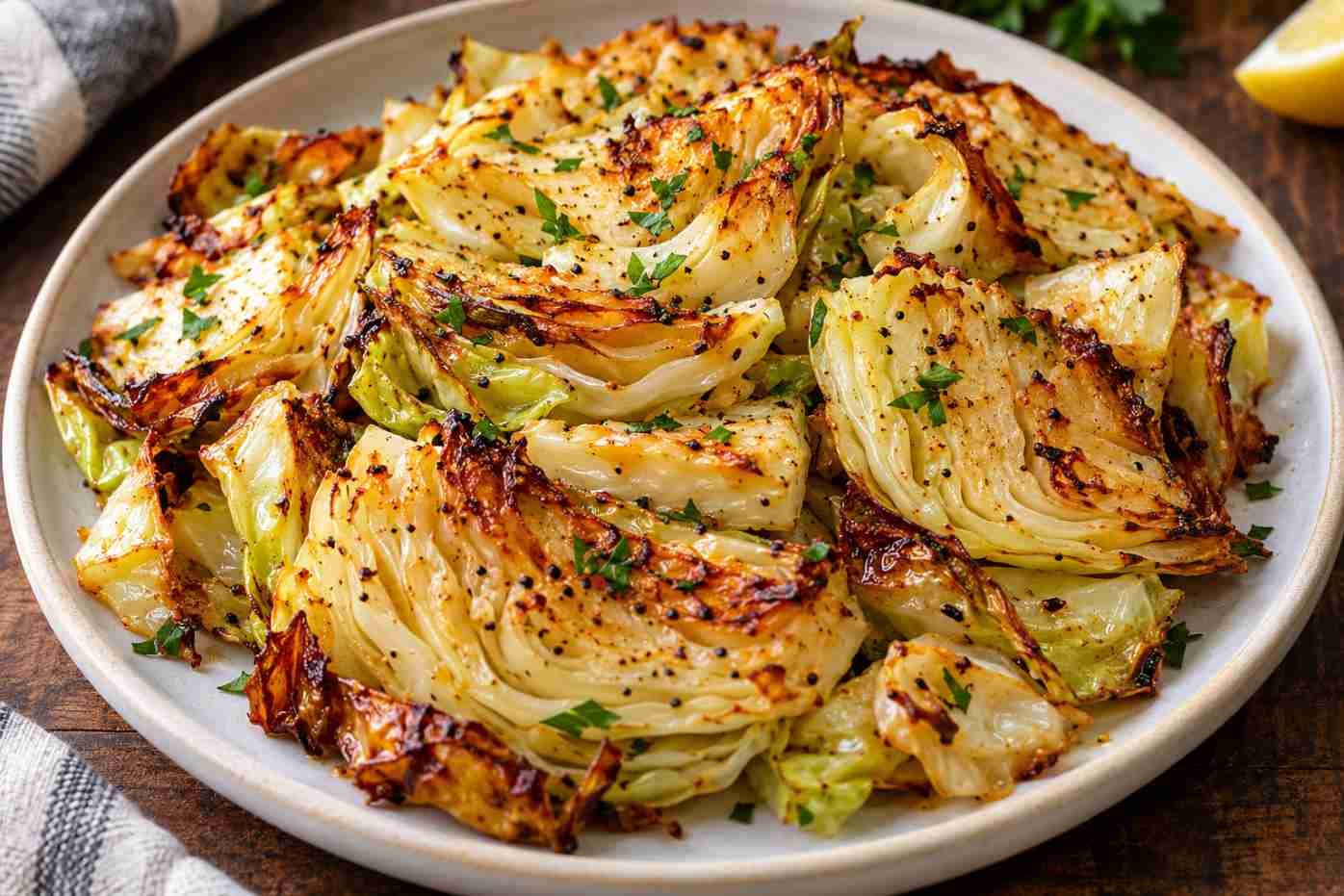
Roasted cabbage is a simple way to turn an everyday vegetable into a tasty side dish. As the cabbage cooks in the oven, its edges become golden and slightly crispy, while the inside softens and develops a naturally sweet, savory flavor. A little olive oil, salt, and black pepper are all you need to get started.
This easy roasted cabbage recipe uses a hot oven to bring out the vegetable’s natural flavor without requiring much preparation. It works with both green and red cabbage and pairs well with rice, roasted potatoes, sandwiches, grilled vegetables, or your favorite main course. Best of all, you can have it on the table in about 25 minutes.
Roasted Cabbage Recipe at a Glance
| Recipe Detail | Information |
|---|---|
| Preparation Time | 5 minutes |
| Cooking Time | 20 minutes |
| Total Time | 25 minutes |
| Servings | 4 side servings |
| Cooking Method | Oven roasting |
| Oven Temperature | 425°F (220°C) |
| Dietary Type | Vegan and vegetarian |
Ingredients for Roasted Cabbage
This recipe keeps the ingredient list short so the natural flavor of the cabbage can shine. Choose a fresh cabbage with firm leaves and a compact head for the best results.
- 1 pound (450 g) green or red cabbage: Use one small cabbage or about half of a medium-sized cabbage.
- 2 tablespoons extra-virgin olive oil: Helps the cabbage brown and develop crisp edges.
- 1/4 teaspoon fine salt: Brings out the cabbage’s natural flavor. Adjust to taste.
- 1/4 teaspoon freshly ground black pepper: Adds a gentle, savory kick.
- 1/2 teaspoon garlic powder (optional): Gives the cabbage a deeper, more savory flavor.
- 1 teaspoon fresh lemon juice (optional): Adds a bright finish just before serving.
Also Read: Cabbage Vegetable Soup
How to Make Roasted Cabbage
Step 1: Preheat the Oven
Preheat your oven to 425°F (220°C). Line a large, rimmed baking sheet with parchment paper to make cleanup easier. A hot oven is important because it helps the cabbage brown instead of simply becoming soft and watery.
Step 2: Prepare the Cabbage
Remove any loose or damaged outer leaves and rinse the cabbage under running water. Pat it dry with a clean kitchen towel. Cut the cabbage in half, remove the tough white core, and slice it into roughly 1-inch pieces. Try to keep the pieces similar in size so they cook evenly.
Step 3: Add the Seasoning
Place the cabbage pieces in a large bowl or directly on the prepared baking sheet. Drizzle the olive oil over them, then add the salt, black pepper, and garlic powder if using. Toss gently until the cabbage is lightly coated on all sides. Avoid using too much oil, as the cabbage should roast rather than feel greasy.
Step 4: Arrange the Cabbage on the Baking Sheet
Spread the cabbage in a single layer, leaving a little space between the pieces. Do not pile the cabbage on top of itself. If the pan is crowded, the vegetable will release moisture and steam, making it harder to achieve those delicious browned edges. Use two baking sheets if necessary.
Step 5: Roast Until Golden
Place the baking sheet in the preheated oven and roast for about 18 to 22 minutes. Turn or toss the cabbage halfway through cooking to encourage even browning. Keep an eye on it during the final few minutes. The cabbage is ready when the thicker pieces are tender and the edges have developed golden-brown or lightly charred spots.
Step 6: Finish and Serve
Remove the cabbage from the oven and taste a piece. Add a little more salt or black pepper if needed. For extra freshness, squeeze a small amount of lemon juice over the top. Serve the roasted cabbage while it is warm, when the contrast between the tender centers and browned edges is at its best.
What You Can Do Better
A few small changes can make a noticeable difference in the flavor and texture of roasted cabbage. Keep these tips in mind when preparing your next batch.
- Dry the cabbage properly: Excess water can slow browning. After washing, pat the cabbage dry before adding the oil.
- Give the pieces enough room: A crowded baking sheet traps steam. Spread the cabbage out or use an extra pan to help the edges turn golden.
- Cut evenly sized pieces: Pieces of similar size cook at roughly the same rate, so you are less likely to end up with some burnt and others still firm.
- Use red cabbage for a firmer texture: Red cabbage can hold its shape well and adds a deep purple color to the plate. Green cabbage works just as well and has a milder flavor.
- Season after roasting, too: A final pinch of salt, freshly ground pepper, or a squeeze of lemon can brighten the finished dish.
- Watch the last few minutes: Brown edges add flavor, but small pieces can burn quickly in a hot oven. Check the cabbage near the end of cooking.
Also Read: Cabbage and Sausage Recipe
Easy Ways to Change the Flavor
Once you have the basic method down, you can adjust the seasoning to suit the rest of your meal. Here are a few simple variations.
| Variation | What to Add | Flavor |
|---|---|---|
| Garlic Cabbage | Garlic powder or finely minced garlic | Savory and aromatic |
| Spicy Cabbage | Red pepper flakes or a pinch of chili powder | Warm with a little heat |
| Lemon Cabbage | Fresh lemon juice after roasting | Bright and refreshing |
| Smoky Cabbage | A small pinch of smoked paprika | Smoky and slightly sweet |
| Indian-Style Cabbage | Turmeric, cumin, and a little red chili powder | Warm, earthy, and spiced |
When using minced garlic, add it carefully because it can burn at high temperatures. Garlic powder or a small amount of garlic added during the final few minutes can be easier to manage.
Also Read: Cabbage Steak Recipe
What to Serve with Roasted Cabbage
Roasted cabbage is versatile enough to fit into an everyday lunch or dinner. Its mild sweetness and browned edges work well with both simple and strongly seasoned dishes.
- Rice and lentils: Serve it alongside steamed rice, dal, or your favorite lentil dish for a simple vegetarian meal.
- Roasted potatoes: Pair it with crispy potatoes for a satisfying vegetable side.
- Sandwiches and wraps: Add the cabbage to a sandwich or wrap for extra texture and flavor.
- Eggs and toast: Enjoy it with fried or scrambled eggs for an easy breakfast or brunch.
- Grilled vegetables: Combine it with roasted carrots, broccoli, or cauliflower for a colorful vegetable platter.
- Beans and chickpeas: Serve it with cooked chickpeas or beans for a more filling plant-based meal.
How to Store and Reheat Roasted Cabbage
Allow leftover cabbage to cool, then transfer it to an airtight container and refrigerate it. For the best quality, eat it within 3 to 4 days. The cabbage will soften as it sits, so it may not retain all of its original crispness.
To reheat, spread the cabbage on a baking sheet and warm it in a 400°F (200°C) oven for about 5 to 10 minutes, checking until it is heated through. An air fryer can also help restore some of the browned edges. You can use a microwave for convenience, but the cabbage will usually be softer.
Also Read: Cabbage Rolls Recipe
Nutritional Information for Roasted Cabbage
Cabbage provides fiber and vitamin C, while olive oil contributes unsaturated fats. The nutritional values below are estimates for one of four servings made with cabbage, olive oil, salt, and black pepper. Actual values may vary depending on the type of cabbage, the amount of oil used, and the size of each serving.
| Nutrient | Approximate Amount per Serving |
|---|---|
| Calories | 95 kcal |
| Carbohydrates | 9 g |
| Protein | 2 g |
| Total Fat | 7 g |
| Saturated Fat | 1 g |
| Dietary Fiber | 4 g |
| Sugars | 5 g |
| Sodium | Approximately 170 mg |
| Vitamin C | A useful source; the amount varies with cabbage type and cooking |
Note: These figures are general estimates, not laboratory-tested values. Sodium levels depend on the salt used, and adding optional seasonings may change the final nutrition information.
Also Read: White Bean Soup with Cabbage Recipe
Frequently Asked Questions
Can I use green cabbage instead of red cabbage?
Yes. Both green and red cabbage work well in this recipe. Green cabbage has a mild flavor, while red cabbage tends to be firmer and adds a rich purple color. Use whichever variety is fresh and available.
Why is my roasted cabbage not crispy?
The most common reason is an overcrowded baking sheet. When the cabbage pieces are too close together, moisture gets trapped and they steam instead of brown. Dry the cabbage well, spread it in a single layer, and roast it in a fully preheated oven.
Should I cover cabbage while roasting?
No. Leave the cabbage uncovered so moisture can escape and the edges can brown. Covering it traps steam and produces a softer result.
Can I make roasted cabbage without olive oil?
Yes, although the cabbage may brown less evenly and have a drier texture. You can use another cooking oil suitable for oven roasting. If you reduce the oil, keep an eye on the cabbage to prevent the smaller pieces from drying out.
Can I prepare the cabbage ahead of time?
You can wash, dry, and cut the cabbage several hours ahead of cooking. Store it in an airtight container in the refrigerator. For the best texture, add the oil and seasonings just before roasting.
Is roasted cabbage suitable for a vegan diet?
Yes. The basic recipe uses cabbage, olive oil, salt, and pepper, all of which are plant-based. Check the ingredients of any optional seasoning blends if you need to follow a strict vegan diet.