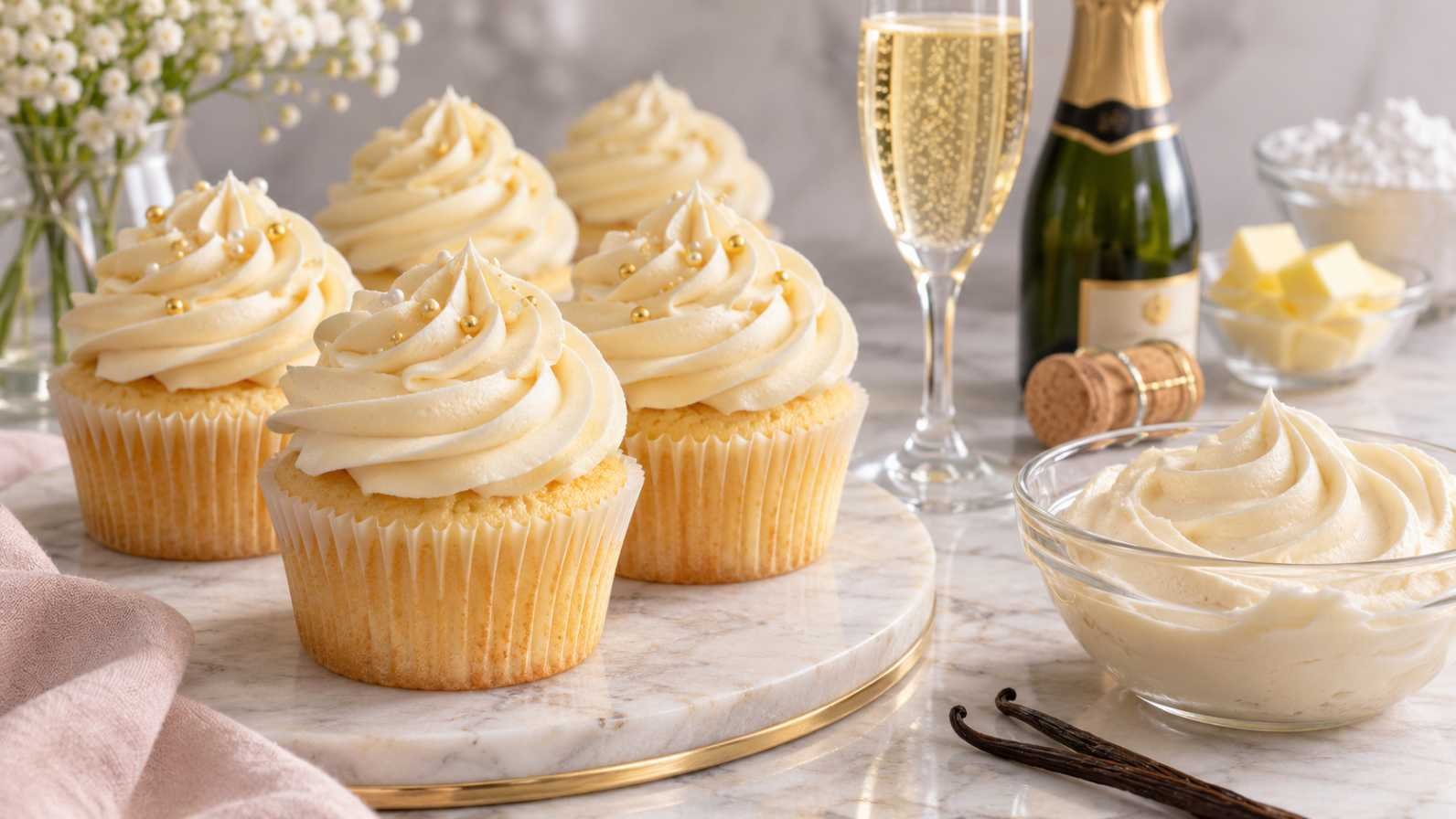
Champagne frosting is a smooth, buttery frosting with a delicate sparkling wine flavor and a little more character than ordinary vanilla buttercream. It has a creamy texture, a gentle sweetness, and a subtle fruity finish that works particularly well with vanilla cakes, strawberry cupcakes, and light celebration desserts. Although the name sounds fancy, making champagne frosting at home is surprisingly straightforward. The real trick is concentrating the champagne before mixing it into the buttercream. That small extra step gives the frosting a noticeable flavor without making it runny.
This recipe makes a generous batch of champagne buttercream that is firm enough for piping but soft enough to spread over a cake. It is particularly useful when you want something a little different for a birthday, wedding, anniversary, or New Year’s dessert.
Champagne Frosting Recipe Overview
| Recipe Details | Information |
|---|---|
| Recipe Name | Champagne Frosting |
| Preparation Time | 15 minutes |
| Cooking Time | 10–15 minutes |
| Cooling Time | 30–45 minutes |
| Total Time | Approximately 1 hour |
| Yield | Approximately 2½–3 cups |
| Servings | 16 cupcake portions |
| Difficulty | Easy |
| Recipe Type | Frosting / Dessert |
| Equipment | Saucepan, mixing bowl, electric mixer, measuring cups |
Ingredients for Champagne Frosting
You only need a few basic baking ingredients and a bottle of champagne or sparkling wine. The quality and temperature of the ingredients matter more than buying anything particularly expensive.
| Ingredient | Quantity | Purpose |
|---|---|---|
| Champagne or dry sparkling wine | 1 cup (240 ml) | Provides the characteristic champagne flavor |
| Unsalted butter, softened | 1 cup (226 g) | Creates a rich, creamy buttercream base |
| Powdered sugar, sifted | 3½ cups (420 g) | Sweetens and thickens the frosting |
| Pure vanilla extract | ½ teaspoon | Rounds out the flavor |
| Fine sea salt | ⅛ teaspoon | Balances the sweetness |
| Heavy cream (optional) | 1–2 teaspoons | Adjusts the consistency if necessary |
Ingredient note: A dry sparkling wine, such as Brut champagne, is a good choice because it adds flavor without making the finished frosting excessively sweet. Prosecco and other dry sparkling wines can also be used. There is no need to purchase an expensive bottle specifically for frosting.
Also Read: Easy Chocolate Chip Scones
How to Make Champagne Frosting
Making champagne frosting involves two main stages: reducing the sparkling wine and preparing the buttercream. The reduction needs to cool completely before the two are combined, so it is best to make that first.
Step 1: Reduce the Champagne
Pour 1 cup of champagne into a small, heavy-bottomed saucepan. Place the saucepan over medium heat and bring the wine to a gentle simmer. Allow it to cook uncovered for approximately 10–15 minutes, stirring occasionally, until the liquid reduces to about ¼ cup. Keep an eye on the saucepan during the final few minutes because the liquid can reduce quickly. The finished reduction should smell noticeably more concentrated than the original wine. It may darken slightly, but it should not become thick like caramel or develop a burnt aroma.
Step 2: Cool the Reduction
Transfer the reduced champagne to a heatproof bowl or measuring cup. Leave it at room temperature until completely cool. You can refrigerate it briefly to speed up the process. Do not add warm champagne reduction directly to the buttercream. Even a small amount of excess heat can soften the butter too much and leave the frosting greasy or difficult to pipe.
Step 3: Beat the Butter
Place the softened unsalted butter in a large mixing bowl. Using an electric hand mixer or stand mixer with a paddle attachment, beat the butter on medium-high speed for approximately 3–4 minutes. Stop once or twice to scrape down the sides of the bowl. The butter should become smooth, noticeably lighter in color, and fluffy. Properly beaten butter makes a considerable difference to the finished frosting because it creates a lighter texture before any sugar is added.
Step 4: Incorporate the Powdered Sugar
Reduce the mixer speed to low and add the sifted powdered sugar gradually, approximately 1 cup at a time. Allow each addition to mix into the butter before adding more. Scrape down the bowl as needed. Once all the sugar has been incorporated, increase the mixer speed to medium and beat for another 1–2 minutes. The mixture will be thick at this stage, which is normal. Adding the sugar gradually prevents a cloud of powdered sugar from escaping the bowl and helps produce a smoother consistency.
Step 5: Add the Champagne Reduction
Start by adding 2 tablespoons of the completely cooled champagne reduction to the buttercream. Add the vanilla extract and fine sea salt, then beat on medium speed until combined. Taste the frosting before adding more champagne. Continue adding the reduction approximately 1 teaspoon at a time until the flavor is where you want it. You may not need the entire ¼ cup. Adding the liquid slowly makes it much easier to maintain a thick, stable frosting.
Step 6: Adjust the Texture
Beat the frosting for another 1–2 minutes until smooth and creamy. If it feels too stiff for spreading, add a teaspoon of heavy cream and mix again. If the frosting is too soft for piping, incorporate a little extra sifted powdered sugar or refrigerate it for 10–15 minutes before using. The finished champagne buttercream should hold a soft peak when the beater is lifted and spread easily without sliding off a spatula.
Step 7: Frost the Cake or Cupcakes
Use the champagne frosting immediately on completely cooled cakes or cupcakes. For cupcakes, transfer it to a piping bag fitted with a large star or round nozzle. For layer cakes, spread it with an offset spatula. If the frosting has been refrigerated, let it soften slightly and beat it briefly before decorating. Never apply buttercream to a warm cake because the heat can cause it to melt and lose its shape.
Also Read: No Bake Holiday Candies
What You Can Do Better
A good champagne frosting should taste balanced rather than simply sweet. Most problems come from adding too much liquid, using butter at the wrong temperature, or expecting the champagne to taste as strong as it does straight from the bottle. A few adjustments can make the frosting noticeably better.
Choose a Dry Sparkling Wine
Brut champagne generally works better than a very sweet sparkling wine. Buttercream already contains a substantial amount of powdered sugar, so the slightly tart, crisp character of a dry wine helps balance the sweetness. If you prefer a fruitier flavor, a dry rosé sparkling wine is also worth considering.
Measure the Reduction Instead of Guessing
The amount of reduced liquid matters more than the exact cooking time. Use a heatproof measuring cup to check that the champagne has reduced to approximately ¼ cup. If too much liquid remains, the frosting may become thin. If you reduce it too aggressively, the flavor can become unpleasantly sharp or cooked.
Use Butter at the Right Temperature
The butter should be softened but still slightly cool. You should be able to press a finger into it and leave an indentation without the butter appearing oily or melted. Butter that is too cold can create lumps, while overly warm butter may produce a loose, greasy frosting. A kitchen temperature around 20–22°C (68–72°F) is generally comfortable for working with American buttercream.
Add the Champagne Gradually
It can be tempting to pour in the entire reduction for a stronger flavor. Resist that temptation until you have tested the consistency. Start with a small quantity, taste, and add more only when needed. Concentrated champagne is much more effective than adding a large amount of ordinary sparkling wine.
Do Not Overbeat After Adding the Liquid
Beat long enough to produce a smooth texture, but avoid whipping unnecessarily at high speed for several minutes. Excessive mixing can introduce large air bubbles, which make frosting a cake neatly more difficult. For a particularly smooth finish, mix the buttercream on low speed for the final minute.
What Does Champagne Frosting Taste Like?
Champagne frosting tastes like a rich vanilla buttercream with subtle fruity and wine-like notes. The exact character depends on the sparkling wine used. A dry champagne may contribute gentle citrus or apple-like flavors, while a rosé sparkling wine can bring a slightly berry-like impression. The champagne does not overpower the butter and vanilla. Instead, it adds a delicate tang that helps the frosting feel less one-dimensional.
It is important to have realistic expectations about the flavor. The finished frosting will not taste like drinking a glass of champagne. Butter, sugar, and vanilla soften the wine’s sharper characteristics. If you want the champagne notes to stand out, pair the frosting with a fairly simple cake rather than a strongly flavored chocolate or spiced cake.
Also Read: Key Lime Pie Recipe
Best Cakes and Desserts to Pair With Champagne Frosting
Champagne buttercream works particularly well with desserts that have delicate fruit, citrus, or vanilla flavors. It can also be used as a filling between cake layers, provided it is firm enough to support the cake.
| Dessert | Why It Works |
|---|---|
| Vanilla cupcakes | The neutral vanilla base allows the champagne notes to come through. |
| Strawberry cake | Strawberry and sparkling wine create a balanced, fruity combination. |
| Lemon cake | The citrus flavor complements the crisp character of dry champagne. |
| White chocolate cupcakes | The champagne adds a little contrast to rich, sweet white chocolate. |
| Almond cake | Delicate almond flavor pairs well with smooth champagne buttercream. |
| Raspberry cupcakes | The tart fruit flavor provides contrast and keeps the frosting from tasting overly sweet. |
| Macarons | A thicker version of the frosting can be used as a creamy macaron filling. |
For an especially good combination, try vanilla cupcakes with champagne frosting and a small spoonful of strawberry filling in the center. The fruit introduces acidity and moisture without covering up the frosting’s flavor.
Champagne Frosting Variations
Pink Champagne Frosting
Replace regular champagne with a dry rosé sparkling wine. After mixing the frosting, add a very small amount of pink gel food coloring if you want a more pronounced color. Rosé wine does not always produce a noticeable pink shade after being mixed with butter and powdered sugar, so coloring may be necessary for a consistent appearance.
Strawberry Champagne Frosting
Mix 1–2 tablespoons of finely crushed freeze-dried strawberry powder into the finished buttercream. The powder adds strawberry flavor without introducing the excess moisture that fresh strawberry purée would contribute. Taste before adding more because the strawberry should complement rather than completely replace the champagne flavor.
Champagne and Lemon Frosting
Add ½ teaspoon of finely grated lemon zest during the final mixing stage. The natural citrus oils brighten the frosting without significantly changing its texture. Avoid adding too much lemon juice, as additional liquid can make the buttercream unstable.
Vanilla Bean Champagne Frosting
Replace the vanilla extract with approximately ½ teaspoon of vanilla bean paste. This version has a slightly richer vanilla aroma and tiny visible vanilla specks. It is particularly suitable for white cakes and wedding cupcakes.
Also Read: Rocky Road Recipe
How to Fix Common Champagne Frosting Problems
Buttercream is usually easy to adjust as long as the ingredients have not become excessively warm. The following table covers the most common problems and their solutions.
| Problem | Possible Cause | How to Fix It |
|---|---|---|
| Frosting is too runny | Too much champagne reduction or warm butter | Chill briefly and beat again. Add sifted powdered sugar if necessary. |
| Frosting is too thick | Too much powdered sugar or cold butter | Add heavy cream 1 teaspoon at a time and mix until smooth. |
| Frosting looks grainy | Unsifted powdered sugar or insufficient mixing | Beat a little longer, scraping the bowl thoroughly. |
| Champagne flavor is weak | Insufficiently concentrated reduction | Add a little more properly cooled reduction if the texture allows. |
| Frosting appears greasy | Butter or champagne reduction was too warm | Refrigerate until slightly firm, then beat again. |
| Too many air bubbles | Excessive whipping at high speed | Mix on low speed or gently work with a spatula to reduce bubbles. |
| Frosting tastes too sweet | High sugar content or very sweet sparkling wine | Add a small pinch of salt or a little lemon zest for balance. |
How to Store Champagne Frosting
Refrigerator Storage
Transfer leftover champagne frosting to an airtight container and refrigerate for up to 4 days. Before using it again, allow it to soften at room temperature until workable, then beat briefly with an electric mixer. Cold buttercream can appear unusually firm or slightly separated, but it often returns to a smooth consistency once it reaches the proper temperature.
Freezer Storage
Champagne buttercream can be frozen in a tightly sealed, freezer-safe container for up to 2 months for best quality. Leave a little room in the container and label it with the preparation date. Thaw overnight in the refrigerator, then allow it to soften and beat until creamy. If needed, add a teaspoon of cream to restore its texture.
Can Champagne Frosting Be Made Ahead?
Yes. You can prepare the frosting a day or two before decorating the cake. Keep it refrigerated in an airtight container and rewhip before use. You can also prepare the champagne reduction in advance and refrigerate it separately. Make sure the reduction is completely cool before adding it to freshly beaten buttercream.
Food safety note: Although simmering reduces some of the alcohol in champagne, it does not guarantee complete removal. This frosting should not be treated as alcohol-free. For anyone who needs to avoid alcohol completely, use a suitable non-alcoholic alternative and check its labeling.
Also Read: Homemade Granola Bars
Nutritional Information for Champagne Frosting
The following values are approximate estimates based on a batch containing 226 g unsalted butter, 420 g powdered sugar, 240 ml champagne, vanilla, and salt, divided into 16 equal servings. Optional heavy cream and additional ingredients are not included. Actual nutrition will vary with the wine, ingredients, reduction, and portion size.
| Nutrient | Approximate Amount Per Serving |
|---|---|
| Calories | 215 kcal |
| Total Fat | 11.5 g |
| Saturated Fat | 7.3 g |
| Trans Fat | 0.4 g |
| Cholesterol | 31 mg |
| Sodium | 23 mg |
| Total Carbohydrates | 27 g |
| Dietary Fiber | 0 g |
| Total Sugars | 26.5 g |
| Protein | 0.2 g |
Nutrition disclaimer: These figures are estimates rather than laboratory-tested values. The alcohol remaining after reduction has not been quantified, and its contribution to the calorie total may vary. The nutrition figures describe the frosting only, not the cake or cupcakes underneath it.
Frequently Asked Questions
Can I Use Prosecco Instead of Champagne?
Yes. Prosecco works well in this recipe, particularly if you choose a dry variety. It often has a fruitier character than traditional champagne, but the difference becomes less pronounced once the reduction is mixed into the buttercream. Other dry sparkling wines can also produce good results.
Does Champagne Frosting Contain Alcohol?
Yes, it may contain residual alcohol. Simmering champagne reduces its alcohol content, but some can remain after cooking. The amount depends on factors such as cooking time, temperature, and the dimensions of the saucepan. If you need to avoid alcohol, do not assume that reducing champagne makes the frosting alcohol-free.
Can I Make Champagne Frosting Without Alcohol?
You can use a non-alcoholic sparkling wine, although the flavor may be different. Check the label if complete alcohol avoidance is important because some beverages described as non-alcoholic can contain trace amounts. Reduce the substitute carefully and taste it before adding it to the frosting. Sweet varieties may need a little extra salt or lemon zest for balance.
Can I Use Salted Butter?
Yes, although unsalted butter gives you more control over the final flavor. If you use salted butter, omit the additional sea salt at first and taste the finished frosting before deciding whether it needs any more.
Can I Reduce the Powdered Sugar?
You can reduce it slightly, but powdered sugar also provides structure. Removing a large amount will produce a softer buttercream that may not hold piped decorations particularly well. If sweetness is your main concern, choose a dry sparkling wine and balance the flavor with a little salt or lemon zest instead.
Can Champagne Frosting Be Used for a Layer Cake?
Yes. This batch can fill and frost a small two-layer cake with a relatively modest coating, or generously decorate approximately 12–16 cupcakes, depending on piping style. For a larger layer cake or elaborate decorations, prepare 1½ or 2 batches. If using the frosting between layers, keep the filling fairly firm so that the cake does not slide.
Why Does My Champagne Frosting Taste Like Ordinary Buttercream?
The champagne flavor is naturally subtle, and a high proportion of butter and sugar can mask it. The best way to increase its presence is to reduce the sparkling wine properly before mixing it in. A dry, flavorful wine and a simple vanilla cake base can also help the champagne notes come through more clearly.
Can I Add Food Coloring to Champagne Buttercream?
Yes. Gel food coloring is the best option because it gives a stronger color with very little additional liquid. Add small amounts at a time and mix thoroughly before deciding whether more is necessary. Liquid food coloring can loosen the frosting if used in large quantities.