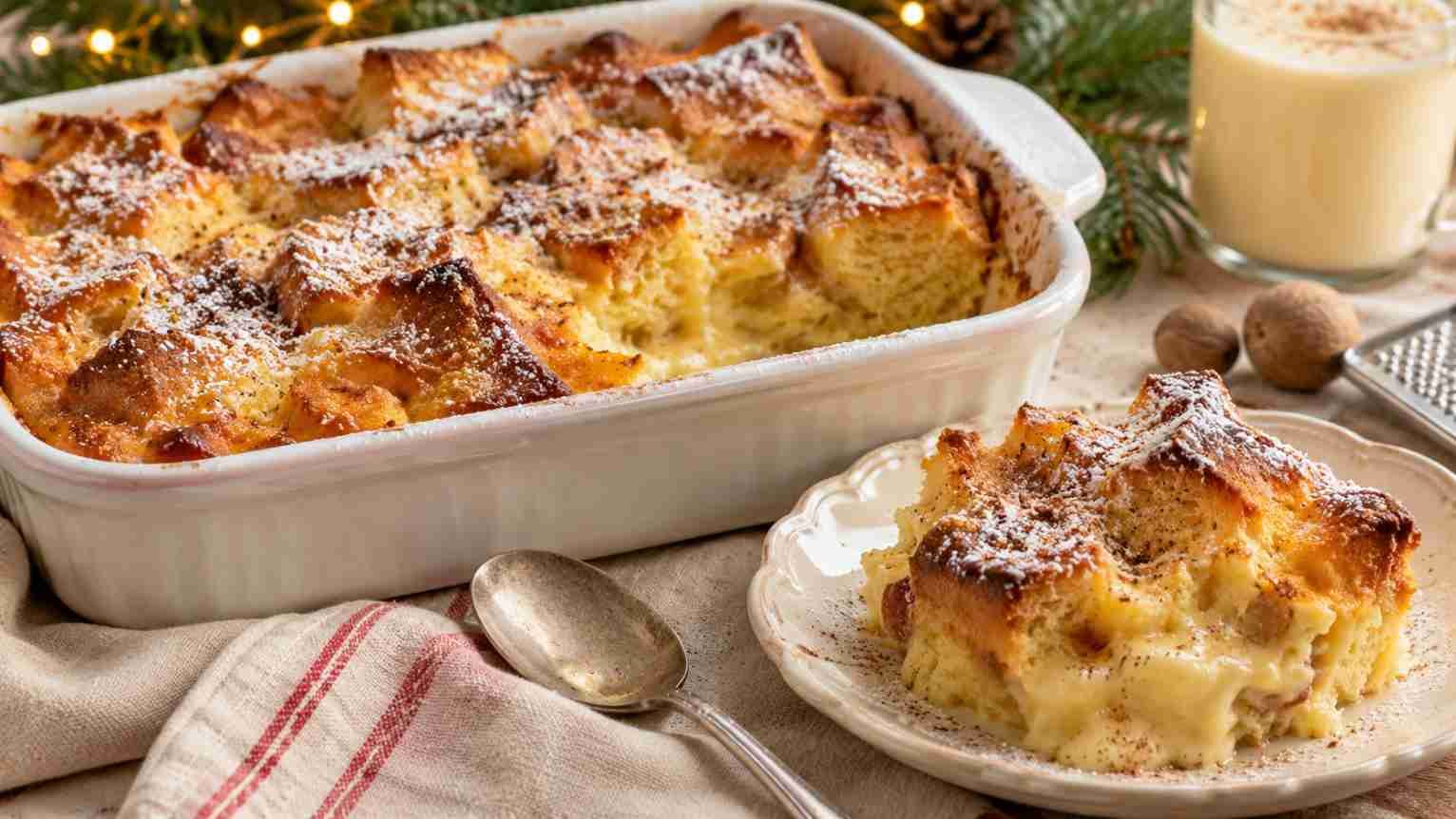
There is something particularly comforting about a warm bread pudding coming out of the oven on a cold evening. The edges are golden and slightly crisp, the middle is soft with vanilla custard, and the kitchen smells of cinnamon and nutmeg. This Eggnog Bread Pudding brings all those familiar flavors together in one simple holiday dessert.
Eggnog does most of the flavoring here. Its creamy texture, sweetness, and warm spices turn ordinary bread into something that tastes like a special occasion. You don’t need to make a complicated custard or spend the afternoon baking. A few everyday ingredients, a baking dish, and a little patience are enough.
This recipe is especially useful when you have leftover eggnog in the refrigerator or a loaf of bread that has started to go stale. Serve it warm with a dusting of powdered sugar, a little caramel sauce, or a spoonful of whipped cream.
Eggnog Bread Pudding Recipe Overview
| Recipe Details | Information |
|---|---|
| Recipe Name | Eggnog Bread Pudding |
| Course | Dessert, Holiday Breakfast |
| Cuisine | American |
| Preparation Time | 15 minutes |
| Soaking Time | 25 minutes |
| Baking Time | 40–50 minutes |
| Resting Time | 10 minutes |
| Total Time | Approximately 1 hour 40 minutes |
| Servings | 8 |
| Difficulty | Easy |
| Oven Temperature | 350°F (175°C) |
Ingredients for Eggnog Bread Pudding
The best bread pudding starts with bread that can absorb plenty of custard without falling apart. Brioche and challah are particularly good choices because they have a tender crumb and a naturally buttery flavor. Slightly stale French bread also works well.
For the Bread Pudding
- 6 cups cubed brioche or challah bread: Preferably one or two days old, approximately 300 grams.
- 2 cups eggnog: Use your favorite nonalcoholic dairy eggnog.
- 1/2 cup whole milk: Helps balance the richness of the eggnog.
- 3 large eggs: Hold the custard together as it bakes.
- 1/4 cup light brown sugar: Adds a gentle caramel-like sweetness.
- 2 tablespoons melted unsalted butter: Adds richness to the pudding.
- 1 teaspoon vanilla extract: Gives the custard a warm, rounded flavor.
- 1/2 teaspoon ground cinnamon: Adds a little extra spice.
- 1/4 teaspoon ground nutmeg: Brings out the classic eggnog flavor.
- 1/4 teaspoon salt: Balances the sweetness.
For the Optional Topping
- 2 tablespoons chopped pecans or walnuts
- 1 tablespoon coarse sugar
- Powdered sugar for dusting
- Caramel sauce or whipped cream for serving
Ingredient tip: Eggnog brands vary considerably in sweetness. Taste your eggnog before adding the brown sugar. If it is already very sweet, you can reduce the sugar to 2 tablespoons without making a major difference to the pudding’s texture.
Also Read: Eggnog Soufflé
How to Make Eggnog Bread Pudding
Making bread pudding is mostly a matter of giving the bread enough time to absorb the custard and baking it gently until the center is set. Follow these steps for a creamy interior and lightly toasted top.
Step 1: Prepare the Bread
Cut the brioche or challah into approximately 1-inch cubes. Try to keep the pieces fairly similar in size so they soak evenly.
If your bread is already a little dry, you can use it immediately. If it is very fresh and soft, spread the cubes on a baking sheet and place them in a 300°F (150°C) oven for about 10 minutes. You want to dry the bread slightly, not turn it into crunchy croutons.
Remove the bread from the oven and allow it to cool while you prepare the custard.
Step 2: Prepare the Baking Dish
Preheat your oven to 350°F (175°C). Lightly grease an 8-inch square baking dish with butter or nonstick cooking spray.
Arrange the bread cubes evenly inside the dish. Avoid pressing them down tightly. Leaving a little space between the pieces allows the custard to spread throughout the pudding.
Step 3: Make the Eggnog Custard
Crack the eggs into a large mixing bowl and whisk until the yolks and whites are completely combined. Add the brown sugar and continue whisking until the mixture looks smooth.
Pour in the eggnog, whole milk, melted butter, and vanilla extract. Add the cinnamon, nutmeg, and salt. Whisk everything together until the spices are evenly distributed.
The custard should be smooth and pourable. A few small bubbles on the surface are perfectly normal.
Step 4: Soak the Bread
Slowly pour the eggnog mixture over the bread cubes, making sure to reach the corners of the baking dish.
Use the back of a spoon or a spatula to gently press any dry pieces into the custard. Do not mash the bread.
Let the mixture sit for approximately 25 minutes. During this time, the bread will absorb the eggnog and become soft throughout.
If you notice a few dry pieces on top after 15 minutes, gently turn them over so they can soak up more liquid.
Step 5: Add the Topping
If you want a little crunch, scatter the chopped pecans or walnuts over the soaked bread. Sprinkle the coarse sugar evenly across the surface.
The sugar will help create a lightly crisp topping, while the nuts add a pleasant contrast to the soft custard underneath.
You can skip both toppings if you prefer a completely soft, traditional bread pudding.
Step 6: Bake Until Golden
Place the baking dish on the middle rack of your preheated oven. Bake uncovered for 40–50 minutes, checking after approximately 35 minutes.
The pudding is ready when the top is golden brown, the edges are slightly puffed, and the center no longer looks liquid. A gentle wobble is fine, but the middle should not slosh when the dish is moved.
For a reliable doneness check, insert an instant-read thermometer into the center. The custard should reach at least 160°F (71°C).
If the surface begins browning too quickly, loosely cover the dish with aluminum foil for the remaining baking time.
Step 7: Rest and Serve
Remove the bread pudding from the oven and let it rest for about 10 minutes before serving. This short resting period helps the custard settle and makes the pudding easier to portion.
Cut into eight servings and transfer to individual dessert plates or shallow bowls.
Finish with a light dusting of powdered sugar or a small spoonful of whipped cream. If you enjoy sweeter desserts, add a little warm caramel sauce just before serving.
Eggnog Bread Pudding tastes especially good while it is still warm, when the custard is soft and the toasted edges have a little texture.
What You Can Do Better
A good bread pudding is forgiving, but a few small choices can make a noticeable difference to the finished dessert.
Choose Bread That Holds Its Shape
Brioche gives the pudding a rich, buttery flavor, while challah produces a slightly firmer texture. French bread is a good option when you want something less rich. Avoid very thin sandwich bread if possible, because it can become overly soft once soaked.
Give the Bread Enough Time to Soak
One of the most common reasons for uneven bread pudding is rushing the soaking stage. The outside of the bread may look wet while the center remains dry. Allowing at least 25 minutes gives the custard time to reach the middle of the cubes.
Don’t Add Too Much Sugar
Eggnog already contains sugar, so the additional brown sugar should complement rather than overpower it. Start with the amount listed in the recipe and adjust based on the sweetness of your eggnog.
Use Freshly Grated Nutmeg
Ground nutmeg works perfectly well, but freshly grated nutmeg has a more noticeable aroma. A small amount added just before baking can make the pudding smell especially inviting.
Keep an Eye on the Center
The top can look finished before the custard in the middle has fully set. Check the center rather than judging only by the color of the surface. If the top is getting dark, cover it loosely with foil and continue baking.
Try a Little Orange Zest
For a slightly different holiday flavor, add 1 teaspoon of finely grated orange zest to the custard. The citrus aroma pairs nicely with the vanilla and nutmeg without making the pudding taste strongly of orange.
Also Read: Eggnog Cinnamon Rolls
Easy Eggnog Bread Pudding Variations
Once you have made the basic recipe, it is easy to change the flavors depending on what you have in the kitchen.
Chocolate Chip Eggnog Bread Pudding
Sprinkle 1/3 cup of semisweet chocolate chips between the bread cubes before pouring over the custard. The chocolate melts into small pockets throughout the pudding and makes it feel a little more indulgent.
Apple Cinnamon Eggnog Bread Pudding
Fold in 3/4 cup of finely diced apple and increase the cinnamon to 3/4 teaspoon. Choose a firm apple variety that will hold its shape during baking. This version has a pleasant fruitiness that balances the creamy custard.
Cranberry Eggnog Bread Pudding
Add 1/3 cup of dried cranberries to the bread before soaking. Their slightly tart flavor works particularly well with sweet eggnog. You can also add a little orange zest for a more festive combination.
Maple Pecan Eggnog Bread Pudding
Replace the brown sugar with 3 tablespoons of pure maple syrup and add 1/3 cup of chopped pecans. The maple flavor is subtle but pairs beautifully with the toasted nuts and warm spices.
What to Serve with Eggnog Bread Pudding
Eggnog Bread Pudding is rich enough to enjoy on its own, but the right topping can make it feel even more special. For a simple dessert, dust the warm pudding with powdered sugar and serve immediately.
For a holiday dinner, try a spoonful of lightly sweetened whipped cream or a small scoop of vanilla ice cream. The contrast between the warm pudding and cold topping is particularly good.
A little caramel sauce is another option, although it is best used sparingly because the eggnog custard is already sweet. Fresh raspberries or sliced strawberries can add a welcome touch of acidity.
If you are serving this for brunch, pair it with hot coffee or unsweetened black tea to balance the richness.
Also Read: Eggnog Crumble Muffins
Can You Make Eggnog Bread Pudding Ahead of Time?
Yes. In fact, preparing the pudding ahead of time can make holiday mornings much easier.
Assemble the bread and custard in the baking dish, cover tightly, and refrigerate for up to 12 hours. Keep any crunchy topping separate until you are ready to bake.
When it is time to cook, preheat the oven and add the topping. Bake until the center is fully set. A pudding that goes into the oven cold may require an additional 5–10 minutes.
If you are using a glass or ceramic baking dish, follow the manufacturer’s instructions for moving it from the refrigerator to a hot oven. Sudden temperature changes can damage some dishes.
This make-ahead method is particularly convenient when you want a warm breakfast or dessert without having to measure ingredients just before serving.
How to Store and Reheat Leftovers
Refrigerating
Allow the pudding to cool slightly, then transfer leftovers to an airtight container. Refrigerate within two hours of baking and consume within 3–4 days.
Freezing
Cut the cooled pudding into individual portions and place them in freezer-safe containers. Freeze for up to 2 months for the best texture. Thaw overnight in the refrigerator before reheating.
Reheating in the Oven
Place the pudding in an oven-safe dish and cover loosely with foil. Reheat at 325°F (165°C) until thoroughly hot, ideally reaching 165°F (74°C) in the center. Individual portions generally take less time than a large batch.
Reheating in the Microwave
Place a serving on a microwave-safe plate and heat in 30-second intervals until hot throughout. If the pudding seems a little dry, add a teaspoon of milk before reheating.
Storage tip: Keep caramel sauce, whipped cream, and other toppings separate until serving. This helps prevent the bread pudding from becoming soggy in the refrigerator.
Eggnog Bread Pudding Nutritional Information
The following nutritional values are approximate estimates for one serving, based on eight servings per recipe. They include the basic bread pudding ingredients but exclude optional nuts, coarse sugar, whipped cream, caramel sauce, and other toppings.
| Nutrient | Estimated Amount Per Serving |
|---|---|
| Calories | 320 kcal |
| Total Carbohydrates | 38 g |
| Protein | 9 g |
| Total Fat | 15 g |
| Saturated Fat | 8 g |
| Dietary Fiber | 1 g |
| Total Sugars | 20 g |
| Sodium | 240 mg |
| Cholesterol | 120 mg |
Note: Nutritional information is an estimate, not a laboratory calculation. Actual values will vary depending on the brand of eggnog, type of bread, ingredient measurements, and serving size. For precise dietary tracking, calculate the recipe using the nutrition labels on your specific ingredients.
Also Read: Blueberry Lavender Latte
Frequently Asked Questions
Can I use regular white bread instead of brioche?
Yes. Regular white bread will work, although the finished pudding may be less rich. Choose a sturdy loaf and allow it to become slightly stale before using. Very soft sandwich bread can break down during soaking.
Can I make Eggnog Bread Pudding without alcohol?
Absolutely. This recipe uses nonalcoholic eggnog, and no alcohol is needed. The eggs provide the structure that allows the custard to set during baking.
Why is my bread pudding soggy in the middle?
A wet center usually means the custard has not finished baking or the bread-to-liquid ratio was too high. Continue baking in short intervals and cover the top with foil if necessary. The center should be set rather than liquid when the pudding comes out of the oven.
Can I use dairy-free eggnog?
Yes, dairy-free eggnog made from oat, almond, or coconut milk can be used. However, the flavor and texture may differ depending on its fat content and thickness. Choose a creamy variety for the best results, and remember that this recipe still contains eggs and butter unless those ingredients are also changed.
Should Eggnog Bread Pudding be served hot or cold?
It can be eaten either way, but warm is usually the better choice. The custard tastes creamier, and the edges retain more of their baked texture. Chilled bread pudding becomes firmer and is easier to slice neatly.
Can I prepare this recipe the night before?
Yes. Assemble the pudding, cover it, and refrigerate overnight for up to 12 hours. Bake it the following morning or evening. Add nuts or coarse sugar just before baking if you want the topping to stay crisp.
Can I use homemade eggnog?
Homemade eggnog works well as long as it is smooth, pourable, and made with pasteurized ingredients or otherwise prepared safely. Because homemade recipes vary in sweetness and thickness, you may need to adjust the added sugar or milk.
How do I know when the bread pudding is done?
Look for a golden top, slightly puffed edges, and a center that has set with only a gentle wobble. An instant-read thermometer should register at least 160°F (71°C) in the middle of the custard.