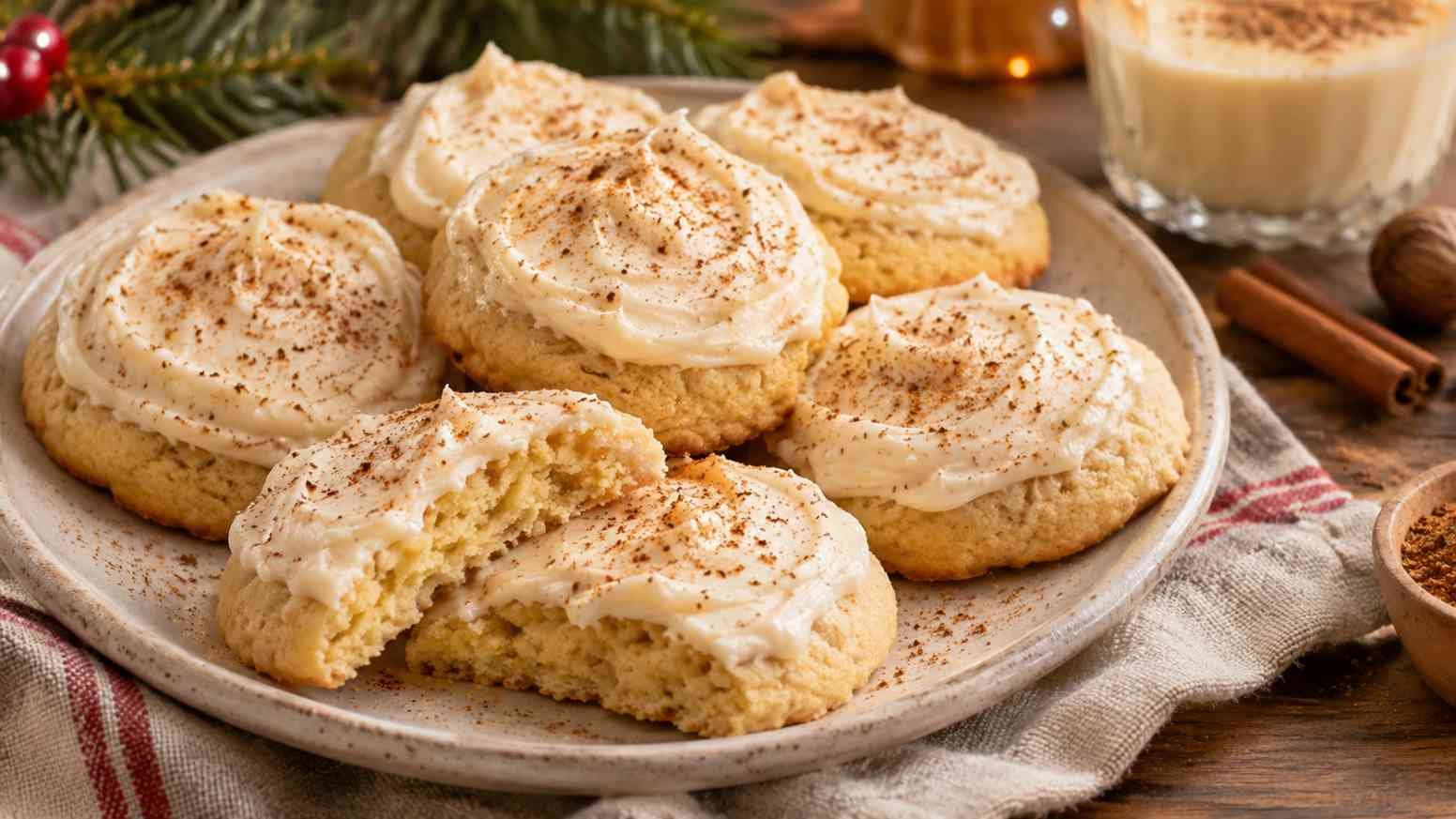
These Eggnog Cookies with Nutmeg Frosting bring those familiar holiday flavors into a soft, buttery cookie with a thick layer of creamy frosting. They have slightly golden edges, tender centers, and just enough spice to remind you of a freshly poured glass of eggnog.
Unlike crisp sugar cookies, these are meant to stay soft. The eggnog adds richness to the dough, while the frosting brings a lovely balance of sweetness and warm nutmeg. They’re particularly good with coffee on a cold afternoon, but they’re also a wonderful addition to Christmas cookie boxes and holiday dessert trays.
You don’t need cookie cutters, a rolling pin, or any special decorating skills. A mixing bowl, a cookie scoop, and a little patience while the cookies cool are enough to make a batch worth sharing.
Eggnog Cookies Recipe Overview
| Recipe | Eggnog Cookies with Nutmeg Frosting |
| Preparation Time | 20 minutes |
| Chilling Time | 35 minutes |
| Baking Time | 10–12 minutes per batch |
| Cooling and Frosting | 35 minutes |
| Total Time | Approximately 1 hour 45 minutes |
| Servings | Approximately 24 cookies |
| Difficulty | Easy |
| Oven Temperature | 350°F (175°C) |
Ingredients for Eggnog Cookies with Nutmeg Frosting
Most of the ingredients are ordinary baking staples. The one thing worth paying attention to is the eggnog itself. Choose a creamy, nonalcoholic variety with a flavor you enjoy drinking. Since it goes into both the cookies and the frosting, its flavor really does matter.
For the Eggnog Cookies
- 2 1/4 cups (280 g) all-purpose flour
- 1 teaspoon baking powder
- 1/4 teaspoon baking soda
- 1/2 teaspoon ground nutmeg
- 1/4 teaspoon ground cinnamon
- 1/4 teaspoon salt
- 1/2 cup (113 g) unsalted butter, softened
- 3/4 cup (150 g) granulated sugar
- 1 large egg, at room temperature
- 1/3 cup (80 ml) prepared nonalcoholic eggnog
- 1 teaspoon pure vanilla extract
For the Nutmeg Frosting
- 1/3 cup (75 g) unsalted butter, softened
- 1 3/4 cups (210 g) powdered sugar, sifted
- 2 tablespoons eggnog, plus a little extra if needed
- 1/4 teaspoon ground nutmeg
- 1/2 teaspoon vanilla extract
- A small pinch of salt
Optional Decoration
- Freshly grated nutmeg for dusting
- A light sprinkle of cinnamon
- White chocolate shavings
Freshly grated nutmeg has a stronger fragrance than the pre-ground version, so use a light hand if you choose it for decorating. You want the warm spice to complement the frosting rather than overpower it.
Also Read: Eggnog Bread Pudding
How to Make Eggnog Cookies with Nutmeg Frosting
These cookies come together much like a classic drop cookie. The important parts are measuring the flour carefully, chilling the dough, and taking the cookies out of the oven before they become too firm.
Step 1: Combine the Dry Ingredients
In a medium mixing bowl, whisk together the all-purpose flour, baking powder, baking soda, nutmeg, cinnamon, and salt. Stir until the spices are evenly distributed throughout the flour.
Set the bowl aside while you prepare the butter mixture. Mixing the dry ingredients separately helps prevent little pockets of baking powder or nutmeg from ending up in individual cookies.
Step 2: Cream the Butter and Sugar
Place the softened butter and granulated sugar in a large mixing bowl. Using an electric mixer, beat them together for about 2–3 minutes until the mixture looks lighter in color and slightly fluffy.
The butter should be soft enough to press with your finger but not melted. If it looks greasy or starts separating, it may be too warm. Properly softened butter gives the cookies a more even texture and helps control spreading during baking.
Step 3: Add the Egg, Vanilla, and Eggnog
Add the egg and vanilla extract to the butter mixture. Beat until combined, scraping down the sides of the bowl as needed.
Slowly pour in the eggnog while mixing on low speed. The mixture may look slightly uneven or curdled at this stage, which is normal. It will come together once the flour is added.
Using room-temperature ingredients helps everything mix more smoothly, so take the egg and eggnog out of the refrigerator a little before starting.
Step 4: Make the Cookie Dough
Add the dry ingredients to the wet mixture in two additions. Mix on low speed until the flour is just incorporated and no dry streaks remain.
The dough should be soft and slightly sticky, but thick enough to hold a scoop shape. Avoid beating it longer than necessary. Too much mixing after adding flour can make the finished cookies tougher than intended.
Step 5: Chill the Dough
Cover the mixing bowl and refrigerate the dough for approximately 35 minutes. This short chilling period allows the butter to firm up and gives the flour time to absorb some of the moisture.
While the dough chills, preheat your oven to 350°F (175°C). Line two baking sheets with parchment paper.
If your kitchen is especially warm and the dough still feels very sticky after chilling, leave it in the refrigerator for another 10–15 minutes.
Step 6: Shape the Cookies
Use a medium cookie scoop to portion the dough into approximately 24 equal pieces. Each portion should be about 1 1/2 tablespoons.
Arrange the dough portions on the prepared baking sheets, leaving roughly 2 inches between them. They will spread a little as they bake.
You can gently smooth the tops with slightly damp fingertips if you prefer a more even appearance, but there is no need to flatten them completely.
Step 7: Bake Until Just Set
Place one baking sheet on the middle oven rack and bake for 10–12 minutes. The edges should look set and may develop a very light golden color, while the centers remain pale and soft.
Don’t wait for the tops to turn dark golden brown. These cookies continue to firm up as they cool, and baking them too long can take away their tender texture.
Let the cookies rest on the baking sheet for about 5 minutes before transferring them to a wire rack. Repeat with the remaining dough, using a cool baking sheet if necessary.
Step 8: Prepare the Nutmeg Frosting
While the cookies cool, place the softened butter in a clean mixing bowl. Beat for about 1–2 minutes until smooth and creamy.
Gradually add the sifted powdered sugar, mixing on low speed to prevent it from scattering around the kitchen. Once incorporated, add the eggnog, vanilla extract, nutmeg, and a small pinch of salt.
Beat for another 2 minutes until the frosting becomes light, creamy, and easy to spread. If it feels too thick, add a small amount of eggnog, about half a teaspoon at a time. If it’s too loose, mix in a little more powdered sugar.
The finished frosting should hold its shape on a spoon without running off.
Step 9: Frost the Cookies
Make sure the cookies have cooled completely before adding the frosting. Even a slightly warm cookie can soften the buttercream enough to make it slide off.
Spread a generous layer of nutmeg frosting over each cookie using a butter knife or small offset spatula. Leave a narrow border around the edge if you like the look of the cookie underneath.
Finish with a tiny dusting of freshly grated nutmeg or cinnamon. Let the frosting settle for a few minutes before serving.
What You Can Do Better
A few small adjustments can make a noticeable difference in the finished cookies. They’re simple changes, but they help with everything from texture to flavor.
Measure the Flour by Weight
Flour is one of the easiest ingredients to measure incorrectly. Scooping directly from the bag can pack too much into the measuring cup, leaving you with dry, heavy cookies. A kitchen scale is the most reliable option. If you don’t have one, spoon the flour into the cup and level it with a knife.
Choose a Thick Eggnog
Different brands of eggnog have different consistencies. A rich, creamy version generally works better in this dough than a very thin one. If you’re using homemade eggnog, make sure it has been properly cooked or prepared with pasteurized ingredients and chilled before measuring.
Don’t Skip the Chilling Time
It may be tempting to bake the cookies immediately, especially when the dough smells so good. Chilling helps the cookies maintain a thicker shape and makes the sticky dough easier to handle. It’s worth the extra half hour.
Use Nutmeg Carefully
Nutmeg gives these cookies their signature holiday flavor, but too much can make them taste bitter or overly spicy. Start with the amounts in the recipe. If you want a stronger flavor, add a tiny pinch to the frosting rather than increasing the amount dramatically.
Keep the Cookies Slightly Underbaked
Soft cookies can look a little unfinished when they first leave the oven. That’s perfectly fine as long as the surface is set and no wet batter remains. They will continue to firm up on the hot baking sheet. Removing them at the right moment is one of the easiest ways to preserve a soft center.
Balance the Sweetness of the Frosting
If you find buttercream frosting too sweet, the small pinch of salt in this recipe makes a difference. You can also spread a thinner layer on each cookie. The eggnog flavor should still come through without making the cookies excessively sweet.
Also Read: Eggnog Cinnamon Rolls
Easy Variations to Try
Brown Butter Eggnog Cookies
For a deeper, slightly nutty flavor, brown the butter before making the dough. Allow it to cool until it becomes soft and spreadable again, and replace any moisture lost during browning with a little water so the dough doesn’t become dry. Brown butter gives the cookies a more caramel-like flavor that pairs beautifully with nutmeg.
Eggnog Cookies with White Chocolate
Fold about 1/2 cup of white chocolate chips into the finished dough before chilling. The chocolate adds little pockets of sweetness and makes the cookies especially appealing on a holiday dessert platter. You may want to use a thinner layer of frosting for this version.
Cinnamon Eggnog Cookies
For a warmer spice profile, increase the cinnamon in the dough to 1/2 teaspoon. You can also finish the frosting with a light dusting of cinnamon instead of nutmeg.
Eggnog Cookies Without Frosting
These cookies are also enjoyable without frosting. Before baking, sprinkle the dough portions with a little cinnamon sugar. They’ll have a simpler appearance and a less sweet finish, making them a nice everyday cookie to enjoy with tea.
Common Mistakes and How to Fix Them
| Problem | Possible Cause | What to Do |
|---|---|---|
| Cookies spread too much | Butter was too warm or dough wasn’t chilled enough | Chill the dough longer and use cool baking sheets. |
| Cookies turn out dry | Too much flour or excessive baking | Measure flour carefully and remove cookies when the edges are set. |
| Cookies are dense | Overmixing after adding flour | Mix only until the dry ingredients disappear. |
| Frosting is runny | Too much eggnog or butter that is too warm | Chill briefly or add a little sifted powdered sugar. |
| Frosting tastes too sweet | Too much frosting per cookie | Use a thinner layer and include a small pinch of salt. |
| Cookies stick to the pan | Insufficient cooling or no parchment paper | Use parchment and let the cookies rest before moving them. |
Also Read: Eggnog Crumble Muffins
How to Store Eggnog Cookies
Because the frosting contains butter and eggnog, it’s best to store the finished cookies in the refrigerator rather than leaving them on the counter for several days.
Refrigerator Storage
Place the frosted cookies in an airtight container and refrigerate for up to 4 days. If you need to stack them, chill the cookies first so the frosting firms up, then separate the layers with parchment paper.
For the best texture, take the cookies out of the refrigerator about 15–20 minutes before serving. The frosting will soften slightly, and the cookies will taste more buttery.
Freezing the Cookies
Unfrosted cookies freeze well for up to 2 months. Let them cool completely, arrange them in an airtight freezer-safe container, and place parchment paper between the layers.
When you’re ready to serve them, thaw the cookies while covered at room temperature and prepare a fresh batch of frosting.
Can You Freeze the Dough?
Yes. Scoop the dough into portions and place them on a parchment-lined tray. Freeze until firm, then transfer the portions to a freezer bag or airtight container. Use within 2 months for the best quality.
You can bake the dough directly from frozen. Add approximately 2–3 minutes to the baking time and watch for the same lightly set edges.
What to Serve with Eggnog Cookies
These cookies are rich enough to enjoy on their own, but they’re especially good with drinks that balance their sweetness. A cup of freshly brewed coffee works beautifully, particularly if you enjoy the combination of coffee and warm spices.
Black tea, chai, hot chocolate, and a simple glass of cold milk are also good choices. For a Christmas dessert table, serve them alongside gingerbread cookies, shortbread, or chocolate crinkle cookies. The pale frosting and delicate nutmeg topping provide a nice contrast to darker holiday treats.
Nutritional Information
The following values are approximate estimates for one frosted cookie, assuming the recipe makes 24 equal servings. Actual nutrition will depend on the brand of eggnog, the size of each cookie, and how much frosting you use.
| Nutrient | Estimated Amount Per Cookie |
|---|---|
| Calories | 190 kcal |
| Total Carbohydrates | 28 g |
| Protein | 2 g |
| Total Fat | 8 g |
| Saturated Fat | 5 g |
| Cholesterol | 30 mg |
| Sodium | 65 mg |
| Dietary Fiber | 0.4 g |
| Total Sugars | 18 g |
Nutrition disclaimer: These figures are estimates calculated from typical ingredient values and have not been laboratory tested. They should be used as general guidance rather than precise dietary measurements.
Also Read: Crab & Corn Pasta
Frequently Asked Questions
Can I make eggnog cookies without eggnog?
You can substitute whole milk or half-and-half in the dough, but the flavor will be different. Add a small extra pinch of nutmeg and a little vanilla to bring back some of the holiday character. The result will be closer to a spiced sugar cookie than a true eggnog cookie.
Can I use homemade eggnog?
Absolutely. Homemade eggnog works well if it is smooth, properly prepared, and similar in consistency to store-bought eggnog. Use chilled eggnog made with pasteurized eggs or a thoroughly cooked egg base. Very thin eggnog may produce a softer dough that needs additional chilling.
Why are my eggnog cookies flat?
Flat cookies usually happen when the butter is too warm, the dough hasn’t chilled long enough, or the baking sheet is still hot from a previous batch. Make sure the dough is cool before baking and avoid placing fresh dough onto a hot pan.
Can I make these cookies ahead of Christmas?
Yes. You can prepare the dough a day in advance and keep it covered in the refrigerator. Alternatively, bake the cookies ahead of time and freeze them without frosting. Add the nutmeg frosting closer to the day you plan to serve them for the freshest appearance.
Can I use plant-based eggnog?
Plant-based eggnog can work, although results may vary depending on the ingredients and thickness. Oat-based or almond-based varieties may contain less fat than traditional dairy eggnog, which can affect the texture and spreading of the cookies. Choose a creamy variety and chill the dough thoroughly.
Should eggnog cookies be soft or crispy?
This recipe is designed to produce soft cookies with tender centers and lightly set edges. They should not be crunchy all the way through. If you prefer a firmer cookie, you can bake them for another minute, but watch carefully to avoid drying them out.
Can I use a glaze instead of frosting?
Yes. For a lighter topping, whisk together 1 cup of powdered sugar with 1–2 tablespoons of eggnog and a pinch of nutmeg. Drizzle the glaze over completely cooled cookies and let it set before serving. The glaze will be thinner and sweeter than the buttercream, but it gives the cookies a pretty finish.
Do these cookies contain alcohol?
Not when made with the nonalcoholic eggnog specified in the ingredients. Some eggnog products contain alcohol, so check the label before using them, especially if you’re baking for children or anyone who avoids alcohol.