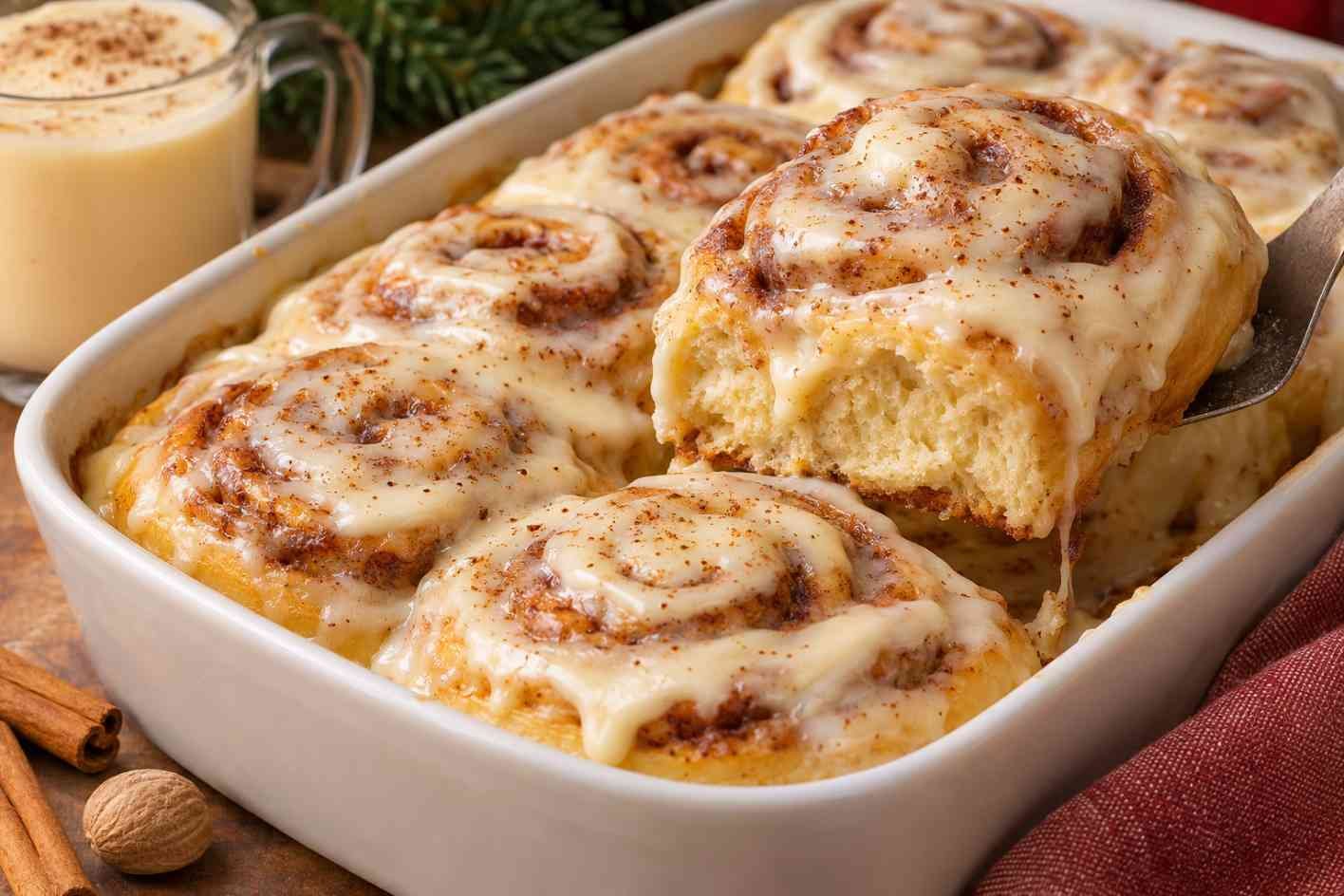
These homemade Eggnog Cinnamon Rolls are soft, fluffy, buttery, and filled with the familiar flavors of nutmeg, vanilla, and warm holiday spices. The eggnog does more than add seasonal flavor. Its milk, eggs, and richness help create a tender dough that pulls apart in soft layers. The cinnamon filling melts into the spirals as they bake, while the eggnog cream cheese frosting brings everything together. They are particularly good served warm, when the centers are still pillowy and the icing has just started to soften.
What You Can Do Better
A few small adjustments can make homemade cinnamon rolls noticeably better. Start with full-fat, nonalcoholic eggnog if you can find it. Its creamy consistency gives the dough a richer flavor than ordinary milk. Use freshly opened cinnamon and a little nutmeg rather than adding several different spices. You want the eggnog to come through, not disappear beneath the filling.
Another important detail is the flour. The dough should feel soft and slightly sticky before the first rise. Adding too much flour makes the rolls heavy, so resist the temptation to keep dusting the work surface. Finally, give the shaped rolls enough time to become visibly puffy before baking. That second rise is what helps create the light, pull-apart texture.
Eggnog Cinnamon Rolls Recipe Overview
| Recipe | Eggnog Cinnamon Rolls |
| Category | Breakfast, Brunch, Dessert |
| Cuisine | American-Inspired |
| Preparation Time | 30 minutes |
| First Rise | 60–90 minutes |
| Second Rise | 35–50 minutes |
| Baking Time | 25–30 minutes |
| Total Time | Approximately 3–3½ hours |
| Servings | 12 cinnamon rolls |
| Difficulty | Moderate |
| Oven Temperature | 350°F (175°C) |
Ingredients for Eggnog Cinnamon Rolls
This recipe has three components: a soft eggnog dough, a buttery cinnamon filling, and a creamy frosting. Most of the ingredients are familiar baking staples, with eggnog providing the seasonal twist.
For the Eggnog Dough
| Ingredient | Quantity |
|---|---|
| All-purpose flour | 3¾ cups (450 g), plus a little for dusting |
| Full-fat eggnog | 1 cup (240 ml) |
| Active dry yeast | 2¼ teaspoons (7 g) |
| Granulated sugar | ⅓ cup (67 g) |
| Unsalted butter, softened | ¼ cup (57 g) |
| Large egg | 1, room temperature |
| Vanilla extract | 1 teaspoon |
| Ground nutmeg | ¼ teaspoon |
| Salt | ¾ teaspoon |
For the Cinnamon Filling
| Ingredient | Quantity |
|---|---|
| Unsalted butter, softened | ⅓ cup (76 g) |
| Light brown sugar | ⅔ cup (135 g) |
| Ground cinnamon | 1½ tablespoons |
| Ground nutmeg | ¼ teaspoon |
| Salt | Small pinch |
For the Eggnog Cream Cheese Frosting
| Ingredient | Quantity |
|---|---|
| Cream cheese, softened | 4 oz (113 g) |
| Unsalted butter, softened | 2 tablespoons (28 g) |
| Powdered sugar | ¾ cup (90 g) |
| Eggnog | 2–3 tablespoons |
| Vanilla extract | ½ teaspoon |
| Ground nutmeg | A small pinch |
Also Read: Cinnamon Roll Pancake Recipe
How to Make Eggnog Cinnamon Rolls
These rolls require two rising periods, but the actual preparation is straightforward. You can knead the dough by hand or use a stand mixer fitted with a dough hook. Either way, pay attention to the dough’s texture rather than relying entirely on the clock.
Step 1: Activate the Yeast
Pour the eggnog into a small saucepan and warm it gently over low heat until it reaches approximately 105–110°F (40–43°C). It should feel pleasantly warm, not hot. Remove it from the heat and pour it into a large mixing bowl. Stir in the active dry yeast and one teaspoon of the measured granulated sugar. Leave the mixture undisturbed for 5–10 minutes. A light layer of foam should develop on the surface, indicating that the yeast is active. If nothing happens, the yeast may be old or the liquid may have been too hot.
Step 2: Prepare the Dough
Add the remaining granulated sugar, softened butter, egg, vanilla extract, nutmeg, and salt to the yeast mixture. Stir until combined. Add the flour gradually, mixing with a wooden spoon or stand mixer until a soft, slightly shaggy dough forms. The butter may initially appear in small pieces, but it will become incorporated during kneading. Avoid adding extra flour unless the dough is genuinely too wet to handle.
Step 3: Knead Until Smooth
Transfer the dough to a lightly floured surface and knead for approximately 8–10 minutes. Push the dough away with the heel of your hand, fold it back, and repeat. If using a stand mixer, knead on low speed for approximately 6–8 minutes. The finished dough should be smooth, stretchy, and slightly tacky. It should hold together without leaving large amounts of dough on your fingers. If it feels stiff or dry, avoid adding any more flour.
Step 4: Allow the Dough to Rise
Lightly grease a large bowl with oil or butter. Place the dough inside and turn it once to coat the surface. Cover with a clean kitchen towel or plastic wrap and leave it in a warm, draft-free place for 60–90 minutes, or until approximately doubled in size. A cooler kitchen may require additional time. The dough should look noticeably larger and feel airy when gently pressed.
Step 5: Make the Cinnamon Filling
While the dough rises, combine the brown sugar, cinnamon, nutmeg, and pinch of salt in a small bowl. Stir until the spices are evenly distributed. Keep the softened butter separate so it can be spread directly over the rolled dough. The butter should be soft enough to spread easily without tearing the dough, but it should not be melted.
Step 6: Roll Out the Dough
Once the dough has risen, gently press it down to release excess air. Transfer it to a lightly floured work surface and use a rolling pin to form a rectangle measuring approximately 12 by 18 inches. Try to keep the thickness reasonably even. Spread the softened butter over the surface, leaving a narrow border along one long edge. Sprinkle the cinnamon-sugar mixture evenly over the butter and press it down gently with your fingertips.
Step 7: Shape the Cinnamon Rolls
Starting from the long edge opposite the uncovered border, roll the dough into a tight log. Work slowly so the filling stays evenly distributed. Pinch the seam closed and position the log seam-side down. Using a sharp knife or a piece of unflavored dental floss, cut the log into 12 equal pieces, each approximately 1½ inches thick. Dental floss is especially useful because it cuts cleanly without squashing the spirals.
Step 8: Let the Rolls Rise Again
Grease a 9-by-13-inch baking dish with butter. Arrange the cinnamon rolls in three rows of four, leaving a little space between them. Cover loosely and allow them to rise for another 35–50 minutes, or until noticeably puffy and nearly touching. During the final 15 minutes of rising, preheat the oven to 350°F (175°C).
Step 9: Bake Until Golden
Remove the covering and place the baking dish on the middle oven rack. Bake for approximately 25–30 minutes, until the tops are lightly golden and the centers are cooked through. If the rolls begin browning too quickly, cover the dish loosely with aluminum foil for the remaining baking time. The center of a fully baked roll should reach approximately 190°F (88°C) when checked with an instant-read thermometer. Remove the dish from the oven and allow the rolls to cool for 10–15 minutes.
Step 10: Prepare the Eggnog Frosting
While the rolls cool, beat the softened cream cheese and butter together until smooth and creamy. Gradually add the powdered sugar, mixing until incorporated. Pour in two tablespoons of eggnog, followed by the vanilla extract and a pinch of nutmeg. Beat until fluffy. If the frosting is too thick to spread, add the remaining tablespoon of eggnog a little at a time. The finished frosting should be creamy enough to spread but thick enough to stay on top of the rolls.
Step 11: Frost and Serve
Spread the frosting generously over the warm cinnamon rolls, allowing some to settle into the spaces between the spirals. The frosting should soften slightly without disappearing completely. Serve while the rolls are still warm. For an extra touch of holiday flavor, dust the tops with a very small amount of freshly grated nutmeg just before serving.
Also Read: Cinnamon Roll Cheesecake
Tips for Soft and Fluffy Eggnog Cinnamon Rolls
Use Eggnog at the Right Temperature
Yeast needs warmth to become active, but excessive heat can damage it. Aim for approximately 105–110°F (40–43°C) when activating active dry yeast. If you do not have a kitchen thermometer, the eggnog should feel comfortably warm against your finger rather than hot.
Keep the Dough Slightly Sticky
One of the most common reasons homemade cinnamon rolls turn out dense is too much flour. A soft, slightly tacky dough is normal. Kneading develops the gluten and gradually makes the dough easier to handle without requiring large amounts of additional flour.
Give the Dough Enough Rising Time
Enriched dough containing butter, eggs, and sugar can rise more slowly than plain bread dough. If the dough has not doubled after an hour, give it more time. The same applies to the second rise. Baking rolls before they become puffy often produces tight, heavy centers.
Do Not Overbake
The rolls should be lightly golden rather than deeply browned. Overbaking dries out the soft interior and makes the edges tough. Begin checking a few minutes before the recommended baking time ends, particularly if your oven tends to run hot.
Let the Rolls Cool Briefly Before Frosting
Spreading cream cheese frosting over piping-hot rolls causes it to melt into a thin glaze. Allowing the rolls to rest for 10–15 minutes gives you a thicker, creamier topping while keeping the rolls warm enough to serve.
Make-Ahead Eggnog Cinnamon Rolls
If you want fresh cinnamon rolls for Christmas morning without waking up hours before everyone else, prepare them the night before. Follow the recipe through shaping and arranging the rolls in the baking dish. Instead of completing the second rise, cover the dish tightly and refrigerate it for up to 12 hours.
The next morning, remove the dish from the refrigerator and let the rolls stand, covered, at room temperature until they become visibly puffy. This generally takes 60–120 minutes, depending on the temperature of your kitchen. Bake as directed and prepare the frosting while the rolls cool. This method spreads the work over two days without sacrificing the freshly baked texture.
Also Read: Air Fried Cinnamon Glazed Donut Holes
Variations Worth Trying
Orange Eggnog Cinnamon Rolls
Add one teaspoon of finely grated orange zest to the cinnamon filling. The citrus aroma cuts through the richness of the eggnog and gives the rolls a brighter flavor. A little orange zest sprinkled over the finished frosting works well too.
Maple Eggnog Cinnamon Rolls
Replace the vanilla extract in the frosting with ½ teaspoon of maple extract, or add one tablespoon of pure maple syrup and reduce the eggnog slightly to maintain the frosting’s consistency. Maple pairs particularly well with cinnamon and brown sugar.
Pecan Cinnamon Rolls
Scatter ½ cup of finely chopped toasted pecans over the cinnamon filling before rolling the dough. The nuts add a pleasant crunch and a slightly roasted flavor that contrasts with the soft bread.
Extra-Spiced Holiday Rolls
For a more pronounced holiday spice flavor, add a small pinch of ground cloves or allspice to the filling. Use these spices sparingly because they can easily overpower the cinnamon and nutmeg.
What to Serve with Eggnog Cinnamon Rolls
These rolls are rich enough to stand on their own, but they also fit nicely into a holiday breakfast or brunch spread. Freshly brewed coffee is a particularly good match because its slight bitterness balances the sweetness of the frosting. Black tea, chai, or a simple latte also works well.
If you are serving a larger breakfast, add fresh berries, sliced oranges, scrambled eggs, or a savory breakfast casserole. The contrast between sweet cinnamon rolls and something savory makes the meal feel more balanced. For dessert, serve the rolls warm with coffee rather than adding another sweet topping.
How to Store and Reheat Eggnog Cinnamon Rolls
Refrigerating Leftovers
Because the rolls contain cream cheese frosting, store leftovers in an airtight container in the refrigerator within two hours of serving. They will keep for up to four days. Refrigeration firms up the bread, so reheating is recommended before serving.
Freezing Cinnamon Rolls
For longer storage, freeze the baked rolls for up to two months. For the best texture, freeze them without frosting and add freshly prepared icing after reheating. Wrap each roll tightly in plastic wrap and place it in a freezer-safe container. Thaw overnight in the refrigerator before warming.
Reheating Instructions
To reheat a single roll, place it on a microwave-safe plate and heat in 10–15-second intervals until warm. For several unfrosted rolls, cover the baking dish with foil and warm in a 300°F (150°C) oven for approximately 10–15 minutes. Avoid overheating, which can dry out the bread and make the frosting runny.
Also Read: Cosmic Brownie Rolls
Nutritional Information for Eggnog Cinnamon Rolls
The following values are approximate estimates for one cinnamon roll, assuming the recipe makes 12 rolls and the frosting is divided evenly. Actual nutritional values will vary depending on the brand of eggnog, cream cheese, butter, and other ingredients used.
| Nutrient | Estimated Amount Per Roll |
|---|---|
| Calories | 425 kcal |
| Total Carbohydrates | 62 g |
| Protein | 7 g |
| Total Fat | 17 g |
| Saturated Fat | 10 g |
| Dietary Fiber | 2 g |
| Total Sugars | 29 g |
| Sodium | 220 mg |
| Cholesterol | 75 mg |
Nutrition note: These figures are estimates rather than laboratory-tested values. For precise nutritional information, calculate the recipe using the specific ingredient brands and quantities you use.
Frequently Asked Questions
Can I Make Eggnog Cinnamon Rolls Without a Stand Mixer?
Absolutely. A stand mixer makes kneading easier, but it is not necessary. Mix the ingredients with a sturdy wooden spoon until a rough dough forms, then knead by hand on a lightly floured surface for approximately 8–10 minutes. The dough should become smooth and elastic as you work.
Can I Use Store-Bought Eggnog?
Yes. Store-bought pasteurized eggnog works well and keeps the recipe convenient. Choose a full-fat variety for the richest flavor and softest dough. Homemade eggnog can also work, provided it is prepared safely and has a similar consistency.
Can I Use Instant Yeast Instead of Active Dry Yeast?
Yes. Substitute the same amount of instant yeast. You can mix instant yeast directly into the flour instead of activating it separately. Warm the eggnog as directed, combine the ingredients, and allow the dough to rise until doubled. The rising time may be slightly shorter.
Why Did My Cinnamon Rolls Turn Out Dry?
Dry cinnamon rolls are usually the result of adding too much flour or baking for too long. Measure flour by weight when possible and stop baking once the centers are set. Also, avoid leaving the rolls uncovered for extended periods after they cool.
Why Didn’t My Dough Rise?
Inactive yeast, overheated eggnog, or a cold kitchen can prevent the dough from rising properly. Check the yeast’s expiration date, keep the liquid within the recommended temperature range, and place the dough somewhere comfortably warm. Rich dough sometimes needs more time than expected.
Can I Make These Cinnamon Rolls Without Cream Cheese?
Yes. For a simple eggnog glaze, whisk together one cup of powdered sugar, two tablespoons of eggnog, ½ teaspoon of vanilla extract, and a pinch of nutmeg. Add a little more eggnog if necessary until the glaze reaches a pourable consistency. Drizzle it over slightly cooled rolls.
Can I Use Regular Milk Instead of Eggnog?
Yes, although the rolls will lose some of their distinctive eggnog flavor. Replace the eggnog in the dough with the same amount of whole milk and add a little extra nutmeg and vanilla. You may need to adjust the flour slightly because milk and eggnog have different consistencies.
Can I Prepare the Rolls Two Days Ahead?
For the best results, refrigerate shaped, unbaked rolls overnight rather than leaving them unbaked in the refrigerator for two full days. If you need to prepare them further in advance, bake the rolls, cool them completely, and freeze them without frosting. Reheat and frost before serving.
How Do I Know When the Cinnamon Rolls Are Fully Baked?
The tops should be lightly golden, and the center rolls should no longer look wet or doughy. An instant-read thermometer inserted into the bread portion of a center roll should register approximately 190°F (88°C). This is especially helpful because the cinnamon filling can make the centers appear darker than the surrounding dough.