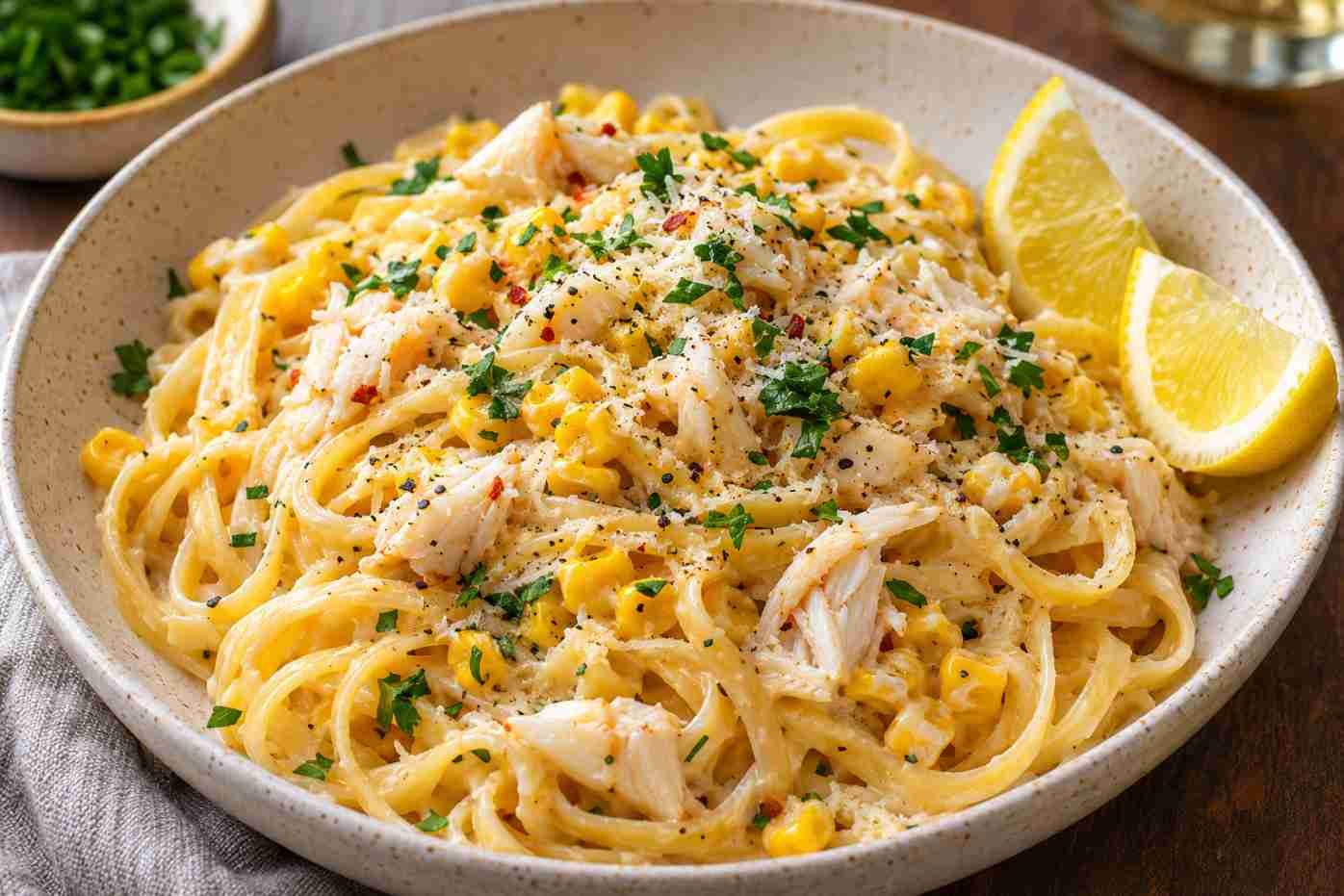
This Crab & Corn Pasta is rich without being unnecessarily heavy. The corn adds little bursts of sweetness, the crab brings a delicate seafood flavor, and the sauce coats the pasta rather than drowning it. A touch of lemon zest and fresh herbs keeps everything tasting fresh.
It is also surprisingly manageable for a weeknight. Once the ingredients are prepared, most of the cooking happens in one skillet while the pasta boils. The important part is treating the crab gently and allowing the sauce to come together slowly.
Crab & Corn Pasta Recipe Overview
| Recipe Details | Information |
|---|---|
| Preparation Time | 15 minutes |
| Cooking Time | 20 minutes |
| Total Time | 35 minutes |
| Servings | 4 |
| Course | Main Course |
| Cuisine | American-Inspired Seafood |
| Difficulty | Easy to Moderate |
| Best Served | Fresh and Warm |
Ingredients for Crab & Corn Pasta
Fresh ingredients make a noticeable difference in this recipe, especially when it comes to the crab and corn. However, good-quality refrigerated crab meat and frozen sweet corn are perfectly reasonable alternatives.
For the Pasta
- 12 ounces (340 g) linguine, fettuccine, or spaghetti
- 8 ounces (225 g) cooked lump crab meat, carefully picked over for shell fragments
- 1 1/2 cups fresh sweet corn kernels, approximately 2 medium ears
- 2 tablespoons unsalted butter
- 1 tablespoon olive oil
- 3 garlic cloves, finely minced
- 1 small shallot, finely chopped
- 1/4 teaspoon crushed red pepper flakes, optional
- Salt and freshly ground black pepper, to taste
For the Cream Sauce
- 3/4 cup heavy cream
- 1/2 cup low-sodium vegetable or seafood broth
- 1/3 cup freshly grated Parmesan cheese
- 1 teaspoon finely grated lemon zest
- 1 tablespoon fresh lemon juice
- 1/4 cup reserved pasta cooking water, plus more as needed
For Garnishing
- 2 tablespoons freshly chopped parsley
- 1 tablespoon chopped fresh chives
- Extra lemon wedges for serving
- Freshly cracked black pepper
Also Read: One Pot Cheeseburger Pasta
How to Make Crab & Corn Pasta
The secret to getting this dish right is timing. The pasta should finish cooking just as the sauce is ready, and the crab should be added near the end so it stays tender.
Step 1: Prepare the Crab and Corn
If you are using fresh corn, remove the husks and silk. Stand each ear upright on a cutting board and carefully slice downward with a sharp knife to remove the kernels. You should end up with approximately 1 1/2 cups.
Check the crab meat with your fingertips to remove any small pieces of shell or cartilage. Try not to break up the larger lumps, since those generous pieces of crab are one of the best parts of the finished pasta.
If you are using frozen corn, there is no need to thaw it completely. It can go straight into the skillet, although it may need an extra minute to cook off the moisture.
Step 2: Cook the Pasta
Bring a large pot of water to a rolling boil and season it generously with salt. Add the linguine or your preferred pasta and cook according to the package instructions, stopping about one minute before it reaches your preferred tenderness.
Before draining, scoop out at least 1/2 cup of the starchy pasta water. This is useful for adjusting the sauce later. Drain the pasta but do not rinse it. The starch left on the noodles helps the cream sauce cling to every strand.
Step 3: Sauté the Corn and Aromatics
Place a large skillet over medium heat. Add the butter and olive oil. Once the butter melts, stir in the chopped shallot and cook for about two minutes, until softened.
Add the minced garlic and crushed red pepper flakes, if using. Stir for about 30 seconds, just until the garlic becomes fragrant. Avoid letting it turn dark brown, which can make the sauce taste bitter.
Add the corn kernels and cook for another three to four minutes, stirring occasionally. The corn should become tender and develop a few lightly golden spots. Those browned edges bring out its natural sweetness.
Step 4: Make the Cream Sauce
Reduce the heat to medium-low and pour in the broth. Stir gently, scraping up any flavorful bits from the bottom of the skillet.
Add the heavy cream and bring the mixture to a gentle simmer. Allow it to cook for three to four minutes, stirring occasionally, until the sauce begins to thicken slightly.
Stir in the Parmesan cheese a little at a time until melted. Add the lemon zest and a small pinch of black pepper. Taste before adding more salt, since the broth, cheese, and crab may already contribute plenty of seasoning.
The sauce should be creamy and fluid, not thick like a cheese dip. It will continue to thicken once the pasta is added.
Step 5: Combine the Pasta and Sauce
Transfer the drained pasta directly into the skillet. Use tongs to toss it gently with the corn and cream sauce.
Add approximately 1/4 cup of the reserved pasta water and continue tossing over low heat for one to two minutes. The starchy water helps create a smooth sauce that coats the pasta evenly.
If the pasta looks dry or the sauce becomes too thick, add another tablespoon or two of pasta water. You want a glossy coating rather than a pool of cream at the bottom of the skillet.
Step 6: Add the Crab Meat
Lower the heat and gently fold the cooked crab meat into the pasta. Allow it to warm through for about one to two minutes. Avoid vigorous stirring, which can break the crab into tiny pieces.
Turn off the heat and add the fresh lemon juice. Toss once more, carefully, and taste the sauce. Adjust with a little salt, pepper, or additional lemon juice if needed.
The lemon should brighten the seafood flavor without making the pasta taste sharply acidic.
Step 7: Garnish and Serve
Divide the pasta among four warm bowls, making sure each serving gets plenty of corn and generous pieces of crab.
Scatter the chopped parsley and chives over the top. Finish with freshly ground black pepper and serve with lemon wedges on the side.
Serve immediately. Cream-based seafood pasta tastes its best when the sauce is still silky and the crab is just warmed through.
Also Read: Pesto Pasta Salad
What You Can Do Better
A few small changes can take this Crab & Corn Pasta from a good homemade dinner to something genuinely memorable. Most of them are about getting more flavor from the ingredients you already have.
1. Use Fresh Corn When It Is in Season
Fresh sweet corn has a crisp, juicy texture that works particularly well with delicate crab. If you have fresh ears available, use them. After cutting off the kernels, you can simmer the stripped cobs in the broth for about ten minutes, then discard them. This gives the sauce an extra layer of corn flavor without adding more cream.
2. Choose Lump Crab Meat
Lump crab meat gives the finished dish a better texture than finely shredded crab. You get noticeable pieces in every serving, and its gentle sweetness complements the corn. Freshly cooked crab is excellent, but pasteurized refrigerated lump crab is a convenient option. Drain it well before adding it to the skillet.
3. Do Not Overcook the Crab
Cooked crab only needs to be heated through. Adding it too early can make it dry and stringy, especially if the sauce is bubbling aggressively. Fold it in during the final minutes and keep the heat low.
4. Balance the Cream With Lemon
Cream and butter create a rich sauce, but they can also soften the more delicate seafood flavors. Lemon zest adds fragrance, while lemon juice brings brightness. Add the juice after removing the skillet from the heat to preserve its fresh taste.
5. Save More Pasta Water Than You Think You Need
It is much easier to loosen a thick sauce than to fix one that has become watery. Reserve at least half a cup of pasta water, even if you expect to use only a few tablespoons. Add it gradually until the sauce coats the noodles properly.
6. Experiment With a Little Heat
A small pinch of red pepper flakes adds warmth without overpowering the crab. For a more pronounced kick, a little finely diced fresh chili can be sautéed with the shallot. Keep the heat restrained so the sweetness of the corn remains noticeable.
Also Read: Butter Parmesan Pasta
Choosing the Best Pasta Shape
Long pasta shapes are especially good with this sauce because they pick up the creamy mixture without hiding the crab and corn.
| Pasta Type | Why It Works |
|---|---|
| Linguine | Holds the light cream sauce well and pairs naturally with seafood. |
| Fettuccine | Its wider ribbons provide a richer, more substantial bite. |
| Spaghetti | A familiar option that keeps the dish relatively light in texture. |
| Tagliatelle | Excellent for catching small corn kernels and coating evenly with sauce. |
| Rigatoni | A good alternative if you prefer short pasta that catches corn inside the tubes. |
Linguine is my preferred choice for this recipe. It is substantial enough for the cream sauce but does not compete with the tender crab meat.
Variations You Can Try
Crab & Corn Pasta With Cherry Tomatoes
Add one cup of halved cherry tomatoes to the skillet after the corn has softened. Cook for two to three minutes until the tomatoes begin to release their juices. They introduce a gentle acidity and make the dish a little lighter.
Crab & Corn Pasta With Spinach
Stir two handfuls of baby spinach into the cream sauce just before adding the pasta. Let the leaves wilt for about one minute. This is an easy way to add greens without changing the overall flavor too much.
Crab & Corn Pasta Without Heavy Cream
For a lighter sauce, replace the heavy cream with 3/4 cup half-and-half. Keep the heat low to prevent separation, and use a little extra pasta water to help the sauce coat the noodles. The result will be less rich but still creamy.
Crab & Corn Pasta With Shrimp
If crab is unavailable, peeled shrimp make a good substitute. Sauté approximately 12 ounces of shrimp in the skillet until opaque and cooked through, remove them, and return them to the finished sauce. Unlike precooked crab, raw shrimp must be fully cooked before serving.
What to Serve With Crab & Corn Pasta
Because the pasta already contains a creamy sauce and a generous amount of seafood, simple side dishes work best. A crisp green salad with a lemon vinaigrette provides contrast without competing with the main course.
Roasted asparagus, steamed green beans, or sautéed zucchini are also excellent choices. Their mild flavors complement the sweetness of the crab and corn.
If you want something to soak up the extra sauce, serve a few slices of warm crusty bread. Garlic bread works too, although a plain baguette allows the seafood flavors to stand out more clearly.
Also Read: Buffalo Chicken Pasta Salad
Crab & Corn Pasta Nutritional Information
The following values are approximate estimates for one serving, assuming the recipe makes four portions. Actual nutrition will vary depending on the pasta brand, crab meat, cream, cheese, and exact quantities used.
| Nutrient | Estimated Amount Per Serving |
|---|---|
| Calories | 745 kcal |
| Protein | 31 g |
| Total Carbohydrates | 79 g |
| Dietary Fiber | 5 g |
| Total Sugars | 7 g |
| Total Fat | 34 g |
| Saturated Fat | 19 g |
| Cholesterol | 160 mg |
| Sodium | 680 mg |
Nutrition note: These are planning estimates, not laboratory-tested values. The sodium content can change considerably depending on how heavily the pasta water is salted and which broth and crab products are used. For precise dietary tracking, calculate the recipe using the labels of your specific ingredients.
How to Store and Reheat Leftovers
Refrigerating
Transfer leftover pasta into a shallow airtight container and refrigerate promptly, within two hours of cooking. Store at 40°F (4°C) or below and use within three to four days. For the best texture and seafood flavor, eating it the following day is preferable.
Reheating
Place the pasta in a skillet over low heat and add a splash of milk, broth, or water. Stir gently until the sauce loosens and the pasta is heated thoroughly to 165°F (74°C). Avoid prolonged heating, which can make the crab tough and cause the cream sauce to separate.
Can You Freeze Crab & Corn Pasta?
Freezing is not ideal for the finished dish. Cream sauces can become grainy after thawing, and cooked pasta often loses its texture. If you want to prepare ahead, it is better to freeze plain cooked crab separately when appropriate and make the pasta and sauce fresh.
Frequently Asked Questions
Can I Use Canned Crab Meat?
Yes. Canned crab meat works when fresh or refrigerated lump crab is unavailable. Drain it thoroughly and check for any shell fragments. The texture may be finer and the flavor slightly less delicate, but it can still make a satisfying pasta.
Can I Use Frozen Corn Instead of Fresh Corn?
Absolutely. Frozen sweet corn is convenient and generally works very well in creamy pasta. Add it directly to the skillet and cook until heated through and any excess moisture has evaporated.
Should I Rinse the Pasta After Cooking?
No. Rinsing removes the surface starch that helps the sauce cling to the noodles. Simply drain the pasta and transfer it directly into the skillet with the cream sauce.
Can I Make Crab & Corn Pasta Ahead of Time?
You can prepare the ingredients in advance by chopping the shallot, mincing the garlic, removing the corn kernels, and checking the crab meat for shells. Keep perishable ingredients refrigerated. However, the pasta and sauce are best cooked shortly before serving.
What Can I Use Instead of Parmesan Cheese?
Pecorino Romano can work, although it is saltier and has a stronger flavor. For a more delicate seafood-forward sauce, you can also leave out the cheese and use a little extra cream and pasta water to achieve the desired consistency.
How Do I Keep the Cream Sauce From Becoming Too Thick?
Use low heat once the cream has been added, and avoid boiling the sauce aggressively. If it thickens too much, stir in a tablespoon of reserved pasta water at a time until it becomes smooth and glossy again.
Can I Make This Recipe Gluten-Free?
Yes. Substitute your favorite gluten-free pasta and check that the broth, seasonings, and other packaged ingredients are certified gluten-free if necessary. Gluten-free pasta can soften quickly, so follow the package instructions carefully.