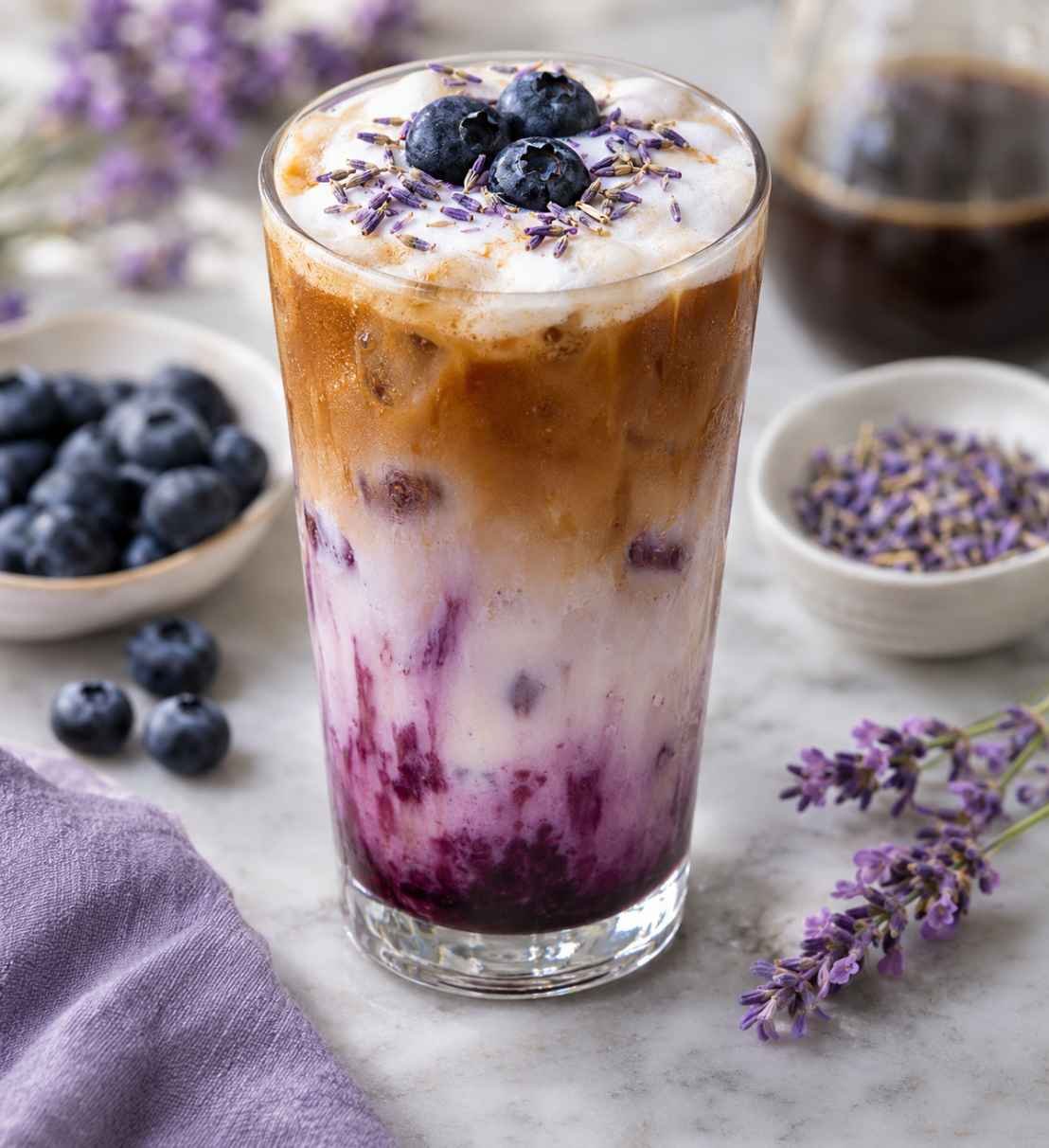
Blueberries and coffee might sound like an unusual combination, but add a little lavender and cold, creamy milk, and the result is surprisingly good. This Blueberry Lavender Latte has the sweetness of ripe berries, a gentle floral aroma, and enough espresso to remind you that you’re still drinking coffee.
The best part is that you don’t need expensive flavored syrups or a complicated coffee setup. A handful of blueberries, a small amount of culinary lavender, and your favorite espresso are enough to make a drink that feels like something you’d order at a specialty café.
It’s especially refreshing on a warm afternoon, although you can easily turn it into a cozy hot latte when the weather gets cooler. The secret is getting the balance right. You want to taste the blueberries first, notice the lavender in the background, and finish with that familiar coffee flavor.
What Makes a Blueberry Lavender Latte Different?
A regular latte is built around espresso and steamed milk. This version adds a homemade blueberry lavender syrup that brings fruitiness and a subtle herbal note to the drink. Instead of using artificial flavorings, the blueberries are gently cooked until they release their juices, while the lavender is briefly steeped to bring out its aroma.
The finished latte is creamy and lightly sweet, with a soft berry flavor that works particularly well with medium-roast espresso. You can serve it over ice for a refreshing coffee or prepare a warm version with steamed milk.
Blueberry Lavender Latte Recipe Details
| Recipe Information | Details |
|---|---|
| Recipe Name | Blueberry Lavender Latte |
| Category | Coffee, Beverages |
| Preparation Time | 5 minutes |
| Cooking Time | 8 minutes |
| Total Time | 13 minutes |
| Servings | 1 large latte |
| Difficulty | Easy |
| Serving Style | Iced or Hot |
| Approximate Calories | 220 kcal per serving |
Ingredients for Blueberry Lavender Latte
You only need a few everyday ingredients to prepare this drink. Fresh blueberries give the syrup a bright flavor, while dried culinary lavender adds the delicate floral touch.
For the Blueberry Lavender Syrup
- 1/3 cup fresh blueberries: Choose ripe, sweet blueberries for the best natural flavor. Frozen blueberries also work well.
- 1 tablespoon granulated sugar: Sweetens the syrup without overpowering the fruit. Adjust according to the sweetness of your berries.
- 3 tablespoons water: Helps the berries cook down into a pourable syrup.
- 1/8 teaspoon dried culinary lavender: Adds a gentle floral fragrance. Use only food-grade lavender.
- 1/2 teaspoon fresh lemon juice: Brightens the blueberry flavor and balances the sweetness.
For the Latte
- 2 shots espresso (approximately 60 ml): Freshly brewed espresso provides the rich coffee base.
- 3/4 cup whole milk: Gives the drink its creamy texture. Oat milk or almond milk can be substituted.
- 1/2 to 3/4 cup ice cubes: For the iced version.
- 1 tablespoon fresh blueberries: Optional garnish.
- A small amount of cold milk foam: Optional, for a café-style finish.
Equipment You’ll Need
You don’t need professional barista equipment. A small saucepan, spoon, fine-mesh strainer, measuring cups, and a tall serving glass will do most of the work. An espresso machine is convenient, but a moka pot or strong brewed coffee can be used if that’s what you have. A handheld milk frother is helpful for making a foamy topping, although it’s not essential.
Also Read: Blue Coffee Latte
How to Make Blueberry Lavender Latte
The process is simple: prepare the flavored syrup, brew the coffee, and combine everything with milk. Making the syrup first gives it enough time to cool before you assemble the iced drink.
Step 1: Cook the Blueberries
Add the blueberries, sugar, and water to a small saucepan. Place it over medium-low heat and stir occasionally. After about 4–5 minutes, the blueberries will begin to burst and release their deep purple juices.
Use the back of a spoon to gently crush any berries that remain whole. Continue cooking for another minute or two until the mixture looks slightly syrupy. You don’t want it as thick as jam; it should still be easy to pour.
Step 2: Infuse the Lavender
Remove the saucepan from the heat and stir in the dried culinary lavender. Allow it to steep for approximately 2–3 minutes. This is enough time to develop a light floral aroma without making the syrup taste overly herbal.
Stir in the lemon juice, then strain the mixture through a fine-mesh sieve into a heat-safe bowl or jar. Press the berries gently to extract the juice, but avoid forcing too much pulp through the strainer.
Set the syrup aside until it cools. A few minutes in the refrigerator can speed up the process.
Step 3: Brew the Espresso
Prepare two shots of espresso using your preferred coffee beans. A medium roast with chocolate, caramel, or mild fruity notes is particularly suitable for this recipe.
If you don’t have an espresso machine, brew approximately 1/4 cup of strong coffee. The flavor will be a little lighter, but the drink will still work. Let the coffee cool slightly before preparing the iced latte.
Step 4: Assemble the Iced Latte
Pour 2–3 tablespoons of the cooled blueberry lavender syrup into a tall glass, adjusting the amount according to your preferred sweetness. Add the ice cubes, followed by the cold milk.
Slowly pour the espresso over the milk. You’ll see the coffee settle into the glass, creating layers of brown, creamy white, and muted purple. The appearance is lovely, but the real flavor comes through once everything is stirred together.
Step 5: Add the Finishing Touches
For a creamier finish, froth a small portion of cold milk and spoon it over the latte. Garnish with a few fresh blueberries if desired.
Give the drink a good stir before taking your first sip. This distributes the syrup evenly, so you get the blueberry, lavender, and espresso flavors together rather than tasting each layer separately.
How to Make a Hot Blueberry Lavender Latte
The hot version is just as enjoyable, particularly when you want something a little different from your usual morning coffee. Prepare the blueberry lavender syrup using the same method, then pour 2 tablespoons into your favorite coffee mug.
Add two freshly brewed espresso shots and stir gently. Heat 3/4 cup of milk until steaming but not boiling, then froth it if you prefer a traditional latte texture. Slowly pour the warm milk into the mug and finish with a little foam.
One thing worth remembering is that blueberries are naturally acidic. Adding very hot milk directly to a concentrated fruit syrup can sometimes cause slight curdling. Mixing the syrup with espresso first and using milk that isn’t boiling helps reduce that problem.
Also Read: Blueberry Greek Iced Latte
What You Can Do Better
1. Use Ripe Blueberries Instead of Adding More Sugar
The quality of the berries makes a noticeable difference. Sweet, ripe blueberries produce a fuller fruit flavor, while underripe berries may need extra sugar. Taste the syrup before adding it to your coffee. If the berries are naturally sweet, you may not need the full tablespoon of sugar.
2. Keep the Lavender Subtle
Lavender should complement the blueberries, not dominate the drink. Too much can make the latte taste medicinal or perfume-like. Start with 1/8 teaspoon of dried culinary lavender. You can increase it slightly in a future batch if you prefer a stronger floral flavor.
3. Choose Coffee That Doesn’t Overpower the Fruit
Very dark espresso can sometimes overwhelm the delicate blueberry and lavender notes. A medium roast is usually a better starting point because it offers enough coffee flavor without excessive bitterness.
4. Try Oat Milk for a Different Texture
Whole milk creates a rich, smooth latte, but barista-style oat milk is another excellent choice. It has a naturally mild sweetness and tends to blend nicely with fruit-flavored coffee. Almond milk produces a lighter drink with a slightly nutty finish.
5. Make the Syrup Ahead of Time
If you enjoy flavored coffee regularly, preparing the syrup in advance makes the morning routine much easier. You can multiply the recipe, refrigerate the strained syrup in a clean airtight container, and use it over the next few days. Always use a clean spoon when serving it.
Flavor Variations Worth Trying
Blueberry Vanilla Lavender Latte
Add 1/4 teaspoon vanilla extract to the finished syrup. Vanilla softens the floral notes and gives the drink a slightly dessert-like quality without needing heavy cream.
Honey Blueberry Lavender Latte
Replace the granulated sugar with 1 tablespoon honey. Stir the honey into the cooked blueberry mixture after removing it from the heat. The result has a warmer sweetness that pairs nicely with lavender.
Blueberry Lavender Oat Milk Latte
Use barista-style oat milk instead of dairy milk. The flavor is naturally mellow, and the milk froths well enough to create a creamy topping. This is an easy way to make the recipe dairy-free.
Extra-Strong Blueberry Lavender Latte
If you prefer your coffee more intense, add an additional espresso shot. You may also want to increase the milk slightly to maintain a balanced texture.
Nutritional Information
The following nutritional values are approximate estimates for one large iced Blueberry Lavender Latte made with whole milk, the listed sugar, blueberries, and two espresso shots. The actual values will depend on the milk brand, syrup quantity used, and how much fruit pulp is removed during straining.
| Nutrient | Estimated Amount Per Serving |
|---|---|
| Calories | 220 kcal |
| Total Carbohydrates | 35 g |
| Total Sugar | 30 g |
| Added Sugar | 12.5 g |
| Protein | 7 g |
| Total Fat | 6 g |
| Saturated Fat | 3.5 g |
| Dietary Fiber | 1 g |
| Sodium | 80 mg |
| Cholesterol | 18 mg |
| Caffeine | Approximately 120–150 mg |
Note: These figures are estimates rather than laboratory-tested nutritional values. Caffeine content varies with coffee beans, brewing methods, and espresso shot size. Optional extra milk foam is not included.
Also Read: Eggnog Cinnamon Rolls
How to Make This Latte Lower in Sugar
If you’re trying to reduce added sugar, start by using just 1 teaspoon instead of 1 tablespoon when cooking the blueberries. Ripe berries already contribute natural sweetness, and the milk adds some sweetness of its own.
You can also use unsweetened almond milk for a lighter drink, although it won’t have the same creamy texture as whole milk. Another option is to prepare the syrup without sugar and sweeten the finished latte gradually, tasting as you go.
Remember that reducing sugar will also change the thickness of the blueberry mixture. A less sweet syrup may be thinner, but that doesn’t affect its usefulness in the latte.
Common Mistakes to Avoid
Using Too Much Lavender
This is probably the easiest mistake to make. Lavender is quite aromatic, and even a small amount can noticeably change a drink. Measure it rather than adding it by eye, and avoid long steeping times.
Adding Hot Syrup Directly to Cold Milk
Freshly cooked syrup can warm the milk, melt the ice quickly, and sometimes cause an uneven texture. Allow it to cool before assembling the iced latte.
Skipping the Straining Step
Leaving blueberry skins and lavender buds in the syrup creates a pulpy texture. Straining gives you a smoother drink that is much closer to what you’d expect from a coffee shop.
Using Weak Coffee
Blueberry syrup and milk both soften the coffee flavor. If the brewed coffee is too weak, the drink may taste more like flavored milk than a latte. Espresso or strongly brewed coffee works best.
What to Serve With Blueberry Lavender Latte
This latte pairs particularly well with baked goods that aren’t overly sweet. A buttery croissant is a simple choice, while a lemon poppy seed muffin brings out the bright fruit notes. Almond biscotti works nicely if you want something crisp to dip into your coffee.
For a more filling breakfast, serve it alongside overnight oats, Greek yogurt with granola, or whole-grain toast with almond butter. The drink already has a fair amount of sweetness, so a lightly sweetened breakfast often makes the better pairing.
Storage and Make-Ahead Instructions
The blueberry lavender syrup is the only part of this recipe that benefits from being made ahead. Once strained and cooled, transfer it to a clean airtight glass jar and refrigerate promptly. Use it within 3 days for best quality.
Keep the espresso and milk separate until you’re ready to make the latte. An assembled iced latte doesn’t store particularly well because the ice melts and dilutes the coffee. The milk foam also loses its texture over time.
If you’re making several servings for guests, prepare a larger batch of syrup and brew the espresso shortly before serving. Arrange the glasses with ice and milk, then let everyone add their preferred amount of blueberry lavender syrup.
Also Read: Gingerbread Muffins with Lemon Glaze
Frequently Asked Questions
Can I use frozen blueberries instead of fresh ones?
Yes. Frozen blueberries work very well for the syrup. You don’t need to thaw them first, although they may take an extra minute or two to soften while cooking.
Does a Blueberry Lavender Latte taste strongly floral?
Not when the lavender is measured carefully. The floral flavor should be gentle, with blueberries and coffee remaining the main flavors. If the lavender tastes too strong, reduce the steeping time or use fewer buds next time.
Can I make this recipe without an espresso machine?
Absolutely. A moka pot, AeroPress, or concentrated brewed coffee can be used. Aim for a small amount of strong coffee rather than a full mug of regular-strength coffee, which could make the latte watery.
Is Blueberry Lavender Latte naturally purple?
The blueberry syrup has a rich purple color, but the finished latte usually becomes a muted lavender, beige, or light brown shade after mixing with milk and espresso. The exact color depends on the berries and coffee. A bright purple appearance isn’t necessary for a good-tasting drink.
Can I make a caffeine-free version?
Yes. Replace the regular espresso with decaffeinated espresso. Keep the remaining ingredients and preparation method the same. Decaf coffee still contains a small amount of caffeine.
Can I use lavender syrup instead of dried lavender?
You can use a food-grade lavender syrup if you already have one. Start with a small quantity, as commercial syrups vary considerably in sweetness and strength. Reduce the sugar in the blueberry mixture accordingly.
What type of lavender is safe for cooking?
Use lavender specifically labeled for culinary use. Dried lavender sold for potpourri, decoration, or fragrance may not be suitable for food preparation. Food-grade English lavender is commonly used in recipes because of its relatively delicate flavor.
Can I prepare this latte for a party?
Yes. Make the blueberry lavender syrup ahead of time and refrigerate it. When guests arrive, brew the coffee and set out chilled milk, ice, and the syrup so each person can assemble a fresh drink.