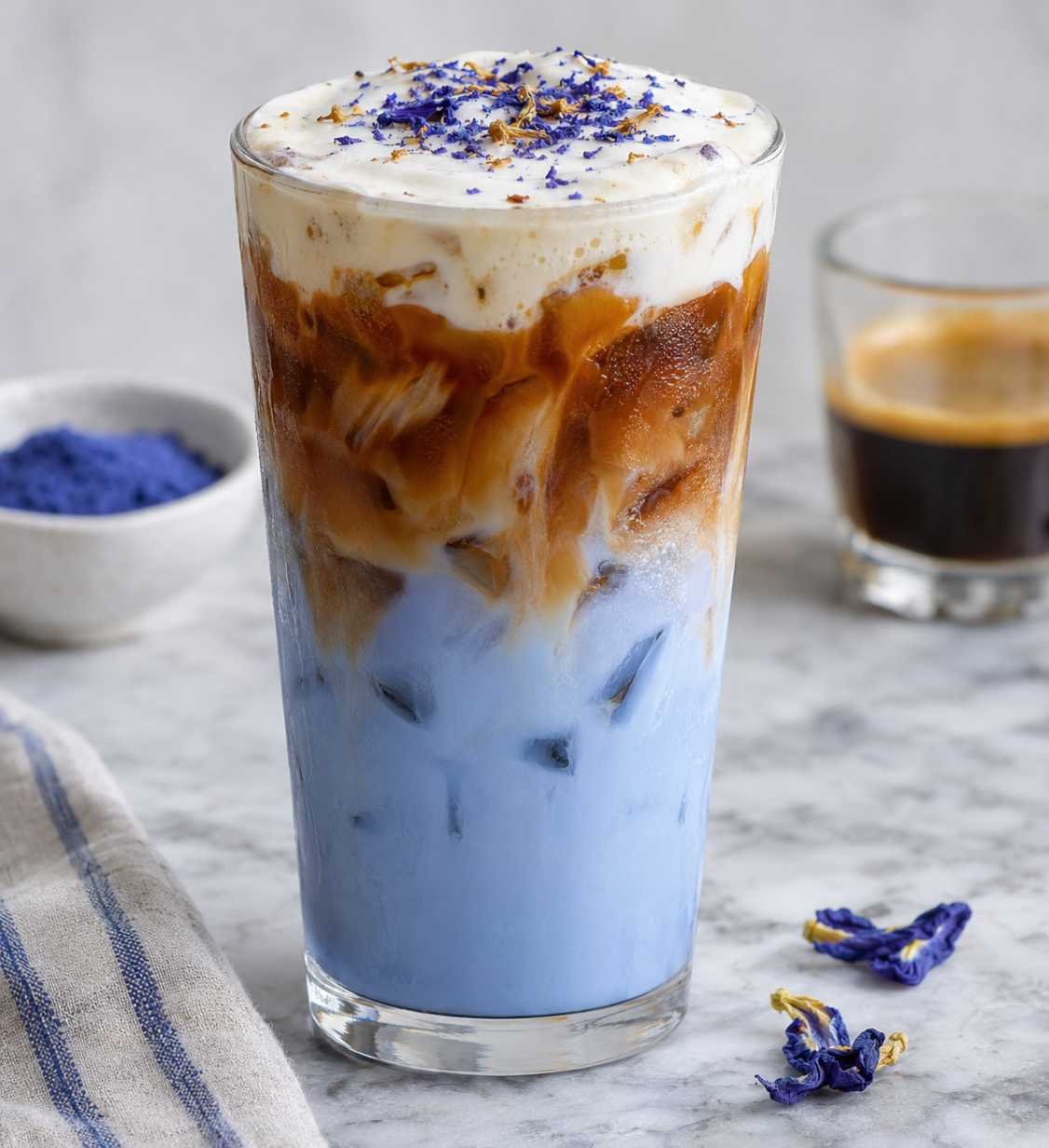
A Blue Coffee Latte is one of those drinks that looks almost too pretty to stir. The soft blue milk, rich espresso, and creamy topping create a striking combination that feels straight out of a specialty coffee shop. Fortunately, you don’t need professional barista skills or expensive equipment to make one at home.
The secret to its unusual color is butterfly pea flower powder, a natural ingredient that turns milk a lovely shade of blue. Add freshly brewed espresso, a little vanilla, and a touch of sweetness, and you have a refreshing iced latte that tastes just as inviting as it looks.
Unlike heavily flavored coffee drinks, this recipe keeps the coffee at the center. The butterfly pea flower contributes a gentle earthy note, while vanilla and milk soften the espresso’s bitterness. The result is smooth, lightly sweet, and surprisingly easy to customize.
What Is a Blue Coffee Latte?
A Blue Coffee Latte is a colorful variation of a traditional latte made with espresso, milk, and butterfly pea flower. The flower contains natural pigments called anthocyanins, which give the milk its distinctive blue appearance.
When the espresso is poured slowly over the ice, the drink develops beautiful layers of blue and brown. These layers gradually blend as you stir, creating a softer gray-blue or lavender-brown shade.
Butterfly pea flower is naturally caffeine-free, but the finished latte contains caffeine from the espresso. Its flavor is mild enough that it doesn’t overpower the coffee, making it an interesting alternative to ordinary vanilla or caramel iced lattes.
Blue Coffee Latte Recipe Overview
| Recipe Details | Information |
|---|---|
| Recipe Name | Blue Coffee Latte |
| Preparation Time | 10 minutes |
| Cooking Time | 2 minutes for brewing espresso |
| Total Time | 12 minutes |
| Servings | 1 large latte |
| Difficulty | Easy |
| Serving Style | Iced |
| Main Flavor | Espresso, vanilla, and creamy milk |
Ingredients for Blue Coffee Latte
This recipe uses everyday coffee ingredients along with food-grade butterfly pea flower powder. You can find the powder in specialty tea shops or stores selling natural food colorings.
| Ingredient | Quantity | Purpose |
|---|---|---|
| Freshly brewed espresso | 2 shots (60 ml) | Provides a bold coffee flavor |
| Whole milk | 3/4 cup (180 ml) | Creates a smooth, creamy base |
| Butterfly pea flower powder | 1/4 teaspoon | Gives the latte its natural blue color |
| Warm water | 2 tablespoons | Helps dissolve the flower powder |
| Maple syrup | 2 teaspoons | Adds gentle sweetness |
| Vanilla extract | 1/4 teaspoon | Balances the coffee flavor |
| Heavy whipping cream | 1 tablespoon | Creates a light, creamy topping |
| Ice cubes | 1/2 to 3/4 cup | Chills the latte and helps form layers |
Also Read: Blueberry Greek Iced Latte
Optional Ingredients
- Honey: Replace maple syrup with honey for a different sweetness.
- Oat milk: Use instead of dairy milk for a plant-based latte.
- Coconut milk: Adds a subtle tropical flavor and extra richness.
- Vanilla syrup: Use instead of maple syrup and vanilla extract for a sweeter coffee-shop-style drink.
- Extra espresso: Add another shot if you prefer stronger coffee.
Equipment You Will Need
- Espresso machine, moka pot, or another strong coffee brewer
- Large transparent serving glass
- Small mixing bowl
- Measuring spoons and measuring cup
- Milk frother or small whisk
- Long spoon for stirring
A transparent glass is especially useful because it allows you to see the blue milk and dark espresso layers. A regular drinking glass works just as well if presentation isn’t your main concern.
Also Read: Blueberry Nespresso Latte
How to Make Blue Coffee Latte
The trick to making a good Blue Coffee Latte is preparing the blue milk separately and adding the espresso slowly. This gives you a smoother flavor and more attractive layers.
Step 1: Prepare the Butterfly Pea Flower Mixture
Add 1/4 teaspoon of food-grade butterfly pea flower powder to a small bowl. Pour in 2 tablespoons of warm water, around 175°F (80°C), and whisk until the powder is completely dispersed. The liquid should turn a rich blue color without visible lumps. Let it cool for a minute or two before using.
Avoid adding the dry powder directly to cold milk because it can form small clumps that are difficult to dissolve.
Step 2: Sweeten the Blue Base
Stir the maple syrup and vanilla extract into the prepared butterfly pea mixture. Taste a small amount and adjust the sweetness if needed. Remember that the espresso will add some bitterness, so the base should taste slightly sweeter than you want the finished latte to be.
Step 3: Make the Blue Milk
Pour the milk into a separate glass or measuring jug. Add the blue mixture and stir thoroughly until the color is evenly distributed. You should have a smooth, pale blue milk with no streaks of concentrated powder.
For a deeper blue color, add a very small pinch of extra butterfly pea powder dissolved in warm water. Use it sparingly, since too much can introduce a noticeable earthy taste.
Step 4: Brew the Espresso
Prepare two shots of espresso using your preferred coffee beans. A medium or medium-dark roast works particularly well because it offers enough richness to stand out against the milk and vanilla.
Let the espresso cool for about two minutes. It doesn’t need to become completely cold, but pouring extremely hot coffee directly over ice will melt the cubes quickly and dilute the drink.
Step 5: Assemble the Latte
Fill a tall serving glass with ice cubes, then pour the blue milk over them. Leave some room at the top for the espresso and cream.
Slowly pour the espresso over the back of a spoon or directly onto an ice cube near the surface. This gentle pouring method helps create a visible coffee layer above the blue milk. The separation won’t last forever, but it makes the freshly prepared drink especially attractive.
Step 6: Add the Creamy Topping
Place the cold heavy cream in a small container and whisk or froth it for 15 to 20 seconds until it becomes slightly thickened but remains pourable.
Gently spoon the cream over the top of the latte. You want a delicate creamy finish rather than a thick mound of whipped cream.
Step 7: Serve and Enjoy
Serve the latte immediately while the ice is still firm and the layers are visible. Give it a gentle stir before drinking to combine the espresso, sweetened milk, and cream.
The finished drink will have a mellow coffee flavor with vanilla sweetness and a soft floral-earthy background. Its bright blue appearance will naturally become less noticeable once everything is mixed.
What You Can Do Better
A few small adjustments can make a noticeable difference in the flavor, texture, and appearance of your Blue Coffee Latte. These are the details worth paying attention to when preparing it at home.
1. Use Freshly Brewed Espresso
Fresh espresso has a richer aroma and fuller flavor than coffee that has been sitting for hours. If you don’t have an espresso machine, use a small amount of concentrated coffee from a moka pot or strong cold brew concentrate. Avoid regular-strength brewed coffee because it may taste weak once combined with milk and ice.
2. Choose the Right Milk
Whole milk creates a rich, smooth latte, but barista-style oat milk is another excellent option. Almond milk produces a lighter drink, while coconut milk adds a distinctive flavor. Different milks also affect how vibrant the blue color appears.
3. Don’t Overdo the Butterfly Pea Powder
More powder doesn’t necessarily make a better latte. Excessive amounts can produce a grassy or earthy taste that competes with the espresso. Start with 1/4 teaspoon and increase only slightly if you want a stronger color.
4. Keep the Ingredients Cold
Cold milk, fresh ice, and slightly cooled espresso help preserve the drink’s texture. If you have time, chill your serving glass in the refrigerator before assembling the latte.
5. Adjust Sweetness Gradually
Two teaspoons of maple syrup provide moderate sweetness, but your preferred amount will depend on the coffee beans and milk you use. Start with less syrup if you enjoy stronger coffee flavors, and add more after tasting.
6. Create Better Layers
For a more distinct layered appearance, use plenty of ice and pour the espresso slowly. The temperature and sugar content of each liquid influence how they settle in the glass. Even with careful pouring, some mixing is natural.
Also Read: Blueberry Cream Iced Latte
Blue Coffee Latte Variations
Iced Blue Vanilla Latte
Replace the maple syrup with 2 teaspoons of vanilla syrup and omit the separate vanilla extract. This version tastes sweeter and has a familiar coffee-shop vanilla flavor.
Blue Coconut Coffee Latte
Use chilled coconut milk beverage instead of whole milk. Coconut pairs nicely with the delicate flavor of butterfly pea flower and gives the latte a slightly tropical character.
Blue Oat Milk Latte
Swap the whole milk for unsweetened barista-style oat milk and leave out the cream or use a plant-based topping. The oat milk adds a naturally mellow flavor that complements espresso.
Honey Blue Coffee Latte
Replace the maple syrup with 2 teaspoons of honey. Dissolve the honey in the warm butterfly pea mixture before adding it to the cold milk so that it blends evenly.
Hot Blue Coffee Latte
For a warm version, omit the ice and gently heat the milk before mixing in the butterfly pea base. Pour the espresso into a mug, add the blue milk, and finish with a little frothed cream. The colors will blend more quickly, but the flavor will remain pleasantly creamy.
Nutritional Information
The following nutritional values are approximate for one serving made with whole milk, two shots of espresso, maple syrup, and one tablespoon of heavy cream. Exact values depend on the milk, sweetener, and coffee used.
| Nutrient | Approximate Amount Per Serving |
|---|---|
| Calories | 205 kcal |
| Total Fat | 11 g |
| Saturated Fat | 7 g |
| Carbohydrates | 21 g |
| Total Sugars | 19 g |
| Protein | 6 g |
| Dietary Fiber | 0 g |
| Sodium | 85 mg |
| Calcium | Approximately 220 mg |
| Caffeine | Approximately 120–150 mg |
Nutrition Note: These figures are estimates rather than laboratory-tested values. Using unsweetened plant-based milk, reducing the maple syrup, or skipping the cream can change the calorie and sugar content. Espresso caffeine levels also vary depending on the beans and brewing method.
Also Read: Pear Ginger White Wine Sangria
What to Serve With Blue Coffee Latte
Because this latte has a smooth, lightly sweet flavor, it pairs best with snacks that don’t overwhelm the coffee.
- Butter croissants: Their flaky, buttery layers complement the creamy milk.
- Vanilla cookies: A simple pairing that brings out the vanilla notes in the latte.
- Banana bread: Its natural sweetness works nicely with the espresso.
- Almond biscotti: A crunchy option for anyone who enjoys a traditional coffee-and-cookie combination.
- Blueberry muffins: Their fruity flavor adds a pleasant contrast to the coffee.
For a light afternoon treat, a small slice of pound cake or a handful of roasted almonds also works well.
Storage and Make-Ahead Tips
Blue Coffee Latte tastes best immediately after preparation. Once the ice begins melting, the drink becomes more diluted and the carefully created layers disappear.
If you want to prepare part of the recipe in advance, mix the butterfly pea powder with water, maple syrup, and vanilla. Cool it promptly and store it in a clean, covered container in the refrigerator for up to 24 hours.
You can also brew the espresso ahead of time and refrigerate it in a sealed container for up to 24 hours, although freshly brewed espresso generally has a better aroma.
Keep the milk refrigerated separately and assemble the latte just before serving. Avoid storing a fully prepared iced latte overnight because the ice will melt and the texture will change.
Common Mistakes to Avoid
Using Too Much Flower Powder
Butterfly pea flower should add color and a subtle background flavor, not dominate the drink. Measuring carefully helps prevent an overly earthy taste.
Pouring Very Hot Espresso Over Ice
Freshly brewed espresso is hot enough to melt ice quickly. Allowing it to cool briefly helps keep the latte refreshing rather than watery.
Expecting the Blue Color to Stay Bright
Butterfly pea flower pigments respond to acidity. Since coffee is naturally acidic and brown in color, the blue can shift toward purple, gray, or brown as the ingredients mix. This is normal and doesn’t mean the recipe has failed.
Using Non-Food-Grade Flower Powder
Always choose butterfly pea flower powder specifically labeled for culinary use. Decorative flower powders and craft colorants are not appropriate for beverages.
Adding Too Much Sweetener
Excessive syrup can hide the espresso flavor and make the drink taste more like a dessert than a latte. Add sweetness gradually and taste as you go.
Frequently Asked Questions
What makes a Blue Coffee Latte blue?
The blue color comes from butterfly pea flower powder, which contains natural plant pigments called anthocyanins. These pigments create blue shades in suitable conditions and can change color when exposed to acidic ingredients.
Does Blue Coffee Latte taste like regular coffee?
Yes, espresso remains the dominant flavor. The milk makes it creamy, vanilla adds sweetness and aroma, and butterfly pea flower contributes a mild earthy note.
Is Blue Coffee Latte naturally caffeinated?
The butterfly pea flower itself is naturally caffeine-free. However, the espresso makes the finished drink caffeinated. Two espresso shots commonly provide around 120–150 mg of caffeine, although the exact amount varies.
Can I make Blue Coffee Latte without an espresso machine?
Absolutely. You can use a moka pot, strong cold brew concentrate, or a small amount of concentrated brewed coffee. The important thing is to use coffee strong enough to remain flavorful after adding milk and ice.
Can I use blue spirulina instead of butterfly pea flower?
Blue spirulina can color drinks, but it has a different flavor and pigment behavior. It may produce a brighter blue in some preparations, although the result will not taste exactly the same as this recipe.
Why does my Blue Coffee Latte turn purple?
Butterfly pea flower contains pH-sensitive pigments. When the blue mixture comes into contact with acidic espresso, the color can shift toward purple. The coffee’s brown color also affects the final appearance.
Can I make this latte without sugar?
Yes. Omit the maple syrup for an unsweetened version or use a suitable alternative sweetener. Vanilla extract can still provide a pleasant aroma without adding much sweetness.
Is Blue Coffee Latte suitable for vegans?
The standard recipe contains dairy milk and cream. To make a vegan version, use plant-based milk, such as oat or almond milk, and replace the cream with a dairy-free alternative.
Can I prepare a Blue Coffee Latte in advance?
You can prepare the blue flavor base and espresso separately ahead of time, but the assembled latte is best enjoyed fresh. Add the ice and combine the ingredients only when you’re ready to drink it.
Can I use butterfly pea flower tea instead of powder?
Yes. Brew a small amount of concentrated butterfly pea flower tea, cool it, and use it in place of the powder-and-water mixture. Keep the amount of tea relatively small so the latte doesn’t become watery.