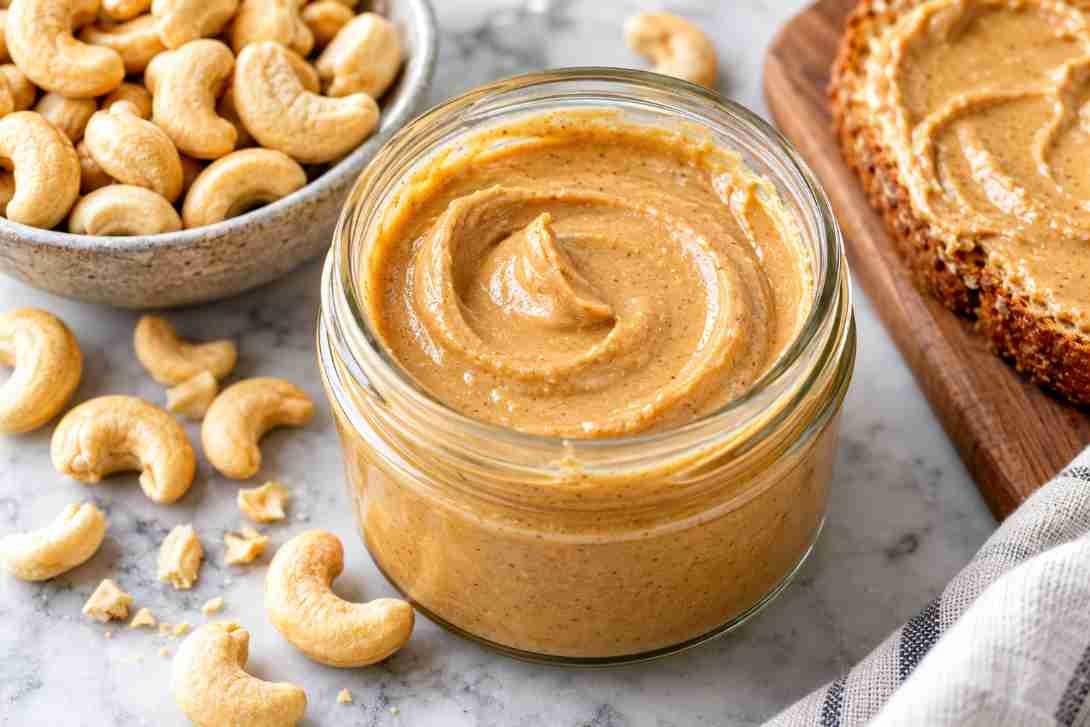
Homemade cashew butter is one of those recipes that looks almost too simple to be worth making, until you taste it. Toasted cashews turn into a naturally creamy, mildly sweet spread with no need for added oil or a long list of ingredients. All you really need is cashews, a little salt, and a food processor. The most important part is giving the nuts enough time to release their natural oils and become smooth.
What Is Cashew Butter?
Cashew butter is simply cashews blended into a smooth, spreadable paste. Unlike peanut butter, cashew butter has a softer, more delicate flavor, which makes it useful in both sweet and savory recipes. Toasting the cashews first adds a deeper nutty flavor and also helps them blend more easily.
Why Toast the Cashews First?
You can make cashew butter with raw cashews, but lightly roasting them makes a noticeable difference. Warm cashews tend to blend more readily, and the gentle heat brings out their natural oils and gives the finished butter a richer flavor. Keep an eye on them while roasting because cashews can go from golden to burnt surprisingly quickly.
Ingredients
| Ingredient | Amount |
|---|---|
| Raw, unsalted cashews | 3 cups (about 16 ounces) |
| Fine salt | 1/4 teaspoon |
Optional: You can add a little cinnamon, maple syrup, honey, vanilla, or cocoa powder if you want to change the flavor. For a simple everyday cashew butter, though, cashews and salt are enough.
Also Read: Kalamata White Bean Dip
How to Make Cashew Butter
1. Toast the Cashews
Preheat your oven to 350°F (175°C). Spread the cashews in a single layer on a baking sheet. Roast for about 8 to 10 minutes, stirring once halfway through. They should smell fragrant and look lightly golden, not dark brown.
2. Let Them Cool Slightly
Remove the cashews from the oven and let them sit for about 10 minutes. You want them warm rather than piping hot. This small step helps the nuts blend smoothly without putting unnecessary strain on your food processor.
3. Start Blending
Transfer the warm cashews to a food processor and add the salt. Start blending. At first, the cashews will become a coarse powder. After a little more processing, the mixture will begin clumping together and may form a thick ball. Keep going.
4. Scrape and Keep Processing
Stop the food processor occasionally and scrape down the sides. The cashews need time to release their natural oils. Eventually, the thick mixture will loosen and turn into a smooth, glossy butter. Depending on your food processor, this can take several minutes, so don’t be tempted to add oil too quickly.
5. Check the Texture
Once the cashew butter is creamy, taste it and add a tiny pinch more salt if needed. If your food processor becomes very warm or seems to be struggling, switch it off and let everything cool for a few minutes before continuing.
6. Cool and Store
Allow the finished cashew butter to cool to room temperature before transferring it to a clean, airtight jar. Store it in the refrigerator and use it within about a month for the best quality.
Also Read: Sesame Dressing
What You Can Do Better
Use fresh cashews. Cashews that have been sitting around for a long time may have less pleasant flavor and can taste stale or rancid.
Don’t skip the light roasting. A short toast gives the butter a fuller flavor and helps the nuts become easier to process.
Be patient with the food processor. The mixture may look dry and crumbly for several minutes before suddenly becoming creamy. This is normal.
Don’t add water. Water can make nut butter seize and become difficult to blend. If you genuinely need to loosen a very dry batch, a small amount of neutral-flavored oil can help, but well-toasted cashews usually don’t need it.
Don’t over-roast the nuts. Deeply browned cashews can give the butter a bitter flavor. Light golden color is what you’re looking for.
How to Use Cashew Butter
There are plenty of ways to use homemade cashew butter beyond spreading it on toast. Try it with sliced bananas or berries, swirl it into oatmeal, spread it over pancakes, or blend a spoonful into a smoothie. It also works nicely in sauces, dressings and homemade energy bites.
- Spread it on toast with banana, berries or a little honey.
- Stir it into oatmeal or overnight oats.
- Add a spoonful to smoothies for extra creaminess.
- Use it as a dip for apple slices or other fresh fruit.
- Swirl it into yogurt with cinnamon and fruit.
- Use it in homemade cookies, bars and energy bites.
- Mix it into savory sauces or dressings for a creamy texture.
Also Read: Arrabbiata Sauce
Cashew Butter Recipe at a Glance
| Details | Information |
|---|---|
| Prep Time | 10 minutes |
| Roasting Time | 8–10 minutes |
| Blending Time | 5–10 minutes, depending on equipment |
| Total Time | About 25–30 minutes |
| Yield | About 1 1/2 to 1 3/4 cups |
| Method | Food processor |
| Category | Spread |
Nutrition Information
The following is an approximate nutritional estimate for 2 tablespoons of homemade cashew butter. Actual values will vary depending on the cashews used and the final serving size.
| Nutrient | Approximate Amount |
|---|---|
| Calories | 175–180 kcal |
| Total Fat | 14 g |
| Saturated Fat | 3 g |
| Carbohydrates | 10 g |
| Fiber | 1 g |
| Protein | 5 g |
| Sodium | 40–50 mg |
| Sugars | 2 g |
Nutrition information is an estimate and will vary based on the brand of cashews, amount of salt and serving size.
Also Read: Spinach Lasagna
How to Store Cashew Butter
Keep homemade cashew butter in a clean, tightly sealed jar in the refrigerator. Because it contains no preservatives, refrigeration is the safer choice for longer storage. The butter may become firmer when chilled, so let it sit at room temperature for a few minutes before spreading if needed. If a little natural oil separates on top, simply stir it back in.
Can You Make Cashew Butter Without Roasting?
Yes. Raw cashews can be blended directly, but they may take longer to turn creamy and the finished butter will have a milder flavor. Lightly toasted cashews are generally easier to work with and give the spread a more developed, nutty taste.
Frequently Asked Questions
Can I use roasted cashews?
Yes. If you already have plain roasted, unsalted cashews, you can use them directly. There is no need to roast them again unless you want to warm them slightly before blending.
Why is my cashew butter not becoming creamy?
Keep blending and scrape the sides of the food processor regularly. Cashews usually move from crumbs to a thick paste before becoming smooth. If the mixture remains unusually dry, the nuts may be old or particularly dry.
Can I make crunchy cashew butter?
Absolutely. Reserve a small handful of toasted cashews, process the rest until smooth, then roughly chop the reserved nuts and stir them into the finished butter.
Can I add sweetener?
Yes. A small amount of maple syrup, honey or another sweetener can give the butter a dessert-like flavor. Add it gradually and taste as you go.
How long does homemade cashew butter last?
When kept in a clean, airtight container in the refrigerator, homemade cashew butter is best used within about one month.