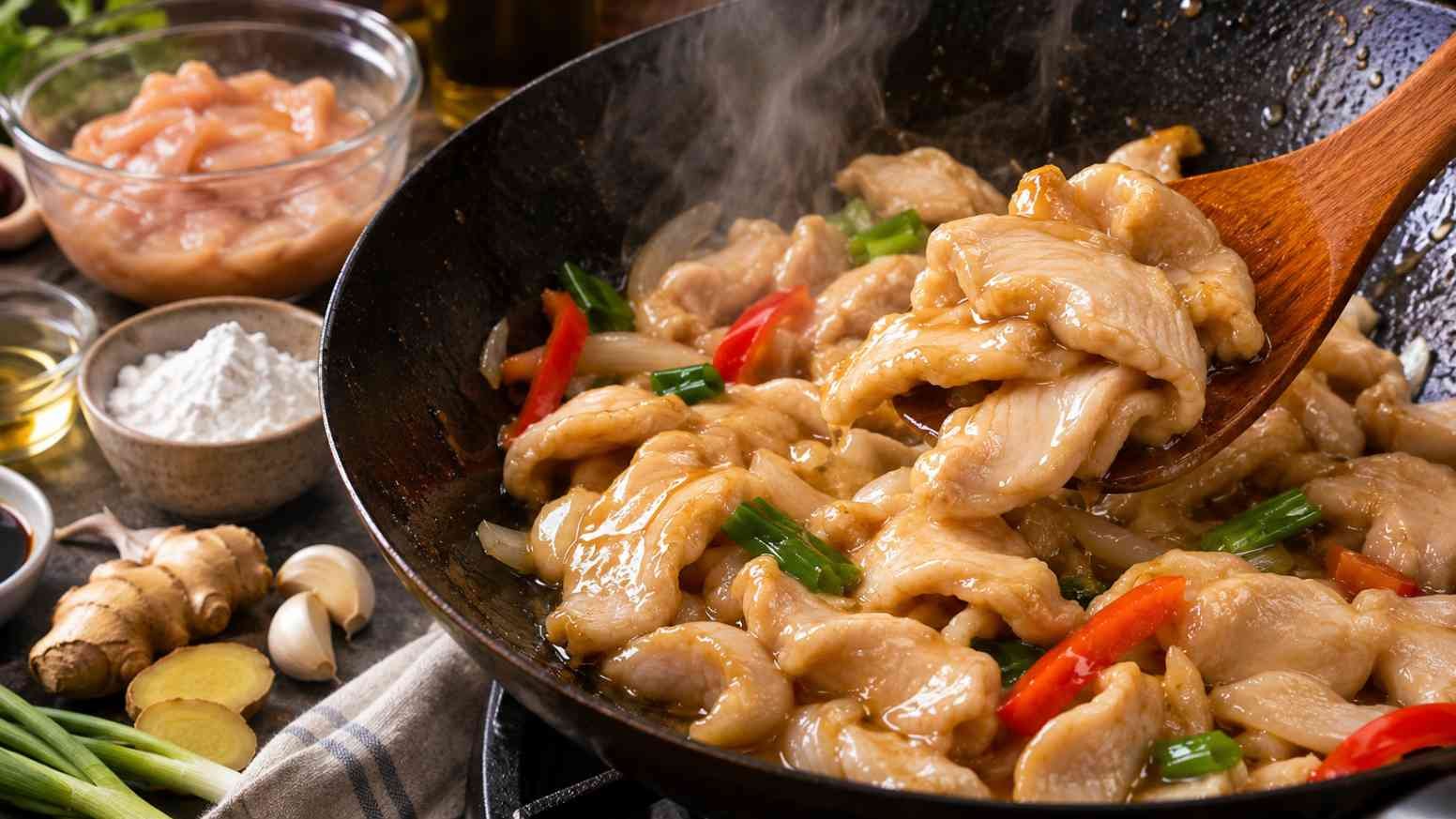
There is something noticeably different about the chicken served in a good Chinese restaurant. Even when the pieces are thinly sliced and cooked over high heat, they remain soft, juicy, and surprisingly tender. Getting that same texture at home can be difficult, especially when using chicken breast, which tends to dry out quickly.
That is where velveting chicken comes in. It is a simple preparation technique that helps chicken retain a tender, silky texture during cooking. You do not need expensive ingredients or special equipment, and the extra preparation takes only a few minutes of hands-on work.
Once you learn how to velvet chicken, you can use the technique for stir-fries, noodles, fried rice, and plenty of other dishes. It is particularly useful when cooking small pieces of boneless chicken breast.
What Is Velveting Chicken?
Velveting is a technique commonly associated with Chinese cooking. It involves treating meat before cooking to improve its texture and help keep it tender. Traditional approaches often use cornstarch, egg whites, or a combination of marinade ingredients, sometimes followed by a brief blanching or oil-cooking step.
For home cooking, baking soda offers a particularly straightforward alternative. A small quantity temporarily changes the pH at the surface of the chicken, making it harder for the proteins to tighten excessively during cooking. This helps the chicken stay softer and more tender.
The important part is controlling the amount of baking soda and the resting time. Too much baking soda or an excessively long treatment can leave the meat unpleasantly soft and affect its flavor.
Velveting does not actually cook the chicken. After treatment, the meat is still raw and must be cooked thoroughly before serving.
Recipe Overview
| Details | Information |
|---|---|
| Recipe Name | Velveting Chicken |
| Cuisine | Chinese-Inspired |
| Preparation Time | 10 minutes |
| Resting Time | 20 minutes |
| Cooking Time | 5–8 minutes, depending on the dish |
| Total Time | 35–38 minutes |
| Servings | 3 |
| Difficulty | Easy |
| Best For | Stir-Fries, Noodles, Fried Rice, and Chicken Bowls |
Ingredients for Velveting Chicken
This recipe uses a baking soda treatment followed by a simple optional seasoning. The velveting process itself requires just chicken and baking soda. The additional ingredients give the chicken a little flavor before it goes into the pan.
Also Read: Sticky Chicken Drumsticks
For the Chicken
| Ingredient | Quantity | Purpose |
|---|---|---|
| Boneless, skinless chicken breast | 300 g (about 10.5 oz) | Lean protein and the main ingredient |
| Baking soda (bicarbonate of soda) | 3/4 teaspoon plus a small pinch | Helps tenderize the chicken |
Optional Seasoning After Velveting
| Ingredient | Quantity |
|---|---|
| Light soy sauce | 1 teaspoon |
| Cornstarch | 1 teaspoon |
| Sesame oil | 1/2 teaspoon |
| White pepper | 1/8 teaspoon |
| Neutral cooking oil | 1 teaspoon, for stir-frying |
Ingredient Note: Baking soda and baking powder are not interchangeable here. Use plain baking soda, also called bicarbonate of soda. Baking powder contains additional ingredients and will not produce the same result.
Also Read: Angry Chicken
How to Make Velveting Chicken
Step 1: Slice the Chicken
Place the chicken breast on a clean cutting board and cut it into thin, even strips or small bite-sized pieces. For stir-fries, slices approximately 1/4 inch thick work well. Cutting across the grain can make the finished chicken easier to chew.
Keep the pieces reasonably consistent in size so they cook at the same rate. Avoid using this baking soda method on whole chicken breasts, as the outside may become overly soft before the treatment affects the center.
Step 2: Add the Baking Soda
Transfer the sliced chicken to a bowl. Sprinkle the baking soda evenly over the pieces and toss gently until the chicken is lightly coated. Make sure the powder is distributed throughout the bowl rather than sitting in one spot.
You do not need to add water, oil, or any other ingredient at this stage. The natural moisture on the chicken is enough for the baking soda to make contact with the surface.
Step 3: Refrigerate and Rest
Cover the bowl and refrigerate the chicken for approximately 20 minutes if using thin strips. Larger bite-sized pieces may need around 30 minutes.
Do not leave the chicken in the baking soda for several hours. This is a short treatment, not an overnight marinade. Overdoing it can produce a mushy texture rather than the pleasantly tender bite you want.
Step 4: Rinse the Chicken Thoroughly
Place the treated chicken in a colander and rinse thoroughly under cool running water to remove the baking soda. Keep the water flow gentle to limit splashing, and clean the sink and surrounding surfaces afterward.
Rinsing matters because leftover baking soda can create a slightly alkaline or soapy taste. Once rinsed, let the chicken drain well.
Step 5: Pat the Chicken Dry
Transfer the chicken to a plate lined with paper towels and gently pat away the excess moisture. The pieces do not need to be completely dry, but they should not be dripping wet.
Removing the extra water is especially helpful if you plan to stir-fry the chicken. Too much surface moisture can cool the pan and cause the chicken to steam instead of developing a little color.
Step 6: Season the Chicken
If you are making a stir-fry, add the soy sauce, cornstarch, sesame oil, and white pepper to the chicken. Toss until everything is lightly coated and let it stand for about 5 minutes in the refrigerator.
The cornstarch helps create a delicate coating, while the soy sauce and sesame oil provide a mild savory flavor. You can skip this seasoning entirely if your chosen recipe already includes a marinade or strongly flavored sauce.
Step 7: Cook the Velveted Chicken
Heat a large skillet or wok over medium-high to high heat. Add the neutral oil and swirl it around the pan. Once hot, spread the chicken into a single layer, working in batches if necessary.
Allow the chicken to cook briefly before stirring. Continue stir-frying until the pieces are opaque throughout and reach an internal temperature of 165°F (74°C). Thin slices generally cook quickly, although the exact time depends on their thickness and the heat of your pan.
Once cooked, transfer the chicken to a plate. Add it back to your stir-fry near the end of cooking, along with the vegetables and sauce. This prevents the chicken from spending too much time over the heat.
Also Read: Grilled Chicken Wraps Recipe
What You Can Do Better
The difference between tender chicken and chicken that feels strangely soft often comes down to a few small decisions. These adjustments can help you get more consistent results.
Choose Chicken Breast for the Biggest Difference
Boneless chicken breast benefits particularly well from this technique because it contains relatively little fat. Chicken thighs are naturally more forgiving, so they generally do not need a baking soda treatment.
Measure the Baking Soda Carefully
Adding extra baking soda will not necessarily make the chicken better. It can change the texture too much and leave an unpleasant aftertaste. Scale the amount in proportion to the chicken rather than estimating generously.
Do Not Skip the Rinsing
A thorough rinse removes the baking soda after it has done its job. This allows the chicken to take on the flavor of your marinade or sauce without an unwanted alkaline taste.
Prepare the Sauce Before Cooking
Stir-frying happens quickly. Have your vegetables chopped, sauce mixed, and noodles or rice ready before the chicken enters the pan. You will have better control over the cooking and less chance of drying out the meat.
Avoid Overcrowding the Pan
Cooking too much chicken at once reduces the pan temperature and releases excess moisture. If your skillet is small, use two batches. The chicken will cook more evenly and the finished dish will have a better texture.
Watch the Final Cooking Time
Velveting helps with tenderness, but it cannot fully compensate for excessive cooking. Use a food thermometer when necessary, and remove the chicken once it reaches a safe internal temperature.
Different Ways to Velvet Chicken
The baking soda approach is convenient, but it is not the only way to prepare tender chicken for Chinese-inspired cooking.
1. Baking Soda Method
Chicken is treated briefly with baking soda, rinsed, and then cooked. This works particularly well for thinly sliced chicken breast and requires very few ingredients.
2. Cornstarch and Egg White Method
Another common approach uses egg white, cornstarch, and a small amount of liquid or oil to coat the chicken. The pieces are sometimes briefly blanched or cooked in oil before being added to a finished dish. This creates a smooth, delicate surface and is different from the baking soda tenderizing method.
3. Cornstarch Marinade Method
For everyday cooking, chicken can also be coated with cornstarch, soy sauce, and a little oil. This helps protect the surface during cooking, although it does not tenderize chicken in exactly the same way as baking soda.
Also Read: Sticky Glazed Christmas Chicken
Best Dishes to Make with Velveted Chicken
Once the chicken is tenderized, you can use it in practically any dish that calls for small pieces of boneless chicken.
- Chicken and Broccoli Stir-Fry: Combine tender chicken with crisp broccoli and a savory garlic sauce.
- Chicken Chow Mein: Toss cooked chicken with noodles, shredded cabbage, carrots, and a soy-based sauce.
- Cashew Chicken: Pair the chicken with roasted cashews, bell peppers, and a lightly sweetened savory sauce.
- Chicken Fried Rice: Add small cooked pieces to fried rice with egg, peas, and spring onions.
- Kung Pao Chicken: Use velveted chicken with dried chilies, peanuts, and a tangy stir-fry sauce.
- Chicken Noodle Soup: Add the treated chicken to simmering broth and cook until it reaches a safe internal temperature.
Because the baking soda treatment itself adds no seasoning, the chicken can also be used in non-Chinese recipes whenever a tender texture is desirable.
Common Mistakes to Avoid
| Mistake | What Happens | How to Fix It |
|---|---|---|
| Using too much baking soda | The chicken may taste alkaline and become excessively soft. | Measure carefully according to the amount of chicken. |
| Leaving the treatment on too long | The surface can become mushy. | Use a short, controlled resting period. |
| Skipping the rinse | An unwanted baking soda aftertaste may remain. | Rinse thoroughly and drain before seasoning. |
| Using whole chicken breasts | The outside may soften unevenly. | Cut the chicken into small pieces before treating. |
| Adding wet chicken to a crowded pan | The chicken steams and cooks unevenly. | Drain well and cook in batches. |
| Overcooking the chicken | The chicken can still lose moisture despite tenderizing. | Cook until the center reaches 165°F (74°C). |
Storage and Meal Preparation
Refrigerating Raw Chicken: For best results, cook the chicken soon after velveting. If you need to prepare it ahead, keep it covered in the refrigerator at 40°F (4°C) or below and cook within 24 hours. Always respect the original use-by date and safe handling guidelines.
Freezing: You can freeze velveted chicken after rinsing and drying it. Place it in a freezer-safe container or bag, remove excess air, and label it with the date. For best quality, use within 2–3 months. Thaw in the refrigerator before cooking.
Storing Cooked Chicken: Refrigerate cooked chicken within two hours in a covered container. It will generally keep for 3–4 days when properly refrigerated. Reheat thoroughly to 165°F (74°C).
Meal Prep Tip: If you regularly prepare stir-fries, portion chicken into individual servings before freezing. That way, you can thaw only the amount needed for one meal.
Nutritional Information
The following values are approximate estimates for one serving, based on three servings made from 300 g of raw boneless, skinless chicken breast, the optional seasoning ingredients, and 1 teaspoon of cooking oil. Values can vary according to the chicken, soy sauce, and other ingredients used. They do not include rice, noodles, vegetables, or additional stir-fry sauce.
| Nutrient | Approximate Amount Per Serving |
|---|---|
| Calories | 145 kcal |
| Protein | 23 g |
| Total Fat | 5 g |
| Saturated Fat | 1 g |
| Carbohydrates | 1.5 g |
| Dietary Fiber | 0 g |
| Sugars | 0 g |
| Cholesterol | 73 mg |
| Sodium | Approximately 150–300 mg, depending on rinsing and soy sauce |
| Potassium | Approximately 300 mg |
Nutrition Note: The quantity of baking soda absorbed or retained after rinsing is difficult to measure, so the final sodium content is only an estimate. Anyone following a medically prescribed low-sodium diet should account for both the tenderizing treatment and any seasonings added afterward.
Also Read: New Orleans Chicken Wings
Frequently Asked Questions
Does velveting chicken change its flavor?
When done correctly, velveting mainly changes the texture rather than the flavor. Properly rinsed chicken should not taste noticeably different because of the baking soda treatment. The final flavor will come from the marinade, seasonings, and cooking sauce.
Can I velvet chicken without baking soda?
Yes. You can use a cornstarch-based coating, sometimes combined with egg white and oil. This produces a silky surface, although it works differently from the baking soda method.
Can I use baking powder instead of baking soda?
No. Baking powder contains additional ingredients and does not work the same way. Plain baking soda is the appropriate ingredient for this tenderizing technique.
How long should I velvet chicken?
Thinly sliced chicken generally needs about 20 minutes, while slightly larger bite-sized pieces may need up to 30 minutes. Leaving it much longer is unnecessary and can damage the texture.
Can I velvet frozen chicken?
Thaw frozen chicken completely in the refrigerator before slicing and treating it. Partially frozen pieces may not be coated evenly. Do not thaw raw chicken at room temperature.
Is velveted chicken fully cooked?
No. Velveting is a preparation method, not a cooking method. The chicken remains raw after the baking soda treatment and must be cooked to an internal temperature of 165°F (74°C).
Can I use velveted chicken in soup?
Yes. Small pieces of velveted chicken work well in broth-based dishes. Add them to simmering soup and cook until the chicken is completely done. Cooking time will depend on the size of the pieces.