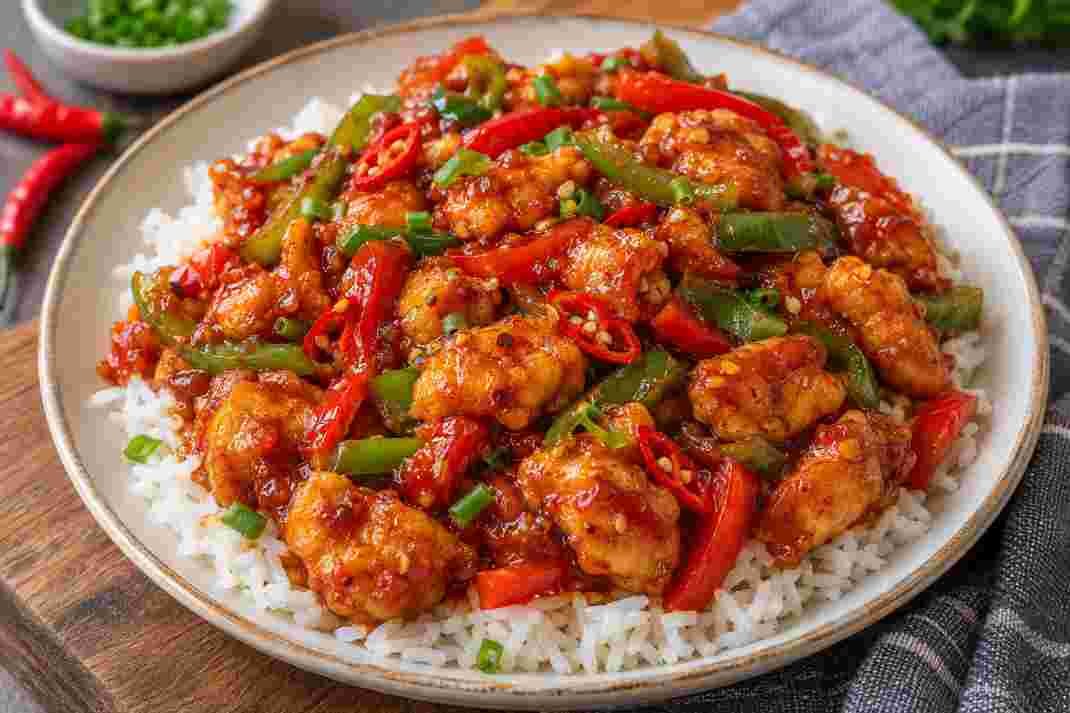
Angry Chicken is one of those weeknight dinners that brings a little excitement to the table. It combines crispy pieces of chicken with colorful bell peppers, red chilies, and a tangy tomato-based sauce that is both sweet and spicy. The chicken is cooked quickly, then coated in the thick sauce so every piece gets plenty of flavor.
The heat can easily be adjusted. Use fewer chilies for a milder dish or add extra if you like your chicken with a serious kick. It is especially good served over steamed rice, but noodles or vegetables work just as well.
Angry Chicken Ingredients
For the Chicken
- 4 boneless, skinless chicken breasts, cut into bite-sized pieces
- 1 tablespoon low-sodium soy sauce
- 2 tablespoons cornstarch
- 1 large egg
- 2 tablespoons vegetable oil
- 2 small red chilies, thinly sliced
- 1 red bell pepper, sliced
- 1 green bell pepper, sliced
For the Sauce
- 1 1/4 cups chicken broth
- 2 tablespoons low-sodium soy sauce
- 4 tablespoons rice vinegar
- 2 tablespoons tomato puree
- 1 tablespoon sugar
- 2 teaspoons cornstarch
Also Read: Fajita Veggies Recipe
How to Make Angry Chicken
1. Prepare the Chicken
Place the diced chicken in a bowl and toss it with the tablespoon of soy sauce. In another bowl, whisk together the egg and 2 tablespoons of cornstarch until you have a smooth batter. Add the chicken to this mixture and toss until the pieces are evenly coated.
2. Cook Until Crispy
Heat the vegetable oil in a large wok or skillet over high heat. Add the coated chicken in batches if necessary so the pan does not become overcrowded. Cook for about 4 to 5 minutes, turning the pieces as they cook, until they are golden on the outside and cooked through. Transfer the chicken to a plate lined with paper towels.
3. Cook the Peppers
Using the same pan, add the sliced red chilies and bell peppers. Stir-fry for about 3 to 4 minutes. The peppers should soften slightly while still keeping some of their texture.
4. Make the Spicy Tomato Sauce
Add the chicken broth, soy sauce, rice vinegar, tomato puree, and sugar to the pan. Stir well and let the mixture simmer for about 5 minutes so the flavors come together.
5. Thicken the Sauce
In a small cup, mix the remaining 2 teaspoons of cornstarch with 2 to 3 tablespoons of the hot sauce until smooth. Pour this mixture back into the pan and stir continuously. Let the sauce bubble for a minute or two until it becomes glossy and thick enough to coat the chicken.
6. Add the Chicken
Return the crispy chicken to the pan and stir everything together. Let it simmer for another 2 to 3 minutes, allowing the sauce to cling to the chicken and peppers. Taste before serving and adjust the heat if needed.
Also Read: Pumpkin Chocolate Chip Muffins
What to Serve with Angry Chicken
Steamed white or jasmine rice is an easy choice because it soaks up the sweet, tangy sauce. You can also serve the chicken with fried rice, noodles, cauliflower rice, or steamed vegetables. Broccoli, green beans, and bok choy are particularly good alongside the spicy sauce.
What You Can Do Better
If you want crispier chicken, avoid overcrowding the pan while frying. Cooking the chicken in smaller batches gives each piece enough contact with the hot surface to develop a better crust. For a milder version, remove the seeds from the chilies or reduce the number of chilies. If you prefer more heat, add an extra chili or a little hot sauce. Low-sodium soy sauce is also a useful choice because the chicken broth and soy sauce can otherwise make the finished dish quite salty.
For a little extra freshness, finish the dish with sliced green onions or sesame seeds. You can also add minced garlic or a small amount of grated ginger to the sauce if you want a deeper savory flavor.
Also Read: 7 Up Biscuits
Tips for Making Angry Chicken
- Cut the chicken into pieces of similar size so they cook evenly.
- Keep the heat fairly high when frying the chicken to help it become golden and crisp.
- Cook the peppers until slightly tender rather than completely soft.
- Mix the cornstarch with sauce before adding it to the pan to prevent lumps.
- Add the cooked chicken near the end so it does not become overly soft.
- Adjust the red chilies according to your preferred level of heat.
Storage and Reheating
Let leftover Angry Chicken cool before transferring it to an airtight container. Store it in the refrigerator for up to 4 days. You can also freeze it for up to 3 months in a freezer-safe container. Thaw frozen chicken in the refrigerator overnight and reheat it in a skillet over medium heat or in the microwave until hot throughout.
Angry Chicken Nutrition
The nutritional values below are approximate and will vary depending on the specific chicken, soy sauce, oil, and other ingredients used. The original recipe lists approximately 272 calories per serving, with 35 grams of protein, 10 grams of fat, and 10 grams of carbohydrates.
| Nutrient | Approximate Amount Per Serving |
|---|---|
| Calories | 272 kcal |
| Protein | 35 g |
| Fat | 10 g |
| Carbohydrates | 10 g |
| Fiber | 1 g |
| Sugar | 5 g |
| Sodium | 875 mg |
| Cholesterol | 125 mg |
Also Read: Cinnamon Bun Scones
Frequently Asked Questions
How spicy is Angry Chicken?
The spice level depends mainly on the amount and type of red chilies you use. For a mild version, use fewer chilies and remove the seeds. For a hotter dish, increase the chilies or add a little hot sauce.
Can I use chicken thighs instead of chicken breasts?
Yes. Boneless, skinless chicken thighs work well and tend to stay juicy during cooking. Cut them into small, even pieces so they cook at roughly the same rate.
Can I make Angry Chicken ahead of time?
You can prepare the sauce and cut the chicken and vegetables ahead of time. For the best texture, cook the chicken close to serving time because freshly cooked chicken will have a better crisp coating.
Can I serve Angry Chicken without rice?
Absolutely. It can be served with noodles, steamed vegetables, cauliflower rice, or simply enjoyed on its own.
How can I reduce the salt?
Use low-sodium soy sauce and a low-sodium chicken broth. You can also reduce the amount of soy sauce slightly and taste the sauce before adding any additional seasoning.